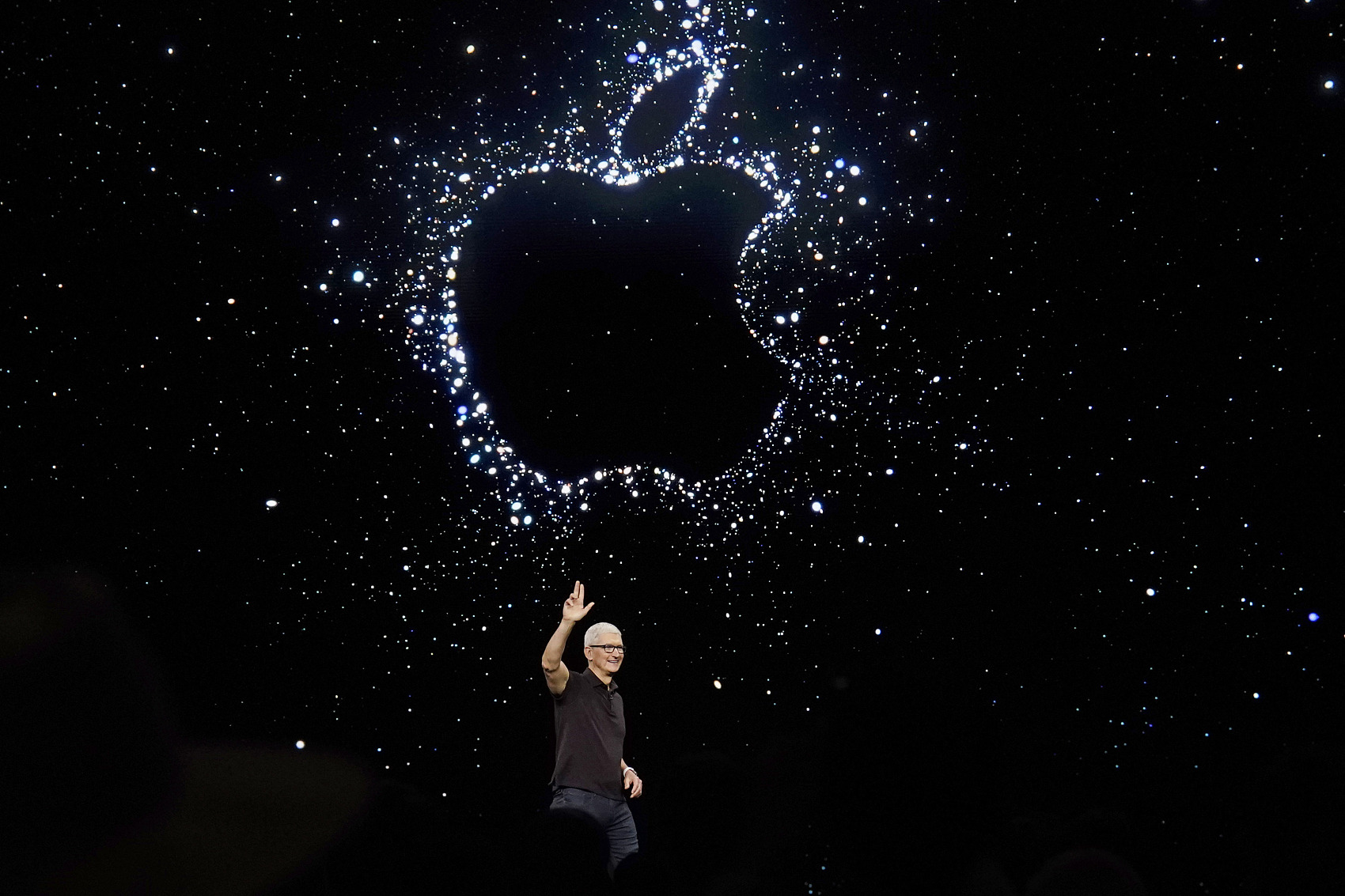
Tonight's Apple event marks the debut of new CEO Ternus, with three key highlights: the first foldable iPhone will have a starting price of approximately USD 2,099 (around RMB 14,085), making it the most expensive iPhone in Apple's history; the Pro series is expected to see a price increase of USD 150 to 200 due to surging memory costs; and the standard iPhone 18 will be delayed until spring 2027, breaking Apple's decade-long release convention. Additionally, Apple Intelligence may officially launch in China.
At 1:00 AM on September 10 (Beijing Time), $Apple (AAPL.US)$ A special autumn event themed "Unveiling a New Chapter, Shine Brightly" will be held.
Apple's new CEO, John Ternus, will take the stage tonight for his first product launch since assuming leadership. In a letter to employees last week, he wrote: "I am full of anticipation for the series of major new products the company is about to launch. Next week, we will witness an extraordinary launch event, and what excites me even more are the surprises that follow—including both outstanding products ready for release and new innovations we have yet to conceive."
 According to Zhuifeng Trading Desk, Bank of America Securities analyst Wamsi Mohan pointed out in a research report released on September 8 that the three core highlights of tonight's event are: Apple's first foldable iPhone, potential significant price increases for the Pro series, and a schedule adjustment delaying the release of lower-priced iPhone models until spring 2027. The convergence of these three factors makes this launch one of the most densely packed with key developments in recent years.

Foldable Screen: Apple's Most Expensive iPhone Arrives
The foldable screen iPhone is undoubtedly the absolute centerpiece of tonight's launch. According to media reports, this device is internally referred to as "iPhone Ultra" and may also be named "Fold."
Citing media reports, the Bank of America Securities report states that its base configuration will have a starting price of approximately $2,099 (about RMB 14,085), making it the most expensive iPhone in Apple's history.
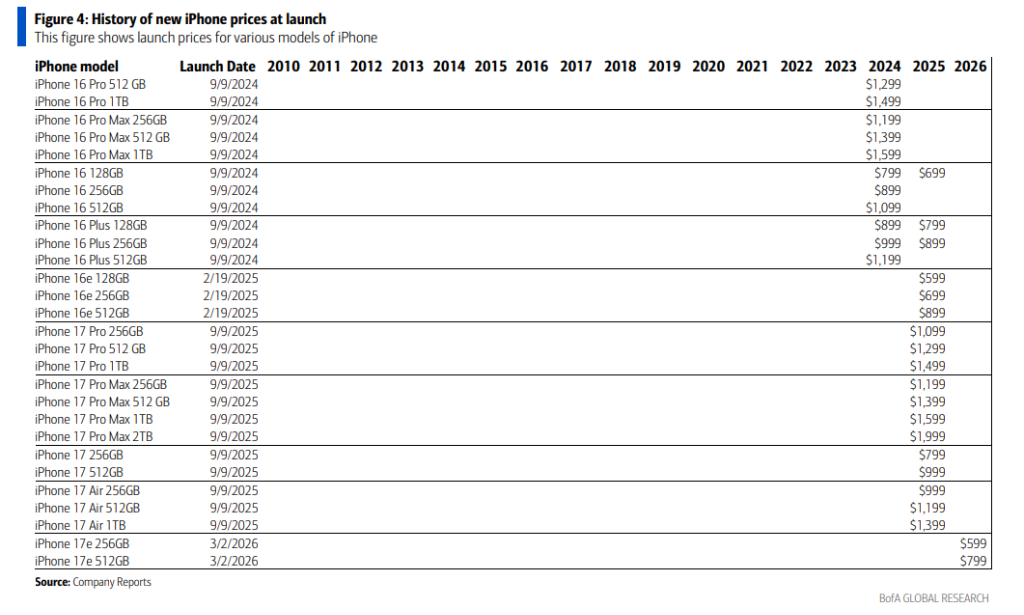
Regarding hardware specifications, analysts expect the device to feature a book-style foldable design, equipped with a 5.5-inch outer OLED screen and a 7.8-inch inner OLED screen. It will be powered by the A20 Pro chip built on a 2nm process, include 12GB of memory, offer storage options of 256GB, 512GB, 1TB, and 2TB, and ship with iOS 27.
Background materials indicate that the foldable device is approximately 4.5mm thick when unfolded and about 9mm when folded, with Apple listing "thin and light" as a core design objective. Trade-offs made to achieve this include replacing Face ID with side-mounted Touch ID, and reducing the rear camera setup from the triple-lens array found in the Pro series to a dual-lens system, eliminating the telephoto lens.
iOS 27 introduces new side-by-side app views and iPad-like multitasking layouts tailored for the foldable form factor, but the device will still run iOS rather than iPadOS.
For investors, Bank of America believes that the market's reaction to this product will largely depend on the actual performance of demand for foldable screens and related comments from management.
However, the Chinese market may be one of the most challenging for this smartphone to penetrate. Domestic manufacturers such as Huawei, Honor, OPPO, and vivo have been deeply engaged in the foldable screen sector for years, with competition reaching a mature stage across dimensions ranging from hinge craftsmanship and crease control to imaging capabilities and fast-charging speeds.
Pro Series: Unchanged exterior, upgraded internals, and higher prices
The iPhone 18 Pro and Pro Max are not expected to undergo significant design changes this year. Reports indicate that both models will retain screen sizes of 6.3 inches and 6.9 inches, respectively, while featuring the 2nm A20 Pro processor, larger batteries, a smaller Dynamic Island, and an upgraded camera system.
The core changes lie within: the A20 Pro is Apple’s first iPhone chip built on a 2nm process. Its significance extends beyond performance improvements to reducing power consumption for high-load tasks such as on-device AI computing and computational photography. Additionally, the Pro Max is expected to feature a mechanical variable aperture for the first time, enabling more precise exposure control and depth-of-field adjustment—a capability previously seen in Android flagships from Huawei, Xiaomi, and Samsung.
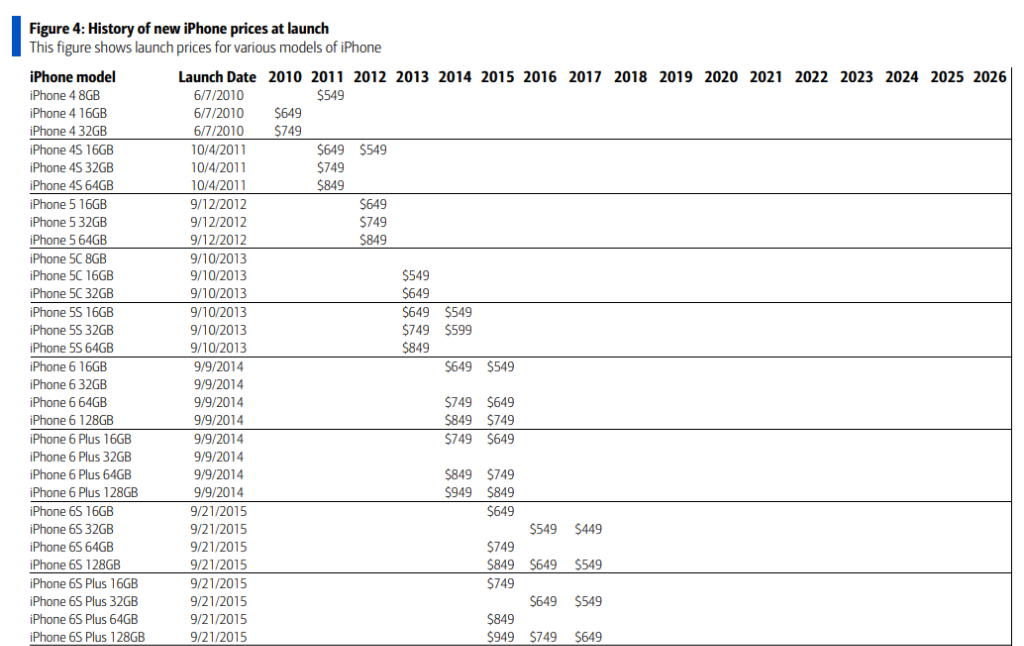
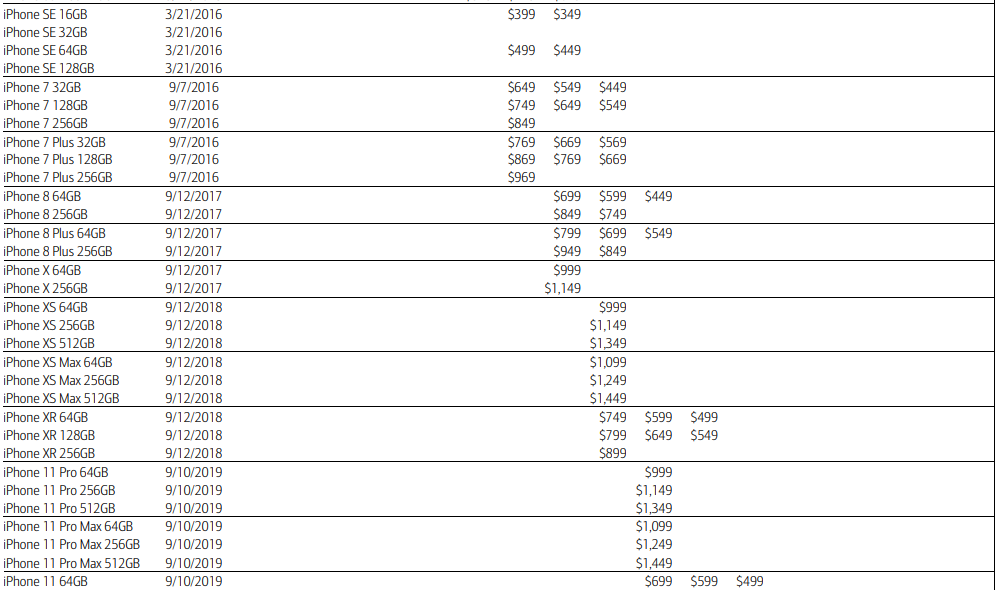
Regarding pricing, a hike appears all but certain. Bank of America Securities forecasts that the iPhone 18 Pro and Pro Max will see price increases of $150 to $200, driven by substantial rises in memory and storage costs. If realized, this would mark the most significant price increase for the Pro series in recent years.
Restructured launch schedule: Only premium models in autumn; no standard iPhone 18
Another notable change at this year’s launch event is Apple’s major adjustment to its iPhone release schedule. The standard iPhone 18 will not be featured in the autumn launch.
Bank of America notes that the standard iPhone 18, iPhone 18 Air, and iPhone 18e are reportedly delayed until spring 2027. This means that during this year’s autumn holiday sales season, the only new iPhones available to consumers will be the Pro series and foldable models, with the entry-level price starting directly at the Pro tier.
Analysts believe this "staggered launch" strategy helps optimize the product mix and raise the average selling price (ASP), but it carries certain risks: "Price-sensitive consumers may delay upgrades, waiting for lower-priced models to become available."
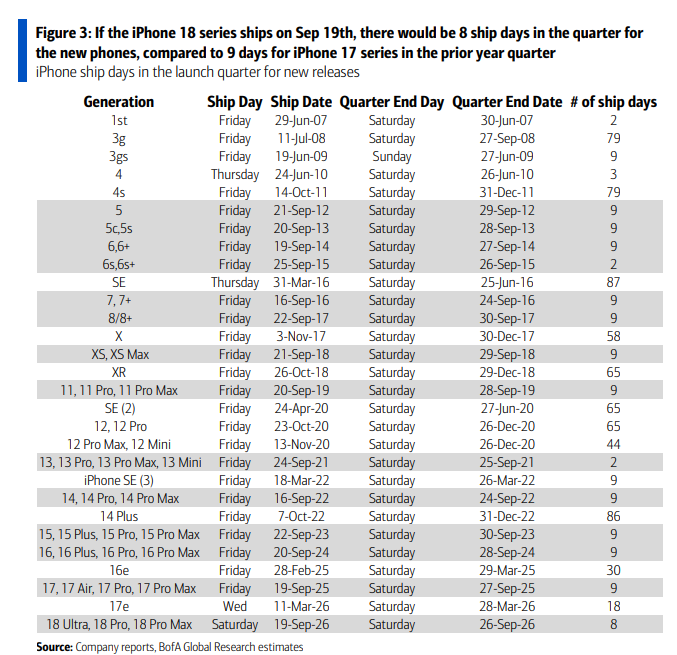
In terms of shipping days, analysts estimate that if the iPhone 18 series begins shipping on September 19, there will be only eight days of new device shipments within the quarter, slightly fewer than the nine days recorded for the iPhone 17 series last year.
Apple Intelligence Enters China: Potentially More Significant for Mainland Users Than Foldable Screens
For Chinese users, another signal worthy of close attention at tonight’s launch event is whether Apple Intelligence will be officially available on iPhones sold in mainland China.
Although Apple Intelligence was released in 2024, it has remained unavailable on iPhones sold in mainland China for nearly two years. Meanwhile, domestic manufacturers such as Huawei, Xiaomi, OPPO, vivo, and Honor have deeply integrated AI capabilities into their systems, covering scenarios including notification reading, screen understanding, photo organization, and cross-application operations.
In July this year, the Cyberspace Administration of China published a new list of registered generative AI services for mobile devices, with “Apple Intelligence” formally appearing on the list. The registering entity is Apple Technology Development (Shanghai) Co., Ltd. Alibaba subsequently confirmed that its Qwen model would be integrated into the mainland China version of Apple Intelligence, providing text and image understanding and generation capabilities for iOS, iPadOS, macOS, and visionOS. Baidu also confirmed its participation in the development of AI features for Apple’s China-specific version. An official support page titled “Use Qwen with Apple Intelligence on Mac” has already appeared on Apple’s China website.
However, analysts note that the launch of Apple Intelligence in China does not imply that all Siri AI features showcased at WWDC 2026 will be simultaneously available. Apple has explicitly stated that the next-generation Siri AI will initially be released later this year as an English-language beta. Tech media outlet Silicon Star Pro suggests that “even if Apple officially announces the entry of Apple Intelligence into China at the September event, it remains to be confirmed which features will be included in the initial rollout and at which system layers Qwen and Baidu are respectively involved.”
Other Highlights: Apple Watch, AirPods, and Smart Home Products
In addition to the iPhone, Bank of America anticipates that Apple may also release the Apple Watch Series 12 and/or Ultra 4, as well as AirPods 5, at tonight’s event. Furthermore, Apple might preview or launch updated versions of smart home products such as the Apple TV 4K and HomePod mini.
The Apple Watch Series 12 is expected to introduce new color options and a ceramic case, along with a more powerful chip to support the computational requirements of the AI-enabled Siri. The AirPods 5 will likely be offered in both standard and active noise cancellation variants. Rumors of a version with built-in cameras are unlikely to materialize this year.
Stock Price Outlook: Historical Patterns and This Year’s Variables
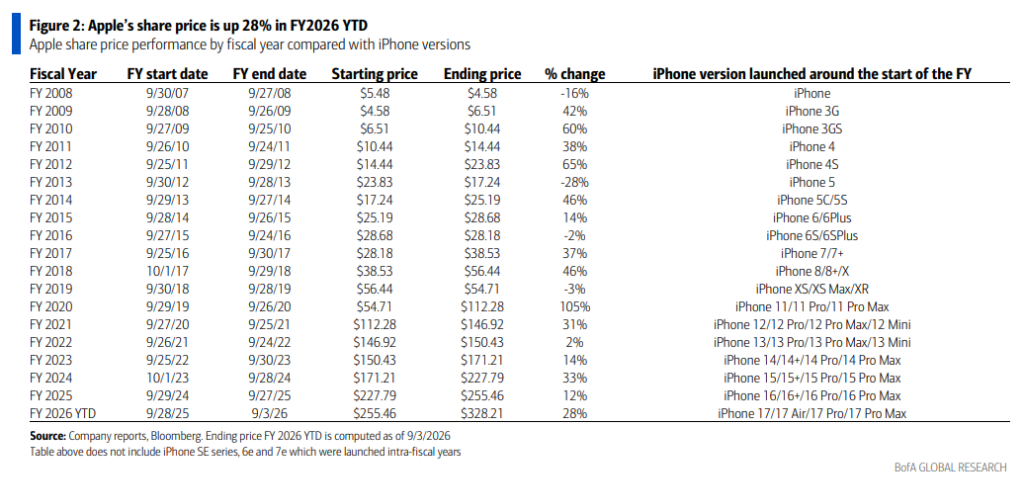
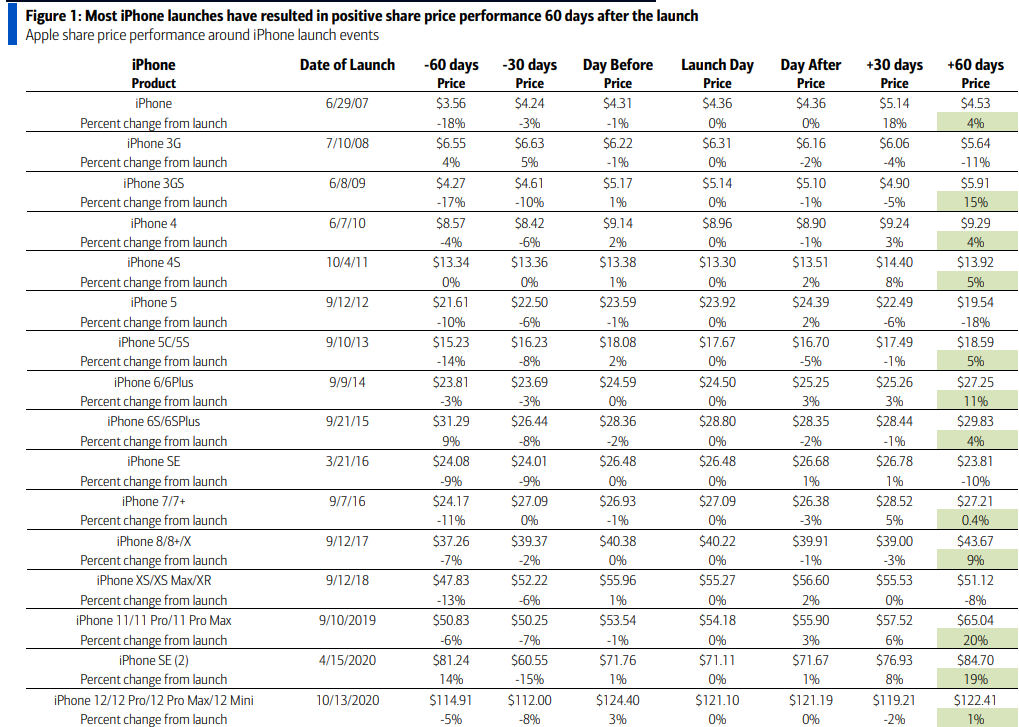
Citing historical data, Bank of America notes that Apple’s stock price often experiences a slight pullback due to “buy the rumor, sell the news” dynamics following an iPhone launch event, but typically recovers these losses within 30 to 60 days.
The situation this year is slightly different. Data shows that as of the market close on September 3, Apple's stock price had fallen by approximately 6% compared to 60 days before the launch event, and also declined by about 6% over the preceding 30 days.
Analysts believe that investor reaction this year will primarily depend on three factors: whether price increases exceed expectations, user adoption of Siri's AI features, and management's commentary on demand for foldable screens.
The firm maintains a Buy rating on Apple with a target price of $380 (current share price: $319.97), citing strong capital returns, long-term leadership potential in on-device AI capabilities, and optionality value from new products. The firm projects Apple's fiscal 2026 earnings per share at $8.85, representing a year-on-year increase of approximately 19%.
The First Deliverable of the Ternus Era
John Ternus officially assumed the role of Apple CEO on September 1 this year, just days before tonight's launch event. This timing was no coincidence—reports indicate that Apple deliberately scheduled the CEO transition immediately prior to the event to allow Ternus to personally headline the unveiling of the product lineup developed under his leadership.
Over the past 15 years, Apple's product strategy has focused primarily on refining existing lines, with the Apple Watch and AirPods being among the few entirely new categories. This landscape is now changing. Reports indicate that during his tenure as Senior Vice President of Hardware Engineering, Ternus spearheaded the R&D efforts for Apple's current wave of intensive new product launches.
According to reports, Apple's new product roadmap for the coming years includes foldable iPhones, touchscreen MacBooks, AirPods with built-in cameras, smart home hubs with displays, desktop robots equipped with robotic arms, and AR glasses. Tonight's launch event represents merely the first page of this roadmap.
 Looking to select stocks or analyze your holdings? Want to understand the opportunities and risks in your portfolio? For any investment-related questions,just ask Futubull AI!

Editor/lambor