
The U.S. Treasury has tripled the cap on its long-term bond buyback program to $6 billion, marking the latest effort by Treasury Secretary Bessent to curb rising long-term borrowing costs. However, the market reaction proved counterproductive, indicating that investors had anticipated a larger-scale operation.
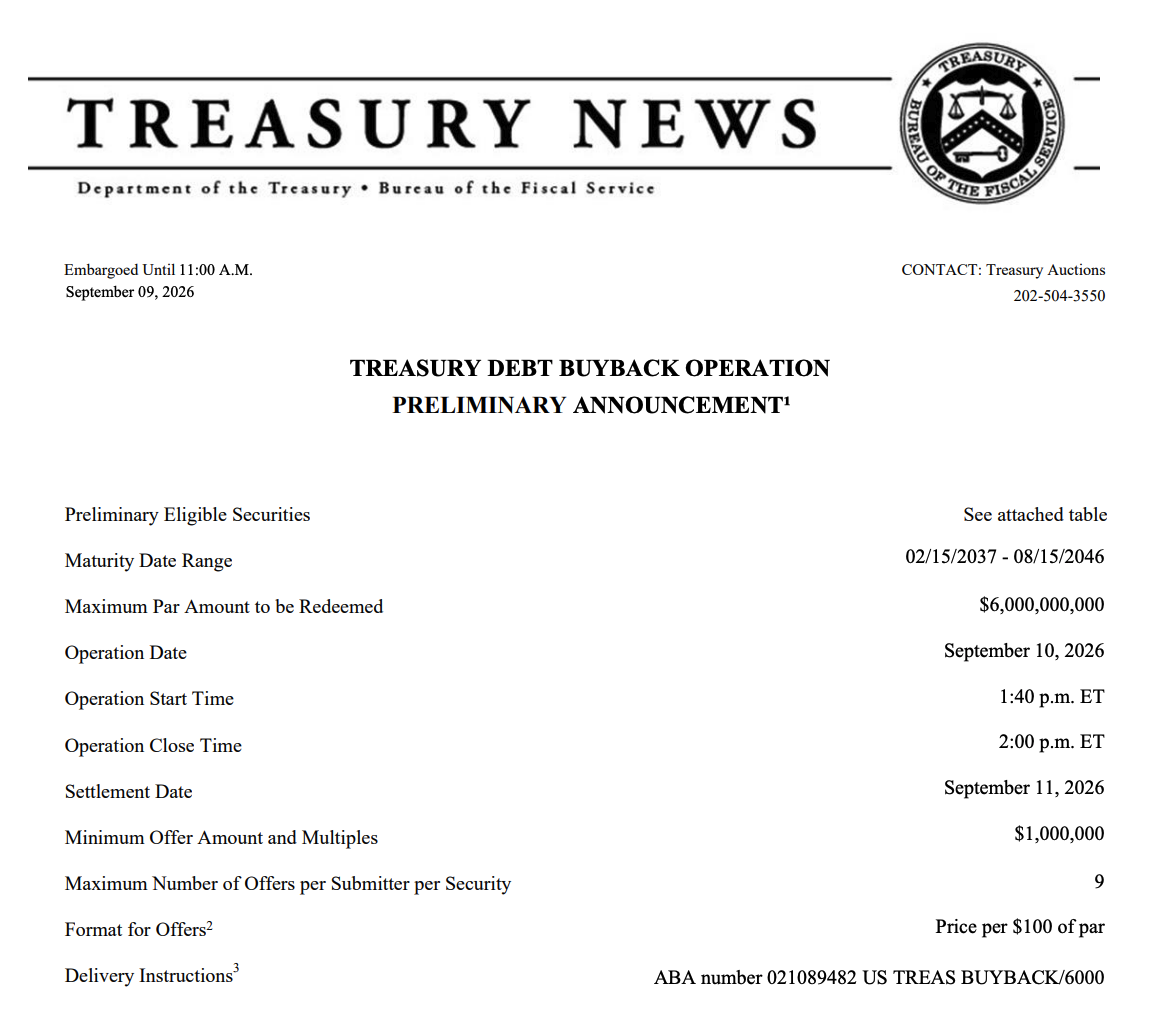
The scale of this operation is three times the initial $2 billion plan previously communicated to investors. Earlier this week, Bessent publicly stated that the buyback volume was expected to exceed $4 billion, boosting expectations among some dealers.
On Tuesday, Bessent reiterated that while he could not alter the "equilibrium" price of Treasury securities, his objective was to slow the pace of rising yields and prevent disruptive narratives from emerging in the world’s largest bond market.
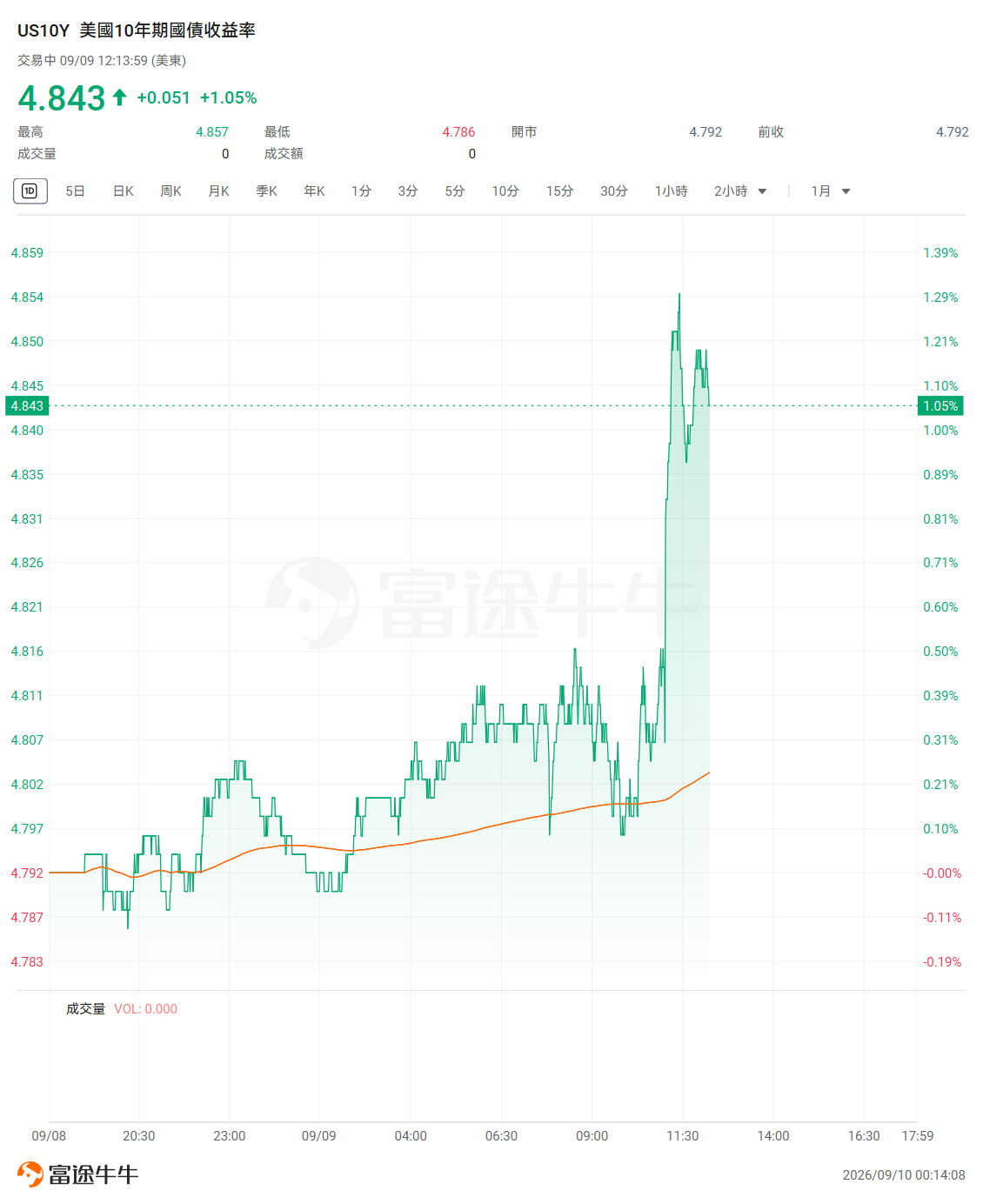
 Following the announcement, the Treasury market extended its previous decline. As of press time, the yield on 10-year Treasury notes had risen by approximately 6 basis points from the previous day to 4.85%, while U.S. equities fell.
Guneet Dhingra, Head of U.S. Rates Strategy at BNP Paribas, stated prior to the announcement that the buyback volume would need to reach $7 billion to surpass market expectations; a level below this threshold could trigger selling pressure.
Expanding Buybacks: Bessent’s Logic for "Stabilizing the Bond Market"
Last month, Bessent surprised markets by announcing an expansion of the long-term Treasury buyback program, as the announcement did not follow the Treasury Department’s customary quarterly schedule. This sparked discussions about a shift in U.S. debt management style toward being "more proactive," standing in sharp contrast to the Treasury’s long-standing principle of "regularity and predictability."
Bessent described the move as a "Treasury Twist," echoing the Federal Reserve’s historical "Operation Twist" aimed at lowering long-term borrowing costs. In an interview with Newsmax, he stated, "I am ensuring that there are no significant adverse outcomes."
Bessent cited enhancing market liquidity as one of the rationales for expanding the buyback program.
He stated last week that this would allow banks and other institutions to offload less liquid securities, thereby strengthening their capacity to participate in new debt auctions. He also attributed the August peak in 30-year Treasury yields—the highest since 2007—to market concerns over "the U.S. inability to repay its debt," describing such fears at an event in Texas as "absurd, yet briefly the dominant narrative."
Effectiveness of the Operation in Question; Outlook Remains Unclear
Whether the expanded buyback program will continue to be effective remains uncertain. Following last month's announcement, yields initially declined but quickly reversed those gains. Last week, the yield on the 10-year benchmark Treasury note touched its highest level since 2023.
Krishna Guha, Head of Economic Research at Evercore ISI, stated ahead of Wednesday's announcement, "Scott has fully embraced a highly proactive model for the Treasury Secretary. He is tactically adept at surprising and leveraging market dynamics in terms of timing and method, achieving certain short-term results." Guha, a former official at the Federal Reserve Bank of New York, also noted, "The enduring challenge lies in whether the effects of such interventions can be sustained without more substantial changes in fundamentals."
In terms of operational practice, the $6 billion cap does not imply that the Treasury Department is obligated to purchase the full amount. However, since the program was relaunched in 2024, the Treasury has failed to reach the cap in only two out of 52 buyback operations targeting long-term nominal bonds, indicating a general tendency to execute purchases at the full limit.
Market Interpretation: Clear Intent to Stabilize, but Limited Power to Reverse Trends
Cameron Crise, a Bloomberg market commentator, remarked bluntly that the $6 billion buyback announcement greatly disappointed the market. The size was squarely at the lower end of expectations, aligning with an operational logic of "smoothing rather than reversing" price trends. Yet, even this modest effect has not been achieved so far. Long-term Treasury yields jumped immediately after the announcement.
Investors and analysts generally view the increased buyback activity as a reflection of the Trump administration's concern over rising long-term borrowing costs. With only weeks remaining before the November congressional elections, the continued rise in Treasury yields has pushed U.S. mortgage rates to their highest levels in over a year.
Editor/Stephen