This launch event marked the debut showcase for new CEO Tenus. The foldable iPhone Duo features a 7.6-inch inner display and is the thinnest iPhone when unfolded; it supports the Apple Pencil and has a starting price of $1,999. The iPhone 18 Pro is equipped with an updated version of Siri, offers the longest battery life in iPhone history, and provides up to 45 hours of video playback on the Pro Max model. Significant camera upgrades include a 48-megapixel main sensor with a variable aperture, introduced for the first time. The A20 Pro chip, built on a 2-nanometer process with a 32-core NPU, features optimized thermal management, delivering a 40% improvement in sustained performance compared to the A19 Pro. The Apple Watch Series 12 introduces a Siri Recap feature, with a starting price of $399. The AirPods 5 now include active noise cancellation, with a starting price of $129.
Apple has officially entered the foldable smartphone market.
On Wednesday, September 9 (Eastern Time), Apple held its annual autumn product launch event at Apple Park. This was the first Apple product launch hosted by new CEO John Ternus since taking office. The highlight of the event was Apple's long-awaited debut of its first foldable iPhone, the iPhone Duo, marking one of the most significant changes in product form factor for Apple since the iPhone X in 2017.
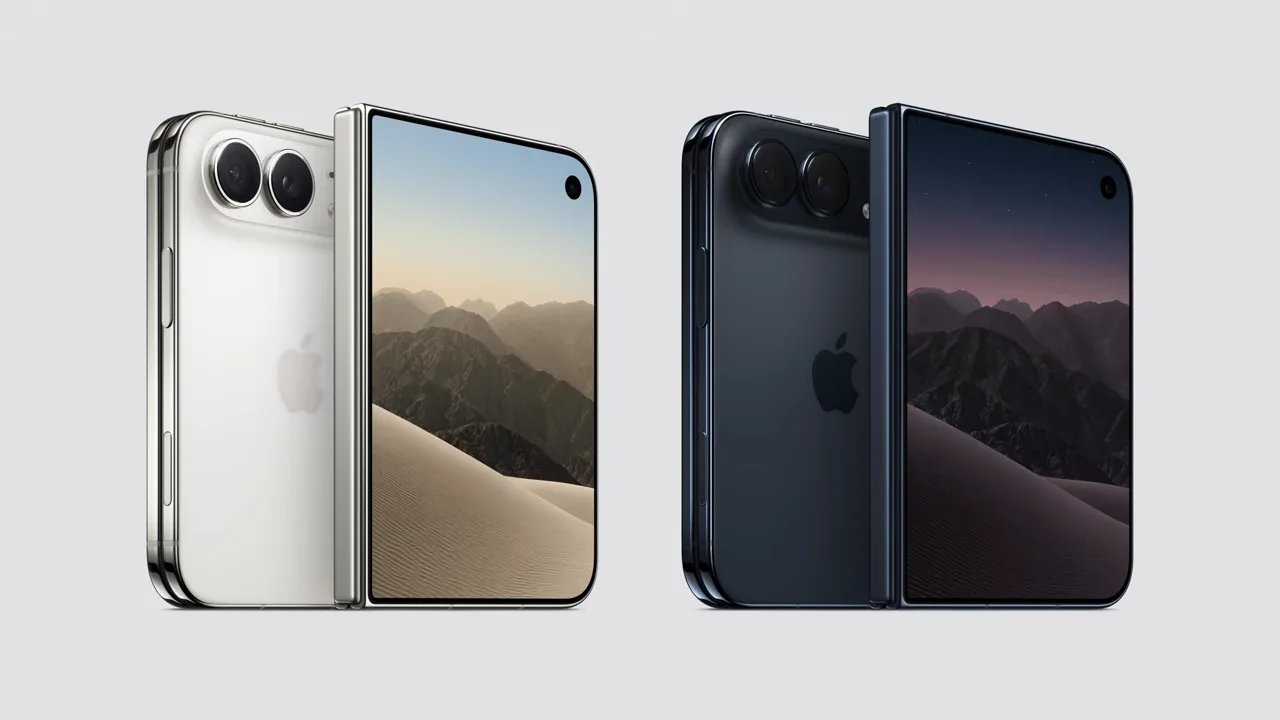
 Concurrently, Apple released the iPhone 18 Pro and iPhone 18 Pro Max, two traditional flagship models. Both these devices and the foldable iPhone Duo are powered by the new generation A20 Pro chip. Apple also launched the Apple Watch Series 12, Apple Watch Ultra 4, and AirPods 5, further extending capabilities such as Apple Intelligence and Siri AI across its entire hardware ecosystem.
The iPhone Duo starts at $1,999 in the US market. In mainland China, the 256GB version starts at RMB 15,999, while the top-tier 2TB version is priced at RMB 26,499. Pre-orders for the mainland China version will open at 8:00 PM on October 16, with official sales commencing on October 23.
Apple has further integrated artificial intelligence into the core experiences of the iPhone and Apple Watch. The next-generation Siri, on-device AI, and Apple Intelligence remained key themes of the launch event.
New CEO Ternus Takes Center Stage for the First Time
The opening of the launch event was highly symbolic.
Tim Cook first appeared in a video before handing over to Ternus. Subsequently, Ternus formally took the stage. This marked his first time hosting Apple’s most important product launch since officially assuming the role of Apple CEO on September 1.

In his opening remarks, Ternus stated that he joined Apple 25 years ago and reflected on his experience working at the company. He emphasized that Apple aims to continue launching products that have tangible significance for users' lives, asserting that the company will continue to "change the world in unimaginable ways."
Judging from the groundwork laid at the event, Ternus did not rush to delve into hardware specifications, but instead first emphasized the changing role of devices in the AI era.
He proposed that with the advancement of artificial intelligence, devices capable of connecting users' lives, applications, services, and various hardware components could become true "smart personal hubs." An ideal device would need to feature a sufficiently large display, high-quality cameras and microphones, and robust battery life, while seamlessly collaborating with other devices, applications, and services.
Subsequently, the answer pointed to the iPhone.
Tennous emphasized that the iPhone is already at the center of Apple's ecosystem, forming part of users' daily digital lives alongside devices such as AirPods and the Apple Watch. Meanwhile, Apple continues to stress that Apple Intelligence operates primarily on-device to protect user privacy.
The foldable iPhone Duo features a large 7.6-inch display and is the thinnest when unfolded.
After years of rumors, Apple has finally officially launched its first foldable iPhone.
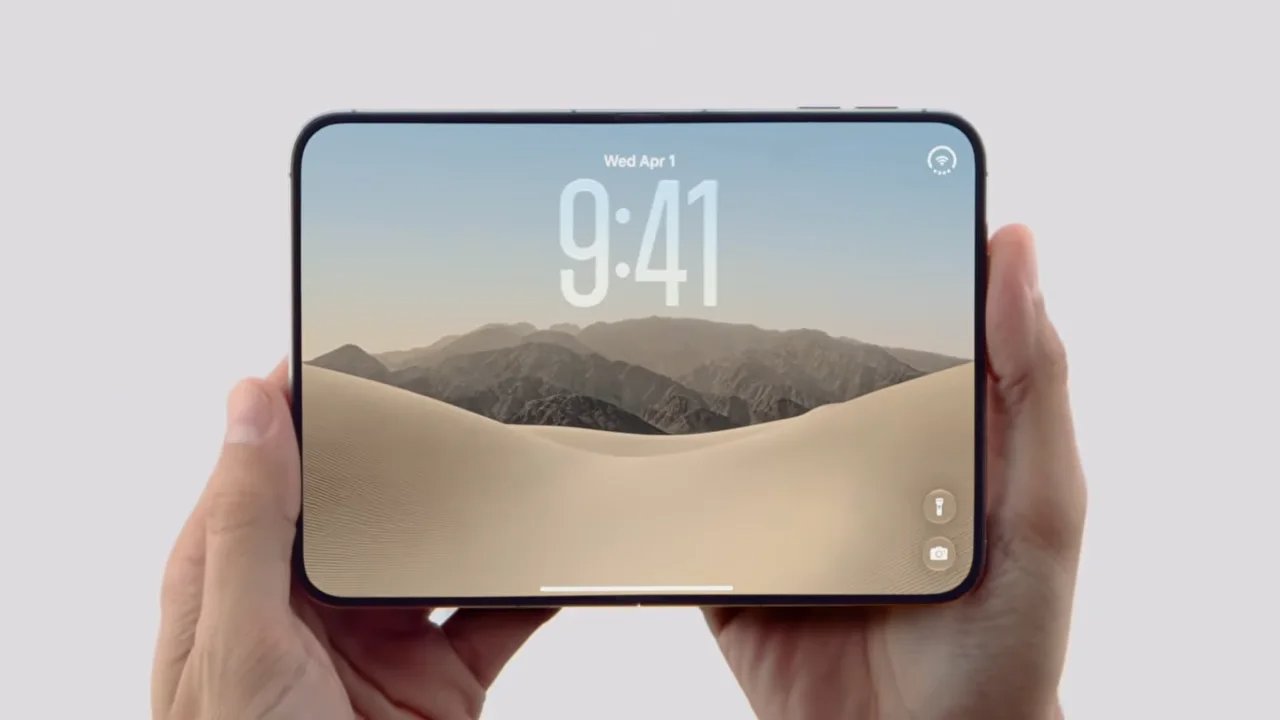
This product adopts a horizontal "book-style" folding design, equipped with a 5.4-inch external screen and a 7.6-inch internal screen. When unfolded, the 7.6-inch Super Retina XDR display becomes the largest iPhone screen to date, supporting ProMotion adaptive refresh rate technology with a peak brightness of up to 3,000 nits.
Apple emphasized that despite the larger display area, the unfolded Duo is the thinnest iPhone in history. Reuters noted that the device features a passport-like form factor, transforming into a horizontal large screen when opened, representing the most significant design change for the iPhone since the removal of the physical Home button in 2017.
To accommodate the foldable form factor, Apple has specifically optimized iOS 27.
The iPhone Duo supports multi-app simultaneous operation, allowing users to perform split-screen tasks on the large display. The device also supports half-folded usage, enabling the phone to handle different tasks at various angles.
Apple also announced that the iPhone Duo supports the Apple Pencil, further enhancing its productivity capabilities for note-taking, office work, and content creation scenarios.
The display itself is another key issue Apple has focused on resolving. The Duo adopts new display technology to minimize crease visibility and utilizes a titanium frame with a ceramic fiber-reinforced structure to balance an ultra-thin profile with durability.
Starting at $1,999 and reaching up to $3,199: Apple Bets on the Ultra-Premium Foldable Screen Market
The pricing of the iPhone Duo was undoubtedly another major highlight of the launch event.
In the U.S. market, the starting price for the 256GB model is $1,999, while the top-tier 2TB version reaches $3,199.
Pricing in the Chinese mainland market is as follows:
256GB: CNY 15,999
512GB: CNY 17,999
1TB: CNY 21,499
2TB: CNY 26,499
Apple will open pre-orders for the China mainland version at 8:00 PM on October 16, with official sales commencing on October 23.
This indicates that Apple is not driving the adoption of foldable screens through low pricing, but rather positioning the Duo directly as a new ultra-premium product.
In terms of industry competition, Apple’s entry into the foldable screen market is significantly later than that of manufacturers such as Samsung and Huawei. Samsung launched its first Galaxy Fold in 2019, whereas Apple is only now formally entering the fray.
Nevertheless, Apple’s brand influence could still reshape the competitive landscape of this market. Wall Street and the technology sector have long monitored when Apple would enter the foldable screen market, as its participation has the potential to propel foldables from niche products further into the mainstream premium segment.
Dual Cameras + Apple Pencil + Split Screen: iPhone Duo Targets Productivity Scenarios
Apple has not simply positioned the Duo as a "foldable iPhone."
Regarding imaging, the Duo features a dual rear camera setup, including a 48MP main sensor and a 48MP fused ultra-wide-angle camera, along with an under-display front camera, supporting 4K Dolby Vision HDR video recording.
In terms of performance, the iPhone Duo is equipped with the A20 Pro chip, similar to the iPhone 18 Pro series, and features a new display engine.
Due to the thinner profile of the foldable body, Apple has incorporated a large-sized VC (vapor chamber) heat spreader into the Duo to improve thermal performance during high-performance operation. For connectivity, the Duo utilizes Apple’s self-developed C2 modem; all global versions adopt an eSIM design, while the U.S. market version supports 5G millimeter-wave.
Battery life is another key focus emphasized by Apple. Public information for the Chinese mainland market indicates that the Duo can achieve up to 24 hours of battery life on a single charge, with up to 44 hours of video playback using the external screen.
More importantly, the large screen, multi-window functionality, Apple Pencil support, and half-folded usage modes collectively redefine the product positioning of the Duo.
Users can multitask across multiple applications in the fully unfolded state, or use the half-folded position for scenarios such as video playback and video calls.
Therefore, Apple clearly intends for the Duo to be not merely a "more expensive iPhone," but rather a new product category bridging smartphones and tablets.
The iPhone 18 Pro is available in four color options, with the Pro Max offering up to 45 hours of video playback.
Subsequently, Apple officially announced the iPhone 18 Pro and iPhone 18 Pro Max.
Based on currently released information, the new generation Pro series continues the overall design philosophy introduced with the previous iPhone 17 Pro. It features an aluminum chassis with rear glass matching the body color, and is offered in four finishes: Deep Black, Silver, Glacier (a light blue hue), and Burgundy (a wine-red tone).
Apple did not undertake a complete redesign of the exterior; instead, it focused upgrades on the chip, battery life, imaging capabilities, and AI features.
One of the most core hardware upgrades is the new A20 Pro chip.
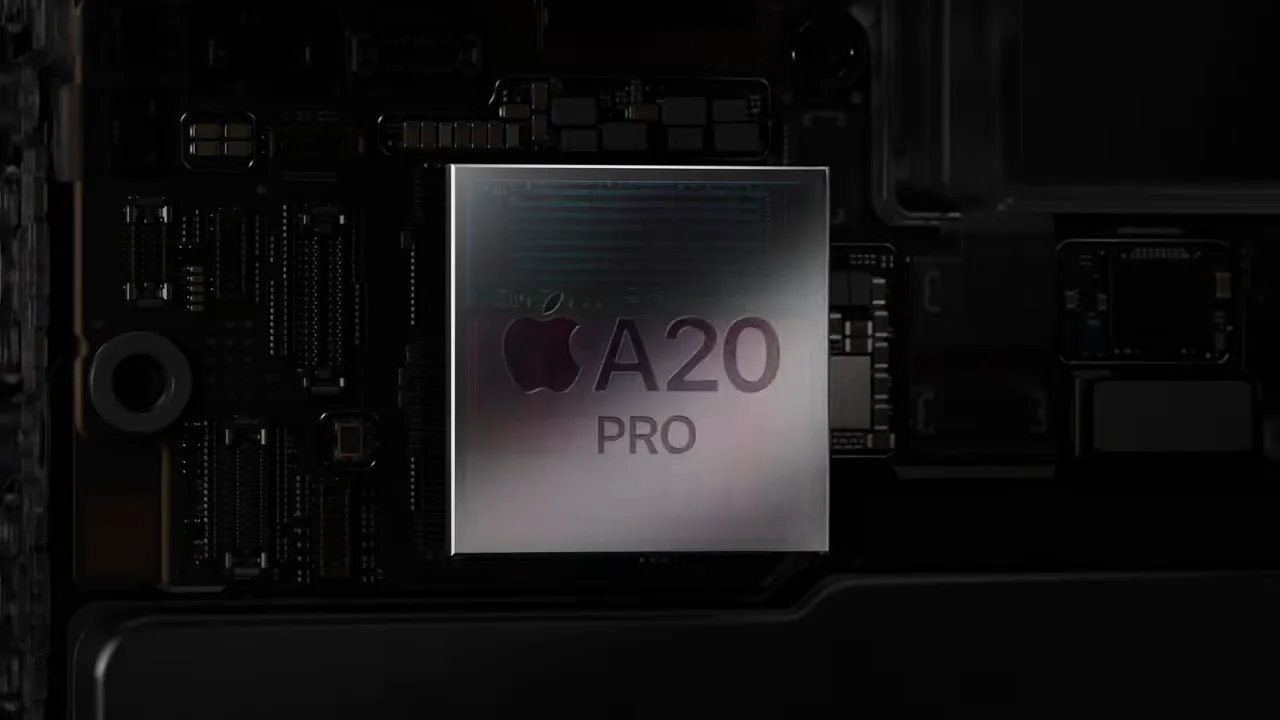
In its launch event video, Apple highlighted the performance enhancements of the A20 Pro, linking them to the AI processing capabilities of the new iPhone generation.
Apple states that the A20 Pro sets a new standard for mobile computing. Manufactured using a 2-nanometer process and featuring a new architecture, it includes a 6-core CPU and a 7-core GPU with desktop-class performance cores. GPU performance has improved by 40% compared to the previous generation, and it is equipped with a 32-core Neural Processing Unit (NPU) to provide enhanced computational power for on-device AI tasks.
The A20 Pro also incorporates an optimized thermal management system, allowing the device to more effectively control heat and maintain high efficiency even when running AI systems or other high-load tasks.
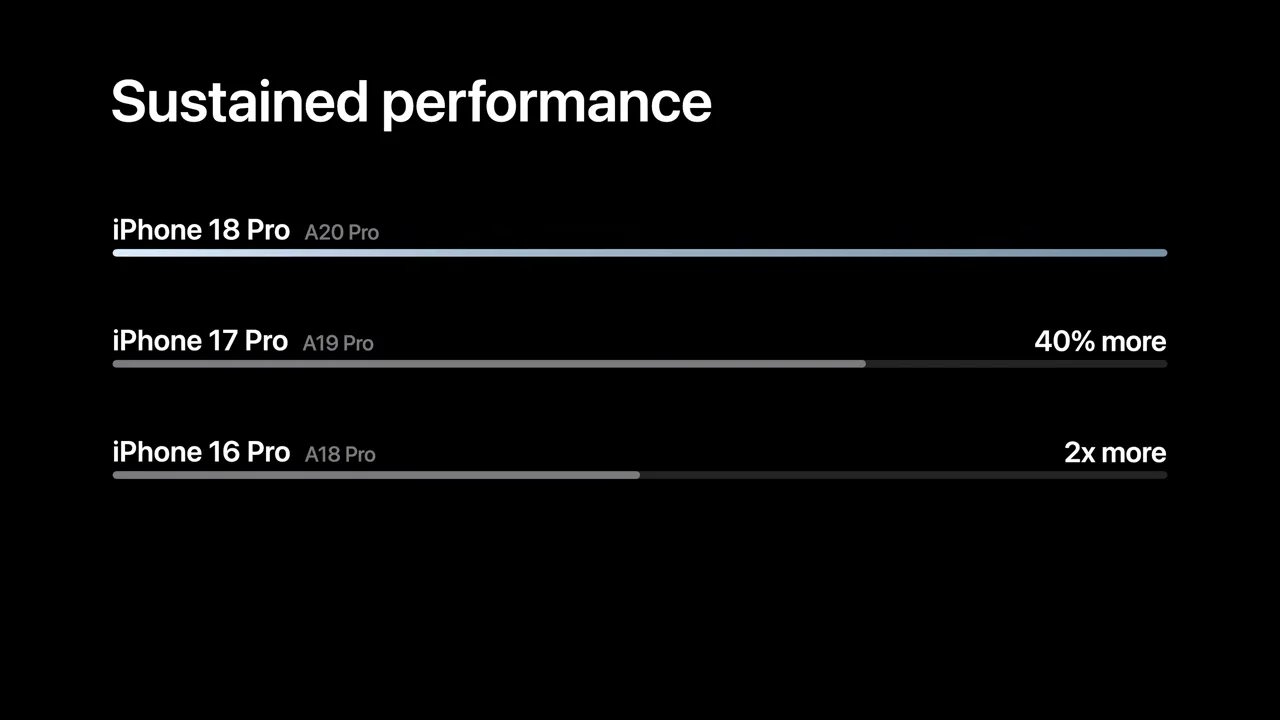
Compared to the A19 Pro chip featured in the iPhone 17 Pro, the A20 Pro delivers a 40% improvement in sustained performance; relative to the A18 Pro in the iPhone 16 Pro, its sustained performance has doubled.
Battery life is also a key focus of this iPhone 18 Pro series.
Apple claims that the iPhone 18 Pro series offers the "longest battery life ever in an iPhone." The iPhone 18 Pro provides 36 hours of "all-day battery life," while the iPhone 18 Pro Max lasts up to 45 hours. The iPhone 18 Pro Max supports up to 45 hours of video playback.
Additionally, the iPhone 18 Pro series is equipped with the new C2 modem and continues to support mmWave 5G.
Regarding pricing, the iPhone 18 Pro starts at $1,199, and the Pro Max starts at $1,299. Both models start with 256GB of storage and are available in 512GB, 1TB, and 2TB configurations.
This indicates that within Apple's product narrative, chip upgrades are no longer just about traditional CPU and GPU performance improvements, but are increasingly geared toward enhancing on-device AI capabilities.
Apple continues to bet on AI: Siri evolves from an "assistant" to an intelligent hub
Beyond hardware upgrades, AI remained a central theme throughout the event.
At the opening of the event, Tenus introduced the concept of an "Intelligent Personal Hub," emphasizing that future personal devices must not only feature superior screens, cameras, batteries, and connectivity, but also possess the ability to understand users and coordinate across different applications and services.
Following the launch of the iPhone 18 Pro, Apple executive Lilian Rincon took the stage to introduce Apple Intelligence. She noted that Siri is already one of the most widely used intelligent assistants globally, and the new version will further expand its capabilities.
A key direction highlighted at the event is transforming Siri from merely a voice assistant that answers questions into an agent capable of understanding ongoing user tasks and collaborating with other applications and services.
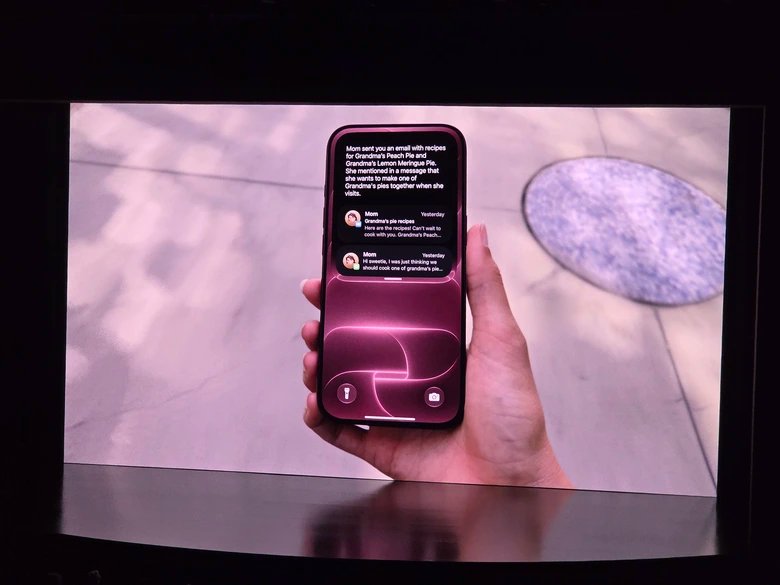
On-site demonstrations showed that users can take photos of ingredients at a fruit stand, ask Siri for recipes, and have it add the required items to their shopping list. Siri can also integrate with third-party applications such as WhatsApp and Outlook.
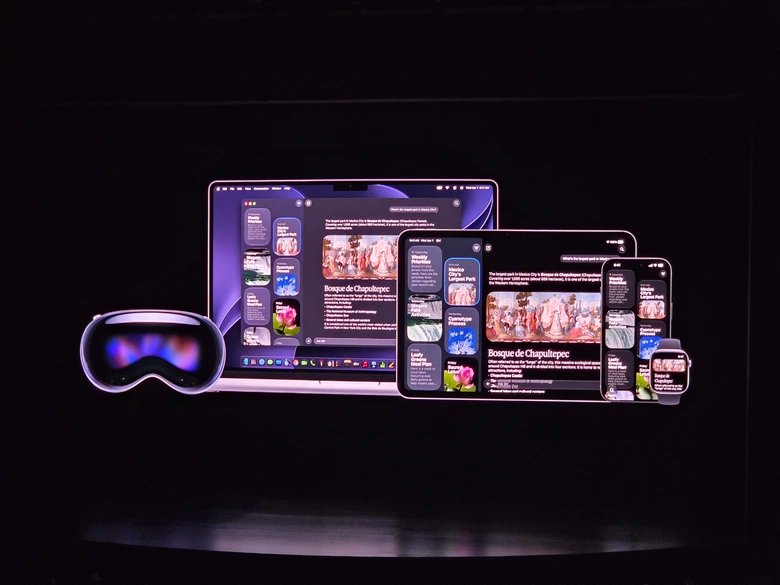
Rincon also stated that the iPhone 18 Pro can leverage Apple's latest foundation models for on-device processing, which will power features such as Siri AI.
Rincon stated that Siri’s AI performance is “astonishing,” as the powerful on-device processing capabilities of the iPhone 18 Pro enable Siri’s Expressive Voices feature.
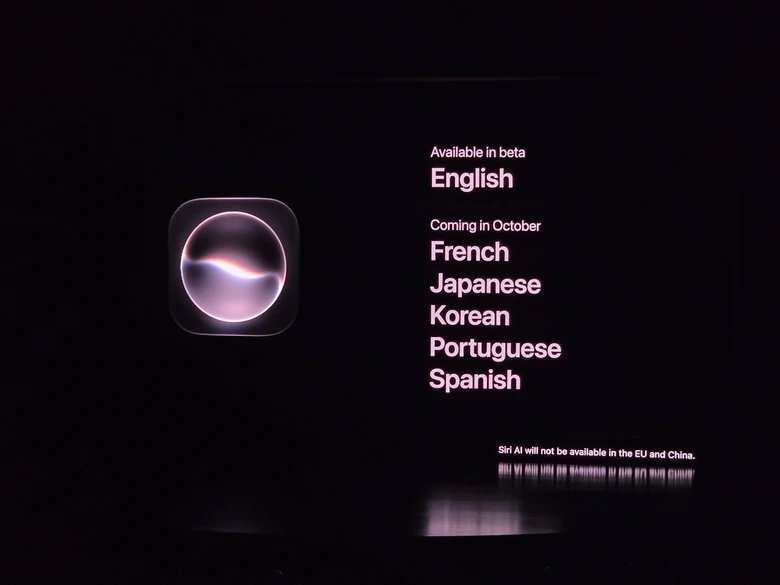
The new version of Siri is currently available only in an English beta, with French, Japanese, Korean, Portuguese, and Spanish support scheduled for release in October. Apple has not disclosed when the new Siri will launch in the EU and Chinese markets.
Apple aims to transform how users interact with their devices: instead of opening apps individually to find features, users can simply tell Siri what they want to accomplish, allowing AI to coordinate across different apps and services.
Meanwhile, Apple continues to emphasize privacy protection and on-device AI processing capabilities.
During the early part of the presentation, Ternus explicitly stated that Apple Intelligence will run directly on the device whenever possible to safeguard user privacy.
From a product strategy perspective, Apple is gradually repositioning the iPhone from a traditional “smartphone” to an “intelligent personal hub” capable of understanding users, connecting apps, and executing tasks.
Major Upgrade for iPhone 18 Pro Camera: 48MP Main Sensor with Variable Aperture
The imaging system represents another key upgrade for the iPhone 18 Pro series.
Apple has introduced a 48MP main camera with a variable aperture and a new sensor for the iPhone 18 Pro, describing it as one of the most significant camera upgrades in recent years.
Both the iPhone 18 Pro and Pro Max feature a 48-megapixel main camera and introduce a variable aperture for the first time. This allows for physical adjustment of light intake, thereby improving performance in low-light conditions and enhancing depth-of-field control.
The new main camera offers more flexible aperture control while further improving shooting performance in low-light conditions.
Apple has also introduced new "Pro Controls" features, enabling users to adjust shooting parameters with greater precision.
Video capabilities have also been upgraded, with the new device supporting features such as 4K Dolby Vision HDR time-lapse photography.
Meanwhile, Apple continues to strengthen the integration of AI and imaging. The new devices introduce features related to image authenticity and technologies addressing the veracity of AI-generated content, launch the "Apple Reference Image" standard, and support SynthID to help identify images that have been generated or modified by AI.
However, Apple stated that Apple Reference Image is currently unavailable in the EU and Chinese markets.
Apple Watch transforms into an "AI wearable device"
Apple also released the Apple Watch Series 12 and Apple Watch Ultra 4.
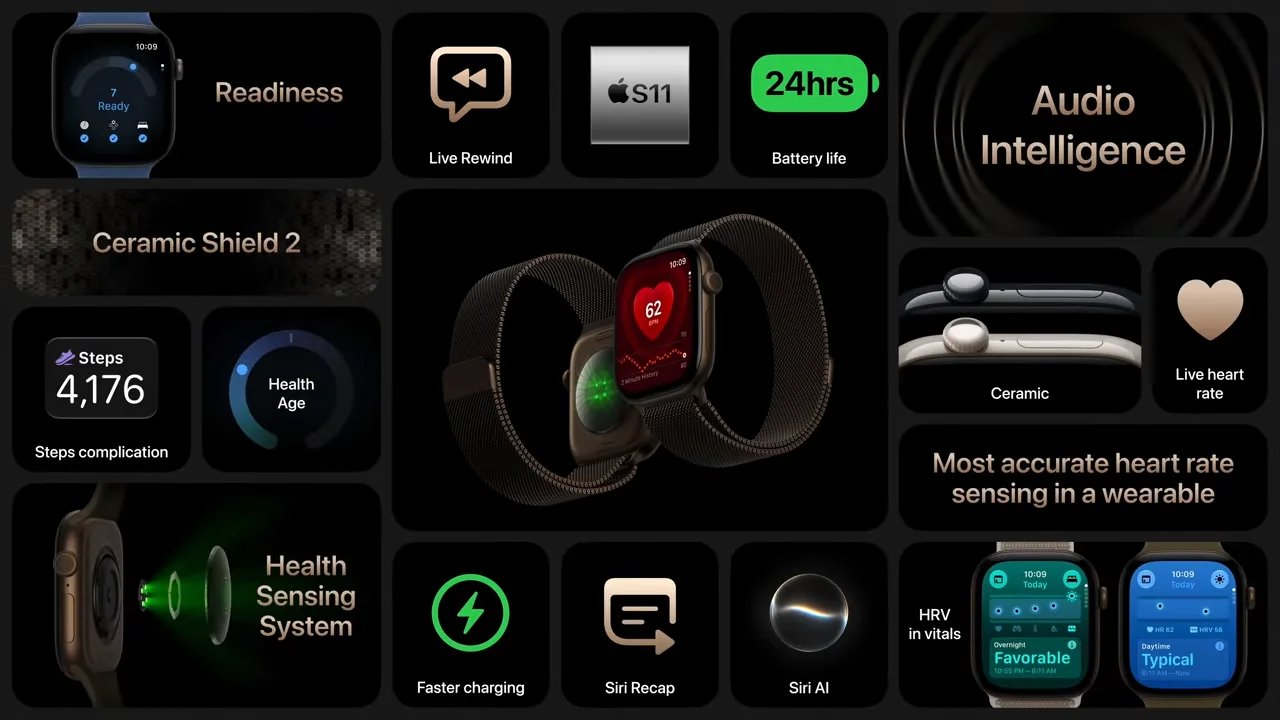
One of the most significant changes to the Apple Watch this time also stems from AI.
Apple introduced the Siri Recap feature, enabling the Apple Watch to leverage ambient sounds and AI capabilities to help users review key information from their day and organize relevant content into summaries.
Additionally, the Apple Watch includes a Live Rewind feature, allowing users to replay ambient audio from a previous period and transcribe it using AI. These features will initially be released in beta form.
Health features have also been upgraded.
The Series 12 adopts a new heart rate sensor that monitors heart rate more frequently and further integrates data on sleep, exercise, and other vital signs. Apple has also upgraded the Health app, introducing more health insights and features such as "Longevity."
The Apple Watch Series 12 starts at $399, and the Ultra 4 starts at $799, with both models launching on September 18.
From a product positioning perspective, Apple is attempting to transform the Apple Watch from a mere health and fitness device into an AI-powered wearable capable of recording, understanding, and summarizing users' daily lives.
AirPods 5 feature active noise cancellation, with a starting price of $129.
Apple also launched the AirPods 5.
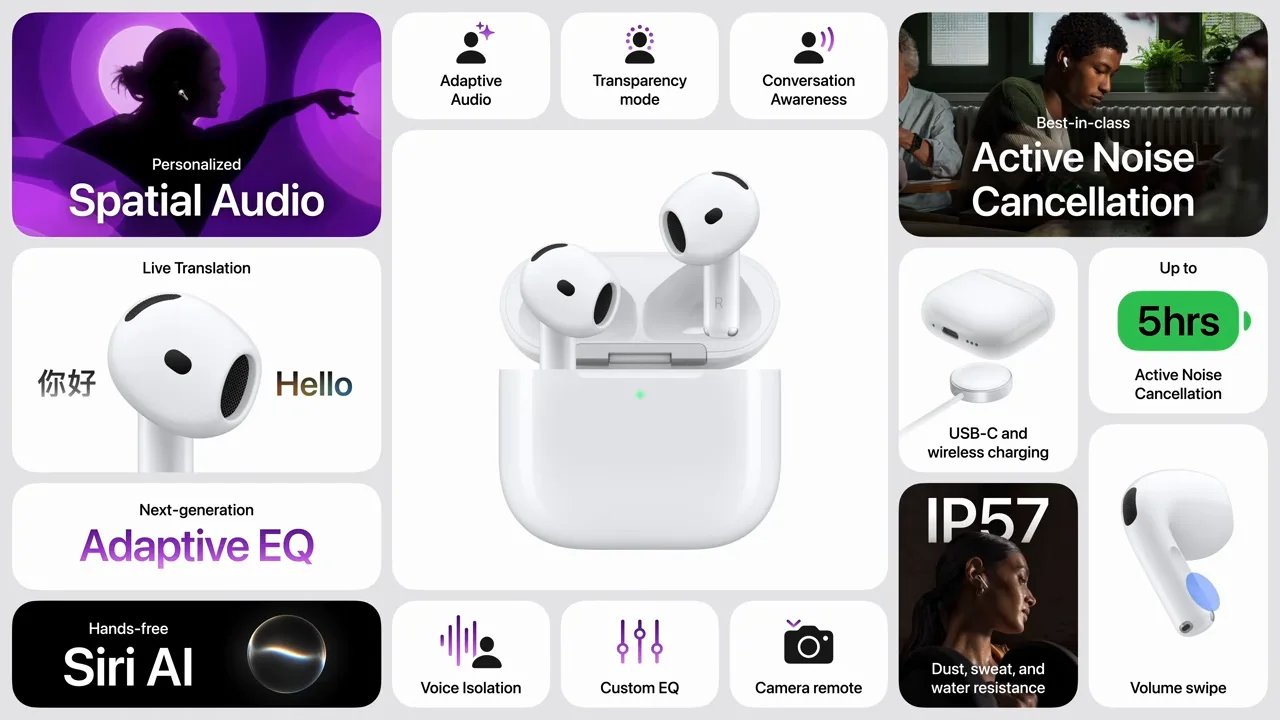
A major upgrade for the AirPods 5 is the inclusion of active noise cancellation (ANC) within an open-ear design. Apple states that its noise cancellation performance improves by up to 50% compared to the previous generation, the AirPods 4.
The AirPods 5 start at $129, while the version bundled with a wireless charging case is priced at $149. The latter offers extended battery life and stem-based swipe controls for volume adjustment.
Apple has further integrated Siri AI and real-time translation capabilities into the AirPods. Users can activate Siri hands-free via the earbuds and leverage Apple Intelligence for cross-language communication.
Pre-orders for the AirPods 5 opened today, with an official launch scheduled for September 18.
At a single event, Apple placed dual bets on 'foldable screens + AI'.
Overall, Apple's product strategy revealed at this event is quite clear.
On one hand, there is the iPhone Duo.
Apple entered the foldable screen market with a high starting price of $1,999. By featuring a 7.6-inch large display, an ultra-thin body, multi-window capabilities, Apple Pencil support, and half-folded usage modes, it positions the foldable iPhone as a hybrid "smartphone + small tablet."
On the other front is Apple Intelligence.
From the A20 Pro chip powering the Duo and iPhone 18 Pro, to the new Siri, and further to Siri Recap on the Apple Watch and real-time translation on AirPods, AI is evolving from a mere feature on the iPhone into a core capability permeating Apple’s entire hardware ecosystem.
This also distinguishes the current launch from past annual iPhone upgrades that focused solely on "faster chips, better cameras, and longer battery life."
In effect, Apple is betting on two futures:
Using foldable screens to identify new avenues for hardware growth, and leveraging AI to redefine the user experience across the iPhone and the broader Apple device ecosystem.
Whether the iPhone Duo, priced starting at $1,999, can penetrate the foldable market by leveraging Apple’s brand strength, ecosystem, and hardware-software integration capabilities will become the most noteworthy new variable in Apple’s next phase of growth.
Editor/Stephen