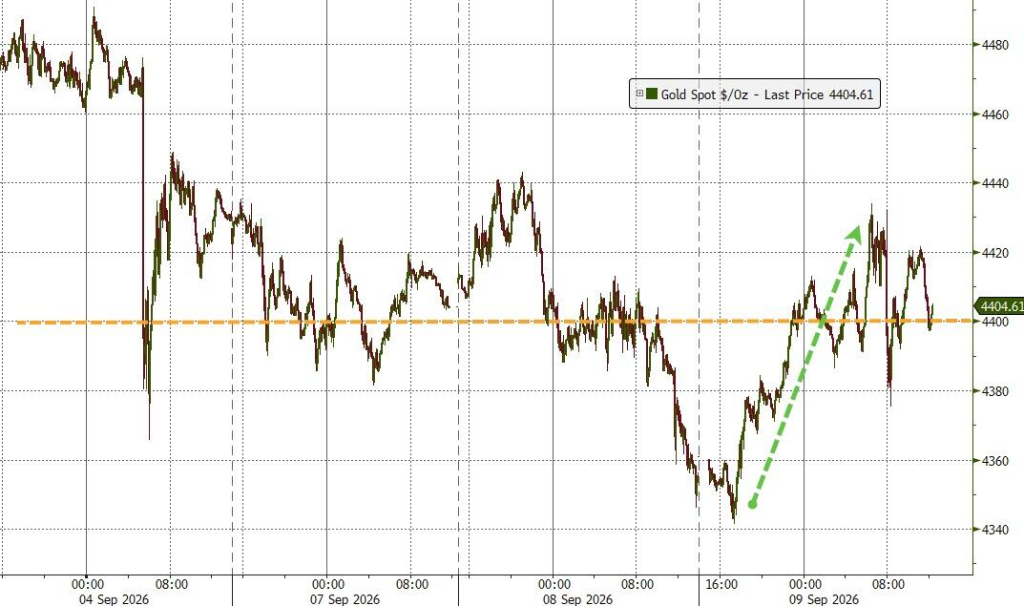
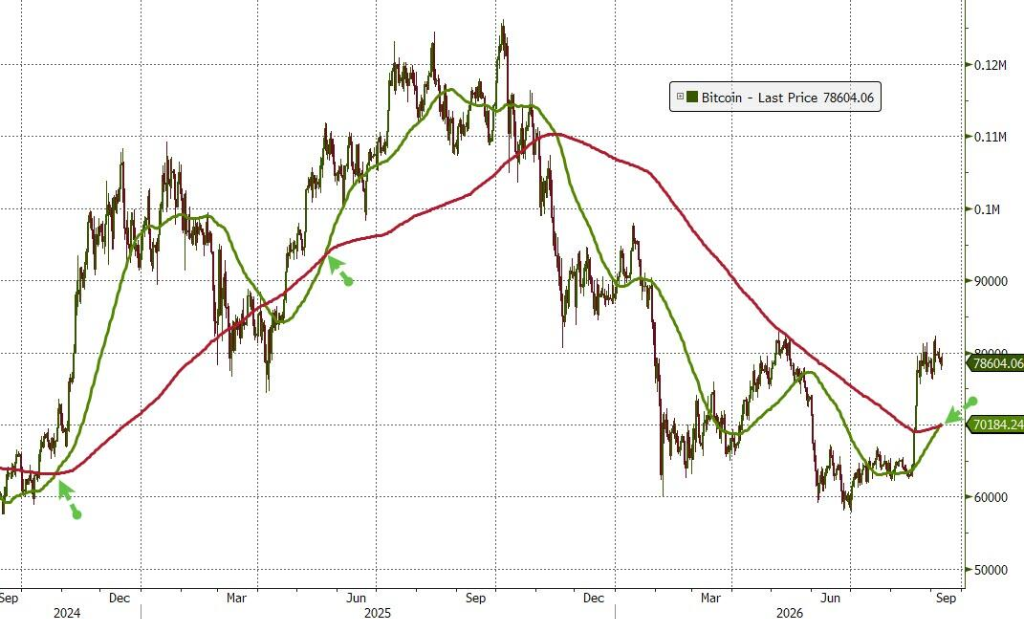
The S&P 500 fell 0.48%, retreating approximately 2% from its historical closing high. The semiconductor index rose 0.37%, with AMD gaining 3%. The yield on the 10-year U.S. Treasury note rose 5 basis points to 4.84%, its highest level since November 2023. Gold recovered to above $4,400 per ounce, rising approximately 1%.$Bitcoin (BTC.CC)$It closed slightly lower by 0.3% at approximately $78,200, still triggering a "golden cross" signal, the first occurrence of this technical pattern in nearly 474 days.
Ahead of the release of U.S. inflation data, U.S. stocks fell for the third consecutive session on Wednesday, weighed down by surging oil prices and smaller-than-expected U.S. Treasury repurchase volumes. The yield on the 10-year U.S. Treasury note rose to its highest level since November 2023.
Most tech giants declined (listed by market capitalization):NVIDIA (NVDA.US)fell 0.91%, Apple fell 0.28%, Alphabet Class C fell 2.09%,$Microsoft (MSFT.US)$fell 0.47%,$Amazon (AMZN.US)$fell 1.78%,$SpaceX (SPCX.US)$fell 3.86%,$Broadcom (AVGO.US)$down 1.13%,$Tesla (TSLA.US)$fell 0.1%.
Meta rose 6.55% after officially launching its personal AI agent, Muse, the previous day. The assistant can autonomously perform tasks on behalf of users, such as sending emails and booking travel.
$Philadelphia Semiconductor Index (.SOX.US)$Rose 0.37%, with 18 constituent stocks advancing and 12 declining. AMD rose 3.04%, Intel rose 1.69%,Qualcomm (QCOM.US)rose 1.33%;$ASML Holding (ASML.US)$down 2%.
Most memory-related stocks moved higher,$SK Hynix (SKHY.US)$Rose 7.05% to hit a new high, marking five consecutive sessions of gains.$Micron Technology (MU.US)$rose 2.75%,$SanDisk (SNDK.US)$rose 1.51%,$Western Digital (WDC.US)$up 1.04%,$Seagate Technology (STX.US)$fell 2.04%.
The optical communication sector strengthened overall,$MaxLinear (MXL.US)$rose 7.53%,$Marvell Technology (MRVL.US)$up 4.26%,$Corning (GLW.US)$rose 1.51%,$Lumentum (LITE.US)$Up 1.07%, AAOI down 3.25%.
Most popular Chinese concept stocks declined,$Nasdaq Golden Dragon China Index (.HXC.US)$down 2.09%,$Pony AI (PONY.US)$Down 5.85%,$Li Auto(LI.US)$Down 4.41%,$XPeng Inc. (XPEV.US)$Down 3.29%, TAL Education Group down 3.21%,$New Oriental (EDU.US)$Down 2.9%,$Alibaba (BABA.US)$Down 2.89%.
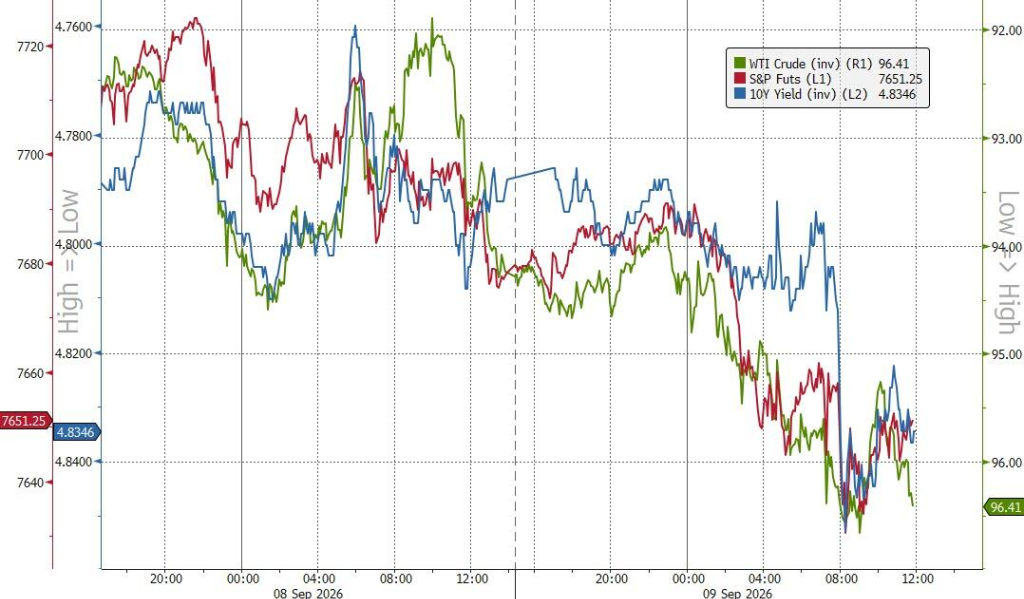
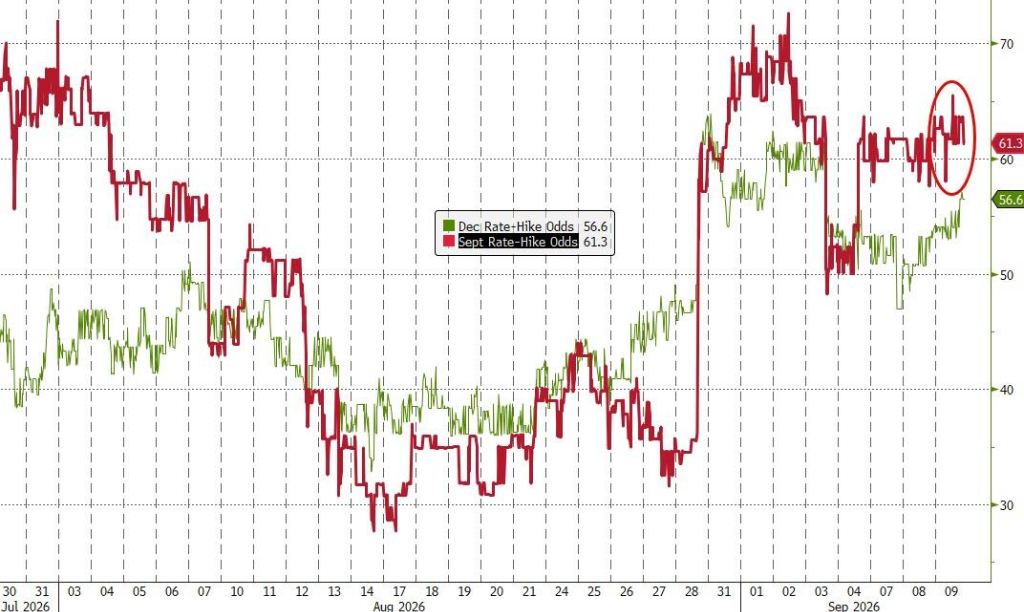
Brent crude oil surpassed $101 per barrel, as escalating tensions in the Middle East intensified market concerns over potential energy supply disruptions and further reinforced expectations that the Federal Reserve may raise interest rates this month. Money markets are currently pricing in approximately a 60% probability of a rate hike in September.
Meanwhile, the U.S. Treasury announced it would purchase up to $6 billion in longer-term Treasury securities, a figure below the previously expected range of $8 billion to $10 billion. Yields surged immediately following the announcement, exacerbating the simultaneous decline in both equities and bonds.
Market attention is currently heavily focused on key inflation data scheduled for release this week. The U.S. Bureau of Labor Statistics will publish the Producer Price Index (PPI) for August on Thursday, followed by the Consumer Price Index (CPI) on Friday. Elias Haddad of asset management firm BBH stated:
If the CPI data comes in hot, it will essentially confirm a September rate hike and support a stronger U.S. dollar; if the data is cool, it will strengthen the case for holding rates steady, leaving the dollar vulnerable to downward pressure from repricing driven by a more dovish Federal Reserve.
Oil prices break $100; energy risk premium fully returns
The continued escalation of tensions in the Middle East is the core driver behind this round of surging oil prices.
According to Xinhua News Agency, a spokesperson for the Islamic Revolutionary Guard Corps stated on the 9th that Iran will establish a new maritime "sanctions zone," extending from the Port of Chabahar to parts of the Gulf of Oman and the Arabian Sea. Coordinates will be announced separately.
Meanwhile, the U.S. military struck Iranian targets on Kharg Island and tankers near Jask, prompting Iran to launch ballistic missiles at U.S. bases within Jordan. Amid these developments, Brent crude prices surged significantly, exceeding $100 per barrel and approaching July highs.
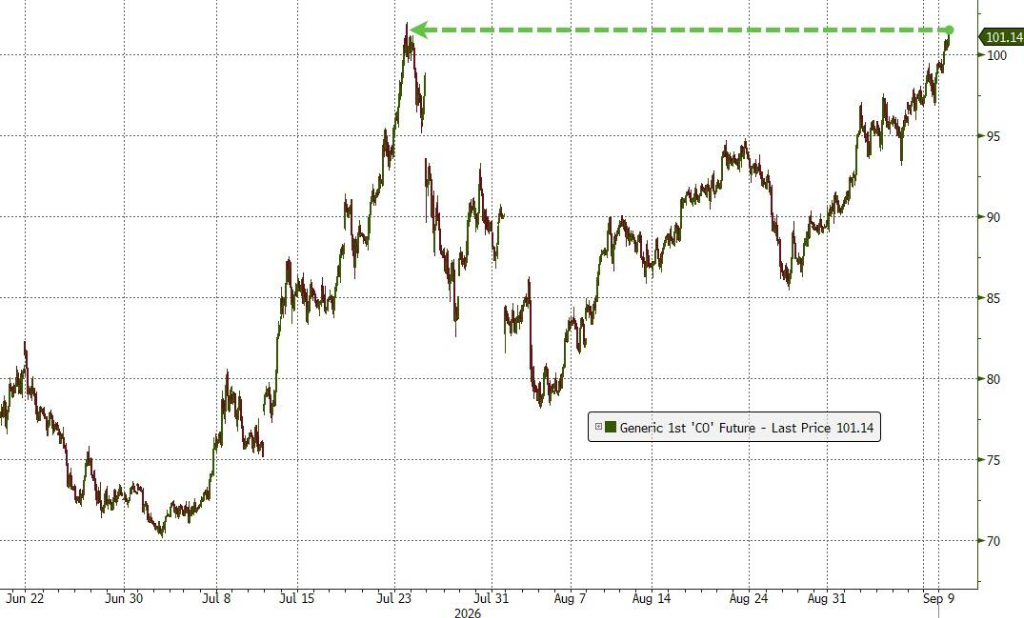
Technical AnalysisThese factors further amplified the upward momentum. According to data from Bridgeton Research Group, a subsidiary of Kpler, trend-following Commodity Trading Advisors (CTAs) have continued to increase their positions. Currently, long positions in Brent and WTI crude oil account for 91% and 90% respectively, compared to just 45% and 36% on August 31. Such algorithmic traders are known for exacerbating price volatility.
Kenny Polcari of SlateStone Wealth Management stated:
The risk premium remains robust, and the risks to energy supply from the Persian Gulf are real.
Evelyne Gomez-Liechti, multi-asset strategist at Mizuho International, pointed out:
The longer oil and refined product prices remain elevated, the harder it becomes for the market to ignore their inflationary impact. Currently, energy continues to be supported by strong buying interest, making it difficult for the market to sustain a meaningful rebound.
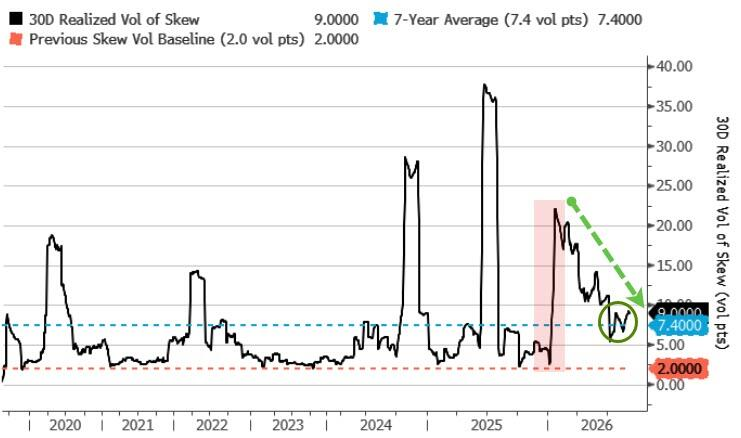
From a broader market structure perspective, Brent's return to $100 is not merely a breach of a psychological barrier. According to Bloomberg analysis, it also marks a shift in volatility mechanisms, with risks in the Strait of Hormuz no longer treated as tail events but fully embedded as core risk pricing within the volatility surface.
Furthermore, Ukraine's sustained pressure on Russia's oil refining capacity continues, while refined product inventories remain at concerningly low levels, driving prices for refined products to new highs.
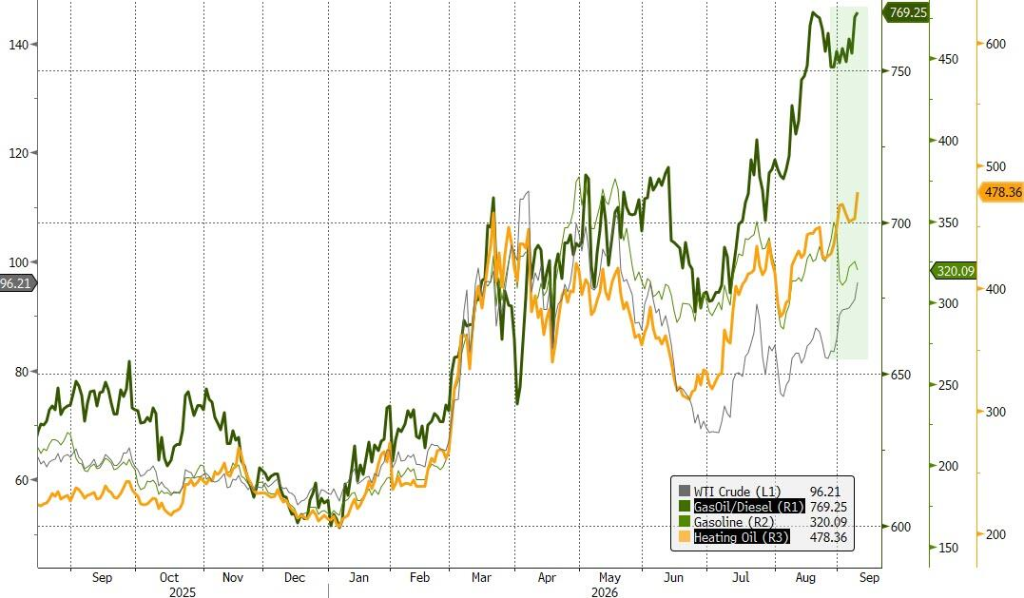
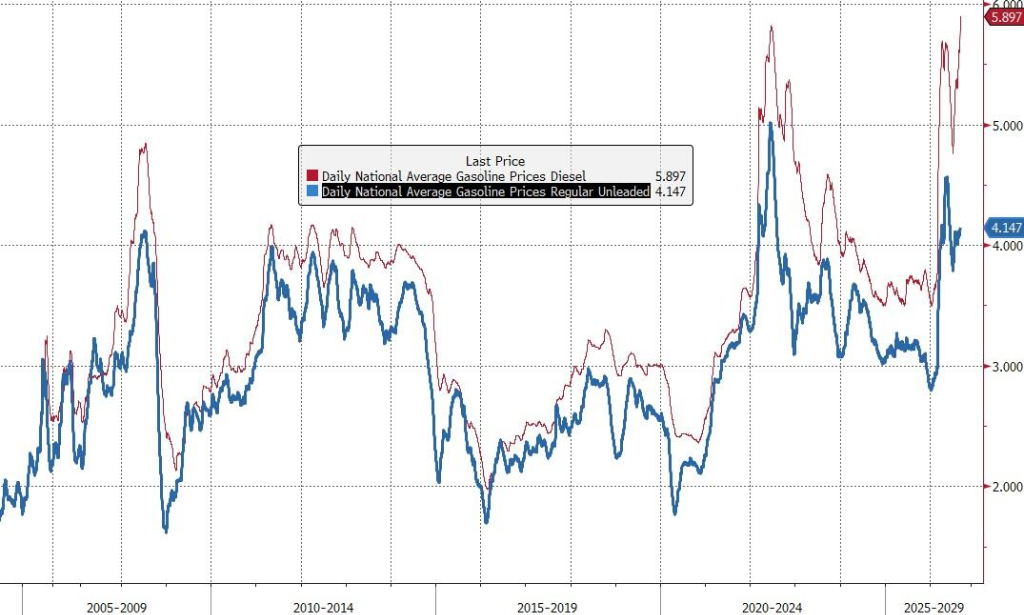
Diesel prices remain at historic highs, while gasoline prices have also set new seasonal records.
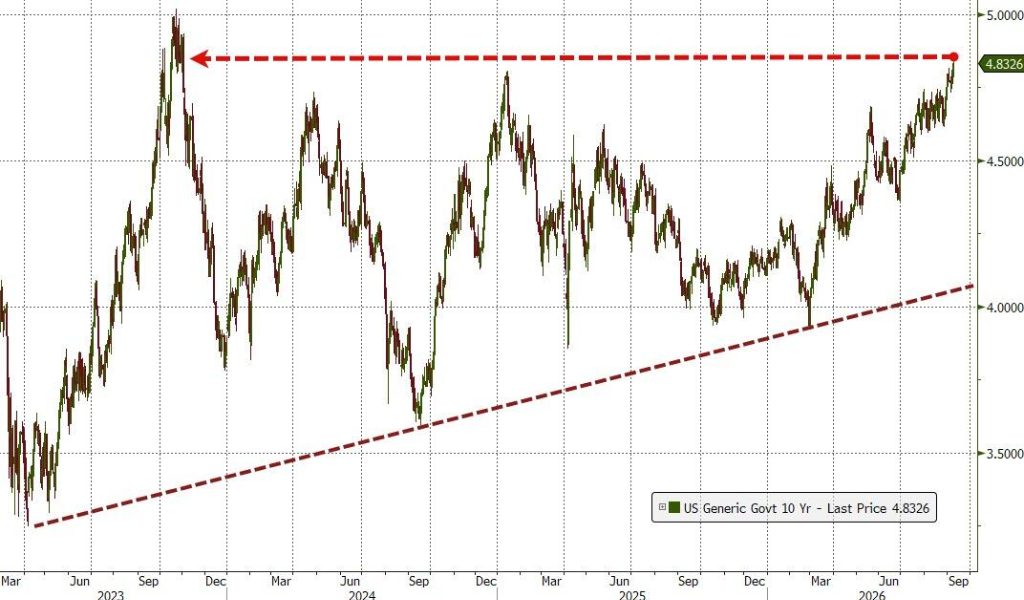
The scale of the U.S. Treasury's buyback program disappointed the market, sending U.S. Treasury yields higher across the curve.
The U.S. Department of the Treasury announced a $6 billion long-end Treasury buyback plan. Although this doubles the previous cap of $3 billion per operation, it still falls short of market expectations of $8 billion to $10 billion. Following the announcement, yields rose again.
Overnight U.S. Treasury rates had risen due to higher oil prices, but eased slightly as the 10-year Treasury auction saw robust demand around 1:00 p.m. Eastern Time. However, by the close, mid-term Treasuries underperformed; while the 2-year note outperformed the mid-term segment, yields rose across all maturities, and the bear steepening of the yield curve became pronounced.
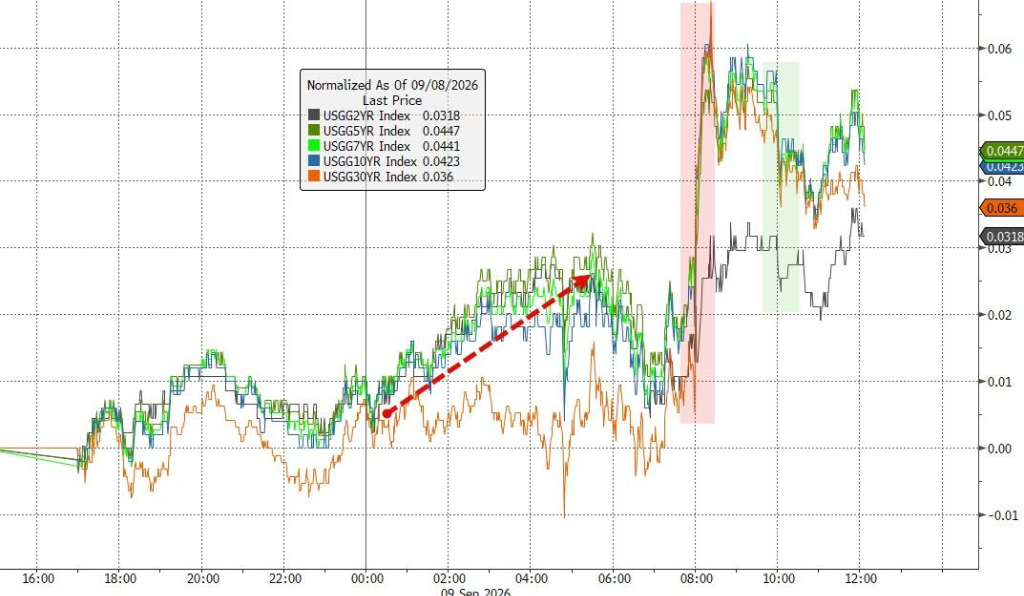
The yield on the 10-year U.S. Treasury note rose by 5 basis points to 4.84% on the day, marking its highest level since November 2023.
John Briggs, Head of North American Interest Rate Strategy at Natixis, stated:
"I believe the market has recently been disappointed by the scale of the buybacks."
He also pointed out that this expansion "does not address the core underlying issues driving long-end yields higher," including a surge in strong capital demand from both the government and corporations, particularly in the technology sector.
Krishna Guha, Head of Economics at Evercore ISI, and his team wrote in a research note that Wednesday's announcement "signals that Bessent is accepting the reality of the limited role of buybacks," and may be "recognizing that the U.S. cannot sustainably prevent fundamentals from dominating yield movements."
The seasonal surge in corporate bond supply this week also added extra pressure. On Wednesday, 18 issuers completed new offerings, marking the third-busiest single day of the year, with another 16 queued for Thursday. Investment-grade bond supply has hit record highs for three consecutive months this year and in four of the past eight months, with the cumulative volume still 7.6% higher than the same period in 2020.
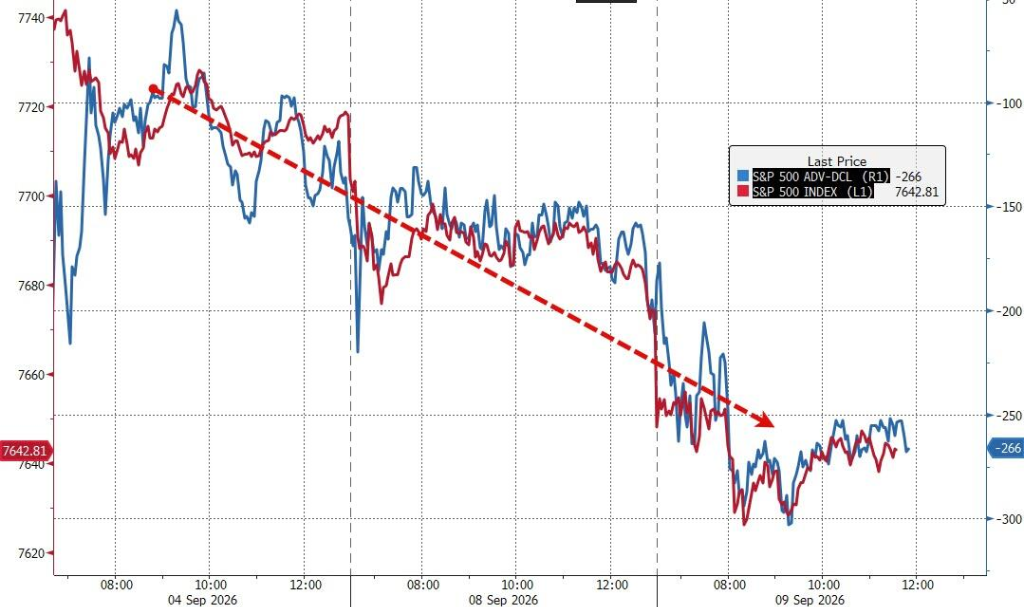
U.S. stocks fell for the third consecutive session, with internal divergence intensifying.
On Wednesday,$S&P 500 Index (.SPX.US)$The index closed down 0.48% at 7,636.46 points. The Dow Jones Industrial Average fell 0.77% to 52,381.02 points, and the Nasdaq Composite declined 0.64% to 26,253.34 points. The S&P 500 Index has retreated approximately 2% from its historic closing high on August 13.
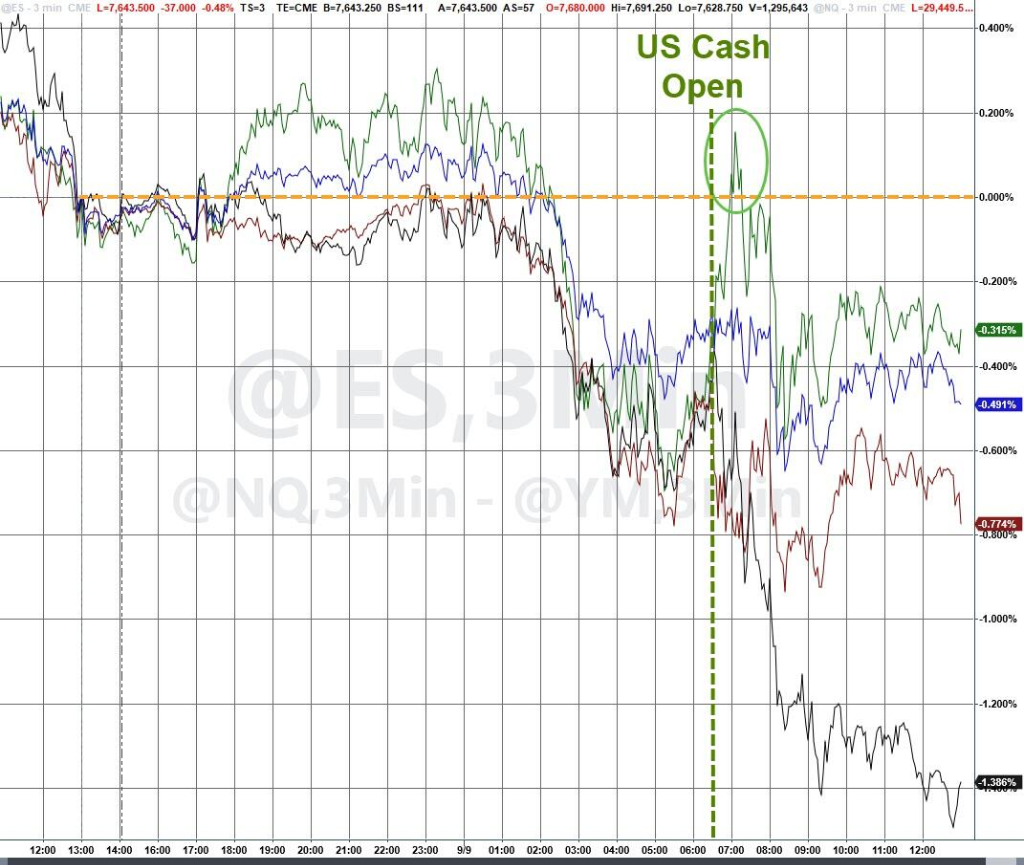
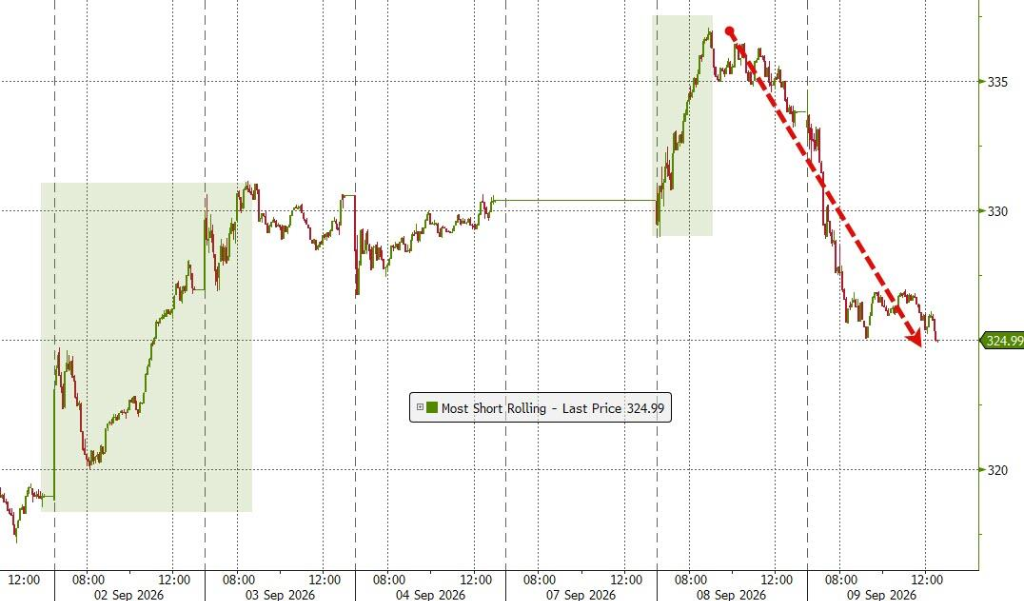
Small-cap stocks suffered a sharp decline, dropping 1.3% during the session. Analysts attribute the weakness in small caps to a plunge in the most heavily shorted stocks.
Sector performance was highly divergent. The S&P 500 Energy Sector rose 1.1%, bucking the trend, while all other sectors declined, with falling stocks far outnumbering gainers.
The Philadelphia Semiconductor Index edged up 0.37%, with AI-related segments generally outperforming the non-AI components of the S&P 500.
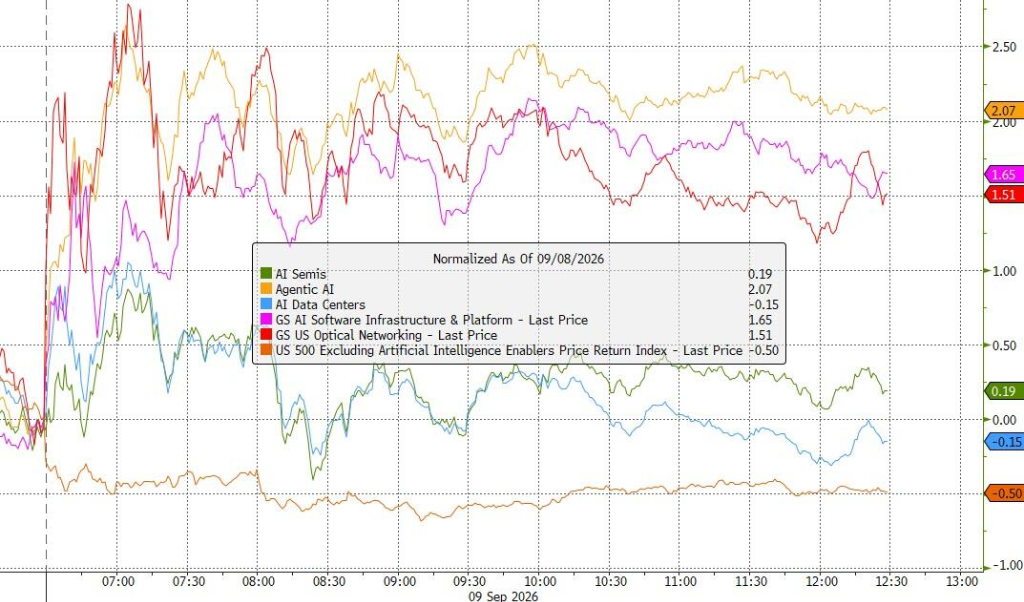
Meta surged more than 6%, becoming the biggest supporter of the index. The company launched Muse, an AI assistant capable of autonomously sending emails, selling products, and booking travel on behalf of users.
Apple dipped 0.3% as new CEO John Ternus hosted the launch of the company's first foldable smartphone, the iPhone Duo. Analysts are optimistic about its potential but warn of margin risks.
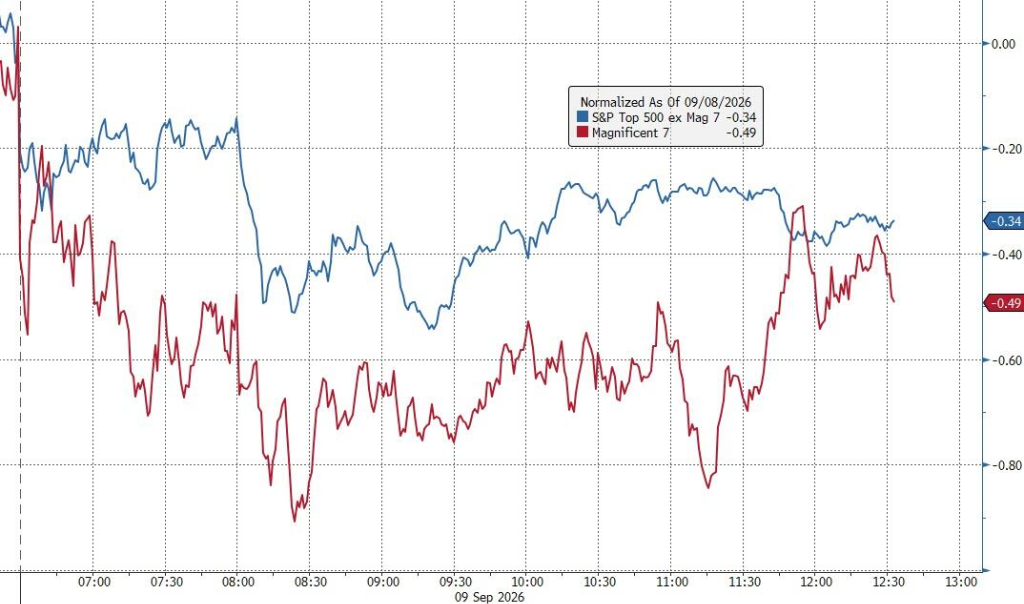
Google fell 2.3% after its parent company announced plans to invest at least $15.1 billion in AI infrastructure in Finland over the next two years. Overall, the Mag 7 stocks underperformed the remaining 493 stocks in the S&P 500.
The yen strengthened, while gold emerged as a safe-haven outlet.
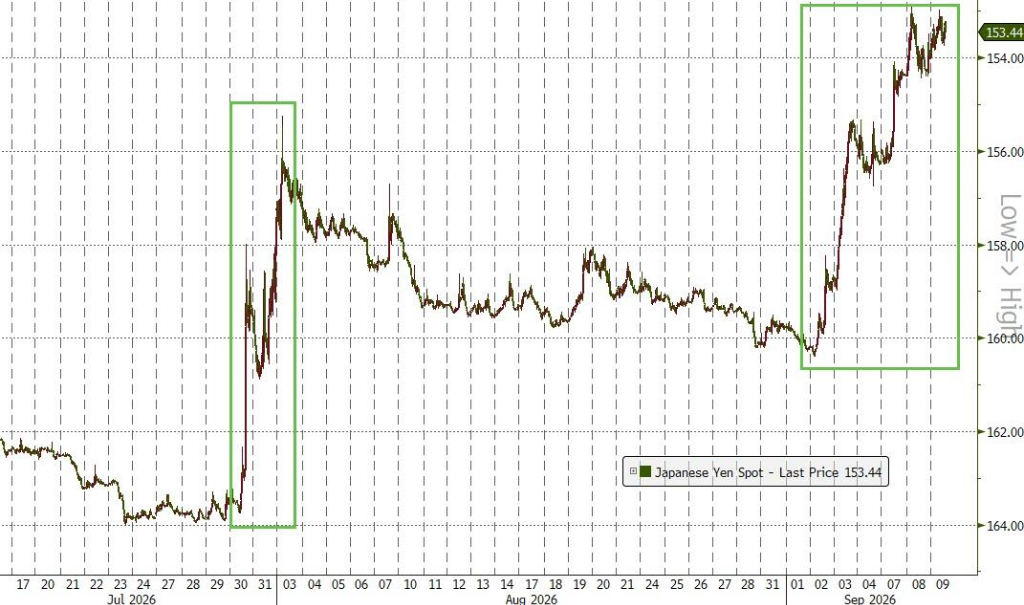
In the foreign exchange market, the yen appreciated slightly by 0.2% to 153.65 against the U.S. dollar. U.S. Treasury Secretary Bessent issued a strong signal regarding the USD/JPY pair, hinting at active intervention in the yen's exchange rate.
Rich Privorotsky, head of Delta-One at Goldman Sachs, noted:
Regardless of how one interprets this rhetoric, the yen is objectively appreciating, and the market is positioning itself accordingly, betting on policy tightening by the Bank of Japan and capital repatriation.
He also warned that the unwinding of yen carry trades could exert latent pressure on U.S. equities:
The S&P 500 and large-cap stocks have recently performed surprisingly poorly without clear fundamental reasons. Some leveraged and carry positions may be quietly exiting the system, which warrants caution.
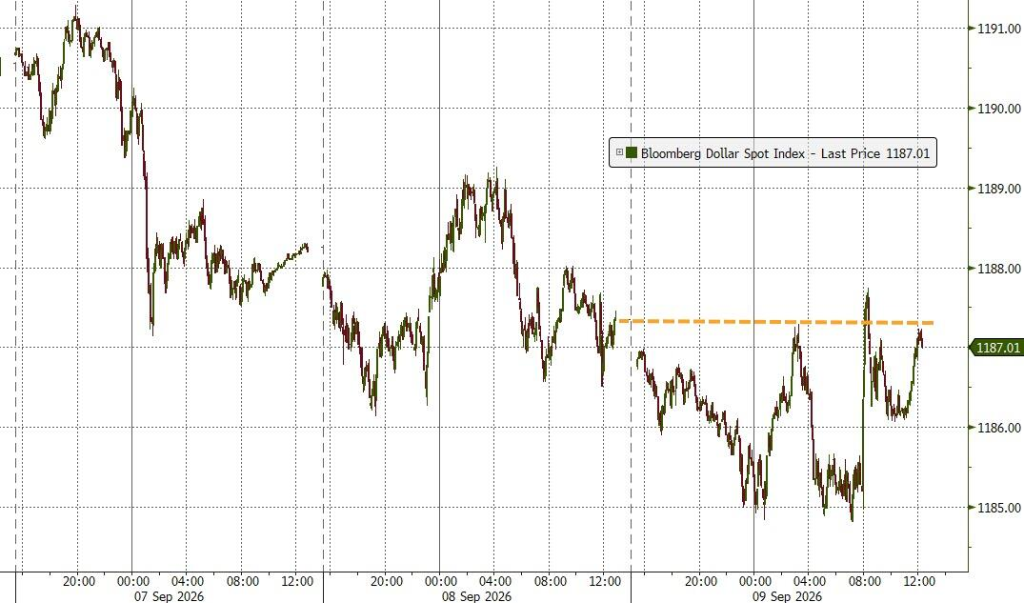
Despite significant market volatility, the Bloomberg Dollar Spot Index ended the day essentially flat.
Gold continued its strong performance, with spot gold recovering above $4,400 per ounce, rising approximately 1%, once again becoming the core safe-haven outlet amid geopolitical risks and policy uncertainty.
Bitcoin closed slightly lower by 0.3% at around $78,200, but still triggered a "golden cross" signal, with the 50-day moving average crossing above the 200-day moving average—the first time this technical pattern has appeared in nearly 474 days.
Company News
[Apple Unveils First Foldable iPhone Duo; Mainland China Pricing Starts at CNY 15,999]
Apple has launched its first foldable flagship smartphone, the iPhone Duo. In its unfolded state, the iPhone Duo is the thinnest iPhone ever produced and features dual cameras. The unfolded iPhone Duo is equipped with a 7.6-inch Super Retina XDR display, which is 50% larger than that of the iPhone 18 Pro Max. The iPhone Duo will support the Apple Pencil. The global version of the iPhone Duo supports eSIM only.
[Amazon and Wiwynn Expand Texas Manufacturing Facility, Adding Nearly 1,000 Jobs]
Amazon and cloud IT infrastructure provider Wiwynn announced plans to expand their advanced manufacturing facility in Texas. The project is expected to create nearly 1,000 jobs.
【$Dow Inc (DOW.US)$[Weighing Exit from $20 Billion Saudi Chemical Joint Venture; Saudi Aramco May Take Over]
Sources familiar with the matter revealed that Dow Inc is considering withdrawing from its $20 billion chemical joint venture with Saudi Aramco. This move is part of the U.S. company's efforts to optimize its asset portfolio and accelerate adjustments in response to the prolonged downturn in the industry. Saudi Aramco may seize this opportunity to acquire Dow's stake, thereby further increasing its controlling interest in the project.
Looking to select or analyze stocks? Want to understand the opportunities and risks in your portfolio? For all your investment questions,just ask Futubull AI!

Editor/Liam