Macro News
U.S. Treasury raises cap on long-term bond buybacks to $6 billion; U.S. Treasuries fall further
The U.S. Treasury announced that the maximum face value for its Thursday repurchase operation targeting Treasury securities with remaining maturities of 10 to 20 years would reach $6 billion, triple the original $2 billion limit and higher than the $4 billion cap for a similar operation on August 19. Peter Boockvar, Chief Investment Officer at OnePoint BFG, noted that market expectations had previously ranged from $7 billion to $8 billion, while some forecasts from Morgan Stanley and Jefferies reached $10 billion. Following the Treasury's official announcement of the Thursday buyback size, U.S. Treasuries fell rather than rose, with the yield on the 10-year Treasury note hitting a three-year high. Treasury Secretary Bessent had previously stated that the expansion of buybacks aimed to alleviate market volatility.
Federal Reserve considers reducing the number of policy meetings, with some officials supporting a format of "six decisions plus two strategic discussions"
 According to reports, the Federal Reserve is discussing adjustments to its schedule of eight policy meetings per year. One proposal involves retaining six interest rate decision meetings while adding two sessions for macroeconomic and strategic discussions. At least one-third of officials are open to reducing the frequency of policy meetings, including six regional Federal Reserve Bank presidents. Vincent Reinhart, an economist at Bank of New York Mellon, believes that lowering the decision-making frequency could reduce the political scrutiny faced during each meeting. These discussions are part of the Fed's broader internal assessment, with five external review groups currently working on recommendations expected by year-end.

Trump: Iran conflict will end "immediately" after U.S. midterm elections, oil prices will fall, and Putin "wants to reach an agreement"
The intermittent conflict between the U.S. and Iran has persisted for over six months. On Wednesday, September 9 (Eastern Time), U.S. President Trump stated that he believed the war with Iran would end "immediately" after the U.S. midterm elections in November, and he expected oil prices to drop significantly thereafter. According to CCTV News, Trump told reporters, "We are not seeking (negotiations with Iran); once the election is over, this war will end immediately." Regarding oil prices, Trump said, "I think this (decline in oil prices) will take a bit longer than the midterm elections." However, he repeatedly insisted that oil prices would plummet once the conflict ended.
On the same day, Trump stated that he had a good conversation with Russian President Putin and that a bilateral meeting might be held. Trump also remarked that Putin "wants to reach an agreement," and if Ukrainian President Zelenskyy were also willing to strike a deal, it would be "a very good thing." Prior to these remarks, U.S. media cited senior Iranian officials as saying that Iran had no intention of backing down and that Tehran would further intensify its counterattacks if the U.S. continued to target Iranian territory and infrastructure.
Nearly 50 economists, including Yellen, sign joint statement opposing legal basis for Trump's global tariffs
Nearly 50 economists and former government officials, including former U.S. Treasury Secretary Yellen, filed an amicus brief opposing the Trump administration's implementation of global temporary tariffs under Section 122 of the Trade Act. The relevant policy imposed a 10% tariff on imported goods from February to July this year. In May, the Court of International Trade ruled the measure illegal, prompting the government to appeal. The signatories argued that the government's overly broad interpretation of balance-of-payments issues could allow the president to impose tariffs long-term based on trade or account imbalances, thereby expanding the executive branch's taxing authority.
AI lending boom drives U.S. companies to raise funds in Europe, with six issuers in a single day setting a record
Six U.S. companies, including Amazon and Uber Technologies, entered the European bond market on the same day, setting a record for the number of U.S. issuers in a single day. Among them, Amazon issued pound-denominated bonds for the first time, while Uber Technologies issued euro-denominated bonds for the first time. Prior to this round of transactions, U.S. companies had already issued €149 billion in euro-denominated bonds this year, second only to the full-year record set in 2025. Jordan Chalfin, an analyst at CreditSights, stated that the higher new-issue premium required for large-scale dollar financing is prompting companies to diversify their funding sources; Societe Generale views the euro market as a liquid alternative financing channel.
U.S. Crypto 'Clarity Act' Faces Key Vote as Banks and Crypto Industry Intensify Lobbying
According to a Reuters report on September 9, the U.S. Senate will hold a key procedural vote on the Clarity Act on September 15. The bill aims to clarify whether digital tokens are classified as securities or commodities, and to define the responsibilities of the corresponding regulatory agencies. During the congressional recess, the crypto industry and the banking sector have intensified lobbying efforts among senators. The controversy centers on whether stablecoin rewards undermine bank deposits and whether anti-money laundering measures and conflict-of-interest safeguards are sufficient. Securing passage requires garnering enough support from Democratic senators to overcome the 60-vote threshold in the Senate.
US Stock Market Overview
Major Indices Fall for Third Consecutive Day; Storage and Optical Communication Sectors Rise Against the Trend
On Wednesday (September 9), the three major U.S. stock indices closed lower. At the close, the Dow Jones Industrial Average fell 0.77% to 52,380.66 points; the S&P 500 Index dropped 0.48% to 7,636.36 points; and the Nasdaq Composite Index declined 0.64% to 26,253.34 points, marking the third consecutive trading day of losses for all three.

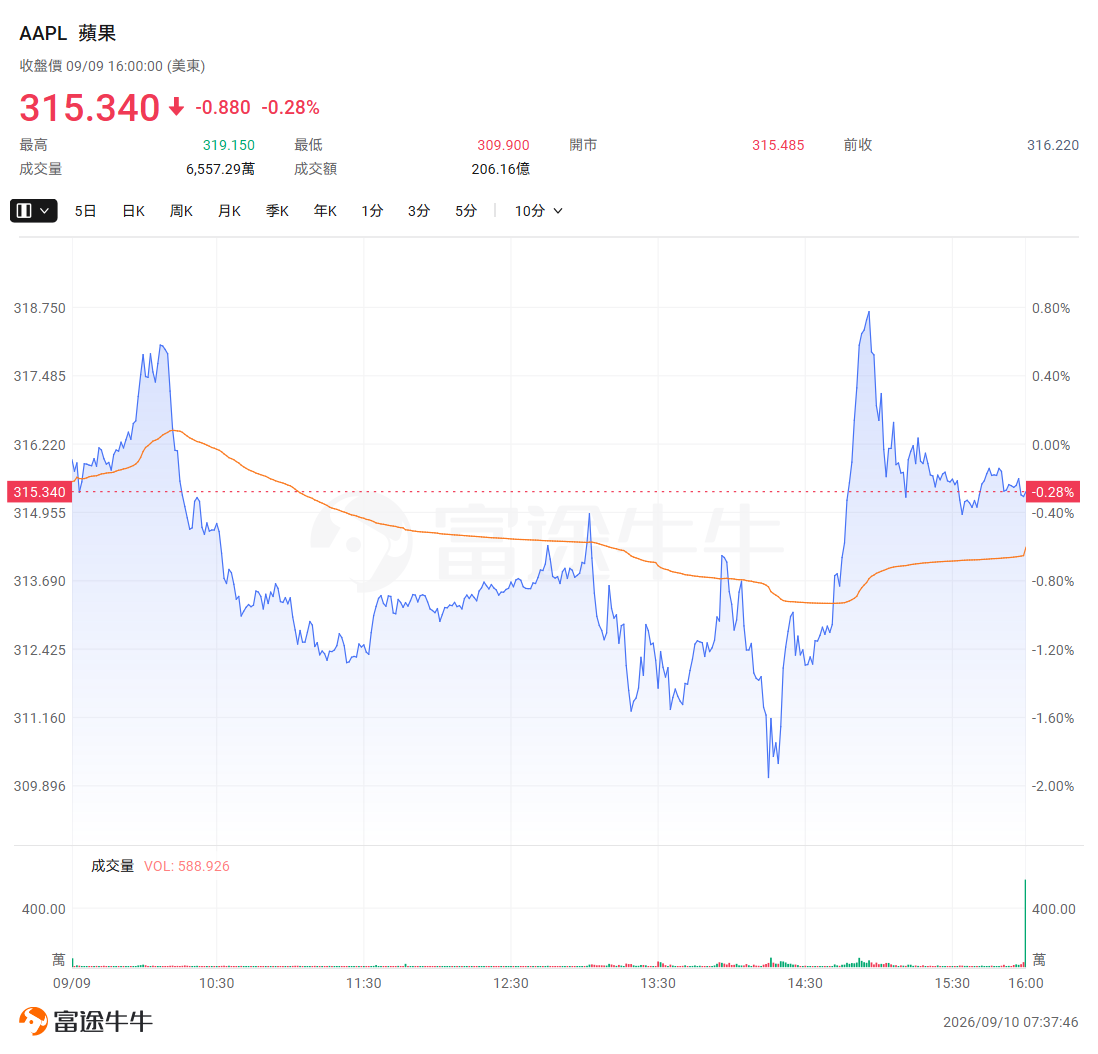
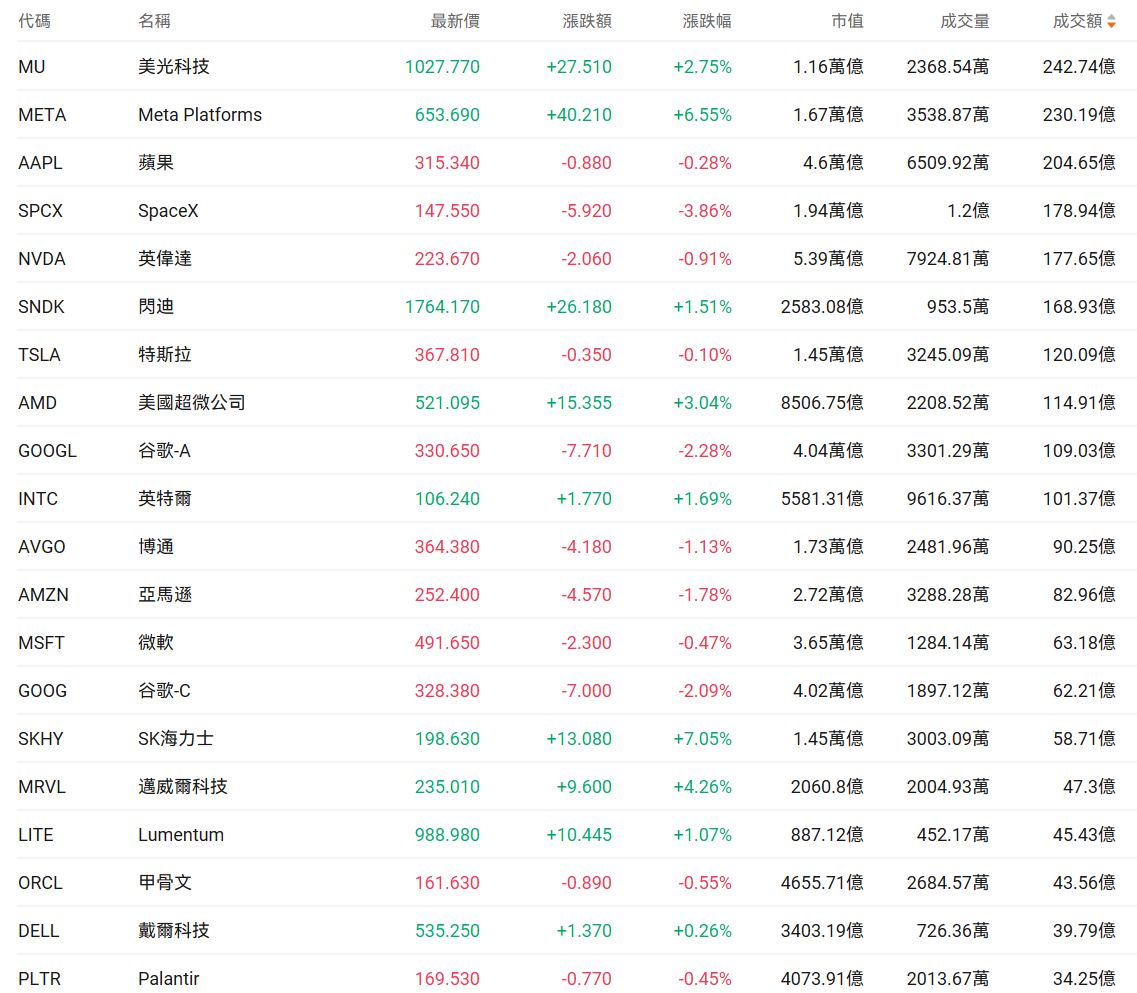
$Star Tech Stocks (LIST2518.US)$ Most stocks declined: NVIDIA fell 0.91%, Apple dropped 0.28%, Alphabet Class C shares decreased by 2.09%, Microsoft slipped 0.47%, Amazon fell 1.78%, SpaceX dropped 3.86%, Broadcom declined 1.13%, and Tesla edged down 0.1%.
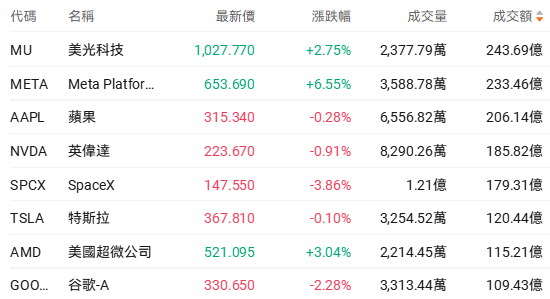
$Philadelphia Semiconductor Index (.SOX.US)$ The index rose 0.37%, with 18 constituent stocks advancing and 12 declining. AMD surged 3.04%, Intel gained 1.69%, and Qualcomm rose 1.33%; ASML Holding fell 2%.
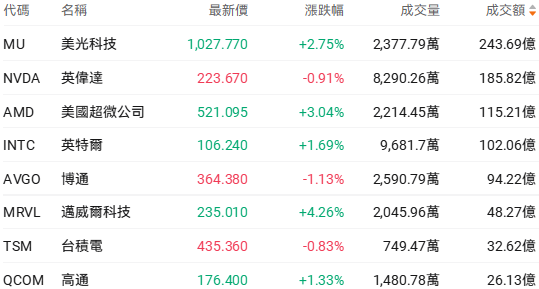
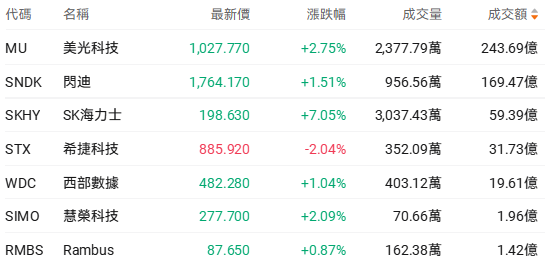
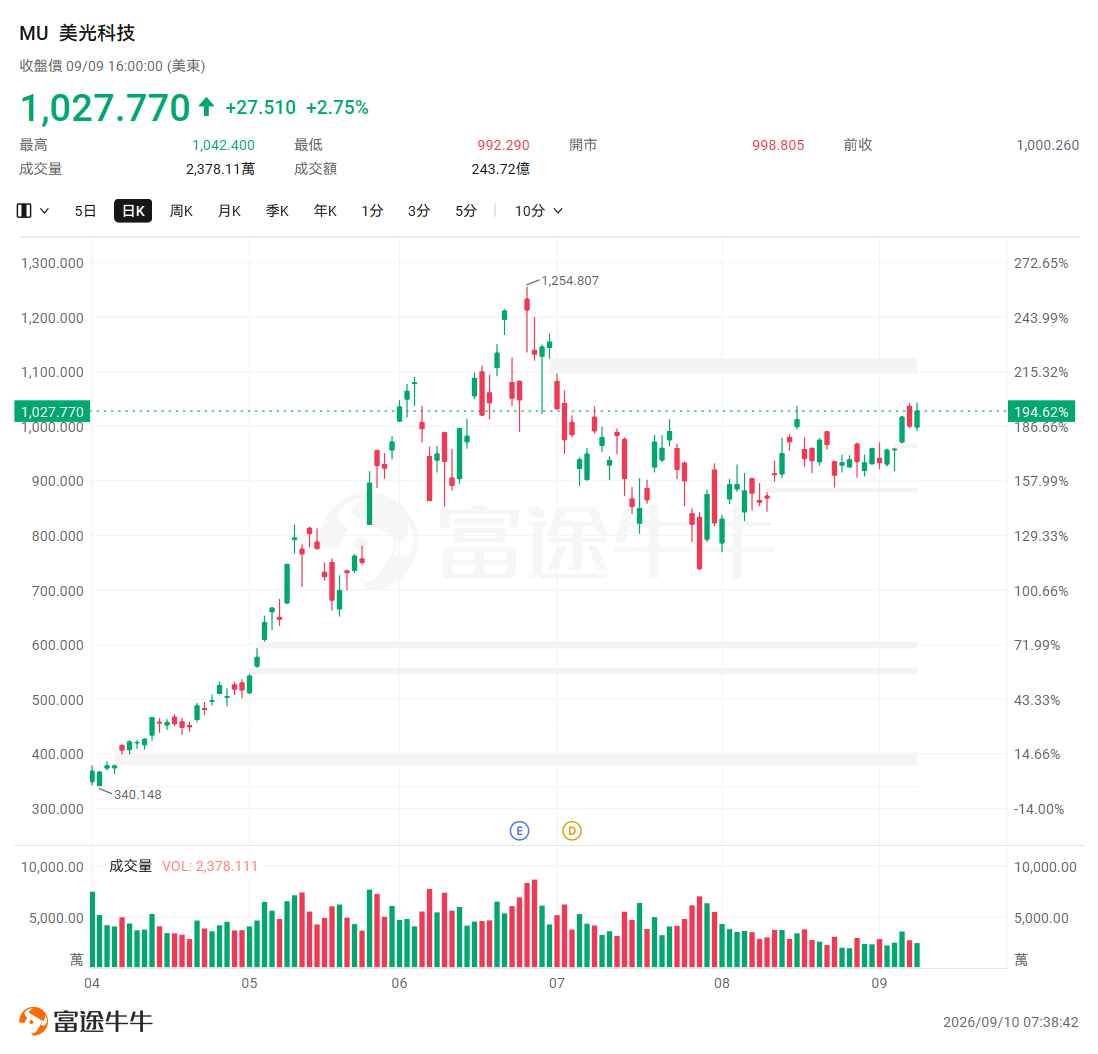
$Storage Concept (LIST23925.US)$ Most stocks rose: SK Hynix jumped 7.05% to hit a record high, Micron Technology increased by 2.75%, SanDisk rose 1.51%, Western Digital gained 1.04%, while Seagate Technology fell 2.04%.
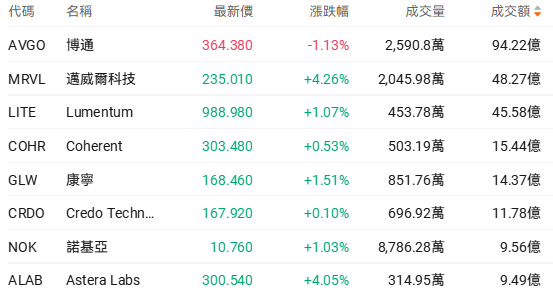
$Optical Communications (LIST23979.US)$ The sector strengthened overall: MaxLinear surged 7.53%, Marvell Technology rose 4.26%, Corning gained 1.51%, Lumentum increased by 1.07%, while AAOI fell 3.25%.
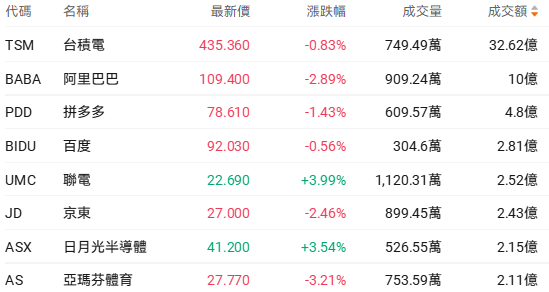
$Popular Chinese ADRs (LIST2517.US)$ Most stocks declined: Pony AI fell 5.85%, Li Auto dropped 4.41%, XPeng Group decreased by 3.29%, TAL Education Group fell 3.21%, New Oriental declined 2.9%, and Alibaba dropped 2.89%.
Stock News
Apple unveils its first foldable iPhone, the iPhone Duo, with mainland China pricing starting at CNY 15,999.
Apple unveiled its first foldable smartphone, the iPhone Duo, featuring a 5.4-inch external display and a 7.6-inch internal screen, with support for the Apple Pencil and multi-app operations. Pricing starts at $1,999, with the Chinese mainland version offering a 256GB model starting at RMB 15,999. Pre-orders begin on October 16, with sales commencing on October 23. Concurrently launched, the iPhone 18 Pro and Pro Max are priced starting at $1,199 and $1,299 respectively, powered by the A20 Pro chip manufactured using a 2nm process. Apple stated that the new chip delivers a 40% improvement in sustained performance compared to the A19 Pro. The new Siri will initially launch in an English beta version, with other language versions scheduled for release in October.
Bloomberg Intelligence has raised its first-year sales forecast for the iPhone Duo to approximately 14 million units, with potential revenue reaching $28 billion. However, the pricing strategy has sparked market concerns: while the iPhone 17 and Air series maintain their original prices, the price increase for the Pro series is lower than expected, creating significant margin pressure amid rising supply chain costs. Analysts believe Apple aims to trade margins for volume and offset these pressures by optimizing its high-end product mix.
Related Reading:Apple's first foldable iPhone has arrived! Starting at RMB 16,000 in China, the Duo and 18 Pro are powered by the A20 Pro.
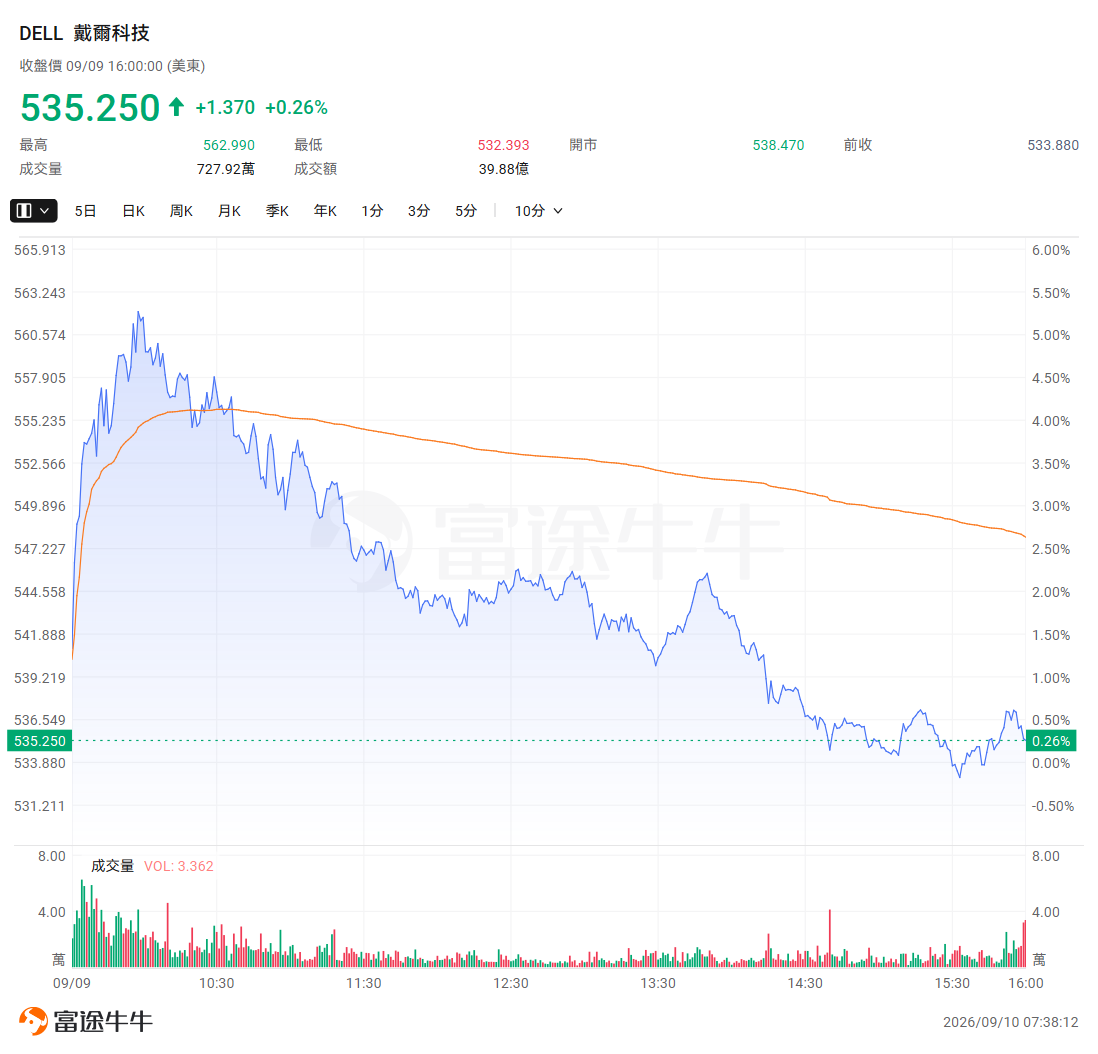
Dell Technologies plans to issue approximately $4 billion in bonds across four maturity tranches.
According to reports, $Dell Technologies (DELL.US)$ The company plans to issue approximately $4 billion in investment-grade bonds, covering four tranches with maturities ranging from three to ten years. The initial spread guidance for the longest-dated tranche is around 140 basis points. The proceeds are intended to repay debt maturing in 2026 and for general corporate purposes. Earlier this month, Dell Technologies raised its full-year revenue forecast by approximately $25 billion, as its AI server business continues to drive sales growth. Robert Schiffman, an analyst at Bloomberg Intelligence, stated that Dell has the financial flexibility to maintain its BBB credit rating, allowing it to increase shareholder returns while refinancing.
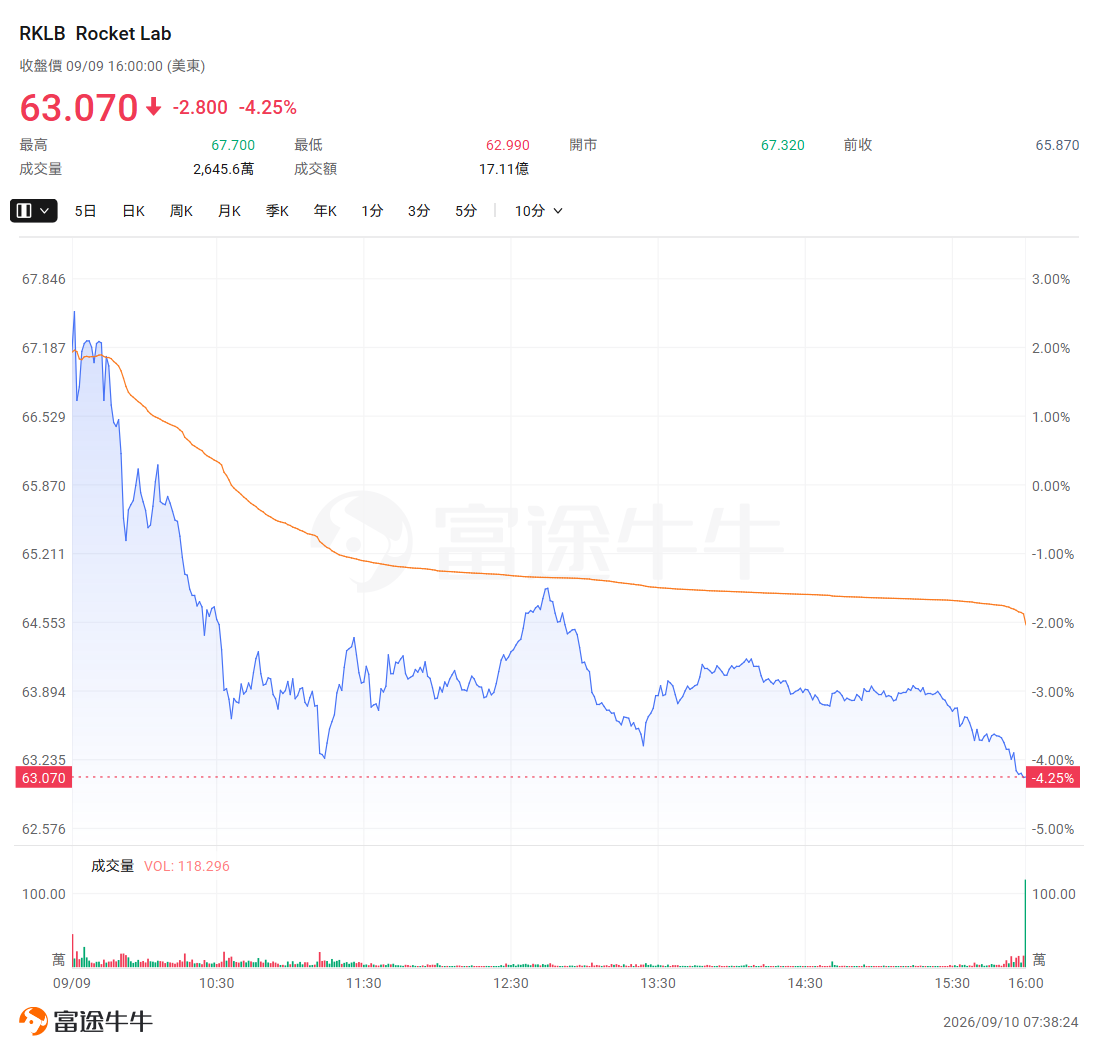
Rocket Lab launches lightweight solar cells with a 40% reduction in weight.
$Rocket Lab (RKLB.US)$ The company announced the advancement of production for its IMM-α Apex solar cells, which achieve a conversion efficiency of 31.5%, weigh approximately 40% less than traditional solutions, and eliminate reliance on germanium substrates. The new product is compatible with the mechanical and electrical interfaces of existing germanium-based solar cells, catering to power requirements for satellites and other spacecraft. Brad Clevenger, head of the company’s Space Systems business, stated that this technology helps shorten production cycles, reduce costs, and meet the growing demands of space missions. The company also identifies orbital data centers as a potential application area.
Crux AI data center project, backed by Google and Blackstone, faces delays.
By $Alphabet-C (GOOG.US)$ Crux AI, supported by investments from Google and Blackstone, secured $5 billion in funding. However, its data center construction has been delayed due to project failures, infrastructure shortages, and Texas's freeze on new data center policies, highlighting the increasingly prominent physical infrastructure constraints behind the rapid expansion of the AI industry. Crux AI stated that its goal of achieving 500 megawatts of computing capacity by 2027 remains on track, but executives currently estimate the probability of on-time delivery for various projects at only around 50%, down from 90% three years ago.
Bernstein favors Micron Technology and SanDisk, as memory chip sales surge more than fourfold year-on-year.
Citing industry data, Bernstein reported that global semiconductor sales rose 131.4% year-on-year in July, with memory chip sales jumping 451.7%. Excluding memory, industry sales grew by approximately 35%. DRAM bit shipments increased 47.5% year-on-year during the month, while the average selling price per bit surged 257.9%. The firm maintains $Micron Technology (MU.US)$ 、 $SanDisk (SNDK.US)$ 、 Samsung Electronics (005930.KR) and $SK Hynix (SKHY.US)$ an “Outperform” rating, believing that shipment growth, product upgrades, and pricing power collectively support profitability. Bernstein pointed out that rising prices for commodity DRAM are driving renegotiations of HBM contract prices for the next year, suggesting there is still room for upward revisions in market earnings forecasts.
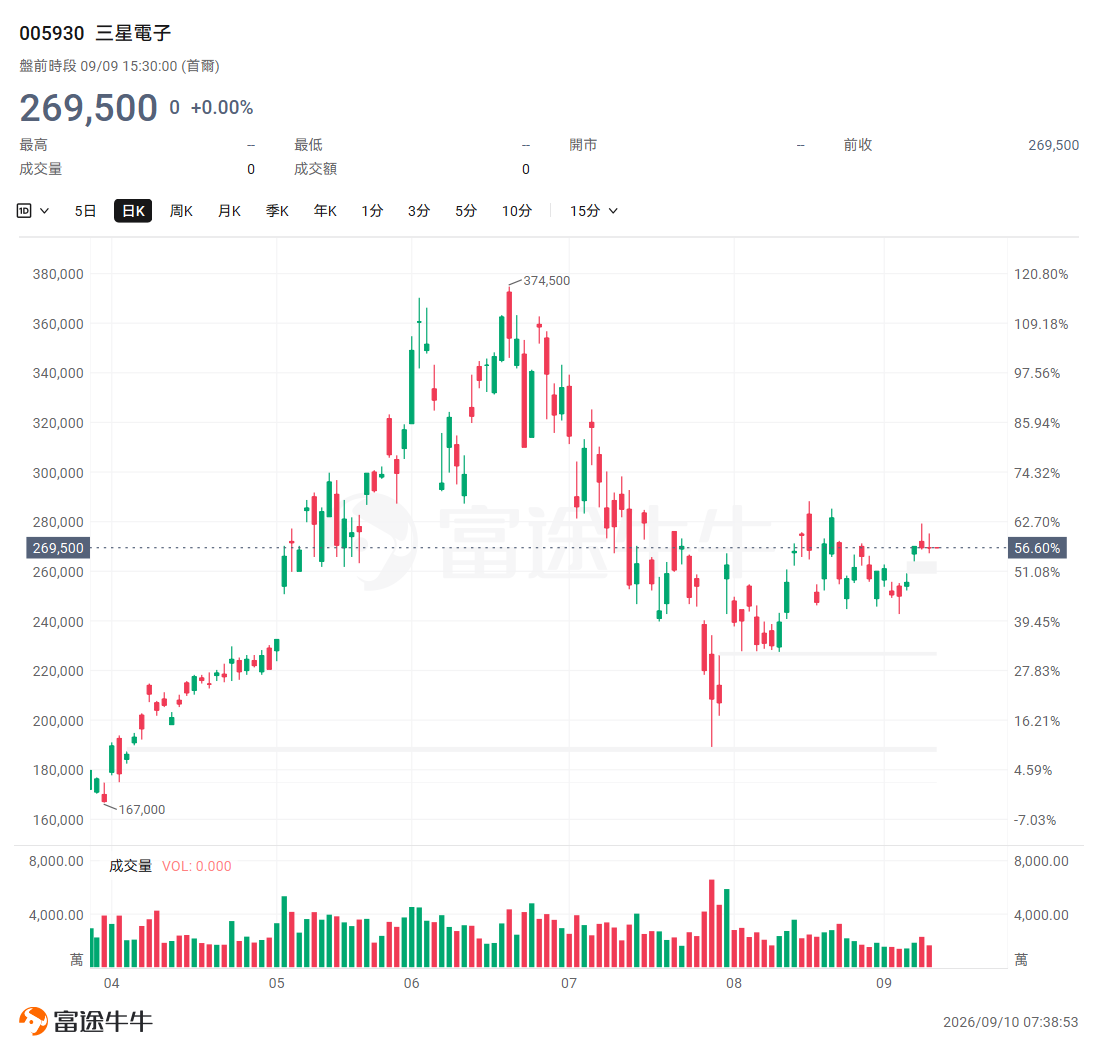
OpenAI deepens cooperation with Samsung to advance next-generation chip R&D
Harrison Kim, Head of OpenAI Korea, stated in Seoul that the company's Samsung Electronics (005930.KR) cooperation with Samsung in the R&D and production of next-generation chips has made substantial progress. Samsung is also one of the largest global deployers of ChatGPT Enterprise. By the end of August, the number of users of ChatGPT Enterprise among South Korean companies and institutions had grown 28-fold year-on-year. Kim noted that rising demand for advanced computing is driving storage demand. Previously, Samsung and SK Hynix signed letters of intent with OpenAI to participate in memory chip supply cooperation for the Stargate project.
Optical communication stock Arista reaffirms full-year revenue guidance; Goldman Sachs focuses on expansion of AI network demand
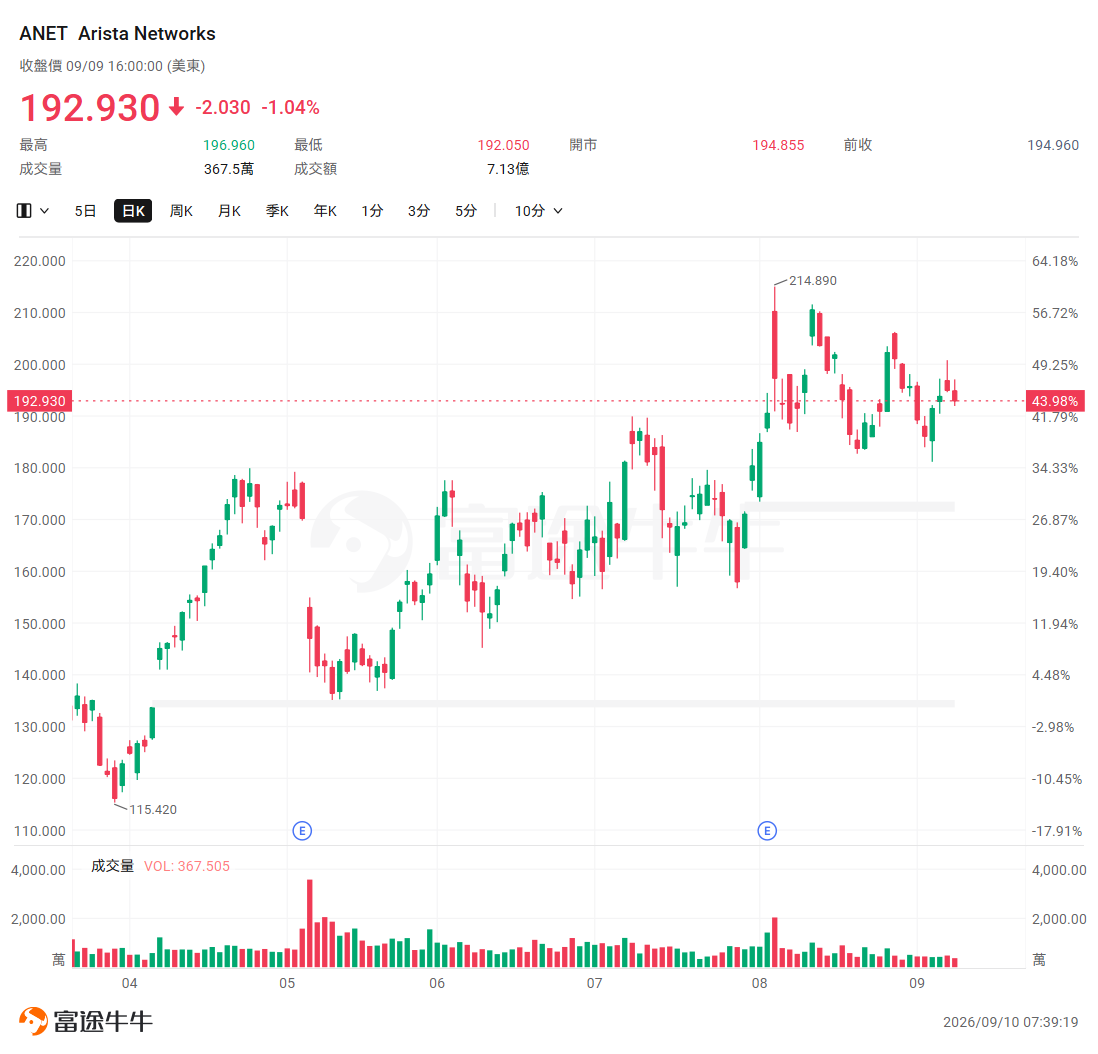
$Arista Networks(ANET.US)$ At the Goldman Sachs Technology Conference, the company reaffirmed its 2026 revenue target of $12.6 billion and gross margin guidance of 62% to 64%. Purchase commitments reached $9.7 billion in the second quarter, with management stating that demand for GPU backend networks and networks connecting multiple data centers remains strong. Regarding its Scale-up Ethernet business for intra-rack chip interconnects, the company expects volume ramp-up to begin by late 2027, with a significant contribution emerging in early 2028. Goldman Sachs maintained its "Buy" rating and a target price of $225, citing factors such as product pricing and tariff refunds as supportive of gross margins.
Top 20 by Trading Volume
Hong Kong Stock Market Preview
Southbound capital increases Hong Kong stock holdings by over HK$3.7 billion, net buying Baidu Group by over HK$1.7 billion and net selling Innovent Bio by over HK$700 million
On Wednesday, September 9, southbound capital recorded net purchases of HK$3.72 billion in Hong Kong stocks.
$Baidu Group-W (09888.HK)$、$CNOOC (00883.HK)$、$Alibaba-W (09988.HK)$recording net buys of HK$1.735 billion, HK$451 million, and HK$438 million, respectively;
$Innovent Bio (01801.HK)$、$Zhipu AI (02513.HK)$、$CSPC Pharma (01093.HK)$while facing net sells of HK$737 million, HK$387 million, and HK$352 million, respectively.
Chinese tech firms raise over $41 billion through secondary offerings this year, sparking concerns over equity dilution due to AI investments
Bloomberg data shows that listed Chinese technology companies raised over $41 billion through secondary equity offerings this year, poised to hit a new high since at least 2020, with $Alibaba-W (09988.HK)$ Last month, rights issues raised $10 billion in financing. During the same period, Chinese technology companies issued approximately $15 billion in bonds, while their U.S. peers raised $103 billion and $380 billion through secondary offerings and bond issuances, respectively. Jason Lemire, Chief Investment Officer at Bold Wealth Partners, believes that aggressive AI capital expenditures and higher offshore borrowing costs will sustain the trend toward equity financing. Bloomberg forecasts that about one-third of the constituents of major Hong Kong and mainland China technology indices will have negative free cash flow over the next year; some analysts point out that the market is underestimating the risk of equity dilution from subsequent secondary offerings.
Foxconn Interconnect Technology showcases 1.6T optical modules and high-density connectivity solutions
$FIT HON TENG(06088.HK)$ At the China International Optoelectronic Exposition held in Shenzhen from September 9 to 11, the company displayed various high-speed interconnect products, including 1.6T optical modules, ELSFP external laser source modules, and XPO high-density connectivity solutions. The exhibits covered optical communication and connectivity technologies required for AI data centers. The company's stock rose more than 7% on September 9, amid a broader rally in Hong Kong-listed stocks related to the optical communication and server supply chains. The products showcased spanned multiple segments, including optical modules, external light sources, and high-density connectivity.
Today's Focus
Keywords: U.S. PPI; Oracle and Adobe earnings reports
Regarding economic data, figures such as the US August PPI and initial jobless claims will be released.
20:30 U.S. Initial Jobless Claims for the week ending September 5;
20:30 U.S. August PPI year-over-year and month-over-month rates;
22:00 U.S. August Annualized Existing Home Sales Total, U.S. July Wholesale Sales month-over-month rate.
At 20:15 Beijing Time, the European Central Bank will announce its interest rate decision, followed by a press conference held by President Lagarde at 20:30. The market is closely focusing on the impact of rising energy prices on the inflation trajectory and subsequent policy stance.
OPEC will release its monthly crude oil market report on the day, with the specific time to be determined.
Regarding earnings reports, $Oracle (ORCL.US)$ 、 $Adobe (ADBE.US)$ Earnings reports will be released after the U.S. stock market closes. $Taiwan Semiconductor (TSM.US)$ The August turnover report will be announced.
 Looking to select stocks or analyze your holdings? Want to understand the opportunities and risks in your portfolio? For any investment-related questions,just ask Futubull AI!

Editor / Rocky