
① According to media reports citing informed sources, the White House has not yet decided whether to impose tariffs on refined copper. The administration is weighing the benefits of supporting the domestic copper industry against the drawbacks of higher manufacturing costs and increased cost of living.
② Following the announcement, LME copper futures dropped by more than 3%, while COMEX copper futures fell by over 4%, leading to sharp declines in related stocks during pre-market trading.
③ Previously, tariff expectations accelerated capital flows into copper stockpiling in the United States, helping drive copper prices to record highs.
 At around 18:00 Beijing time on Thursday evening, LME copper futures, which had risen for several consecutive days, suddenly plunged, with intraday losses exceeding 3% at one point. New York copper futures also declined by more than 4%.
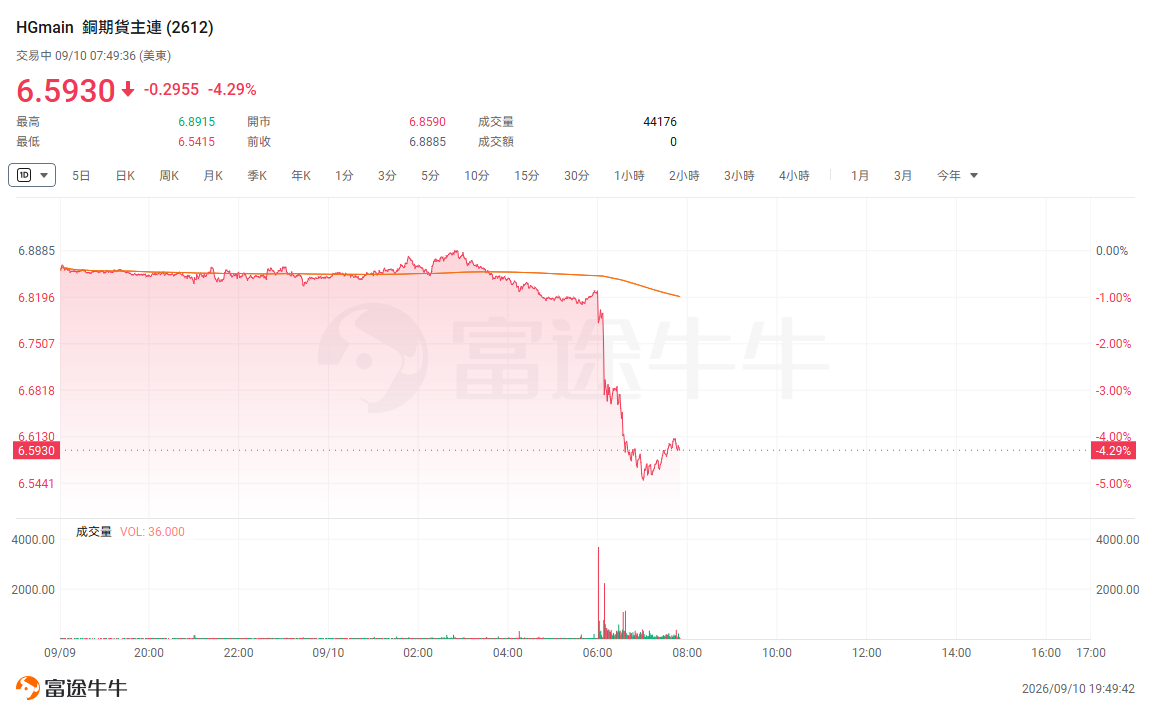
The cause of this major volatility in the key industrial metal was news regarding U.S. tariff policy on copper.
According to media reports citing "two informed sources," the White House has not yet decided whether to impose tariffs on refined copper. Officials are weighing the pros and cons on two fronts: while rising copper prices could increase manufacturing costs, encouraging increased domestic mining also offers benefits.
Sources stated that the White House's plan for copper tariffs has stalled due to concerns over manufacturing costs and the cost of living. With the U.S. midterm elections approaching, Trump and Republican lawmakers are under pressure to demonstrate that their economic policies are lowering, rather than raising, costs for American consumers and businesses. The U.S. government's growing emphasis on cost-of-living issues has led to "hesitation among relevant parties."
U.S. tariffs on copper were precisely the key driver behind this round of copper price increases.
As market participants anticipated that Trump would impose tariffs on refined copper products such as cathode copper, as well as on copper concentrate, traders and industrial buyers rushed to stockpile inventory in the United States, pushing copper prices to historical highs. On Monday, LME copper prices broke through the previous high set in January of this year, and continued to hit new records on Tuesday and Wednesday.
The report also cited a White House official stating that no final decision has been made on copper tariffs, and that the U.S. Department of Commerce had already reported the latest developments to Trump before the June 30 deadline set by the White House.
The official also stated: "The government is still evaluating all options to promote the reshoring of copper and other key manufacturing industries to the United States."
As part of Trump's initiative to rebuild U.S. manufacturing, the U.S. government has been considering imposing tariffs on refined copper.
The United States relies on imports for approximately half of its annual copper demand, with only two copper smelters currently in operation domestically, owned by Freeport-McMoRan and Rio Tinto, respectively. The proposed tariffs could drive up the price of imported copper and improve the economic viability of U.S. mining, smelting, and refining projects.
Consequently, influenced by this news, Freeport-McMoRan shares fell nearly 7% in pre-market trading, while Rio Tinto’s U.S.-listed ADRs dropped more than 3%.
Although higher copper prices may stimulate domestic production, broad-based copper tariffs could also raise costs for manufacturers reliant on the metal, including producers of automobiles, building products, electrical equipment, and other industrial goods.
The market witnessed a similar scenario last year.
Last summer, the market anticipated that the 50% copper tariff planned by the United States would cover imports of refined copper, including copper cathodes. However, the policy announced by the Trump administration in late July was not as broad; it excluded raw materials such as copper cathodes, copper ore, and copper concentrates, imposing tariffs only on semi-finished products like pipes and wires, as well as copper-intensive derivatives. Following the announcement, near-month COMEX copper futures plummeted by more than 22% in a single day, marking the largest drop on record, and the abnormal premium of New York copper prices over LME copper rapidly narrowed.
Meanwhile, Trump directed Commerce Secretary Lutnick to submit an updated assessment of the copper market by the end of June 2026 and to provide recommendations on whether to impose a 15% tariff on refined copper starting January 1, 2027, and to raise the rate to 30% in 2028. It remains unclear what recommendations Lutnick ultimately submitted.