
HSBC believes that geopolitical conflicts and weather-related factors continue to disrupt supply, while investment in AI infrastructure and the energy transition are boosting demand for energy and metals, pushing commodity markets into a phase of "super squeeze." As inventory buffers are depleted at an accelerated pace, supply risks are further spreading across energy, metals, and agricultural products. HSBC has raised its forecast for the average increase in commodity prices by 2026 to 22%, with the price center still facing upward pressure.
The commodities market is experiencing a rare confluence of multiple supply shocks, with geopolitical conflicts, extreme weather, and structural demand growth jointly pushing up the price center. HSBC believes that the market has entered a "super squeeze" phase, and commodity prices may remain elevated for an extended period.
Paul Bloxham, Chief Economist for Global Commodities at HSBC, pointed out in his latest report that the war in Iran, the Russia-Ukraine conflict, and the El Niño phenomenon continue to disrupt global supply, while investments in artificial intelligence infrastructure and the energy transition are continuously boosting demand for energy and metals. The "super squeeze" pattern persists, and the risk of further upward movement in commodity prices is accumulating.
 From both the supply and demand sides, the market's existing high inventory buffer is being rapidly depleted. Uncertainty remains regarding key shipping channels such as the Strait of Hormuz and the Red Sea, with varying degrees of supply constraints affecting energy, metals, and agricultural products. Consequently, HSBC has raised its forecast for the average increase in commodity prices in 2026 from 16% to 22%, and also increased its 2027 forecast by 14 percentage points compared to previous estimates.
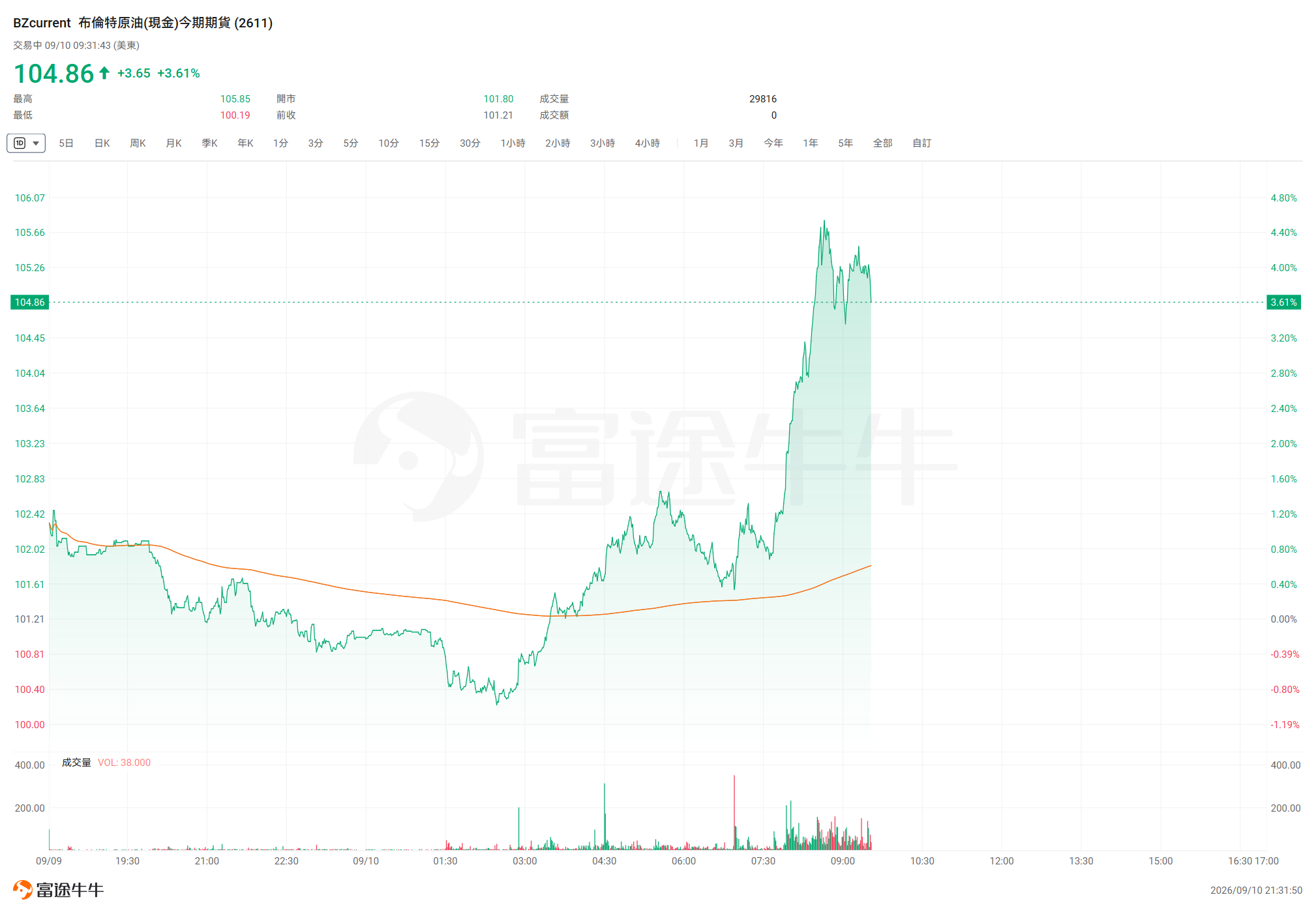
Market prices have already begun to reflect this change: London copper futures briefly surpassed $14,700 per ton,$Brent Last Day Financial Futures Current Contract (NOV6) (BZcurrent.US)$while crude oil prices climbed back above $104 per barrel. HSBC’s purely statistical model, COCCLES, also indicates that the commodities market has entered a "super bull" phase, which typically lasts longer than other cycles.
Geopolitical conflicts continue to intensify, with supply risks spreading from energy to all commodity categories.
Six months after the outbreak of conflict in the Middle East, it remains one of the most significant variables in the commodities market. The Strait of Hormuz is currently largely closed, with substantial uncertainty surrounding when and under what conditions it might reopen. As the conflict repeatedly escalates and de-escalates, energy and commodity prices have experienced severe volatility.
Meanwhile, attacks by Houthi forces on vessels in the Red Sea and those belonging to Saudi Arabia have further disrupted shipping through the Bab el-Mandeb Strait. Obstructions in these critical waterways have not only increased transportation costs but also heightened uncertainty in the supply chains for crude oil, refined petroleum products, and other commodities.
As the Russia-Ukraine conflict enters its fifth year, its impact on global supply continues to spread. Recent shocks to the supply of refined products such as diesel and grain have intensified significantly. Supply disruptions have expanded beyond crude oil to include sulfur, fertilizers, aluminum, helium, as well as various refined oil by-products such as aviation fuel and naphtha.
This implies that supply constraints in this commodity cycle are no longer limited to a single energy category but are beginning to spread to metals, chemicals, and agricultural products. The Bloomberg Commodity Index has risen 18% year-to-date, with a year-on-year increase of 24%, reflecting that supply shocks are generating broader price transmission effects.
Accelerated depletion of inventory buffers raises risks of energy markets hitting "rock bottom"
Previously elevated inventory levels served as a crucial buffer, allowing commodity markets to absorb supply shocks and maintain supply-demand equilibrium. However, as disruptions persist, this buffer is rapidly diminishing, particularly in the energy market.
In the oil market, the United States continues to draw down its Strategic Petroleum Reserve through exports. HSBC warns that if supply disruptions are prolonged, the risk of inventories falling to "tank-bottom" levels will rise significantly. Once inventory buffers are exhausted, any new supply disruption could directly translate into stronger upward pressure on prices.
The natural gas market faces similar issues with insufficient inventories. European natural gas stocks are significantly below target levels, with unusually hot summer weather accelerating energy consumption. If inventories cannot be effectively replenished before winter, the supply-demand gap may widen further, increasing the risk of a sharp price spike during the winter season.
AI and energy transition drive up metal demand; El Niño exacerbates agricultural product risks
Structural changes are also occurring on the demand side. The investment boom in artificial intelligence infrastructure and the ongoing energy transition continue to drive global electrification demand, strengthening prices for most base metals. Copper prices have risen to historical highs, reflecting both growing demand and exposing long-term supply constraints caused by insufficient investment in new mines.
Supply and demand dynamics vary across different commodities. Although the aluminum market has been disrupted by conflicts in the Middle East, some shipments have successfully passed through the Strait of Hormuz, thereby relatively containing price increases. Lithium prices rose by 130% over the past year, but historical experience suggests that high prices often stimulate new supply; increased production in Zimbabwe and Australia may limit further price gains.
Agricultural products face dual pressures from weather and costs. The strong El Niño event is intensifying, with the Southern Oscillation Index (SOI)—which reflects anomalies in tropical Pacific atmospheric circulation—reaching extreme levels not seen in over two decades. Drought risks are rising in Australia and Indonesia, the Indian monsoon is weakening, and weather conditions across much of Southeast Asia are becoming hotter and drier.
Meanwhile, conflicts in the Middle East and the war between Russia and Ukraine have heightened supply risks for agricultural inputs such as fertilizers and diesel. Grain prices have continued to rise recently, with wheat performing particularly strongly, while prices for cocoa and coffee have also climbed.
Regarding precious metals, gold retreated after peaking in January 2026, primarily suppressed by rising long-term interest rates as some investors shifted toward yield-generating assets. However, Paul Bloxham believes that persistent geopolitical risks, central bank gold purchases, and uncertainty in the bond market will continue to support precious metals. Limited mine supply may also benefit platinum and palladium.
Editor/melody