
Following the release of the PPI data, market expectations for a Federal Reserve rate hike in September rose to 70%, with bets placed on at least one rate increase by the end of October.
The latest data released by the U.S. Bureau of Labor Statistics on Thursday showed that rising energy prices last month have once again exerted inflationary pressure, which could increase the pressure on the Federal Reserve to raise interest rates at its meeting next week.
The core Producer Price Index (PPI) for August, which excludes food and energy costs, rose 0.2% month-on-month. This increase was lower than the market expectation of 0.3% and marked a slowdown from the revised 0.3% growth in July; the year-on-year growth rate remained unchanged at 4.6%.
 Although core data has shown marginal cooling, the overall U.S. PPI has remained at elevated levels for several consecutive months since the outbreak of the conflict involving Iran. In August, the PPI rose 0.4% month-on-month, in line with expectations, while the year-on-year increase reached 5.4%, exceeding the market expectation of 5.3%.
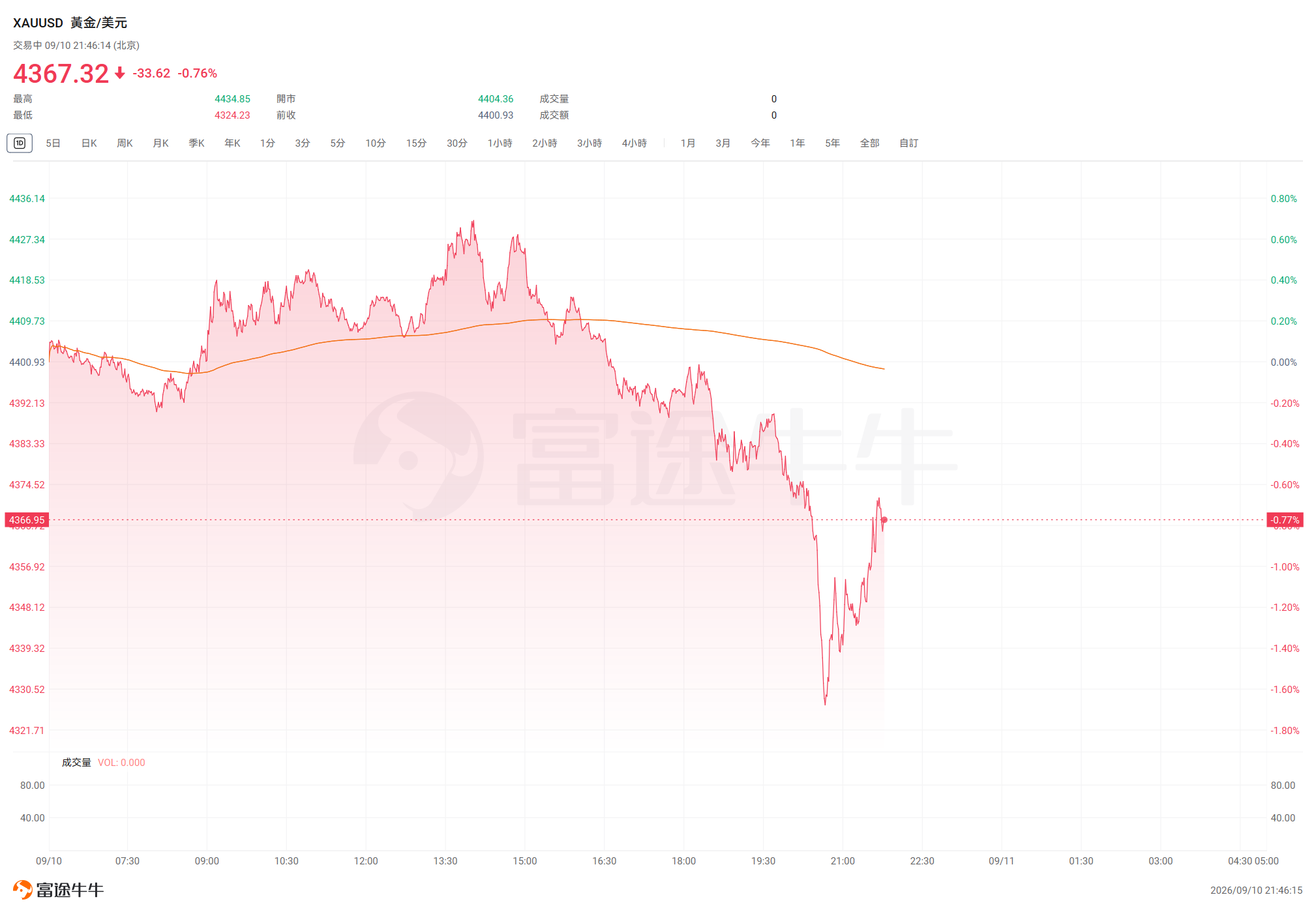
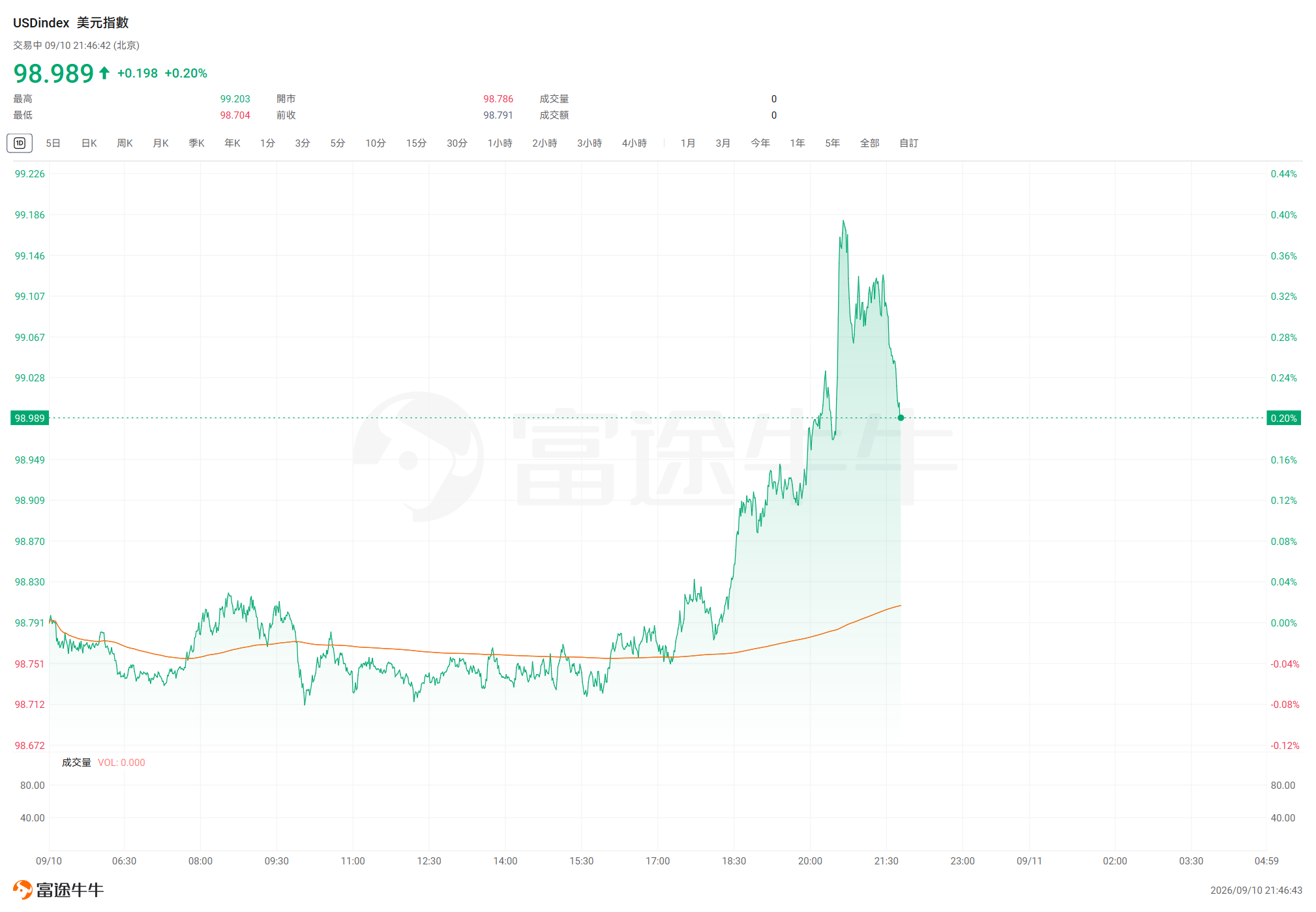
Following the data release,$XAU/USD (XAUUSD.CFD)$short-term prices plummeted, briefly falling below $4,330;$USD (USDindex.FX)$while it once again climbed above 99.
Influenced by this complex mix of data, financial markets have rapidly increased their bets on an imminent interest rate hike by the Federal Reserve. According to federal funds futures contracts on the Chicago Mercantile Exchange (CME), the market-implied probability of a rate hike in September has risen to approximately 70%, with one hike fully priced in before the end of October.
Breakdowns show that airfare prices rose 0.7% month-on-month in August, while price movements in the healthcare category were mixed. These specific indicators are core variables closely monitored by the Federal Reserve, as they are directly incorporated into its preferred Personal Consumption Expenditures (PCE) price index.
To more accurately reflect the full picture of inflation, the U.S. Bureau of Economic Analysis is scheduled to release the August PCE data and related income and outlay reports on September 30. In this report, officials will adjust the price measurement methods for specific categories such as legal services, computer software, and investment advice.
Many economists expect that this methodological change will lower the PCE figures. However, ahead of this release, the market is eagerly awaiting the latest Consumer Price Index (CPI) report to be published this Friday.
It is widely expected that although continuously rising gasoline prices will inevitably push up overall prices, the so-called core CPI will remain relatively moderate. These two major reports, released in succession, will directly influence the direction of monetary policy.
Some Federal Reserve officials have previously sent clear signals indicating that the final interest rate decision at the policy meeting on September 15–16 will depend largely on the trends revealed by this week's price indicators.
Federal Reserve Chair Waller struck a stern tone in a public speech last month. He emphasized that if policymakers are not convinced that underlying inflation trends are improving meaningfully, the U.S. central bank still has "work to do."
The ongoing hostility between the United States and Iran is triggering a new round of increases in international crude oil prices. This geopolitically driven energy shock will undoubtedly further complicate the already challenging outlook for the Federal Reserve’s fight against inflation.
Editor/melody