
Investors are increasingly confident that the Democratic Party will secure control of the House of Representatives in November, while also believing that the Republican Party holds a slight advantage in the Senate. For many market observers, this represents the most ideal scenario, carrying the lowest risk of disruptive policy changes.
Zhitong Finance APP notes that the U.S. midterm election season has entered its final stretch, with Wall Street busy formulating contingency plans for various potential outcomes. However, in an unexpectedly favorable twist, the best-case scenario for markets also appears to be the most likely one. Investors are increasingly confident that the Democratic Party will capture the House of Representatives in November, while believing the Republican Party holds a slight edge in the Senate. For many market observers, this is the ideal outcome, carrying the lowest risk of disruptive policy changes.
Markets bet on a "divided Congress," potentially triggering a relief rally in equities
 Although confidence in the aforementioned outcome is not unfounded, it is far from certain. In prediction markets, the Democrats are clear favorites to control the House of Representatives. However, the race for the Senate has intensified, with Republicans currently holding only a narrow lead on platforms such as Kalshi and Polymarket.
Brian Gardner, Chief Washington Policy Strategist at Stifel, stated: "Investors expect a divided Congress. If this materializes—meaning the Democrats achieve their goal of winning the House but without a 'Blue Wave' victory—I anticipate a subsequent wave of relief-driven rallies."
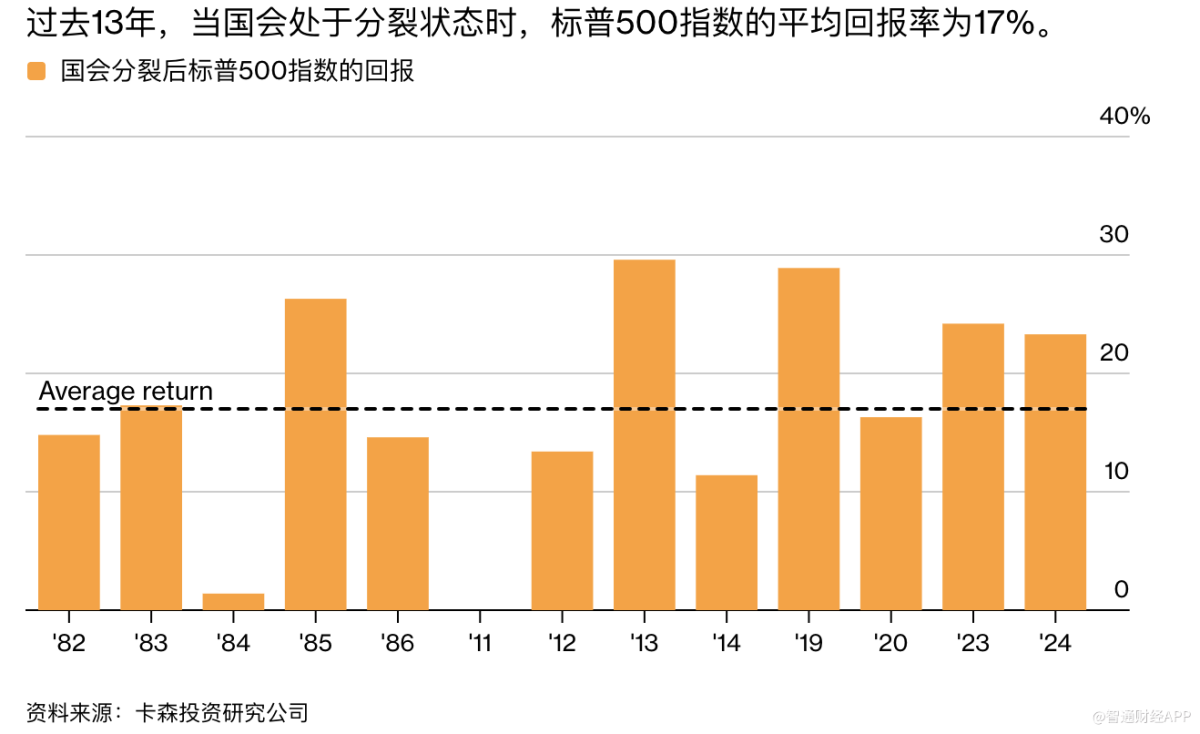
During the past 13 years in which Congress was under divided government, the S&P 500 Index delivered an average return of 17%.
As elections approach, Wall Street increases volatility hedging
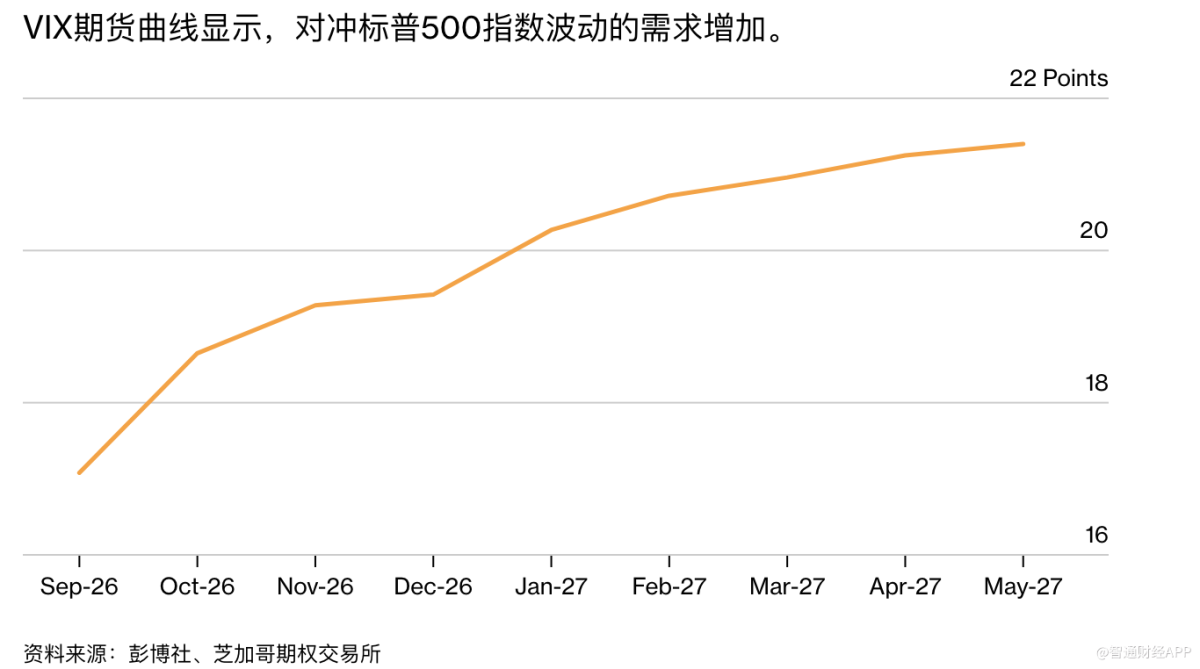
Meanwhile, Wall Street is navigating market volatility associated with the midterm elections. Futures markets linked to the CBOE Volatility Index (VIX) indicate rising demand for hedging against S&P 500 volatility risks in early November.
Evercore ISI advises traders to prepare for potential sharp market swings by implementing a so-called "straddle" strategy on the SPDR S&P 500 ETF Trust (SPY). This options strategy allows traders to profit from significant price movements in either direction without making directional bets, achieved by simultaneously purchasing call and put options expiring in November with a strike price of $770.
Julian Emanuel, strategist at the firm, noted that the pricing of this position is attractive because the VIX remains well below its long-term average, despite macroeconomic forces capable of driving substantial equity market swings. "The risk of unexpected events is significantly underestimated."
Traders prepare to hedge midterm election anxiety; the VIX futures curve indicates increased demand for hedging against S&P 500 volatility risks.
Regarding the election results, Wall Street’s view is that if different parties control the two chambers of Congress, the likelihood of radical policy changes—whether in artificial intelligence, defense, or healthcare—will decrease, implying less uncertainty for the market.
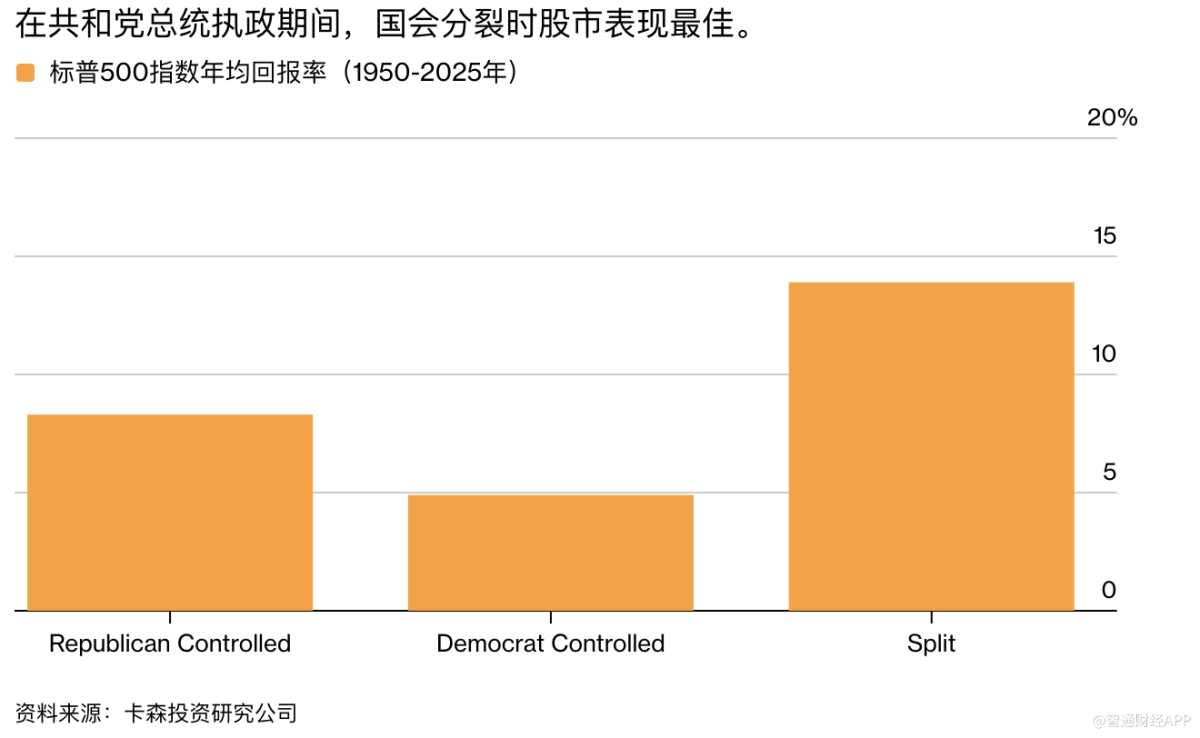
Historically, a divided Congress has been bullish for U.S. equities. Data compiled by Carson Investment Research shows that since 1950, during periods with a Republican president and a divided Congress, U.S. stocks have risen an average of 13.7% annually. In contrast, when Congress was fully controlled by either the Republican or Democratic Party, the annual average gains were 8.3% and 4.9%, respectively.
U.S. stocks have performed best under a Republican president with a divided Congress.
As backlash against data center construction intensifies, AI has steadily become one of the most prominent issues of this election season. This forces investors to confront the rising regulatory risks associated with the core technology that has driven the four-year bull market in U.S. stocks.
Stuart Kaiser, Head of U.S. Equity Trading Strategy at Citigroup Inc., wrote in a report to clients earlier this week that a divided government would "force either gridlock or compromise," noting that this is both the most likely and the most positive outcome. "In this scenario, policy choices tend to be moderate, allowing the stock market to refocus on corporate and economic fundamentals."
Kaiser recommends establishing long positions in the S&P 500 Index or the Invesco QQQ Trust to capture the surging earnings from technology companies and benefit from the fading of election-related risk premiums.
The Delta One trading desk at JPMorgan Chase & Co. pointed out that if Congress remains divided, stocks benefiting from the Affordable Care Act will present investment opportunities. The desk also believes that traditional defense stocks will benefit, as defense is currently a shared priority for both parties.
Beware of a "Clean Sweep": Different Election Outcomes Drive Sector Performance
While the consensus around a "divided Congress" is gradually forming, it carries a risk: if market expectations suddenly shift toward a clean sweep by either party, the stock market could experience significant volatility.
The possibility of the Democratic Party capturing both the Senate and the House of Representatives still exists. Although Donald Trump remains the Republican Party's biggest draw, his historically low approval ratings pose a major risk for the GOP heading into the November elections. Republicans hope that an informal mid-term convention, dubbed "Trumpapalooza," will prevent a repeat of the devastating losses seen during his first term.
Last month, the strategy team at Bank of America Corp., led by Michael Hartnett, noted that a strong performance by Donald Trump’s party and Greg Abbott’s successful re-election in Texas would be particularly beneficial for AI-related stocks. Conversely, Hartnett argued that if the Democratic Party were to seize control of the Senate and defeat Abbott, the stock market would face a “sharp decline.”
Phil Wool of Rayliant Global Advisors believes that a Republican sweep could boost sectors benefiting from further deregulation, identifying energy and financials as potential beneficiaries. Meanwhile, a “blue wave” (a comprehensive Democratic victory) could lift renewable energy and healthcare providers.
Nevertheless, some view the midterm elections merely as a minor interlude.
Omar Aguilar, CEO of Schwab Asset Management, stated that while political outcomes invariably cause client unease and introduce uncertainty, most results have minimal impact on the market’s long-term trajectory. Although certain sectors may exhibit higher volatility than others, this presents an opportunity to rebalance asset allocation portfolios over the long term.
"Clients are watching closely, much like they monitor oil prices at $100 per barrel," Aguilar said. "But does this mean they need to change their strategy? Our advice remains consistent: No, maintain your course and ride it out."
Editor/KOKO