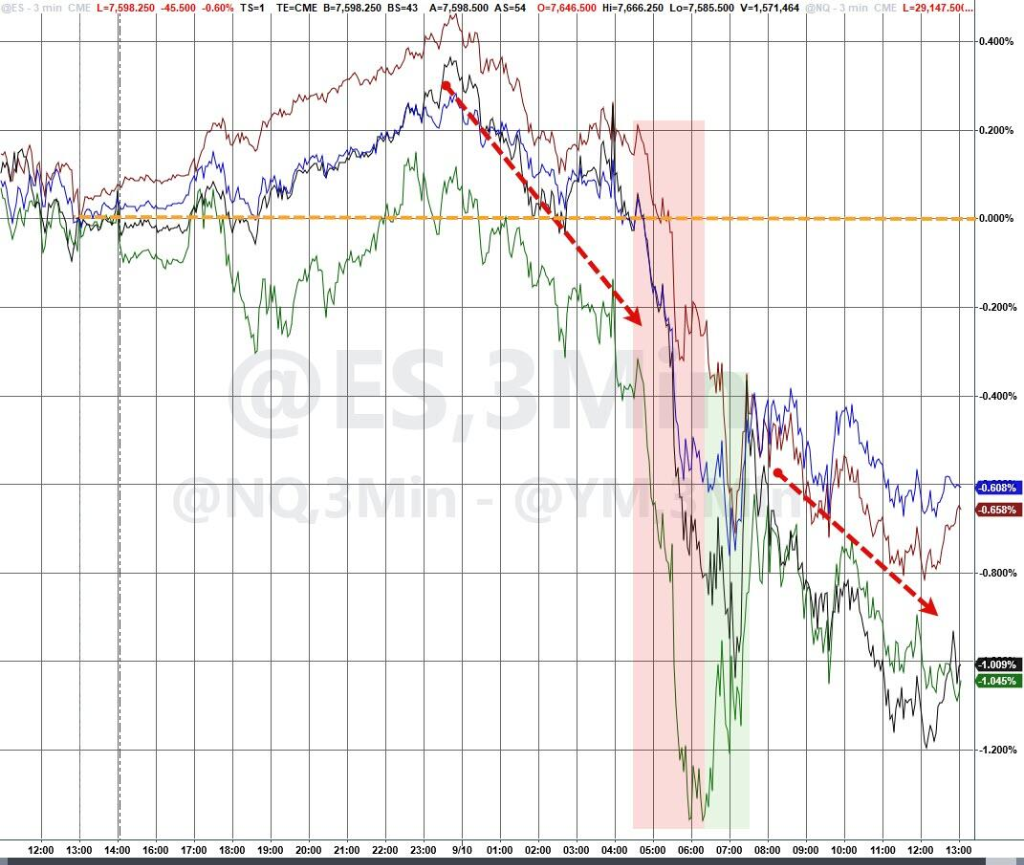
The Nasdaq Composite fell 0.65%,$Philadelphia Semiconductor Index (.SOX.US)$dropping more than 2%, while Intel declined over 5%. The memory chip sector plunged,$SK Hynix (SKHY.US)$down 5.2%,$Micron Technology (MU.US)$falling 4.9%. The yield on the 2-year U.S. Treasury note rose by 13 basis points, and the 10-year yield touched 4.96%. Gold dropped 1.7%, breaking below the $4,400 threshold. WTI crude oil surged 7% for the day, closing at $102.78 per barrel, while Brent crude rose more than 6%, with both benchmarks returning to their highest levels since the onset of the war.
Unexpectedly hotter-than-expected U.S. Producer Price Index data and a strong breakout in oil prices through key thresholds sharply increased market bets on a Federal Reserve rate hike next week, triggering broad-based sell-offs in U.S. equities, bonds, gold, and cryptocurrencies on Thursday.
U.S. stocks on Thursday$S&P 500 Index (.SPX.US)$closing down 0.58%, marking its fourth consecutive daily decline and the longest losing streak since June, bringing the cumulative drop from the August 13 historical high to nearly 3%. $Nasdaq 100 Index (.NDX.US)$declined more sharply, falling 1.1%, led by losses in semiconductor and AI-related stocks.
Tech giants showed mixed performance (ranked by market capitalization),NVIDIA (NVDA.US)dropped 2.37%, while Apple rose 3.56% and Google Class C shares gained 0.61%,$Microsoft (MSFT.US)$up 0.16%,$Amazon (AMZN.US)$fell 0.2%,$SpaceX (SPCX.US)$rose 0.43%, Meta dropped 1.42%,$Tesla (TSLA.US)$and declined 1.16%.
The Philadelphia Semiconductor Index fell 2.66%, with 25 of its 30 constituent stocks rising and 5 declining.$Lam Research (LRCX.US)$NVIDIA fell 5.65%, Intel dropped 5.57%, ARM declined 3.8%, and AMD fell 3.36%.$ASML Holding (ASML.US)$Broadcom fell 2.43%.$Broadcom (AVGO.US)$ASML Holding fell 0.97%.
Memory-related stocks retreated collectively.$SK Hynix (000660.KR)$SK Hynix fell 5.2%, Micron Technology dropped 4.9%.$Western Digital (WDC.US)$Samsung Electronics fell 4.43%.$SanDisk (SNDK.US)$Kioxia fell 4.06%.$Seagate Technology (STX.US)$Western Digital fell 2.66%. The Roundhill Memory ETF (DRAM) dropped 4.9%.
Affected by the sharp decline in memory stocks, the Direxion Daily South Korea Bull 3X Shares (KORU) closed down 12.52%, and the iShares MSCI South Korea ETF (EWY) fell 4.19%.
The optical communication concept sector also declined overall,$Lumentum (LITE.US)$down 5.39%,$Astera Labs (ALAB.US)$down 5.33%, CRDO down 4.53%, AAOI down 4.3%,$Marvell Technology (MRVL.US)$down 3.43%,$Coherent (COHR.US)$down 3.4%,$Corning (GLW.US)$down 3.17%.
Copper and aluminum concept stocks led the declines,$Taseko Mines(TGB.US)$down 10.19%,$Ero Copper(ERO.US)$Down 8.55%,$Southern Copper (SCCO.US)$Down 7.23%,McMoRan Copper & Gold (FCX.US)Down 6.59%;$Century Aluminum (CENX.US)$Down 6.98%,$Kaiser Aluminum (KALU.US)$Down 5.37%, Alcoa down 4.79%.
$Oracle (ORCL.US)$Closed down 5.38%, with shares rebounding approximately 6% in after-hours trading following the earnings release.$Adobe (ADBE.US)$Closed down 2.37%, falling more than 2% further after the earnings report was released.
Most popular Chinese concept stocks declined,$Hesai (HSAI.US)$down 4.92%,$GDS Holdings (GDS.US)$Down 4.11%,$Nio (NIO.US)$Disney fell 3.24%$Li Auto(LI.US)$down 2.18%,$XPeng Inc. (XPEV.US)$down 2.18%,$New Oriental (EDU.US)$down 1.64%.
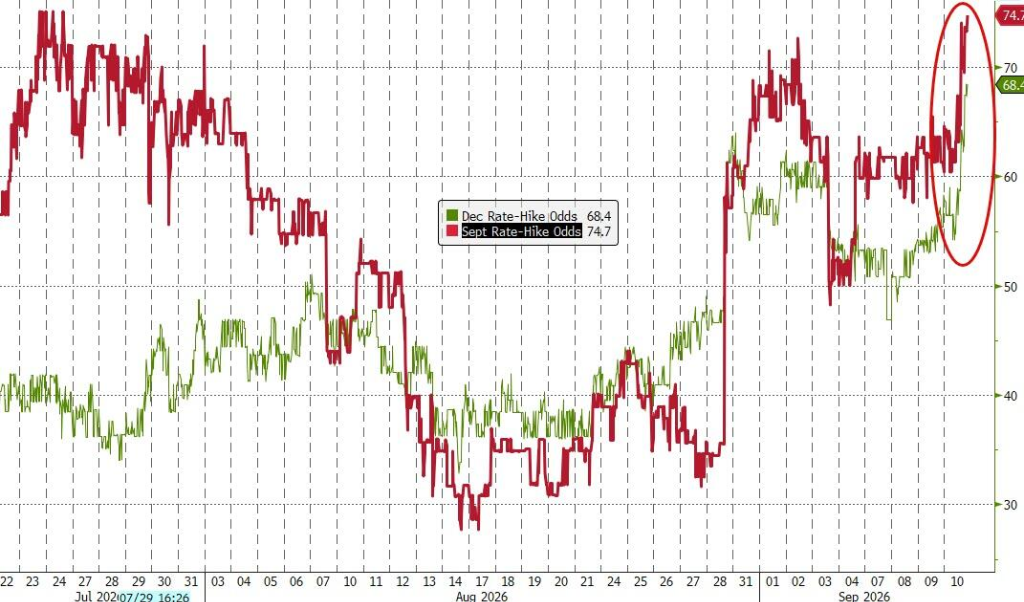
The yield on 10-year U.S. Treasury notes rose by 11 basis points in a single day to touch 4.96%, reaching a three-year high; the 2-year yield surged by 13 basis points, indicating significant pressure on the short end of the curve.
Data shows that traders' bets on the Federal Reserve raising interest rates by at least 25 basis points next week have risen to 75%, a notable jump from 64% before the PPI data release. With CPI data scheduled for release on Friday and the Fed's policy meeting set for September 15–16, the market has entered a highly sensitive window.
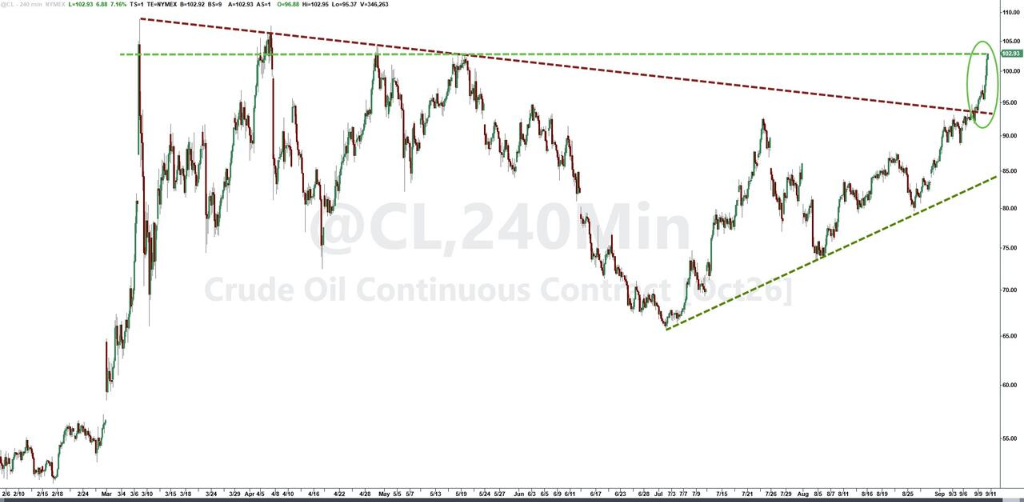
Oil prices break above $100, with energy inflation becoming a core disruption.
WTI crude oil surged 7% on the day to close at $102.78 per barrel, while Brent crude rose more than 6% to $107, with both benchmarks returning to highs not seen since the onset of the war.
On Thursday, September 10 local time, CCTV News reported that Yemen's Houthi forces stated the Saudi Air Force had launched 64 airstrikes in the past 24 hours against Taiz, Hudaydah, Marib, and Al Jawf governorates in Yemen.
Meanwhile, CCTV cited a report from The Wall Street Journal stating that "Iran has resumed ballistic missile production in underground facilities using stockpiled components."
Following reports of Iranian ballistic missile production, intraday gains in international crude oil futures expanded to over 7% during midday trading in the U.S. on Thursday, with Brent crude briefly rising to $108.42 per barrel, marking its highest level since May 21.
U.S. WTI crude briefly rose to $103.06 per barrel, up approximately 7.3% for the day, breaking above $100 per barrel for the first time since late May.
Senior energy trader Rebecca Babin stated:
"Crude oil is trading at its highest level since last May, as the market reprices the intensity and duration of escalating geopolitical risks."
She also pointed out that as prices move into a range where option market makers hold significant short gamma exposure, this positioning structure will further fuel upward momentum.
According to Kpler data, trend-following CTA funds flipped their Brent long positions to the 100% maximum cap on Thursday, while algorithmic long positions in WTI futures reached 91%, indicating that systemic buying momentum for this rally is nearing exhaustion.
Pressure in the refined products market is even more severe. The diesel crack spread surpassed $110 on Thursday, hitting a record high.
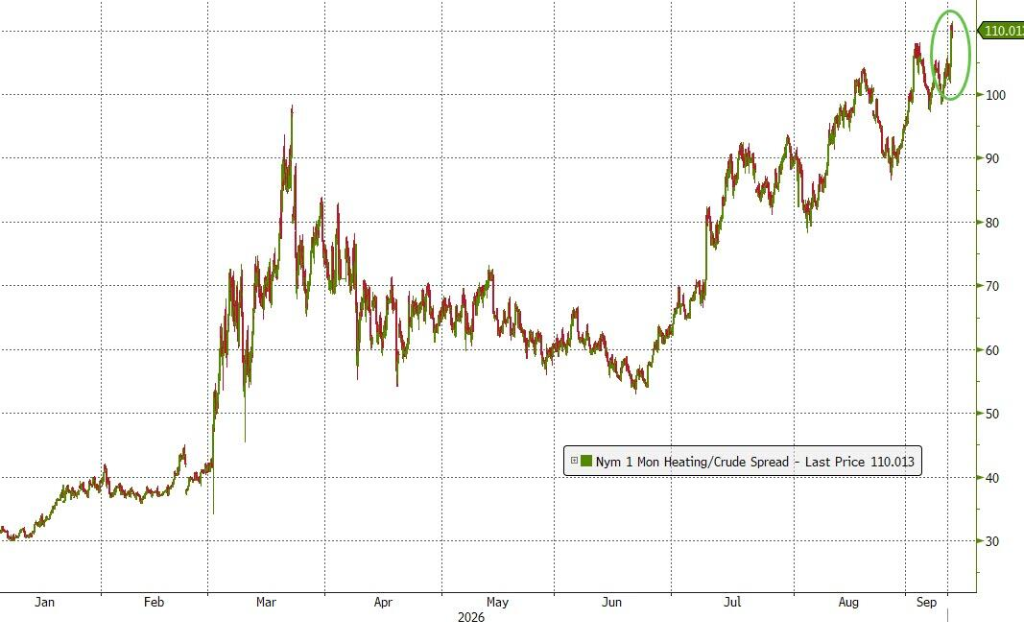
However, Goldman Sachs analyst Adam Widjaya believes that the diesel crack spread may have peaked, while crude oil prices still have room for further upside. Goldman Sachs had previously warned that if Persian Gulf output remains 4 million barrels per day below pre-war levels, Brent crude has the potential to break through $120 per barrel.
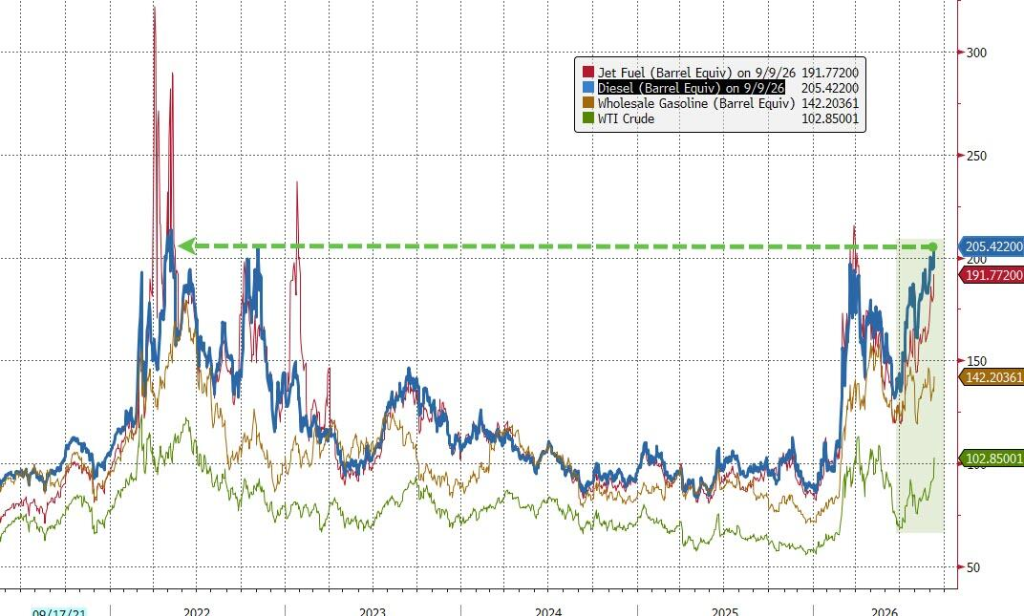
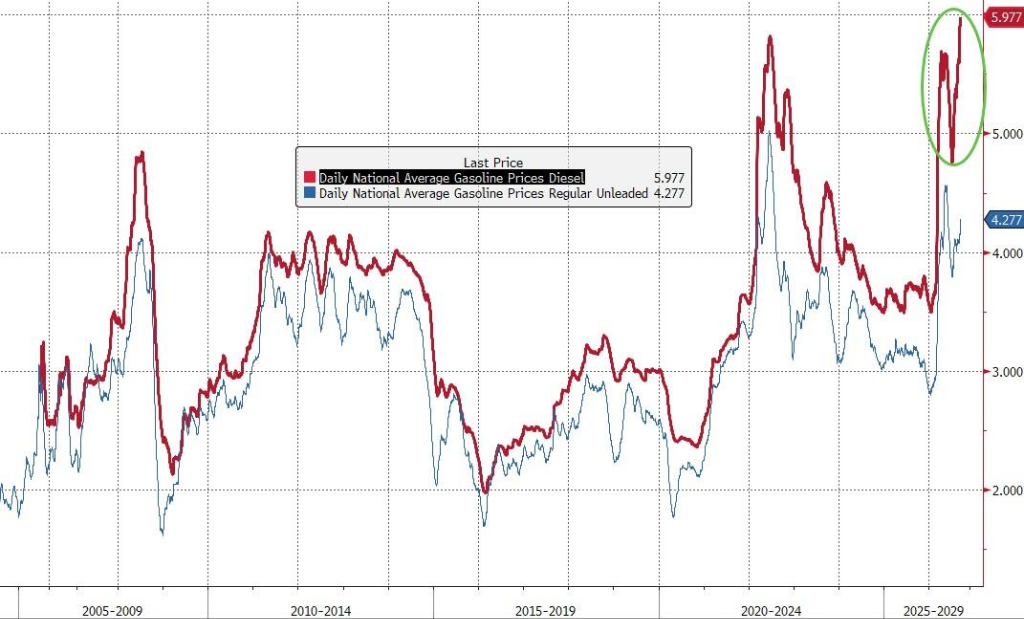
Data from the U.S. Energy Information Administration shows that U.S. distillate inventories remain at historically low seasonal levels, with retail diesel prices approaching the $6 per gallon mark. It was precisely the surge in diesel prices that drove the sharp rise in the energy component of the day's PPI data.
Global central banks embark on a wave of interest rate hikes
The European Central Bank implemented a 25 basis point rate hike in September, marking its second tightening measure of the year. ECB officials anticipate further policy tightening, with an October rate hike under consideration. The Danish central bank raised its benchmark interest rate from 1.85% to 2.10%, stating that this tightening move aligns with the actions of the European Central Bank.
Previously, the Bank of Japan raised rates by 25 basis points on June 16. The Reserve Bank of Australia has cumulatively raised rates three times in 2026, while the Reserve Bank of New Zealand has raised rates once.
Market pricing suggests the European Central Bank may implement one additional rate hike this year; the probability of a September rate hike by the Bank of Japan is approaching 90%; the Reserve Bank of Australia has retained room for one more rate increase. Swap markets indicate that the Bank of England is expected to raise rates four times during the same period, pushing interest rates to their highest level since February 2025.
Expectations of Federal Reserve rate hikes have reignited, with U.S. Treasury yields approaching highs last seen in 2007.
The U.S. Producer Price Index (PPI) accelerated to 5.4% year-on-year in August, exceeding expectations, while core PPI rose 4.6% year-on-year, sharply boosting expectations of Federal Reserve rate hikes.
Following the release of PPI data, the short-end interest rate market reacted first, with the 2-year Treasury yield rising 13 basis points in a single day. The short end significantly underperformed the long end—a typical characteristic of markets front-loading rate hike expectations.
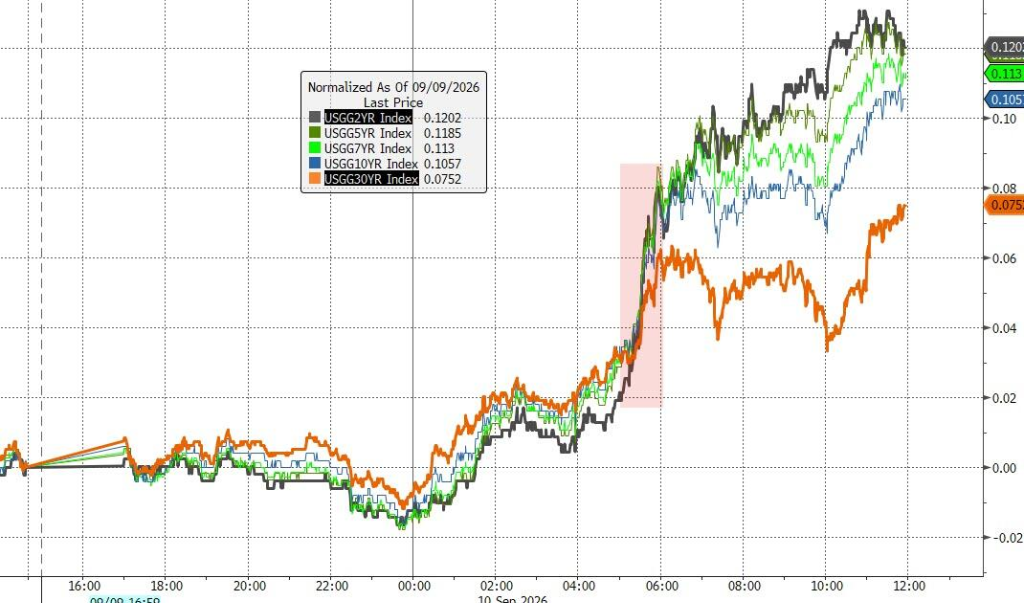
The 10-year yield touched 4.96%, with the market closely watching whether the 5% psychological barrier will be breached.
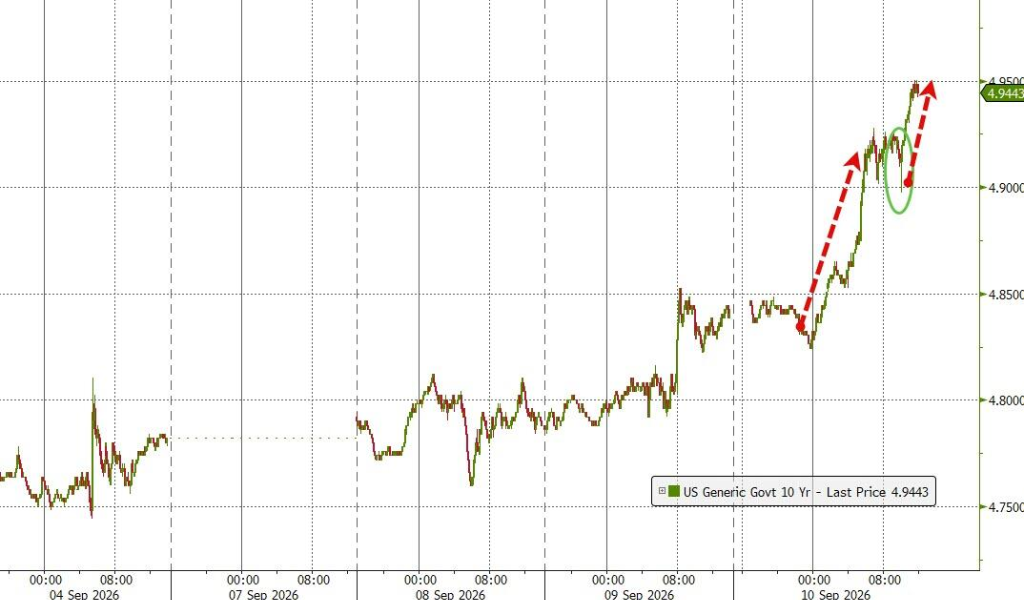
The afternoon auction of 30-year Treasury bonds briefly boosted market sentiment: the winning bid rate was 3 basis points lower than pre-auction yields, and the primary dealer bid-to-cover ratio hit a record low, reflecting genuine allocation demand. George Goncalves, Head of U.S. Macro Strategy at MUFG, stated:
"Investors have been eager for such yield levels for years. Perhaps not in the current environment, but based on interest in absolute yields, we believe the results of this auction reflect genuine demand."
However, buying momentum did not sustain after the auction, and the 10-year yield ultimately closed at its daily high. Rising energy prices also impacted major global bond markets: the UK 2-year yield surged 17 basis points in a single day; the European Central Bank raised rates by 25 basis points to 2.5% as expected, marking its second rate hike since the outbreak of the war involving Iran, citing that inflation will remain significantly above target for an extended period.
Tony Farren, Director of Interest Rate Sales and Trading at Mischler Financial Group, stated:
"Crude oil drives inflation; once it permeates the entire system, it becomes difficult to contain. As long as inflation remains elevated, yields will have no room to decline."
Krishna Guha of Evercore pointed out that CPI data is crucial for the Federal Reserve's decision on whether to raise interest rates next week. If the data fails to provide further confidence, the Fed "may have little room left to accommodate a new round of supply shocks." The firm has placed its previous "no rate hike" forecast under review and will update it after the CPI release.
Brendan Fagan, a macro strategist at Bloomberg, commented that PPI data "only strengthens the case for tighter policy, providing more solid fundamental support for rising yields at the margin, although part of this can be attributed to the renewed surge in crude oil prices."
U.S. stocks fell for the fourth consecutive session, with technology and small-cap stocks leading the declines.
U.S. stocks weakened at the open, with the S&P 500 Index falling for four straight days, marking its longest losing streak since June, and accumulating a total decline of 2% over the period.
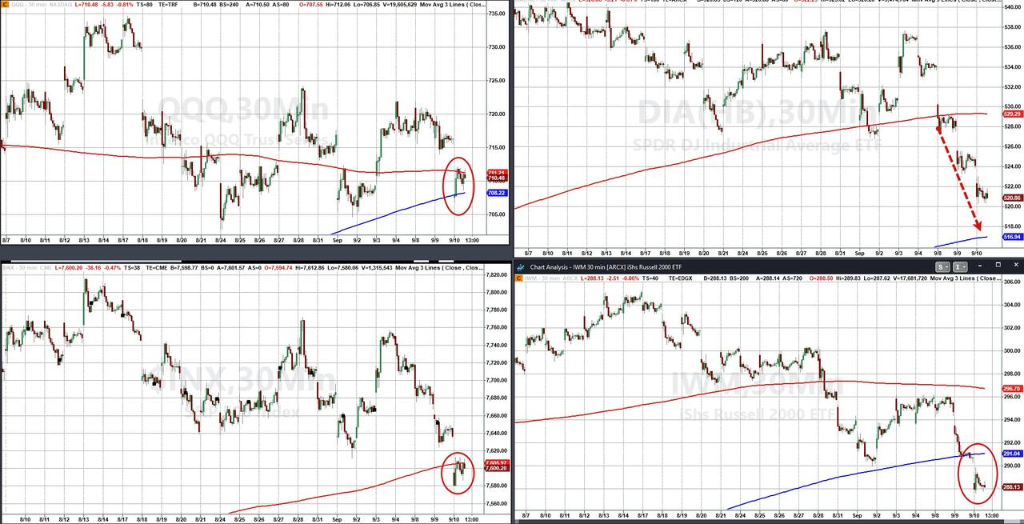
From a technical perspective, all major U.S. stock indices have reached critical technical levels. The Nasdaq Composite is hovering between its 50-day and 100-day moving averages, while the S&P 500 Index is clinging closely to its 50-day moving average,$Dow Jones Industrial Average (.DJI.US)$testing its 100-day moving average, while the small-cap index is declining at a faster pace than other indices.
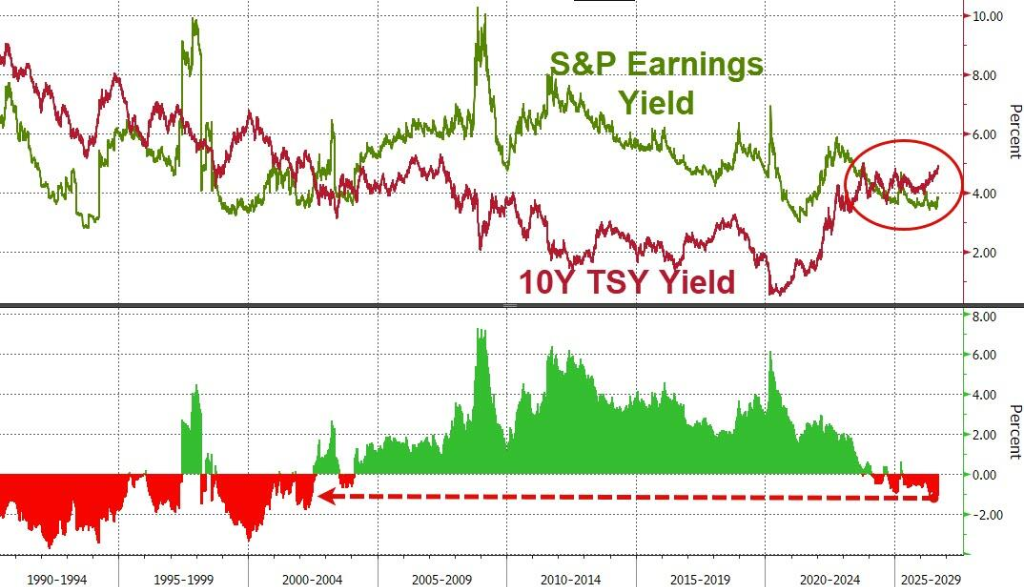
Rising yields have reduced the valuation attractiveness of stocks relative to bonds to their lowest level since 2002.
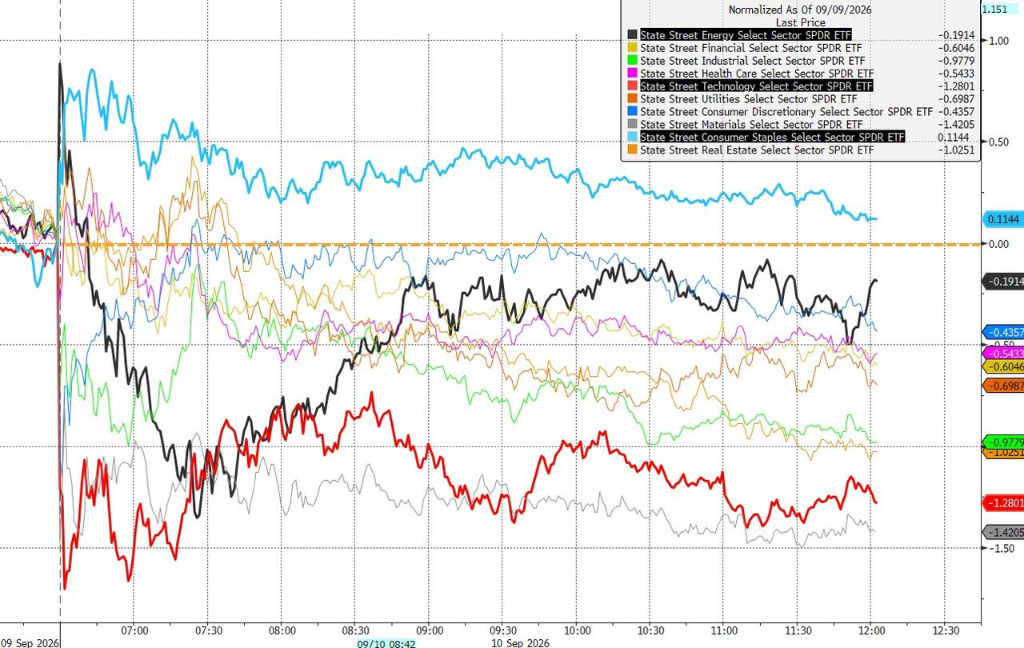
In terms of sector performance, nine of the eleven sectors closed lower, with the Materials sector suffering the steepest decline (-1.45%), followed by the Information Technology sector, which fell more than 0.9%. Defensive Consumer Staples and defense stocks bucked the trend to close higher, becoming the few bright spots of the day. Notably, despite a sharp rise in crude oil prices, the Energy sector barely managed to stay flat, indicating investor skepticism about the sustainability of high oil prices.
Chip stocks declined broadly, with the Philadelphia Semiconductor Index dropping 2.66%. NVIDIA fell 2.3%, and Micron Technology dropped 4.7%.
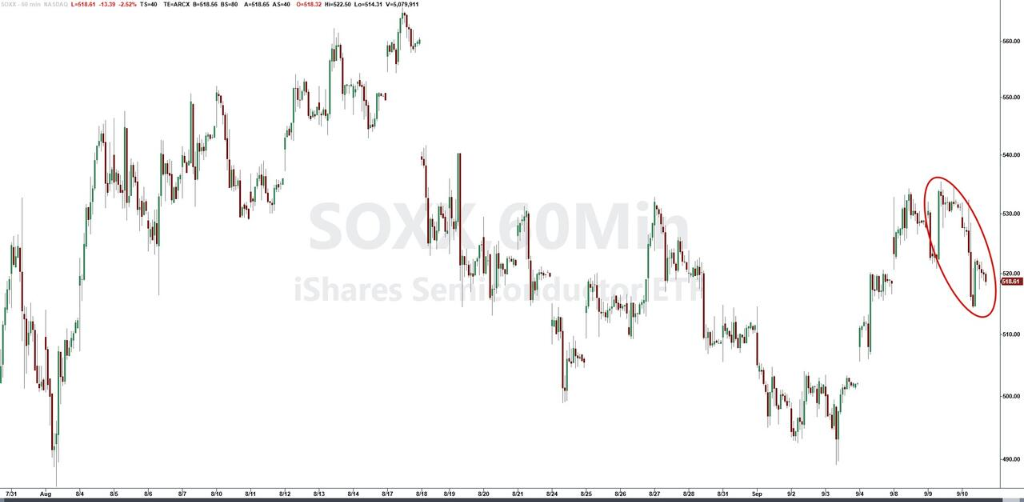
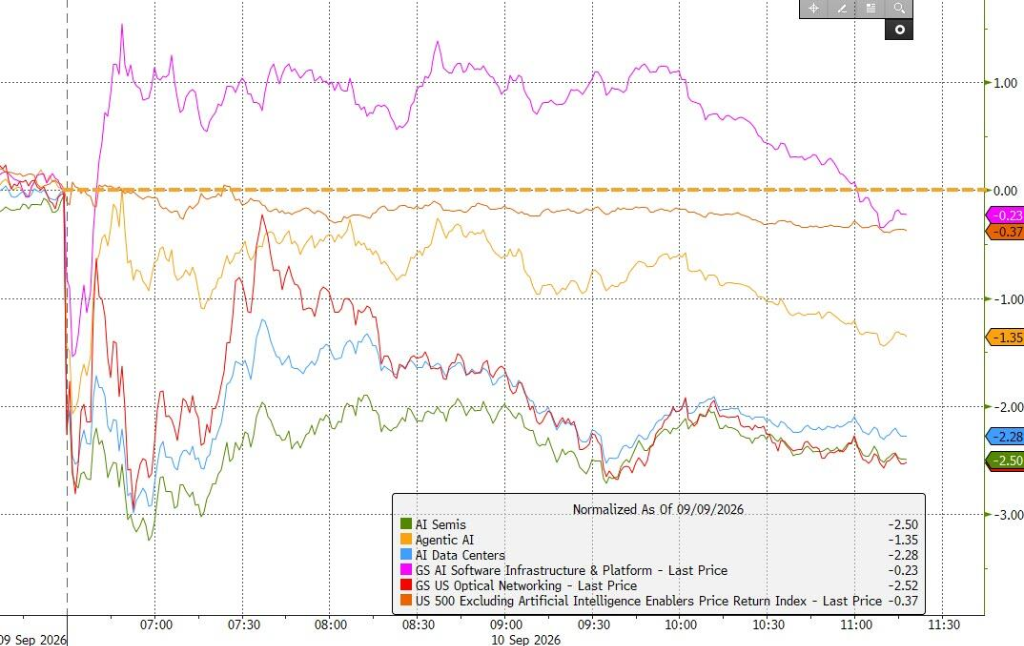
Stocks related to AI data centers experienced particularly significant declines as regulatory and political pressures continue to mount.
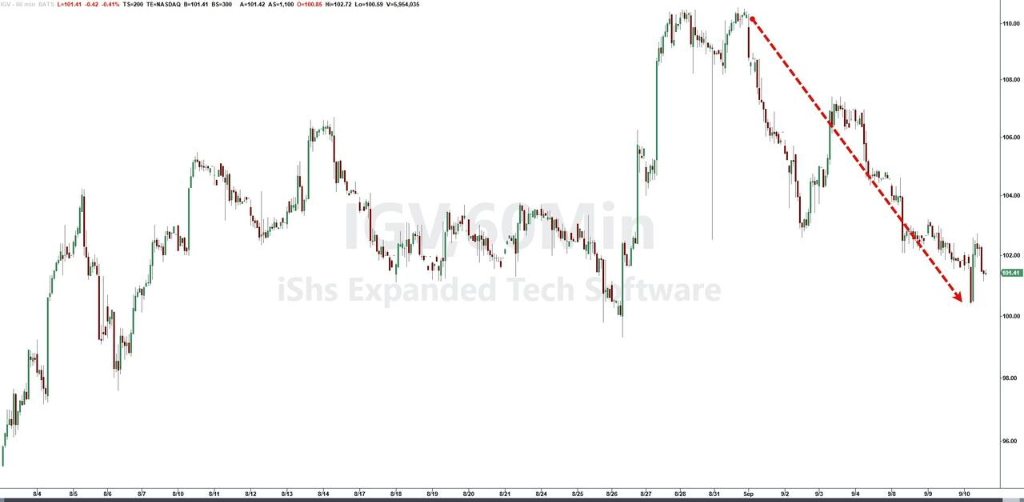
Software stocks also weakened across the board, interrupting the rebound momentum of momentum factors.
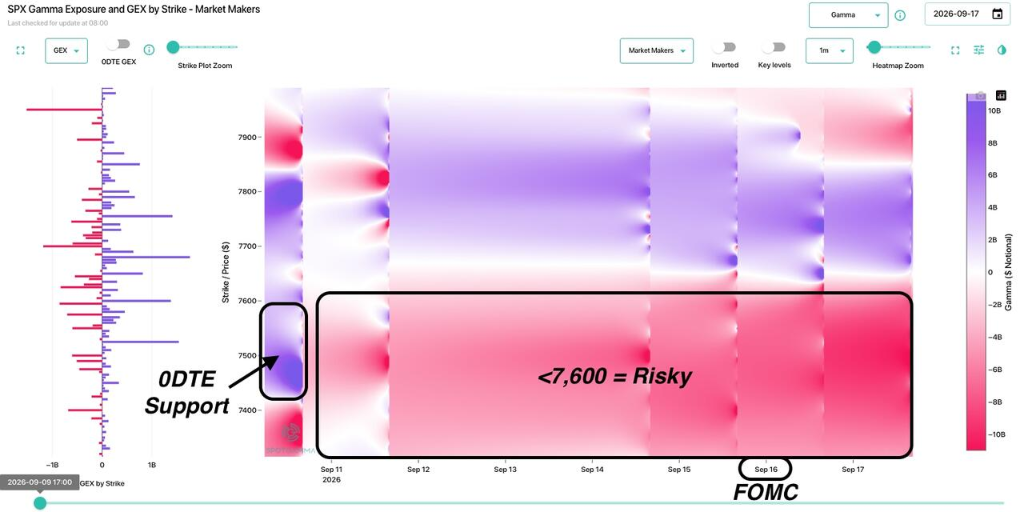
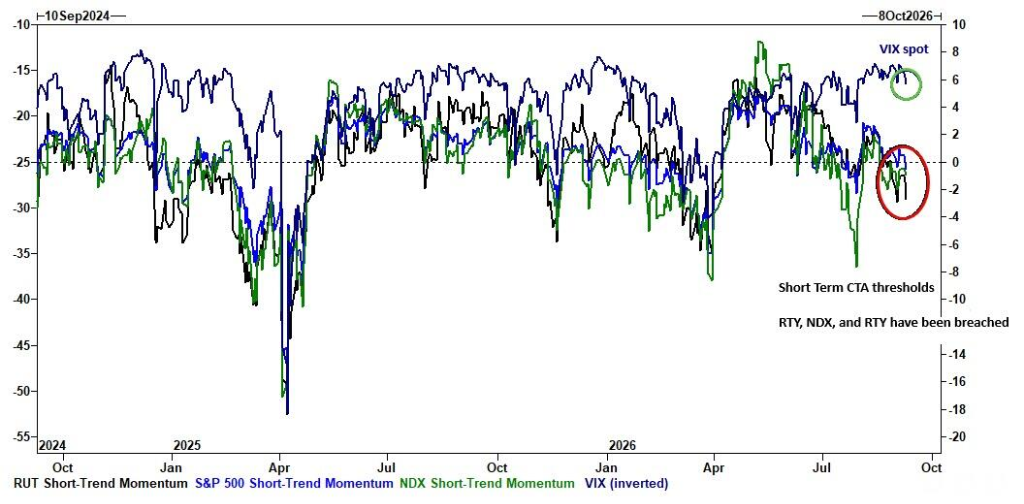
SpotGamma notes that 7,600 is a key support level for the S&P 500 currently; if this level breaks, the negative Gamma structure below it could accelerate market declines.
Brian Garrett, a quantitative trader at Goldman Sachs, pointed out that the current VIX stands at around 17, well below the fair value of 25 implied by their model based on actual market risk.
Oracle reported earnings with cloud computing growth exceeding expectations and initial success in AI data center projects; meanwhile, Adobe issued revenue guidance slightly below expectations, reigniting market concerns about the competitive landscape in AI.
U.S. retailers$Macy's (M.US)$Second-quarter results exceeded expectations, but third-quarter guidance disappointed investors, causing the stock price to fall 4.7%;$American Eagle Outfitters (AEO.US)$Reaffirmed annual comparable sales forecasts, but the stock price dropped more than 14%, hitting a new low since October 2023;
In the labor market, initial jobless claims for the week stood at 206,000, essentially flat, indicating that layoffs are not the primary concern at present. In the housing sector, existing home sales fell 2% month-on-month in August to a seasonally adjusted annual rate of 3.98 million units, marking the first time since mid-2025 that sales have dropped below the 4 million mark. The 30-year mortgage rate has returned to near 6.8% and is approaching 7%.
Amid converging pressures, Friday's CPI data will serve as the final hurdle before the Federal Reserve's decision next week, with the market holding its breath in anticipation.
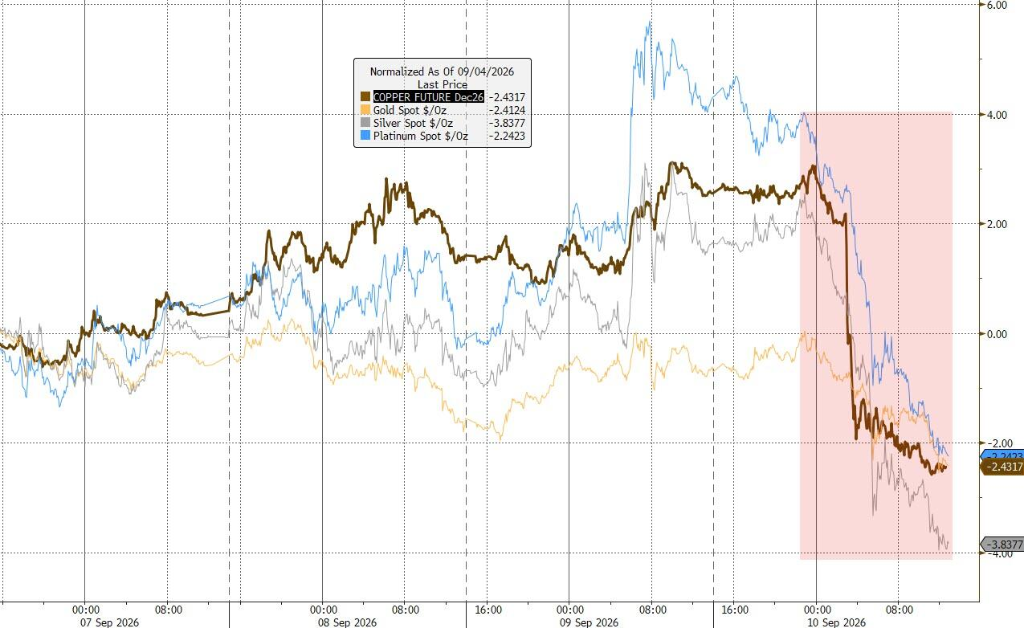
The U.S. dollar strengthened, while gold,$Bitcoin (BTC.CC)$Copper faces broad-based pressure.
$U.S. Dollar Index (USDindex.FX)$The euro rose 0.3% on the day. Following the European Central Bank's expected rate hike, no additional hawkish signals were released, putting pressure on the currency. However, the euro strengthened further after the release of PPI data. The strength of the U.S. dollar exerted downward pressure on other assets.
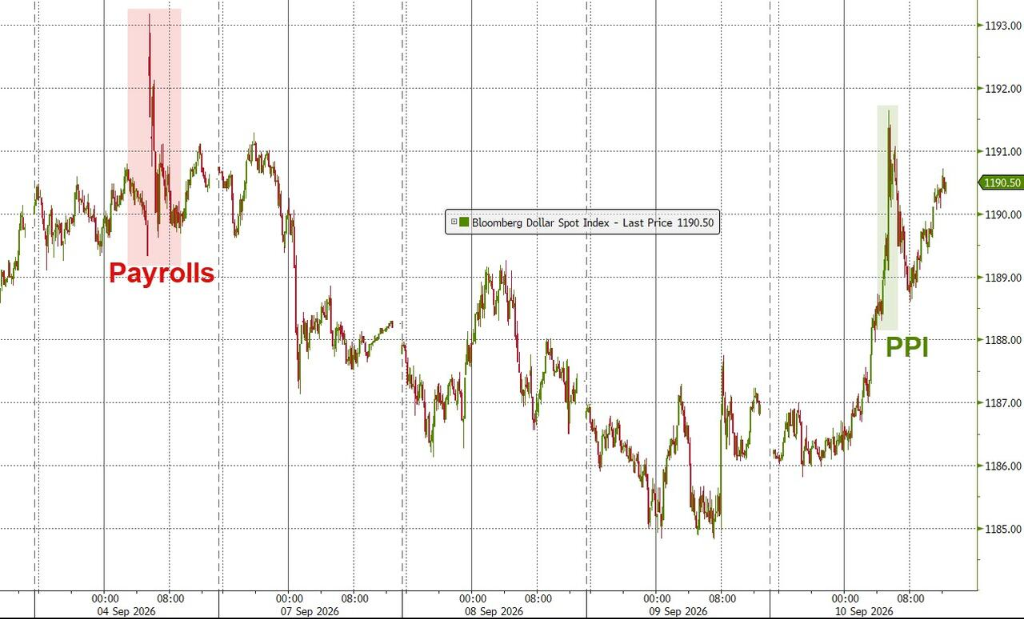
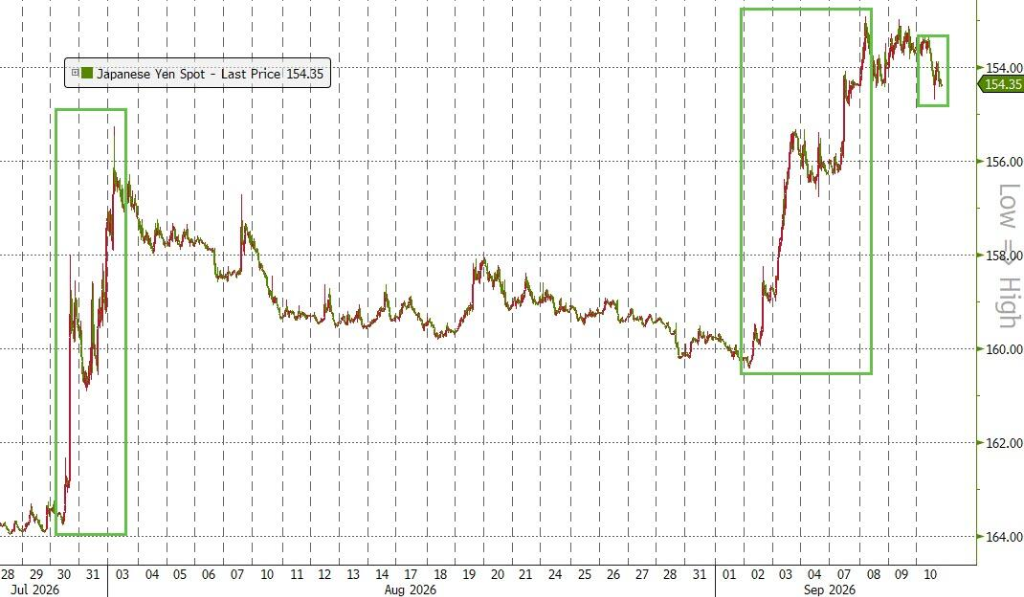
The yen fell 0.5%, trading at 154.34 per U.S. dollar.
Gold dropped 1.7% to $4,324.15 per ounce, falling below the $4,400 threshold.
Copper and other metals closed lower across the board, reflecting a broader weakness in industrial commodities.
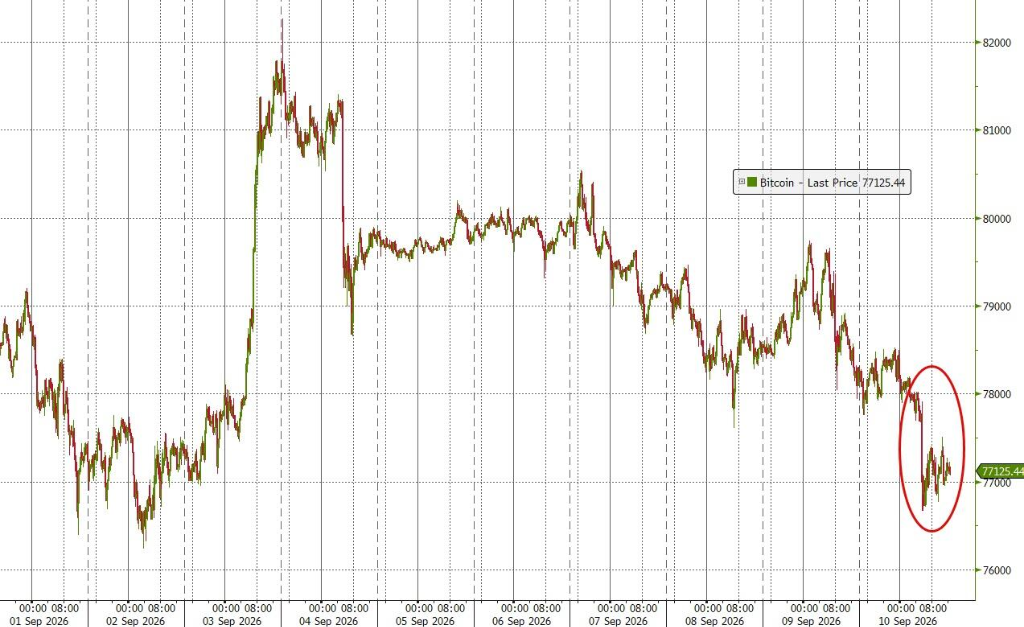
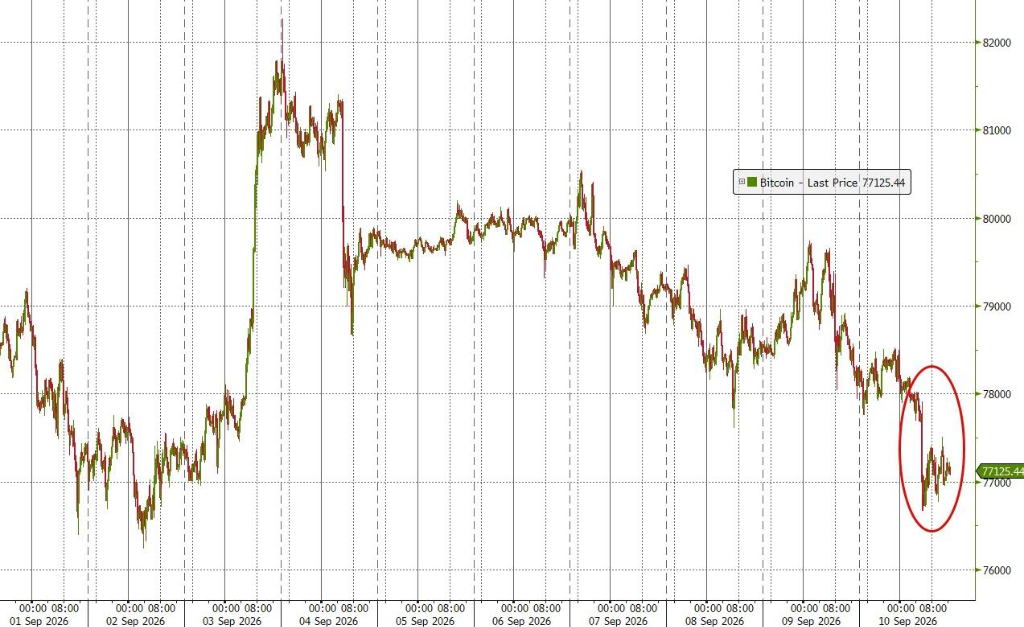
Bitcoin declined 1.5%, briefly dipping below $77,000 during intraday trading before closing at $77,150.
Company News
[Jensen Huang Bullish on Cybersecurity Market: AI-Driven 'New Problems' Are Creating New Demand]
Speaking to attendees at the Goldman Sachs Communacopia + Technology Conference in San Francisco, Jensen Huang stated, "Cybersecurity is likely to become the next major application scenario for AI." Huang pointed out that AI models are accelerating automated programming, which is impacting the cybersecurity industry. The significant increase in code generation speed means that code can be exploited and attacked more rapidly, leading to a corresponding rise in vulnerabilities that need to be patched.
[Oracle's First-Quarter Adjusted Revenue Reaches $19.35 Billion, Exceeding Market Expectations]
Oracle's adjusted revenue for the first fiscal quarter was $19.35 billion, compared with market estimates of $19.13 billion. Software revenue for the first fiscal quarter was $5.55 billion, against market expectations of $5.67 billion. Cloud infrastructure (IaaS) revenue totaled $7.39 billion, versus market estimates of $7.19 billion. The company projects adjusted earnings per share of $8.10 for the fiscal year. Total revenue for the second fiscal quarter is expected to grow by 30% to 34%. Cloud applications (SaaS) revenue for the first fiscal quarter was $4.22 billion, compared with market estimates of $4.26 billion.
[Adobe Projects Q4 Revenue of $6.8 Billion to $6.85 Billion]
Adobe projects fourth-quarter revenue of $6.8 billion to $6.85 billion, compared with market expectations of $6.85 billion. The company forecasts full-year revenue of $26.58 billion to $26.63 billion, an increase from its previous guidance of $26.5 billion to $26.6 billion. Adjusted earnings per share (EPS) for the full year are expected to be $24.45 to $24.50, up from the prior estimate of $24.35 to $24.45.
[Report: Microsoft Loses Business Due to Computing Power Shortages; Plans to Triple Data Center Capacity]
According to sources familiar with the matter, Microsoft plans to significantly expand its data center footprint, with global capacity expected to exceed 38 gigawatts by 2032, more than triple the current level of approximately 12 gigawatts. This initiative aims to alleviate computing power shortages driven by the rapid growth of AI and cloud businesses in recent years; previously, Microsoft had to decline certain AI and cloud service contracts due to insufficient capacity. The sources noted that this roadmap includes both self-built and leased data centers, but excludes$CoreWeave (CRWV.US)$computing resources rented from "new-type cloud service providers" such as CoreWeave. The relevant plans remain subject to adjustment based on customer demand and technological developments. Microsoft's capital expenditure reached $145 billion in the latest fiscal year, and analysts expect spending to continue growing in the coming years. Reports indicate that Microsoft's previous suspension of certain data center construction projects constrained computing power supply, causing some customers to turn to competitors. Documents show that Microsoft had restricted new cloud service subscriptions in key regions of the United States and Europe. Microsoft stated that it is accelerating data center construction.
Looking to select or analyze stocks? Want to understand the opportunities and risks in your portfolio? For all your investment questions,just ask Futubull AI!

Editor/Liam