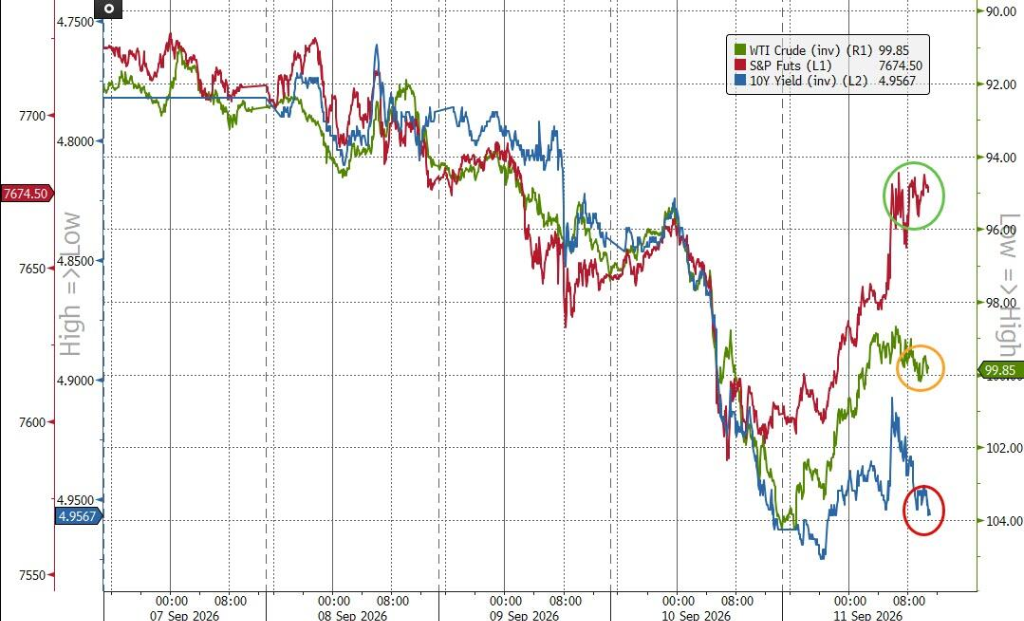
$S&P 500 Index (.SPX.US)$Closed up 0.86% to 7,656.98 points,$Nasdaq Composite Index (.IXIC.US)$The Nasdaq Composite rose 0.96% to 26,333.04 points, and the Dow Jones Industrial Average gained 0.98% to 52,573.29 points. WTI crude oil fell 2% to $99.99 per barrel, while Brent crude retreated nearly 3% from its four-month high but remained above $104. Long-term U.S. Treasuries outperformed short-term ones.
Despite pressures from persistently high U.S. price levels, U.S. Treasury yields approaching 5%, rising expectations of Federal Reserve rate hikes, and weak consumer confidence, market risk appetite remains supported by resilient corporate earnings, expectations of computing power expansion, and declining energy prices.
On Friday, U.S. stocks ended a four-day losing streak as oil prices retreated from multi-month highs, partially offsetting the pressure from hotter-than-expected inflation data. Core inflation in August remained above desirable levels, and interest rate futures indicate that a Federal Reserve rate hike next week is virtually certain.
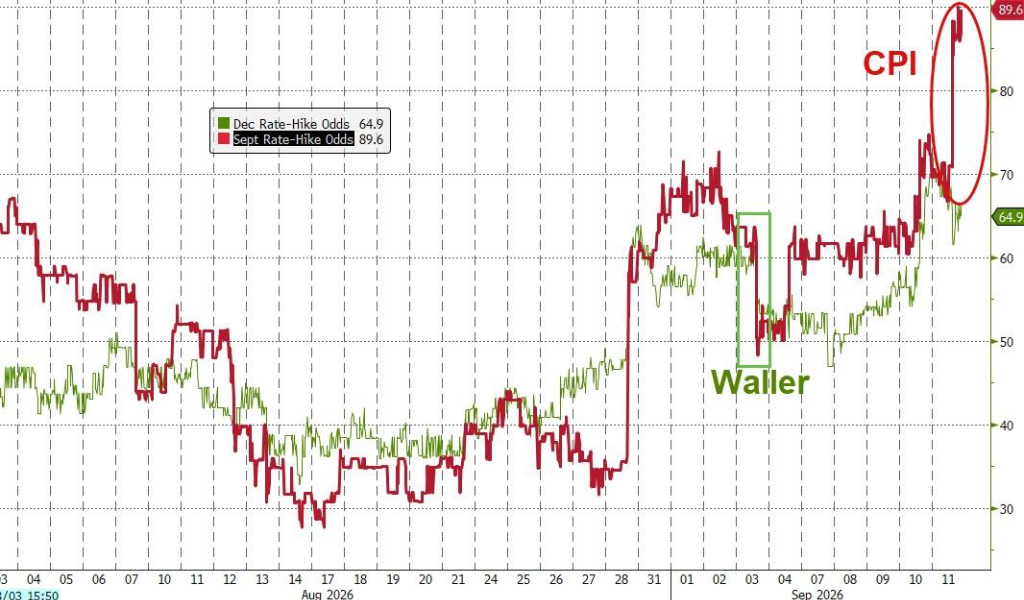
 According to Wall Street News, U.S. consumer prices accelerated in August, with gasoline prices rebounding after two consecutive months of declines. Data from the CME FedWatch tool shows that the probability of a rate hike next Wednesday, as priced in by interest rate futures, rose from 72% a day earlier to nearly 90%. Thomas Martin, Senior Portfolio Manager at GLOBALT Investments, stated that this is essentially a "done deal."
The S&P 500 closed up 0.86% at 7,656.98 points, the Nasdaq Composite rose 0.96% to 26,333.04 points, and the Dow Jones Industrial Average gained 0.98% to 52,573.29 points. WTI crude oil fell 2% to $99.99 per barrel, while Brent crude dropped 3% from its four-month high. Long-term U.S. Treasuries outperformed short-term ones.
Tech giants generally rose (ranked by market capitalization)NVIDIA (NVDA.US)fell 0.03%, Apple rose 1.75%, Google C rose 1.53%,$Microsoft (MSFT.US)$rose 0.65%,$Amazon (AMZN.US)$rose 1.94%,$SpaceX (SPCX.US)$rose 2.04%, Meta rose 0.57%,$Tesla (TSLA.US)$and another by 0.52%.
$Philadelphia Semiconductor Index (.SOX.US)$rose 1.81%, bringing the weekly gain to 0.76%. Of the 30 component stocks, 28 rose and 2 fell.$ON Semiconductor (ON.US)$rose 8.51%,$Skyworks Solutions (SWKS.US)$up 5.14%, ARM up 4.17%, Intel up 2.61%, AMD up 2.49%.
Most memory-related stocks declined,$Seagate Technology (STX.US)$down 3.73%,$SanDisk (SNDK.US)$down 3.5%,$Western Digital (WDC.US)$down 2.98%,$Micron Technology (MU.US)$down 0.22%,$SK Hynix (SKHY.US)$up 0.94%. The Roundhill Memory ETF (DRAM) rose 0.92%.
The optical communication sector strengthened overall,$Coherent (COHR.US)$up 4.16%,$Marvell Technology (MRVL.US)$rose 4.03%,$Astera Labs (ALAB.US)$up 2.35%,$Corning (GLW.US)$up 2.01%, AAOI up 2%, CRDO up 1.65%,$Lumentum (LITE.US)$fell 0.93%.
The computer equipment concept sector led the gains,$Dell Technologies (DELL.US)$rising 11.98%,$HP Inc (HPQ.US)$rising 8.4%,$Super Micro Computer (SMCI.US)$rising 7.28%. Royal Bank of Canada Capital Markets initiated coverage of Dell Technologies with an "Outperform" rating and a target price of $640.
Popular Chinese concept stocks showed mixed performance,$Nio (NIO.US)$rising 3.07%, while TAL Education Group rose 2.7%,$New Oriental (EDU.US)$rising 2.27%,$XPeng Inc. (XPEV.US)$rising 1.93%,$Li Auto(LI.US)$rising 1.37%,$Tencent Music (TME.US)$Rose by 1.01%.$Legend Biotech (LEGN.US)$down 2.87%,$Atour Lifestyle Holdings (ATAT.US)$down 1.34%.
Peter Williams of 22V Research noted that the market interpreted the inflation data as "hot enough to trigger Federal Reserve tightening," which could be seen as a "good thing" amid concerns over overly loose policy. Meanwhile, Bret Kenwell of eToro cautioned that if the Federal Reserve frames the rate hike as insurance against resurgent inflation, the market might view it as a "dovish hike."
August CPI heats up; probability of a rate hike next week approaches 90%
Data released on Friday showed that U.S. consumer prices accelerated in August. Gasoline costs rebounded after two consecutive months of decline, increasing pressure on the Federal Reserve to tighten monetary policy. According to the CME FedWatch tool, the interest rate futures market's pricing for a rate hike next Wednesday rose from 72% on Thursday to nearly 90%.
Chris Zaccarelli of Northlight Asset Management stated that while there is no guarantee the Federal Reserve will act next week, it is difficult to see how the central bank could justify keeping interest rates unchanged.
Jim Baird of Plante Moran believes the core issue for this meeting is whether the Federal Reserve's assessment of overall economic conditions remains sufficiently dovish to warrant a temporary pause, or whether a modest re-acceleration in inflation constitutes a trigger for resuming rate hikes. He added that if policymakers choose to wait and watch again, external questioning about "what they are waiting for" will become more direct and vocal.
Florian Ielpo of Lombard Odier Investment Managers noted that this was not an inflation report that sparked market fear, nor was it one that definitively resolved the puzzle of U.S. inflation. Following the data release, the market reversed some of its recent losses.
Equity markets halted their decline and rebounded, long-term bonds outperformed, and oil prices retreated.
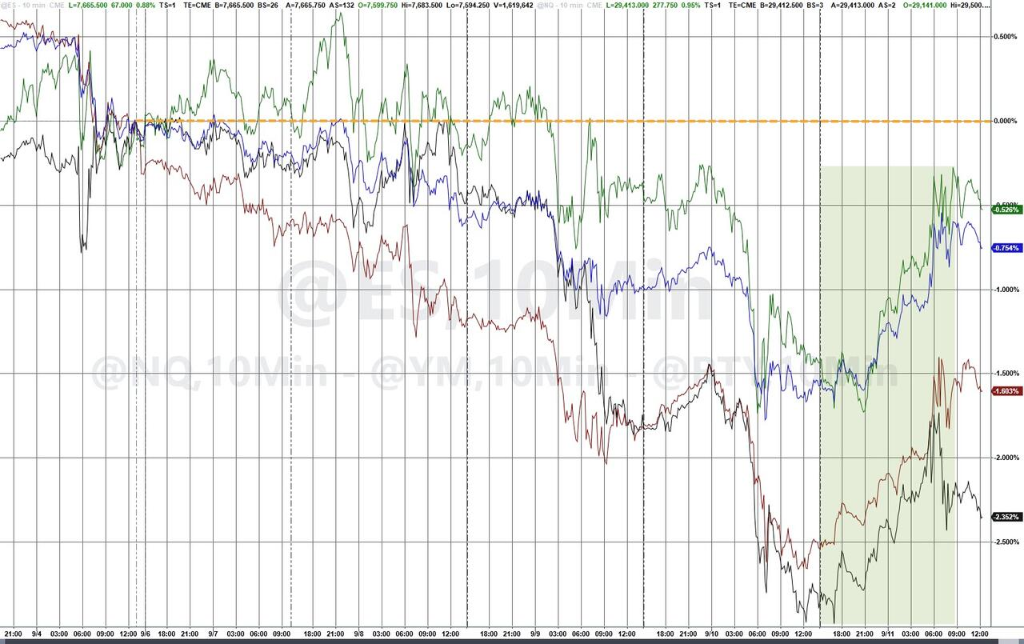
The S&P 500 Index closed at 7,656.98 points, up 0.86%, following four consecutive days of declines. The Nasdaq Composite Index rose 0.96%, and the Dow Jones Industrial Average gained 0.98%.
Nine of the 11 sectors in the S&P 500 rose, with Communication Services and Consumer Discretionary gaining 1.35% and 1.13%, respectively.
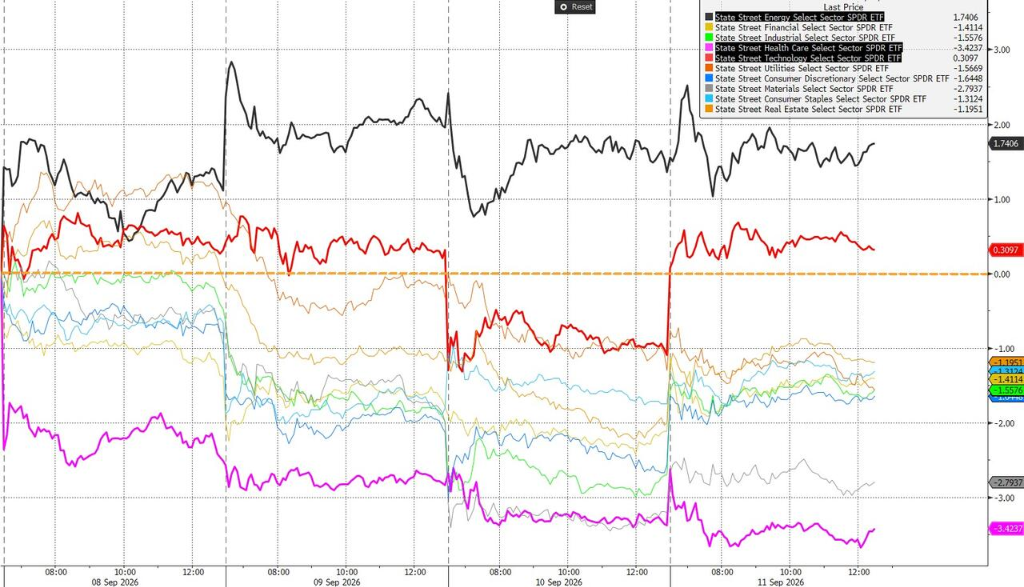
The CBOE Volatility Index fell by 2 points to 15.88, indicating a recovery in risk appetite. Trading volume remained relatively light compared to recent levels, with total U.S. equity trading volume at 14 billion shares, below the 20-day average of 14.9 billion shares.
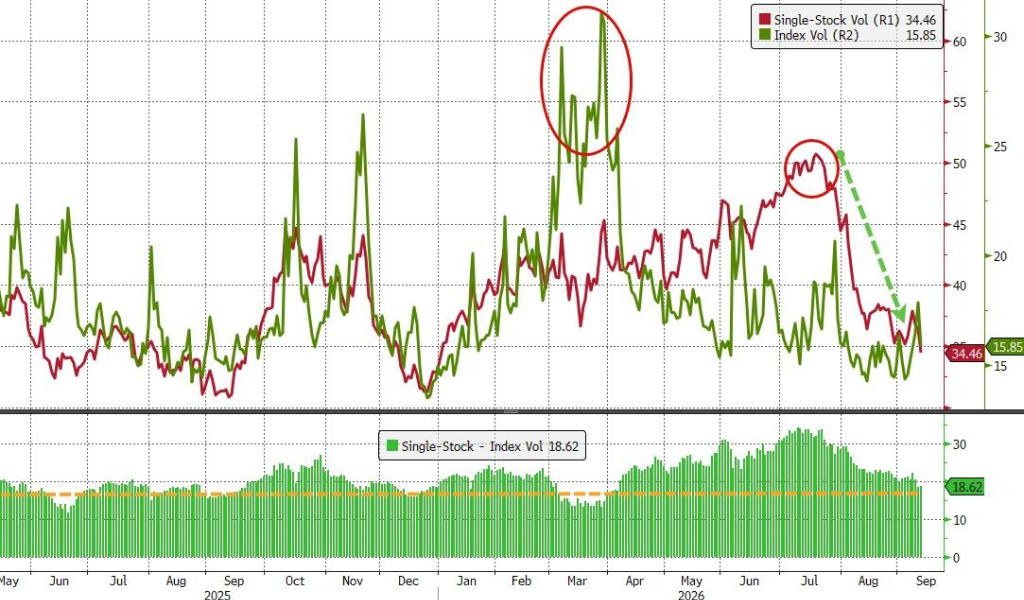
AI server suppliers strengthened.
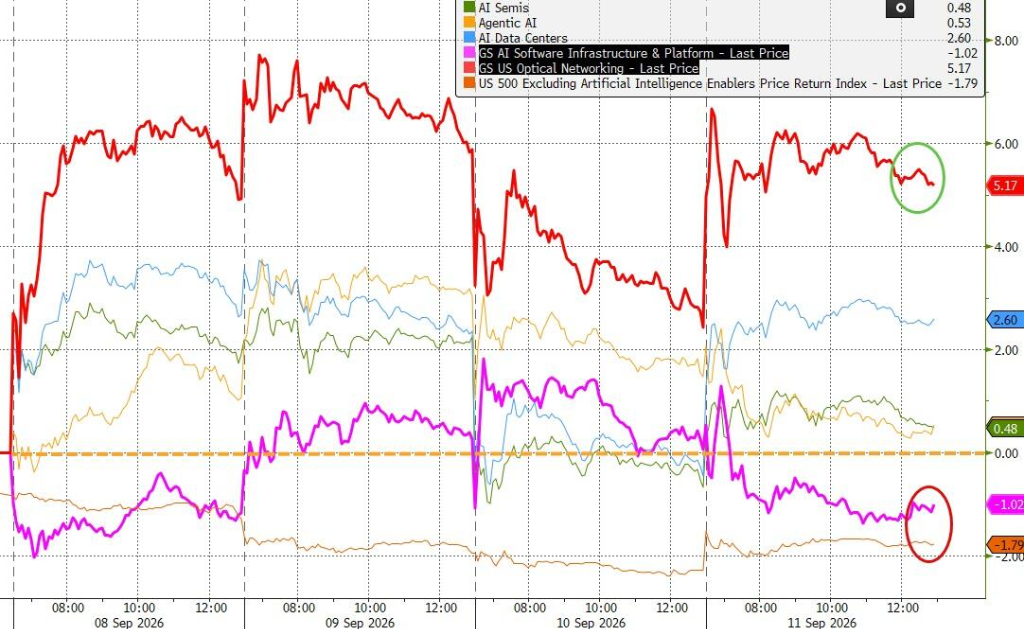
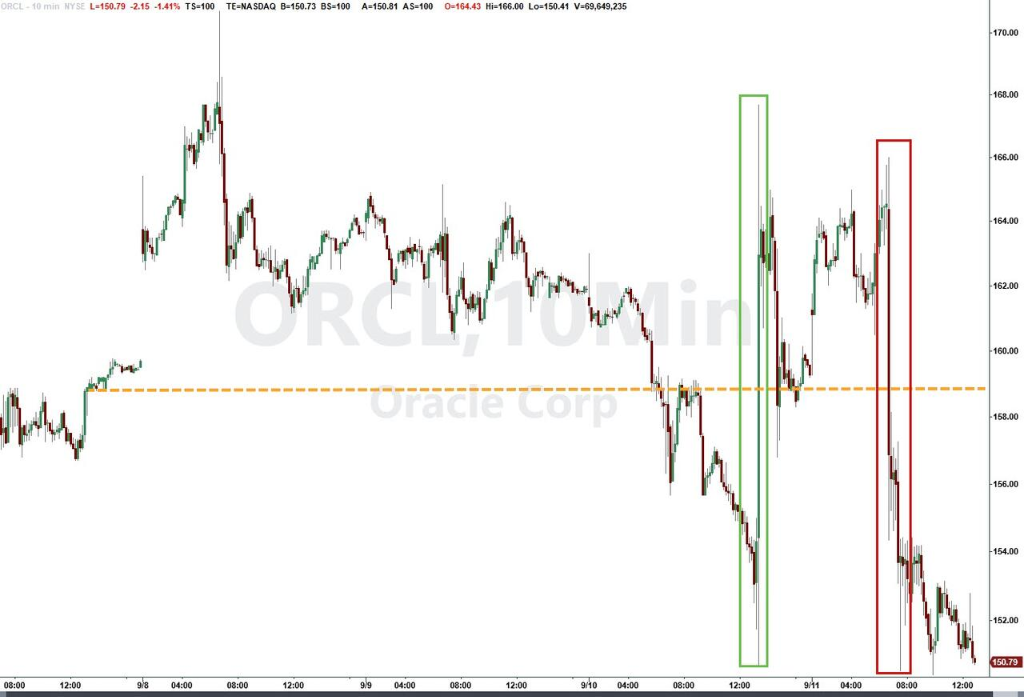
Dell Technologies rose 12% to a record high, HPE rose 12%, and HP Inc. rose 8.4%, mainly driven by$Oracle (ORCL.US)$stronger-than-expected quarterly cloud revenue. Oracle's share price fell 1.8% due to narrowing gross margins.
In other corporate news,$ACV Auctions (ACVA.US)$surged 44%, after$Copart (CPRT.US)$agreed to acquire the online auto auctioneer for nearly $1.9 billion.
Despite Friday's rebound, the S&P 500 declined 0.8% for the week, while the Nasdaq Composite fell 0.7%. The S&P 500 remains about 2% below its record closing high set on August 13, but is still up 12% year-to-date in 2026.
The recent pullback, combined with strong earnings prospects, has lowered the S&P 500's forward price-to-earnings ratio to 19x, the lowest level since April 2025.
Among S&P 500 constituents, the ratio of advancing to declining stocks was 2.1 to 1. The S&P 500 recorded eight 52-week highs and nine new lows, while the Nasdaq logged 45 new highs and 182 new lows.
Looking beyond next week, Bret Kenwell of eToro stated that given the resilience of the labor market and strengthening monthly core inflation, the Federal Reserve finds it increasingly difficult to avoid raising interest rates. However, the bigger question is how to proceed thereafter.
If the Federal Reserve frames this action as an insurance measure against a resurgence of inflation rather than the start of a prolonged hiking cycle, the market may interpret it as a 'dovish hike.' This could limit further upward pressure on long-term U.S. Treasury yields, even as short-term yields remain elevated.
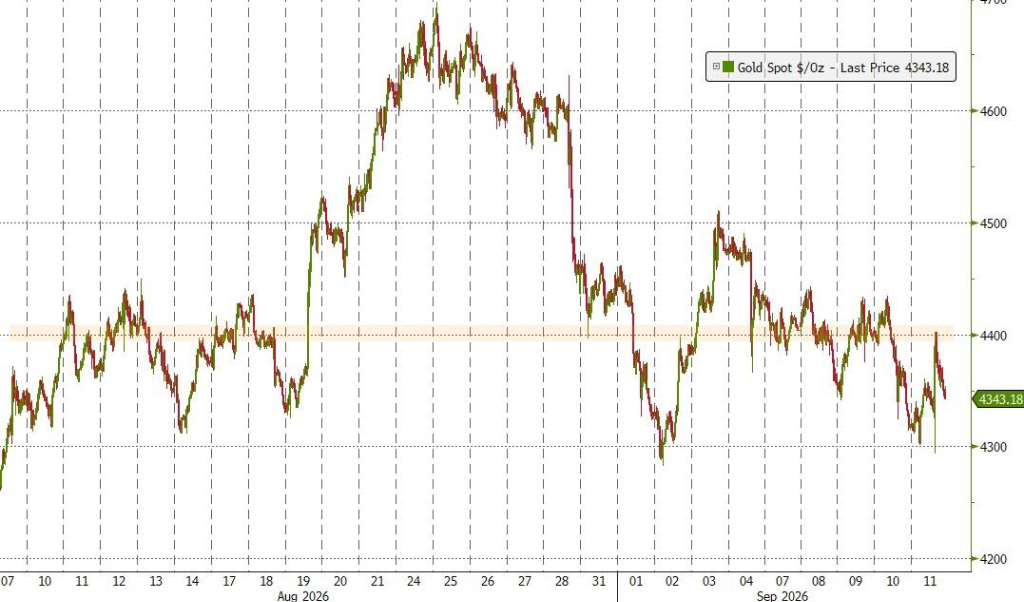
U.S. Treasury yields continued to climb, while gold held above $4,300.
In the bond market, the yield on the 10-year U.S. Treasury note rose 1 basis point to 4.97%, the 2-year yield increased 4 basis points to 4.63%, and the 30-year yield remained largely flat at 5.36%.
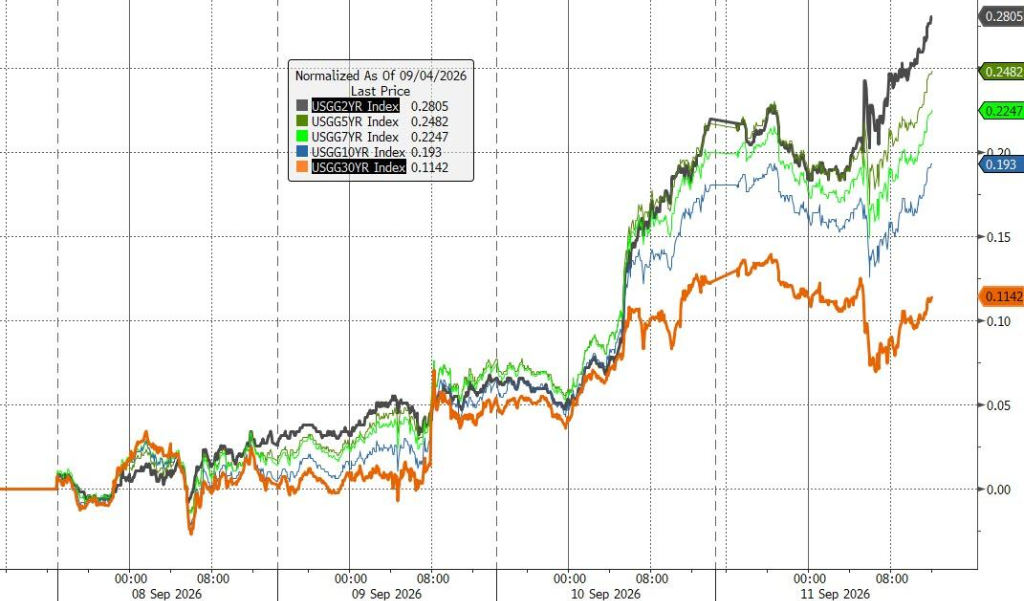
Long-term bonds outperformed short-term bonds, reflecting market expectations that the Federal Reserve will raise interest rates to maintain its anti-inflation credibility.$German 10-year government bond yield (DE10Y.BD)$held steady at 3.50%,$UK 10-Year Government Bond Yield (GB10Y.BD)$Down 3 basis points to 5.34%.
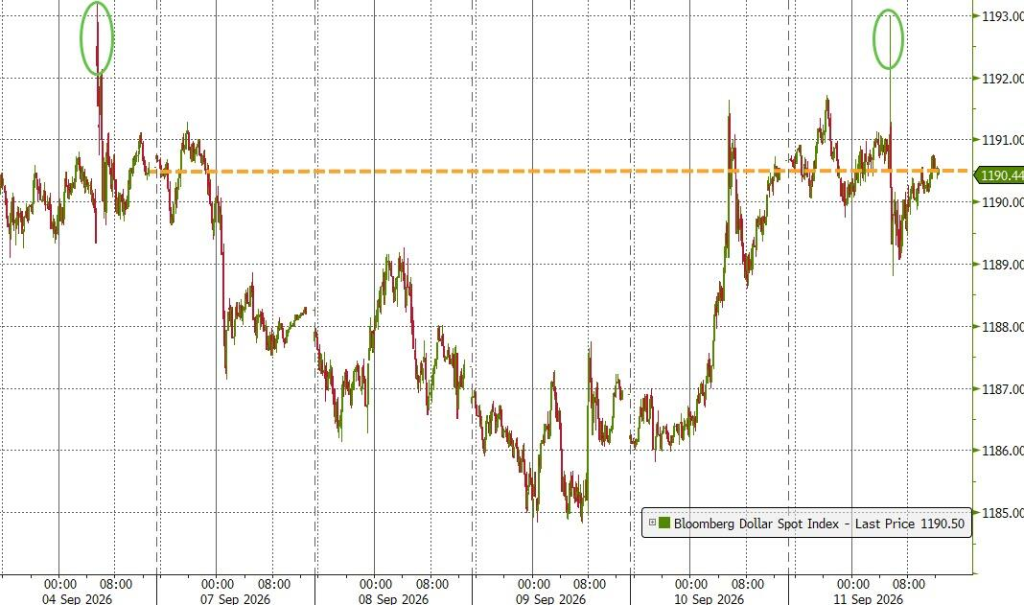
In the foreign exchange market, the Bloomberg Dollar Spot Index remained largely flat. The euro fell 0.1% against the U.S. dollar to 1.1596, while the pound sterling rose 0.1% to 1.3528. The U.S. dollar declined 0.5% against the Japanese yen to 153.68.
In commodities, WTI crude oil dropped 2% to $100.44 per barrel, and Brent crude futures fell nearly 3%, remaining above $104.
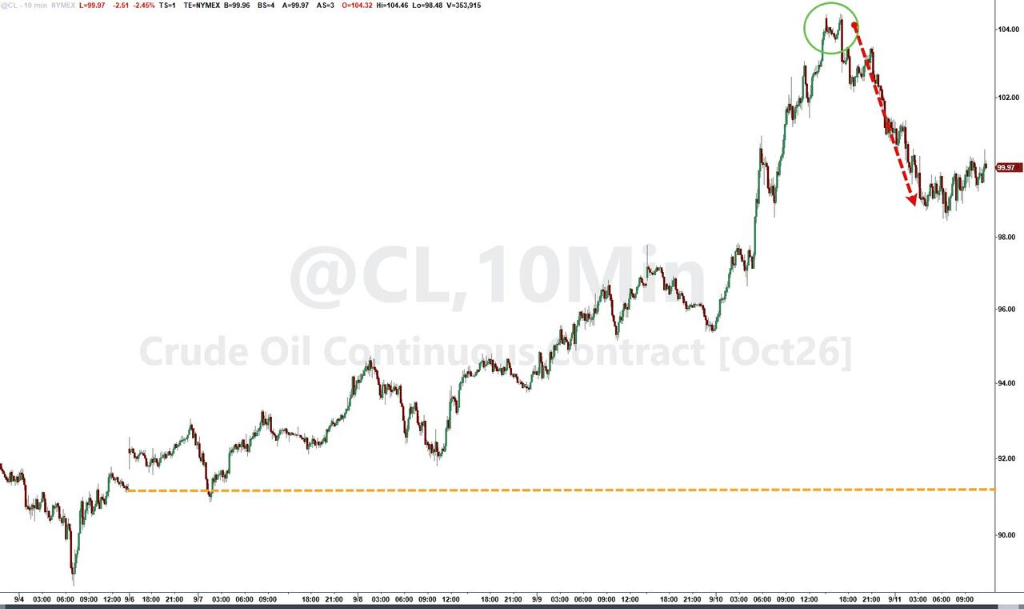
Oil prices still rose approximately 9% this week, driven by persistent concerns over supply disruptions following attacks on Middle Eastern shipping routes. Spot gold increased 0.7% to $4,349.06 per ounce.
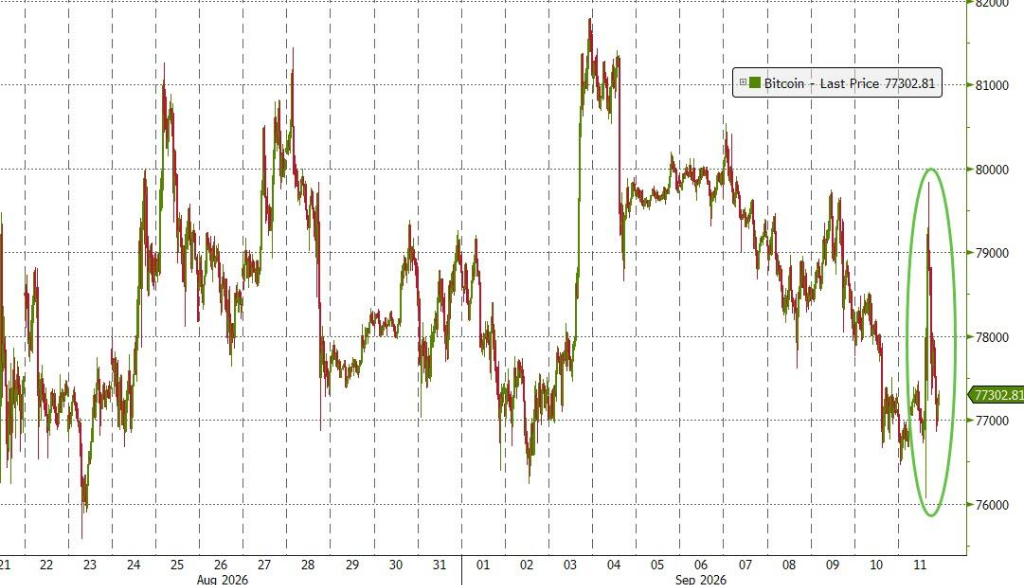
$Bitcoin (BTC.CC)$Bitcoin rose 0.3% to $77,439.13, while Ethereum gained 3.4% to $2,545.44.
Company News
[Apple Executives Respond to Entry into Foldable Screen Competition]
On Thursday local time, a video podcast featuring Apple's new CEO John Ternus and Senior Vice President of Worldwide Marketing Greg Joswiak was released. Addressing why Apple has been slow to launch a foldable smartphone, Ternus stated that the key determinant for a product's market entry is not the number of competitors already in the market, but whether Apple has a product concept that simultaneously meets its standards for quality, durability, and design. In his view, the iPhone Duo has finally crossed this threshold.
[Meta May Have Prematurely Leaked Next-Generation High-End Ultra-Thin Headset]
According to VR industry media, developers discovered clear images of a new headset codenamed "Project Phoenix" in Meta's Horizon OS firmware. Compared to the currently available Quest series, this device significantly reduces the size of the headset unit, with an overall form factor resembling a pair of thick-rimmed glasses.
[SpaceX Reveals Major Positive News: Multi-Billion Dollar Computing Power Contract Secured, Orbital Computing Timeline Released]
Brett Johnson, Chief Financial Officer of SpaceX, attended the 2026 Goldman Sachs Technology Conference and disclosed the latest business developments. Johnson revealed that SpaceX recently secured another large order for AI computing power hosting, with the computing business rapidly becoming a core growth engine. He also announced timelines for various business lines, including ground-based computing expansion, orbital computing, Starship commercialization, and direct satellite-to-mobile connectivity. Johnson stated that SpaceX is confident in achieving its target of $100 billion in annualized recurring revenue (ARR) by the end of 2026.
[Goldman Sachs Technology Conference Concludes: Tech Giants Unanimously Bullish on AI]
At the recently concluded Goldman Sachs Technology Conference, executives from tech giants such as NVIDIA and SpaceX expressed strong optimism about the prospects of AI and reaffirmed expectations for robust growth. The Goldman Sachs Sales and Trading team summarized that, consistent with the previous two days, the overall signal from participating companies on the third day was "firmly bullish," although investors are still awaiting evidence that AI capital expenditure is translating into sustained revenue.
Looking to select or analyze stocks? Want to understand the opportunities and risks in your portfolio? For all your investment questions,just ask Futubull AI!

Editor/Liam