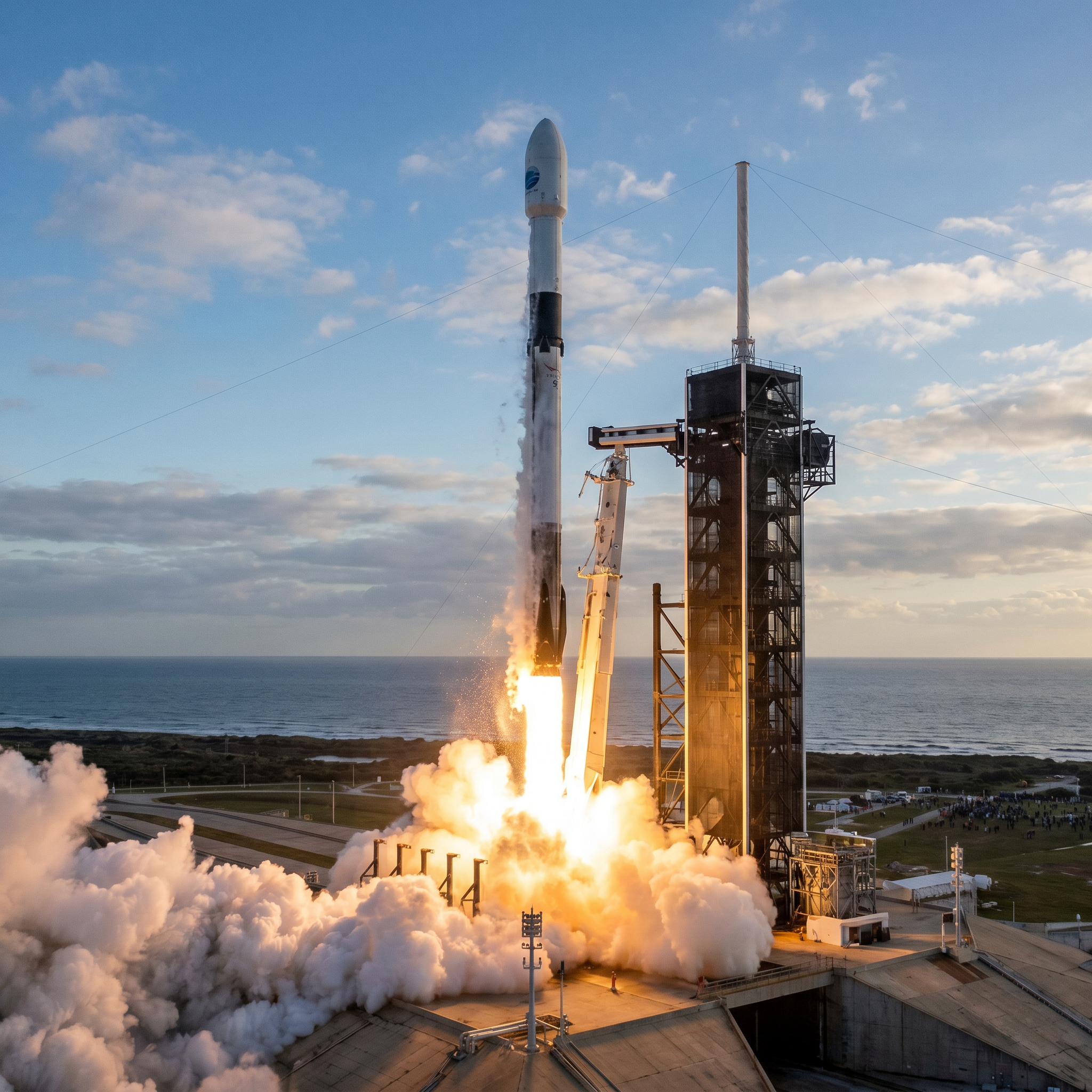
Before Starship achieves regular launches, each liftoff will entail a trade-off. Elon Musk is facing a strategic dilemma: whether to launch satellites that can generate cash flow or to send humans into deep space.
$SpaceX (SPCX.US)$There are ambitious plans for Starship. If all goes according to schedule, this 407-foot-tall rocket will one day be used to build a network of AI‑powered data centers orbiting Earth and to carry humans to the Moon and Mars.
However, until Starship achieves regular launches, each liftoff will entail a trade-off. Elon Musk is facing a strategic dilemma: should he launch satellites that can generate cash flow, or send humans into deep space—where the returns remain uncertain?
 SpaceX plans first to launch its initial batch of upgraded, revenue‑generating Starlink V3 satellites into orbit during the critical 14th test flight of the Starship. On August 20, an airspace notice issued to pilots designated September 15 as the target launch date—later than the end‑August window Elon Musk had previously mentioned on an earnings call. However, SpaceX has yet to publicly confirm a specific launch date, and Starship's launch schedule often shifts due to hardware readiness and the Federal Aviation Administration's approval process.
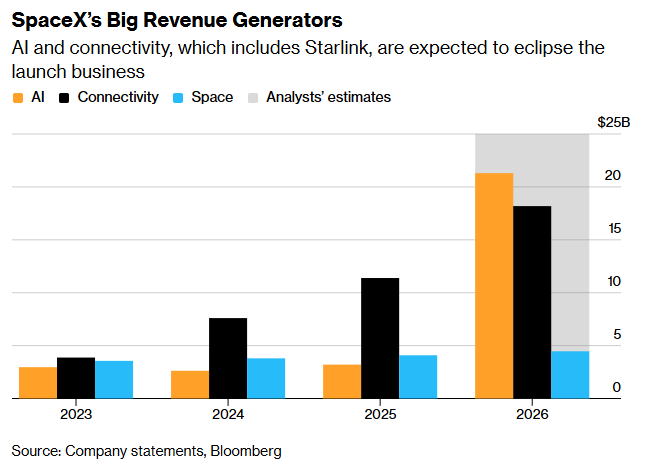
Ensuring that Starship operates as planned is of paramount importance to SpaceX and its shareholders. The company not only relies on Starship to revitalize its Starlink satellite‑internet network— which accounted for nearly 55% of its revenue in the second quarter— but also needs it to launch satellites for a variety of commercial applications. Moreover, there is perhaps the most lucrative mission of all: sending a futuristic, orbit‑based "giant" data center into space. SpaceX says this could help it tap into an AI market with a total potential value of up to $26.5 trillion.
This has forced Elon Musk to make a major decision. Launching more satellites will almost certainly bring in substantial cash and deliver immediate returns to investors. By contrast, refining Starship's deep-space exploration capabilities will require an additional investment of several billion dollars and will likely necessitate many more test launches, with returns that are far more uncertain.
Starship is critical to the growth of Starlink and to realizing Elon Musk's ambitious vision. Musk predicts that this rocket, designed for rapid, repeated launches, could be flying nearly once a day within a year, making it the engine of SpaceX's financial success for years to come.
Clayton Swisher, deputy director of the Aerospace Security Program at the Center for Strategic and International Studies (CSIS), stated that the next phase of Starship's development will test whether SpaceX's revenue-generating model conflicts with Elon Musk's vision of "enabling humanity to live on planets beyond Earth."
Operating multiple business lines in parallel will compel SpaceX to balance, even as it ramps up its launch capacity, the competing demands of various stakeholders: corporate customers eager to deploy more satellites, the obligations imposed by the U.S. space program with its ambitious goals and requirements, and SpaceX's own aspirations to expand Starlink and remain at the forefront of humanity's deep-space exploration efforts.
SpaceX stated that Starship will be capable of handling all these missions. Ultimately, this rocket will become SpaceX's sole launch vehicle, replacing the current workhorse, the Falcon 9. Since 2010, SpaceX has relied on the Falcon 9 to serve its space customers, deploy Starlink satellites, and deliver cargo and astronauts to the International Space Station.
However, the Falcon 9's size and payload capacity are insufficient to enable SpaceX to rapidly expand its commercial space business and venture into deeper space. According to Musk, to launch satellites in large numbers and transport the personnel and supplies needed for deep-space colonization, he requires a high‑capacity rocket capable of repeated, safe flights.
To swiftly achieve the goal of launching a Starship every day, many factors must fall into place—this year, the Starship has only lifted off twice. Nevertheless, a successful low‑Earth‑orbit test flight would demonstrate that nothing can prevent SpaceX from using the Starship to launch Starlink satellites time and again.
After that, every Starship launch will, to some extent, represent a choice: Will SpaceX use each new launch to expand the Starlink network, or will it continue testing and refining Starship for its other design mission—sending humans to other planets?
SpaceX Chief Financial Officer Brett Johnson said at an investor conference on Thursday that he is excited about Starship's upcoming test flight, "because it will be a revenue‑generating mission," adding that the company "will then enter full‑rate production and begin launching mass‑produced V3 Starlink satellites into orbit."
Starlink vs. NASA
Ten years ago, Elon Musk unveiled the Starship program, positioning it as a cornerstone of his vision to establish a permanent human presence on Mars. Financial documents show that SpaceX has so far invested more than $15 billion in Starship. The company is betting that its satellite business will generate additional revenue while engineers continue development, preparing the spacecraft to carry humans off Earth.
Over the past three and a half years, nearly every test launch of Starship has aimed to demonstrate its ability to lift off, reach space, and return safely. While it has encountered some explosive setbacks like other rockets, recent tests of its capability to deploy satellites into orbit have proceeded relatively smoothly.
Some of the reusable Falcon 9 rockets once represented a breakthrough in the aerospace industry. Starship, however, aims to take things even further—returning to Earth intact and ready for immediate reuse. This has long been a major challenge, as large spacecraft must withstand extreme heat upon reentry. Nevertheless, Musk has stated that concerns about Starship's thermal protection system have largely been addressed.
Mike French, a consultant with the Space Policy Group, stated that SpaceX must first demonstrate that Starship can reliably perform its basic missions before expanding into more complex applications. He added, "I believe what we're still seeing is that this expansion has yet to materialize."
Starship is not just a source of high hopes for SpaceX's investors. The rocket is the cornerstone of a roughly $4.3 billion contract between SpaceX and NASA to help return astronauts to the Moon, with a deadline set for 2028. During the August earnings call, analysts pressed Musk on the progress of adapting Starship into a lunar lander.
At the time, Musk stated: "Before we let anyone board, we need to make Starship extremely reliable for launching satellites. However, we expect to achieve a very high launch cadence, which should quickly bring us to the safety standards required for human spaceflight—perhaps as early as the end of next year."
As far as the lunar mission is concerned, Starship still has several milestones to achieve. To demonstrate that the rocket can traverse the vast distances it must cover, SpaceX needs to perform an in-space docking between two vehicles and transfer propellant between them. This technology has never been tested in space at the scale required for SpaceX's lunar mission. When analysts raised this issue during the earnings call, SpaceX President Gwynne Shotwell did not provide a timeline for when such tests might take place.
Refining in-orbit refueling technology will require additional testing and will consume more of the company's resources as SpaceX expands its launch capabilities. To accomplish a single lunar landing, Starship may need to perform roughly a dozen or more consecutive refueling‑and‑launch missions, though the exact number remains subject to change.
SpaceX's commitments to NASA also require it to build multiple versions of the Starship. According to Paul Sean Hill, a member of NASA's Aerospace Safety Advisory Panel, the lander being developed for the agency differs from the Starship used to launch satellites and will need to meet NASA's stringent safety standards. Hill stated, "This non‑standard variant poses a significant challenge to their manufacturing process."
NASA stated that it has "a thorough understanding" of the development progress of its commercial partners and expressed confidence in SpaceX's ability to adapt Starship for use as a lunar lander. In an email, NASA's press office noted: "SpaceX has a long track record of advancing major projects in parallel, from the Falcon Heavy rocket and Starlink to Starship." The office also pointed out that once Starship begins flying more frequently, it will create additional opportunities for further vehicle development.
Capital buffer
When SpaceX's $4.3 billion contract with NASA is spread across a multi-year R&D timeline, its scale turns out to be quite modest. By contrast, financial filings show that Starlink satellites generated $11.4 billion in revenue in 2025 alone, up nearly 50% year over year.
During the August earnings call, when discussing the new Starlink product line, Musk stated: "We do expect the Starlink communications business to experience very rapid revenue growth as V3 satellites are deployed. Their capabilities are more than ten times those of the V2 satellites, and our launch cadence will also increase tenfold."
As it navigates a range of competing priorities, SpaceX is drawing on its capital reserves to invest in the construction of new launch facilities, including a recently announced spaceport off the coast of Louisiana that is slated to cost $100 billion—potentially enabling the company to dramatically increase its launch cadence in the years ahead.
Carissa Christensen, founder of the aerospace analysis firm BryceTech, said, "What truly impresses me is the sheer scale of capital that SpaceX can now access."
Until Starship achieves regular, routine launches, every liftoff will entail trade-offs. In its IPO filing, SpaceX stated that the company "may prioritize our own launch payloads over additional U.S. government contracts or third-party customers." The company has already begun politely turning away clients who rely on Falcon 9 to reach space, sparking concern throughout the satellite industry.
On the other hand, keeping the government at arm's length may not be a winning strategy. According to Christensen, "For space companies, the government is indispensable. It serves as the regulator, the provider of launch facilities, a paying customer, and a source of expertise."
About one-fifth of SpaceX's disclosed revenue comes from its various contracts with the U.S. government, giving the company a strong incentive to maintain favorable treatment from the government. Equally important is guarding against competitive threats from rival Blue Origin—if SpaceX were to struggle or shift its focus elsewhere, NASA might turn to Blue Origin to provide lunar landers. "It's a delicate balancing act," said Christensen, "and this company excels at it. I believe SpaceX takes its government customers seriously and will work hard to keep them satisfied."
Editor/Jeffy