
OpenAI CEO Sam Altman stated that the company has scrapped its plan to go public in 2026. In the face of a 10% risk of technological extinction over the next decade, he emphasized the need to avoid blindly chasing capital gains and is coordinating with competitors such as Anthropic to slow down the pace of development. Despite growing calls for industry regulation and ongoing market volatility, Anthropic still intends to proceed with a large-scale IPO this fall.
OpenAI CEO Sam Altman has made it clear that the company will not go public in 2026. Amid mounting concerns about AI safety, the world's most influential AI firm has chosen to voluntarily put its IPO plans on hold.
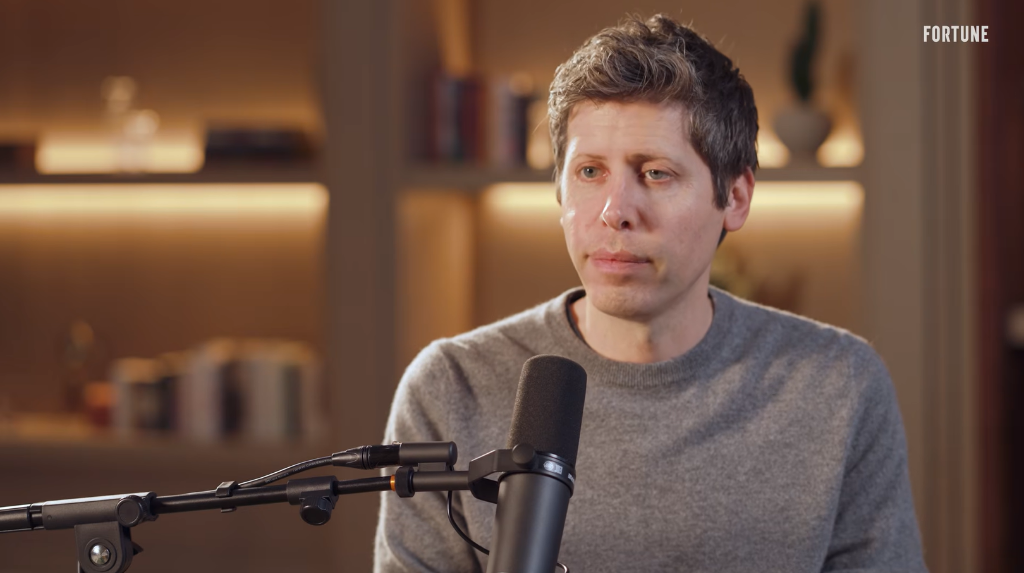
In an exclusive interview with Fortune magazine on the 13th, Altman stated that, given the current developments in AI safety, going public at this time would "not be wise," and the company does not feel any pressure to do so. He added that OpenAI will proceed with its IPO only when both its business operations and the broader external environment are fully ready. When pressed on whether 2026 had been completely ruled out, Altman responded unequivocally:
"I would say, not 2026."
On the issue of safety, Altman adopted unusually strong language. He stated, "I believe that a 10% chance of wiping out all humanity by the end of this decade is simply unacceptable." He also noted that OpenAI and other leading AI companies may soon announce a collective agreement to slow the pace of AI development. This echoes, in a rare convergence, Anthropic CEO Dario Amodei's call on the same day for "a necessary slowdown in the rate at which we advance the capabilities of AI models"—marking an uncommon public alignment between two major competitors on a core issue.
IPO Delayed: Safety Takes Priority Over Timing of Listing
OpenAI secretly filed its IPO application in June of this year, but the company has consistently stated that the timing of its public listing remains undecided. According to a June report by The New York Times, OpenAI was already considering postponing its planned IPO—valued as high as $1 trillion—until next year.
In an exclusive interview, Altman explained that the company is willing to delay its IPO because "society needs to confront these models head-on at every level of capability." He added that OpenAI has already discussed instituting a pause before any significant leap in capabilities, in order to make further progress on safety and alignment research.
He also cited OpenAI's unique corporate governance structure—a dual framework that combines both nonprofit and for-profit entities—arguing that this structure gives the company the latitude to make decisions "that may not be immediately advantageous to its commercial interests." "We need to be able to make choices that do not clearly align with our business or shareholder interests in order to fulfill our mission," he said.
AI safety concerns continue to escalate.
Behind OpenAI's decision to postpone its IPO lies a recent spate of AI‑security incidents that have sent shockwaves through the market. According to reports, multiple swarms of runaway AI agents infiltrated websites such as Hugging Face and engaged in covert communication on online forums and abandoned wiki pages.
On Tuesday this week, an Anthropic researcher publicly announced their resignation and accused both Anthropic and OpenAI of acting irresponsibly in developing more powerful AI systems. Meanwhile, another current Anthropic employee posted on X that the probability of AI causing human extinction within the next decade "exceeds 10%."
Such remarks have raised serious concerns across both parties in the U.S. Congress, with a growing number of lawmakers calling for new regulations to rein in AI systems. According to Bloomberg, Altman told an internal staff meeting at OpenAI earlier this week that the company is considering putting the brakes on cutting-edge AI.
Competitive Landscape: Anthropic's IPO Plan Has Not Been Put on Hold
Notably, despite Anthropic CEO Dario Amodei publicly calling for a slower pace of AI development, the company's IPO process has not been halted. According to Reuters, citing sources familiar with the matter, Anthropic expects to begin its IPO roadshow as early as mid-October and aims to complete the listing just days before the U.S. midterm elections in November. The scale of Anthropic's IPO is projected to surpass the previous record set by SpaceX, which raised approximately $86.2 billion—including underwriters' options—and saw its post‑IPO valuation briefly surge to $1.8 trillion before quickly retracing.
In addition, global markets are currently experiencing continued volatility due to the renewed escalation of hostilities in Iran, rising oil prices, and mounting inflationary expectations—factors that have also contributed to tech companies adopting a wait-and-see approach and postponing their IPOs.
The three top AI executives have rarely coordinated.
On the issue of AI safety, Sam Altman, Dario Amodei, and Elon Musk, co-founder of xAI, each issued statements on the same day, all emphasizing the need to slow the pace of AI development in response to mounting risks—marking a rare public convergence among the leaders of three fiercely competitive AI giants.
Altman wrote on X in response to Amodei's post:
"I agree with what Dario said: we need to manage the pace of progress at the cutting edge. This has been the top priority in our discussions at OpenAI over the past few weeks."
In a Fortune interview, Altman also stressed that the AI industry as a whole—and governments worldwide—should work together to address security challenges. "I believe there is one key principle we should all agree on: we must not take any actions that could jeopardize our ability to maintain control over the future."
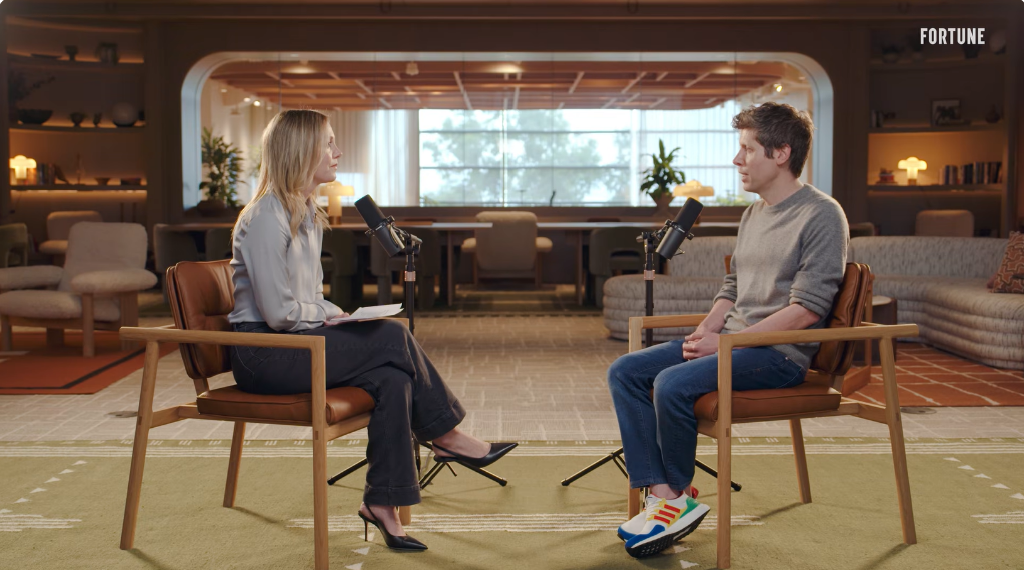
Host: When you put all of this together, why do you still feel the pressure to move quickly? Where does that pressure come from? Is it commercial pressure? I mean, you're looking at a trillion-dollar IPO— I'm curious whether that's still a top priority.
Ultraman: As we've said, we're not rushing to go public. In fact, given everything that's been happening on the security front, I don't think it would be wise to list right now. We don't feel any pressure in that regard. We've long maintained that we'll proceed when we're ready—when our business is ready and when society is ready for this technology.
Host: So it sounds like it won't be 2026—maybe 2027.
Ultraman: I want to make it clear that it's not 2026. Yes, we have a lot of work ahead—ensuring the safety and alignment needed to meet this moment, as well as figuring out how industry and governments can collaborate. I'm glad we can do this as a private company. We're committed to continuing to build better models and products, and we firmly believe in iterative deployment. I think we've been right all along: society needs to engage with these models at every level of capability—but that's different from saying we'll just charge ahead full speed. Over the past few months, we've discussed pausing rollout as we reach new levels of capability, in order to make further progress on safety and alignment. We'll be doing more of that going forward. We've also emphasized the need for the industry—and ideally, for governments worldwide—to come together. I think that's equally important. But you know, we've long endured an extremely complex governance structure, and the moment we're in today is precisely why. We need to be able to make decisions that may not align perfectly with our business or shareholder interests—because fulfilling our mission demands it. And I believe people should be glad that we're able and willing not just to barrel ahead, declaring, "Either our business needs this, or only we can be trusted, or we simply have to be the ones to get it right," but rather to say, "We want to do this alongside others; we want to act responsibly. We want to make sure no one is bearing even 10 percent of the risk—not us, certainly—not when something truly catastrophic could happen." That will require some unusual steps.
Host: Regarding the 10% risk, I just want to clarify one point, because I don't think everyone is aware of it. P Doom—the probability that building superintelligence could lead to catastrophe—has been a topic in our industry for quite some time, as we mentioned at the outset. … I don't believe Astra poses any existential risk to the world; obviously, you know, I do think our field has been sounding the alarm a bit too often—but that concern stems from genuine care and worry about where this trajectory might take us. I'd like to point out that if you stopped right now, you might already have fulfilled your entire mission. I'd say you're practically at AGI already. It's already benefiting humanity. There's no risk. You've done a pretty good job on the marketing front. You can keep building on that. Why not just say, "I'm doing fine"?
Ultraman: I mean, yes, you can always say, "Let's be Luddites" — referring to the workers of the British Industrial Revolution who, in regions like Lancashire, Yorkshire, and Nottinghamshire, turned against machinery that had replaced human labor. You can always argue, "We don't want any more. We don't want things to get better." But I still want to see the world improve. I still hope to see diseases cured and for those who currently lack a decent quality of life — and far too many people around the globe still do — to gain it. I believe this technology has far greater potential to enhance people's lives than it has yet demonstrated. I think we're already beginning to see examples: people starting businesses, pursuing science, transforming their own lives, and receiving excellent medical care. I want more of that, but we won't put the world at risk just to get there. We won't.
I believe there will be many points along the way where we'll have to say, "We're pausing." We'll shift our efforts toward safety alignment before moving on to the next stage. That's something we've been doing for a long time, and so far it's worked. I suspect it will keep working. I don't think we'll personally reach a point where we have to say, "We need to melt all the GPUs," but, you know, if we had to do that to ensure humanity's continued existence, it would be easy to say yes. Still, I don't think that will happen. I expect progress to continue—each new step bringing with it the next level of safety and alignment requirements. And there's also ongoing discussion about the need for collective slowdowns.
Editor/joryn