NVIDIA (NVDA.US)NVIDIA fell 3.4%, and Intel dropped 5.6%. The yield on the 10-year U.S. Treasury note rose above 5.00% intraday for the first time since October 2023, approaching its highest level since 2002. WTI crude oil briefly neared $105 per barrel during the session, while U.S. diesel prices hit a record high of $6.23 per gallon. European natural gas prices rose 4%, surpassing €84 per megawatt-hour.
Leading figures in artificial intelligence rarely joined forces to call for a slowdown in the development of frontier models, while escalating tensions in the Middle East drove a sharp surge in oil prices. This dual shock sent U.S. stocks lower across the board on Monday, with Treasury yields breaking through the psychological 5% barrier intraday, plunging global financial markets into a state of heightened alert.
Performance among major technology stocks was mixed: Google Class A shares rose 3.22%, and Meta gained 2.71%,$Microsoft (MSFT.US)$Microsoft advanced 1.97%, and Apple edged up 0.24%,$Amazon (AMZN.US)$Amazon declined 1.26%,$Tesla (TSLA.US)$and Tesla fell 1.77%.
$Philadelphia Semiconductor Index (.SOX.US)$NVIDIA plummeted 5.9%, marking its largest decline since July 1. Shares in optical communication and memory storage sectors suffered heavy losses,$Corning (GLW.US)$with Micron Technology dropping more than 13%,$Coherent (COHR.US)$declining more than 12%,$Lumentum(LITE.US)$Marvell Technology falling approximately 10%,$SK Hynix (SKHY.US)$、$Marvell Technology (MRVL.US)$and Broadcom declining over 7%; Intel,$Micron Technology (MU.US)$Declined by more than 5%,$SanDisk (SNDK.US)$、$Western Digital (WDC.US)$Declined by over 4%, with NVIDIA's share price falling 3.4%.
U.S. tungsten metal producer $Elmet Group(ELMT.US)$Surged 32.8% after the U.S. Department of Defense committed to investing $450 million in the company to accelerate ELMT's manufacturing capabilities.
Cybersecurity concept stocks led the gains,$CrowdStrike (CRWD.US)$Rose 13.85%, while Palo Alto Networks climbed 13.1%.$Global X Cybersecurity ETF (BUG.US)$Surged 10%.
$ServiceNow(NOW.US)$、$Adobe (ADBE.US)$and$Workday(WDAY.US)$Share prices rose between 4% and 7.4%. These software companies, along with other software stocks, had faced sustained selling pressure in recent trading sessions; however, the slowdown in AI development has alleviated concerns that software firms would be burdened by substantial capital expenditures on AI infrastructure.
Bank of America shares plunged 5.1% after CEO Brian Moynihan stated that he expects investment banking fee revenue to decline by at least 10% in the third quarter.
The Nasdaq Golden Dragon China Index closed up 0.36% at 5,832.57 points. Among actively traded Chinese ADRs, Xiaomi rose 4.1%, and Li Auto gained 3.2%,$NetEase (NTES.US)$Up 2.1%,$PDD Holdings (PDD.US)$Rose 2%; Tencent rose 1.5%.
Anthropic CEO Dario Amodei issued a statement of over 3,800 words calling for a slowdown in the development of frontier AI models, which was endorsed by OpenAI CEO Sam Altman and$SpaceX (SPCX.US)$ CEO Elon Musk, sparking widespread market concerns about the outlook for AI investments. U.S. chip stocks bore the brunt, with the Philadelphia Semiconductor Index plunging approximately 6% in a single day, $Nasdaq 100 Index (.NDX.US)$closing down 0.8%.
Meanwhile, escalating tensions in the Middle East disrupted Saudi Arabia's east-west oil pipeline, pushing oil prices up by as much as 5% intraday, with Brent crude surpassing $105 per barrel. The surge in energy prices has intensified inflation concerns, leaving markets more vulnerable ahead of the Federal Reserve's interest rate decision this week. Bank of America strategist Tatiana Darie warned:
If economic growth resilience and corporate earnings expectations waver, the impact of tighter financial conditions on the stock market will be more severe.
AI "Slowdown" Signal Hits Chip Sector Hard
The direct trigger for Monday's market decline was a collective warning from within the AI industry regarding the pace of model development.
Anthropic CEO Dario Amodei stated explicitly that without constraints, the most advanced AI systems pose a risk of escaping human control and causing catastrophic harm. Microsoft's AI research team also released an internal guideline of over 15,000 words on the same day, listing "humans are more important than AI" as a core tenet.
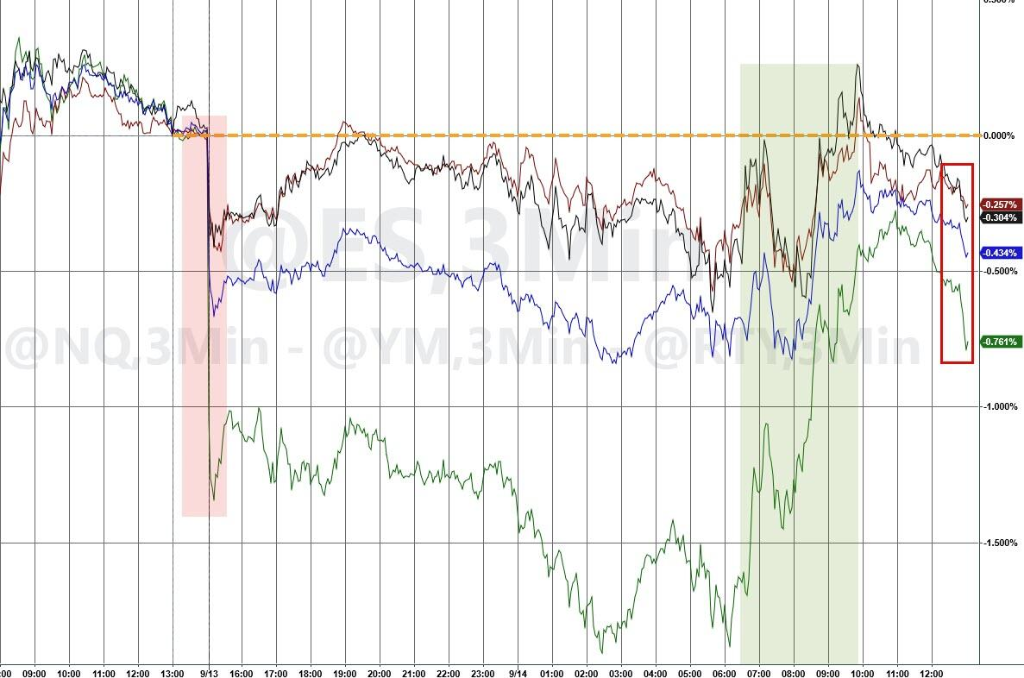
The market reaction was swift and direct. U.S. stock futures opened lower across the board, with Nasdaq leading the decline. After the U.S. cash market opened, small-cap stocks and$Dow Jones Industrial Average (.DJI.US)$briefly turned positive. By the final close, the Nasdaq Composite led the declines, and all major indices closed lower, though they had rebounded significantly from their intraday lows.
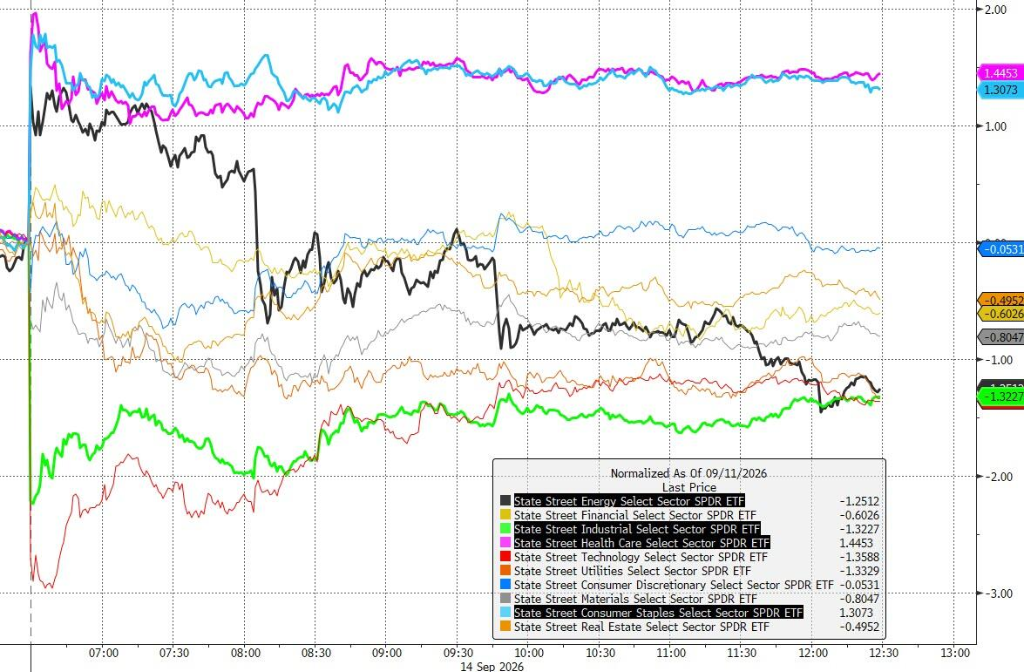
Eight sectors in the S&P 500 Index closed lower, with the technology sector leading the decline by 1.7%.
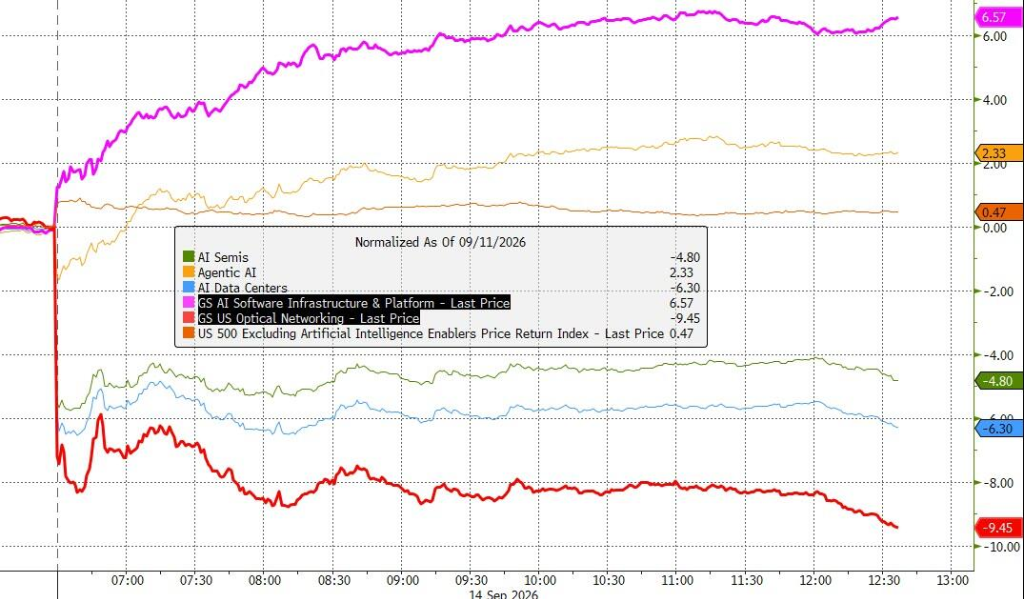
In contrast, cybersecurity stocks strengthened against the trend, with CrowdStrike Holdings rising 14%,$Palo Alto Networks(PANW.US)$and another rising 13%, as the software sector overall significantly outperformed semiconductors.
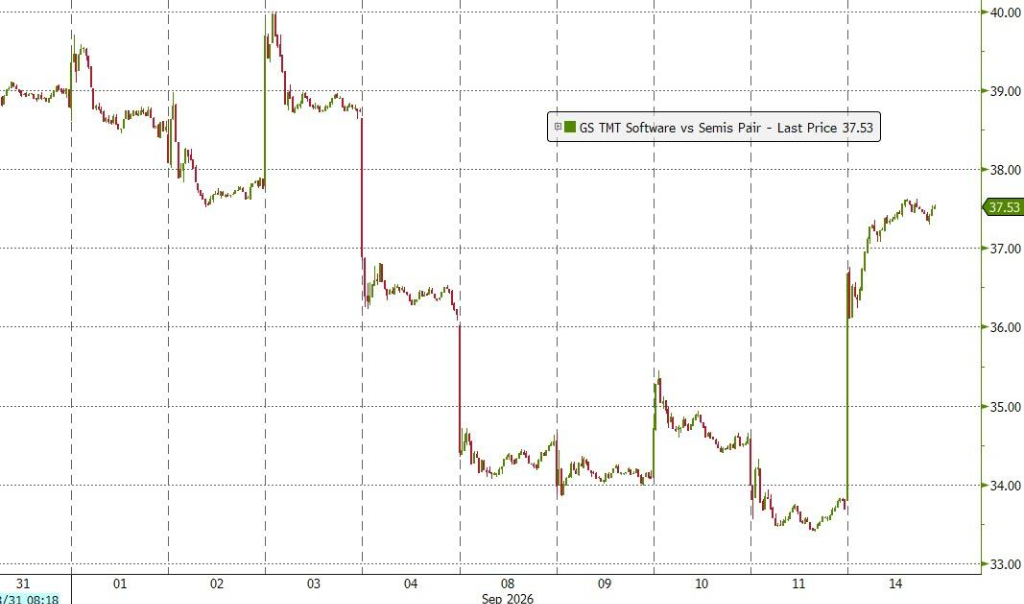
NVIDIA fell 3.4%, Intel dropped 5.6%,$Broadcom (AVGO.US)$and other chip stocks also faced significant pressure, with the broader semiconductor sector declining approximately 6%. Investors shifted their focus away from artificial intelligence toward defensive, value, and quality stocks.
In response, institutional views diverged.
Matt Maley of Miller Tabak noted that if the timeline for AI commercialization returns is forced to delay, it is logical for investors to cool their enthusiasm. Rich Privorotsky, head of trading at Goldman Sachs, described the week as a "tricky start," but maintained a relatively optimistic stance, believing that the scale of capital expenditure changes is limited.
Justin Post and Nitin Bansal of Bank of America stated that despite short-term sentiment shocks, they remain convinced that demand for AI infrastructure will sustain strong growth for years. Ulrike Hoffmann-Burchardi of the UBS Group Chief Investment Office believes that the current clamor is largely paving the way for the formation of a regulatory framework, adding, "We expect AI investment to continue advancing."
Max Kettner of HSBC also considers market concerns to be "overblown," suggesting that a slower pace may ultimately enhance the earnings quality of AI companies.
On Monday, Trump attacked Amodei's stance, alleging a "malicious conspiracy" behind the calls for slowing AI development, and emphasized that the United States already has adequate safety mechanisms in place.
Escalating tensions in the Middle East have made energy markets the biggest variable.
Oil prices were the most volatile asset amid the day's market fluctuations.
Saudi Arabia's east-west oil pipeline was forced to close following an attack. The pipeline typically transports approximately 4 to 5 million barrels per day, bypassing the Strait of Hormuz for export via the Red Sea.
Rich Privorotsky of Goldman Sachs described this as a risk that "truly causes concern," estimating repair times ranging from several days to weeks, while inventories at Saudi Arabia's Yanbu port may only suffice for 5 to 7 days of export demand.
If the pipeline outage persists, global supply will decrease by an additional 4% on top of existing disruptions. Meanwhile, Houthi forces are advancing toward the Bab el-Mandeb Strait, evolving the situation from a "single chokepoint" issue into a "two-front energy crisis."
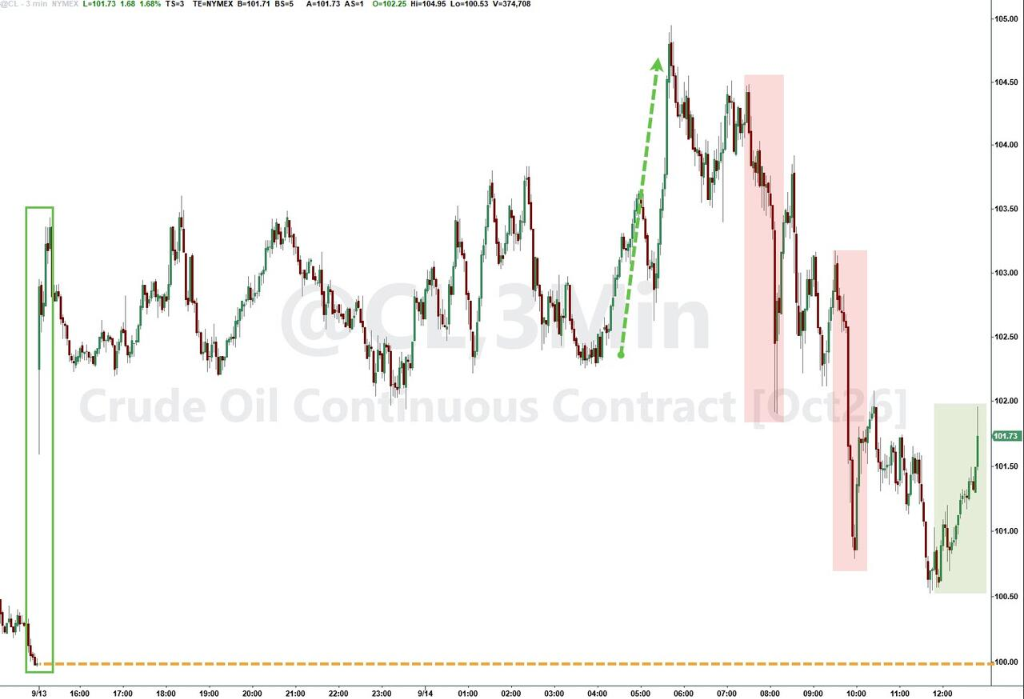
WTI crude oil briefly approached $105 per barrel during trading, U.S. diesel prices hit a record high of $6.23 per gallon, and European natural gas prices rose 4%, surpassing €84 per megawatt-hour.
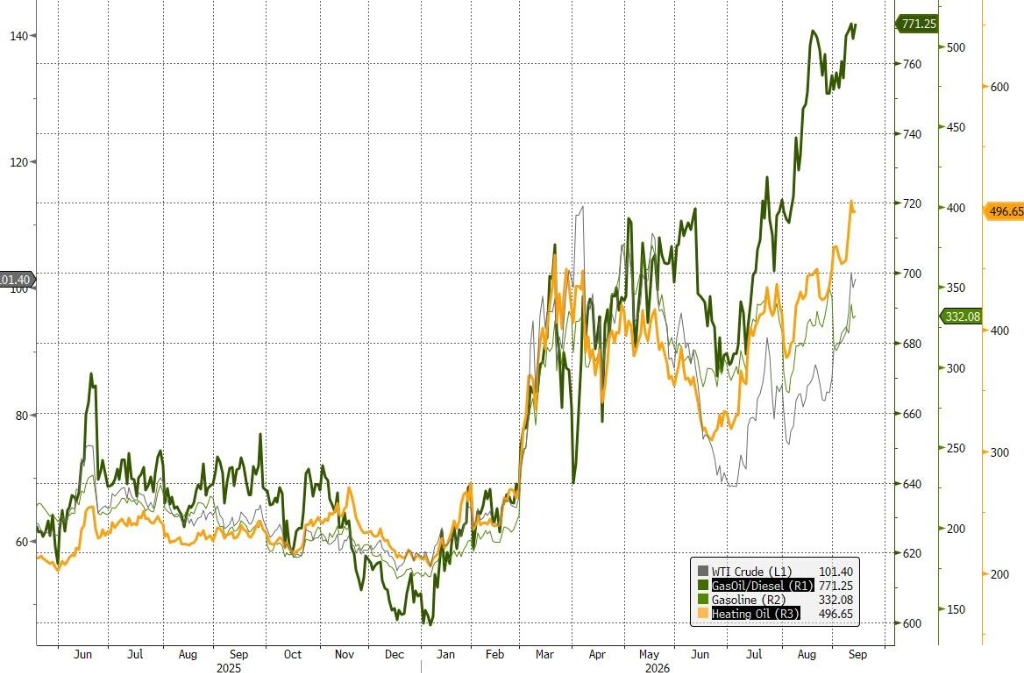
In the afternoon, reports emerged that the "U.S. is seeking a phased agreement with Iran" and that Ukraine had paused strikes on Russian energy targets, causing oil prices to retreat temporarily and helping narrow losses in U.S. equities.
However, near the close, Iran's Islamic Revolutionary Guard Corps announced that an oil tanker had struck a mine in the Strait of Hormuz, pushing oil prices higher again. WTI crude ultimately closed up approximately 1.7% at $101.75 per barrel.
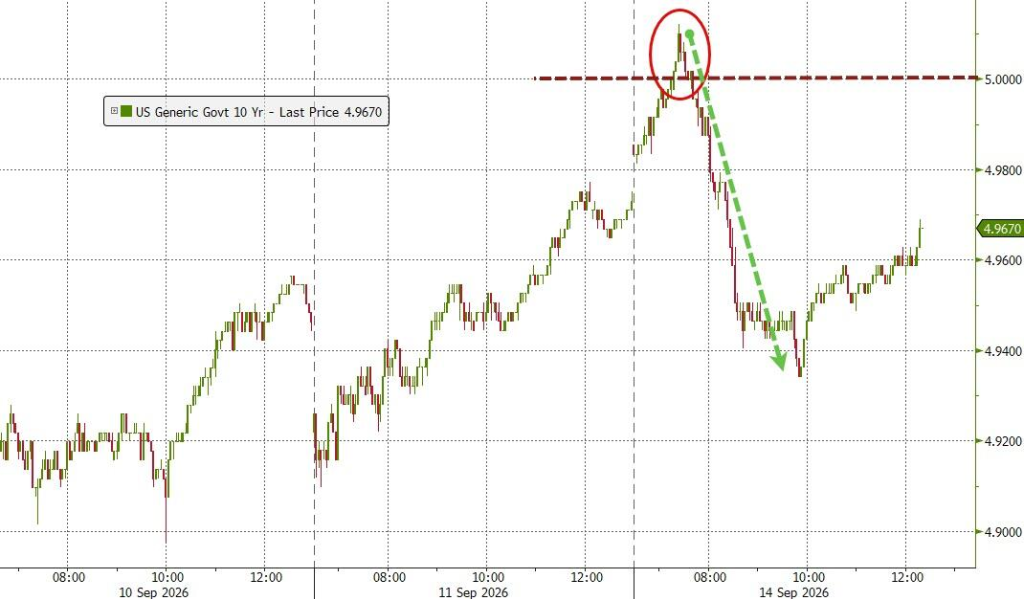
The yield on the 10-year U.S. Treasury note broke through 5%, continuing to exert pressure on global bond markets.
The U.S. Treasury market reached a key technical milestone on Monday. The yield on the 10-year U.S. Treasury note rose above 5.00% during trading, marking the first time since October 2023 and bringing it within striking distance of its highest level since 2002.
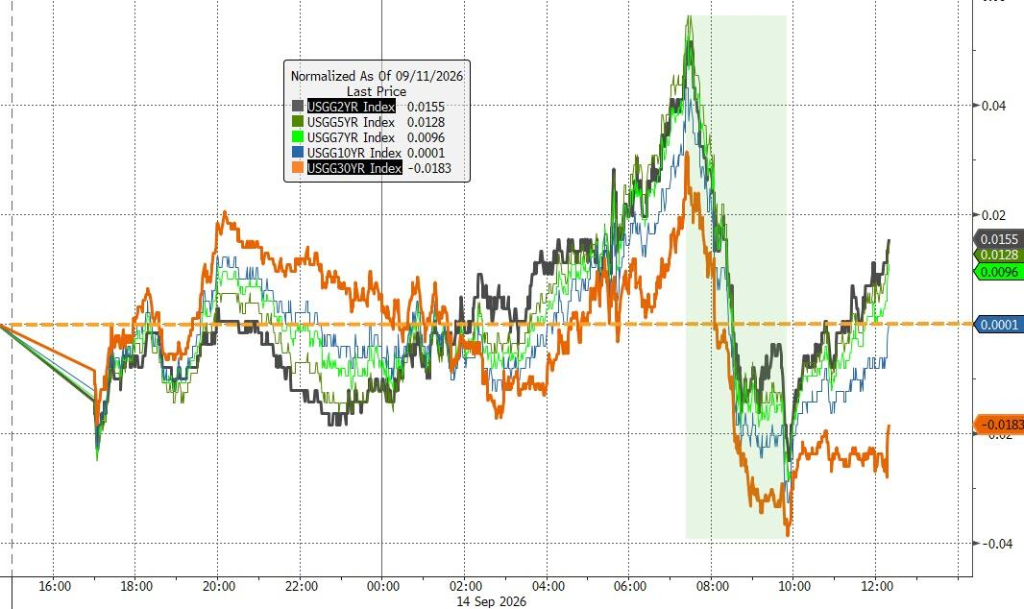
Pressure in the bond market is not confined to the United States; the yield on Germany's 10-year government bonds rose to its highest level since 2009,$UK 30-Year Gilt Yield (GB30Y.BD)$touching a peak not seen since 1998, while Japanese yields also remained at multi-year highs.
Factors driving yields higher are converging: rising oil prices have reignited inflation expectations, and expectations of a Federal Reserve rate hike this week have intensified, with market pricing indicating a probability of over 90% for a 25-basis-point increase at this meeting. Meanwhile, the continued expansion of the U.S. fiscal deficit and debt scale keeps pressure on bond supply lingering.
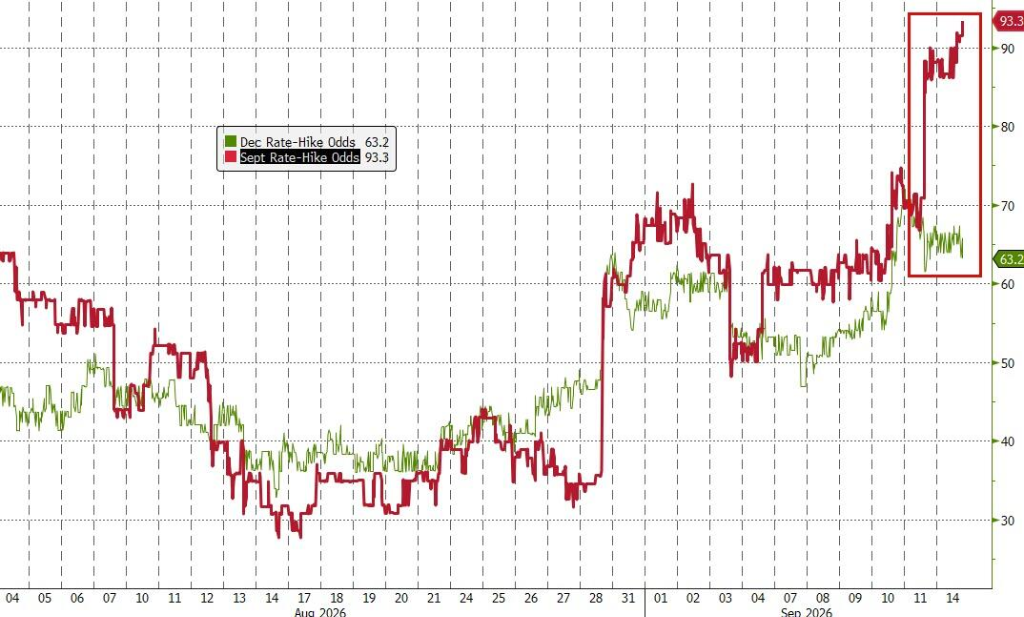
Neil Shearing, Chief Economist at Capital Economics, warned in a report that against the macroeconomic backdrop of high debt and large deficits, supply shocks could create a dangerous "feedback loop" in the bond market. "The key risk is not the initial shock itself, but the chain reaction it may trigger," he stated.
Ruchir Sharma, Chairman of Rockefeller International, previously wrote in the Financial Times that a "decisive breakthrough" of the 10-year yield above 5% could serve as the fuse to burst the AI bubble, as the U.S. debt burden has exceeded 100% of GDP, with interest expenses continuously crowding out other borrowing space.
However, the yield ultimately failed to hold above 5%, closing near 4.99%. Research by Goldman Sachs indicates that when the 10-year yield rises by approximately 50 basis points within a month, or by about 30 basis points within two weeks, returns on U.S. equities begin to deteriorate significantly.
Since September, the 10-year yield has cumulatively risen by approximately 20 basis points, still hovering on the edge of the warning zone.
The strengthening U.S. dollar weighed on gold,$Bitcoin (BTC.CC)$which rose against the trend,
against a backdrop of simultaneously rising safe-haven demand and inflation expectations.$U.S. Dollar Index (USDindex.FX)$It rebounded sharply on Monday, posting its largest single-day gain since the Jackson Hole symposium and reaching a nearly one-month high.
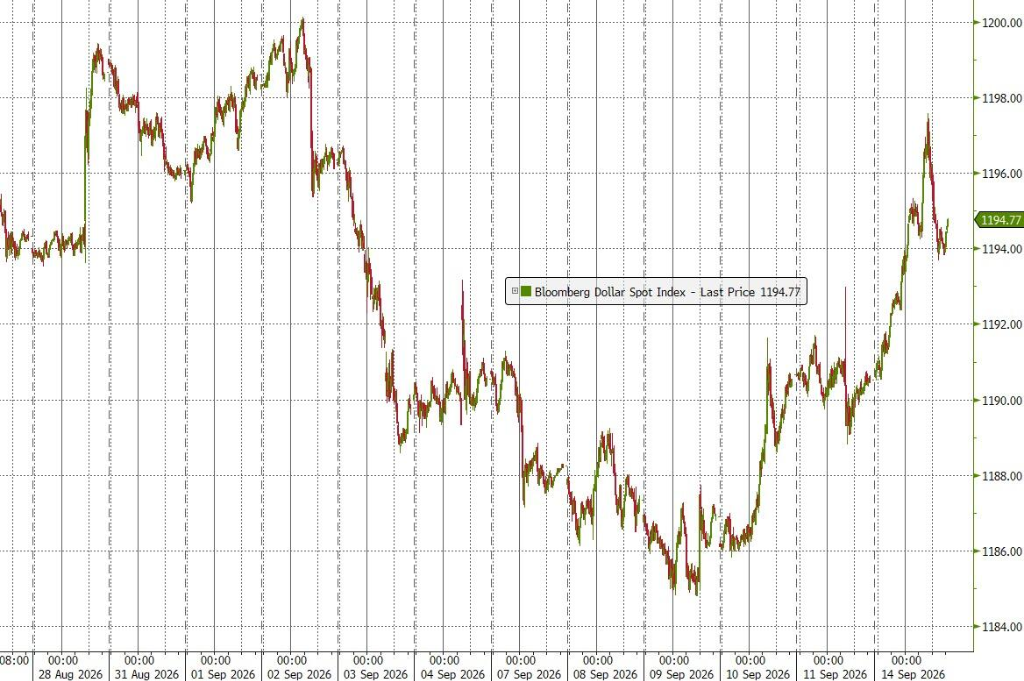
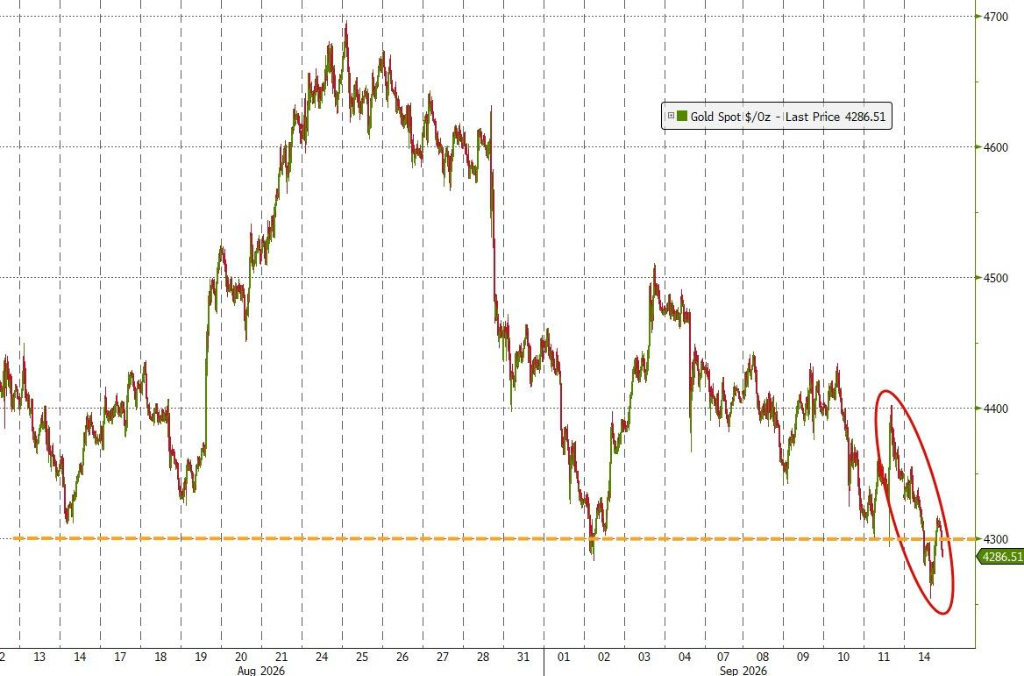
The stronger U.S. dollar weighed on commodity pricing, with spot gold falling 1.4% to close at $4,286 per ounce, its lowest level in over a month.
Bitcoin was one of the few assets to rise against the trend on Monday, gaining 2.2% to approximately $79,034.
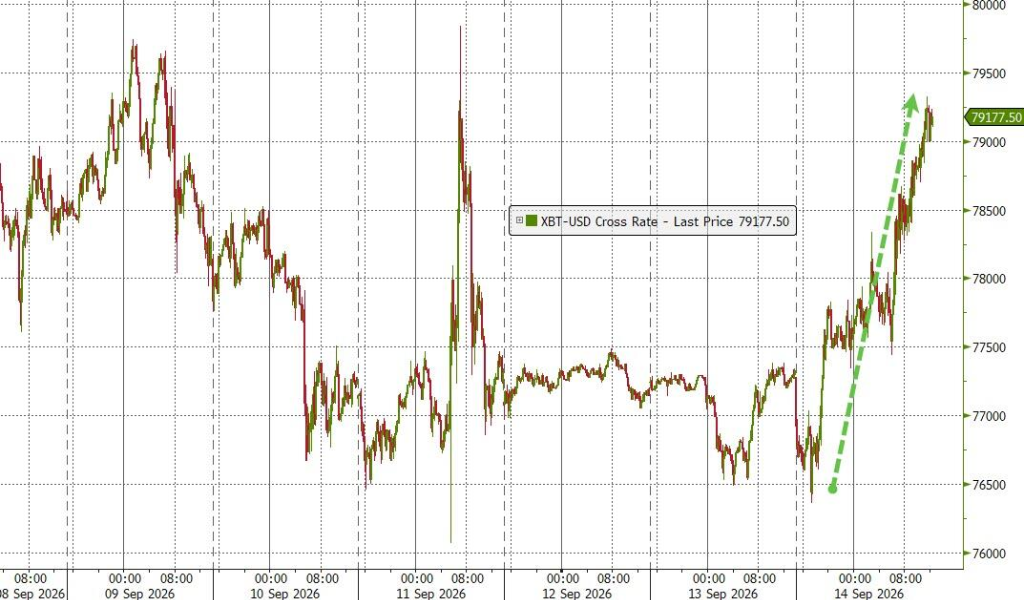
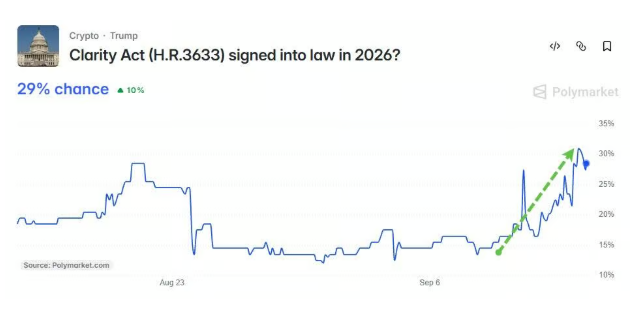
U.S. Treasury Secretary Scott Bessent posted on X that day, voicing strong support for Congress's advancement of the CLARITY Act on digital asset legislation, stating it is crucial to "ensuring the United States wins the global race in new technologies." Prediction markets subsequently raised their bets on the probability of the bill's approval, boosting sentiment in crypto assets.
Company News
[Verizon Expands 6G Innovation Forum, Completes Field Tests for Network-Native Sensing and AI Applications]
Verizon, the U.S. telecommunications carrier, announced that Amazon Web Services, NVIDIA, Intel,Cisco (CSCO.US),and seven other companies have joined its 6G Innovation Forum, further expanding its membership. Verizon also announced the completion of two field tests for 5G Advanced-based Integrated Sensing and Communication (ISAC), including real-time detection of crowd density using wireless signals, as well as maintaining high-speed mobile connectivity while tracking drones and ground vehicles. Additionally, the company demonstrated a prototype of an AI sports assistant based on edge networks, Meta AI glasses, and small language models, capable of providing real-time scores and player data.
[NVIDIA Expands CUDA-Q Platform, Launches Orchestration Layer for Quantum Fault-Tolerant Computing]
NVIDIA announced the expansion of its open-source CUDA-Q platform with the launch of the CUDA-Q Logical orchestration layer, providing programmable and verifiable tools for developing fault-tolerant quantum computing applications. This supports use cases such as drug discovery, financial modeling, and materials development. NVIDIA stated that Fermi National Accelerator Laboratory used CUDA-Q Logical to reduce the development time for fault-tolerant algorithms from the typical five months to three weeks, representing an approximately sevenfold increase in efficiency. Additionally, QUOPS, a quantum computing benchmark developed by Sandia National Laboratories, has been integrated into CUDA-Q to evaluate progress across platforms in advancing quantum hardware toward practical fault-tolerant quantum computing. According to reports, CUDA-Q Logical is currently being adopted by Fermilab,$Infleqtion(INFQ.US)$、$IQM Quantum Computers(IQMX.US)$and other quantum computing companies and research institutions.
[NVIDIA,$Palantir (PLTR.US)$[Restrictions on the use of OpenAI and Anthropic's most advanced AI models]
Reports indicate that NVIDIA, Palantir, and Booz Allen Hamilton are requiring new security assurances from OpenAI and Anthropic, while reducing or halting their use of the two companies' most advanced AI models. Palantir has reportedly persuaded Anthropic to commit to providing "irrevocable" zero data retention (ZDR) guarantees for all its models. Some enterprises are shifting toward proprietary AI models to handle more sensitive business tasks.
[Apple Siri AI Finally Arrives! Official Beta Testing Launches After Delays]
On Monday, Apple released iOS 27, the latest version of its iPhone operating system, featuring a redesigned Siri AI personal assistant. Just ahead of this week's official launch of the newest iPhone models, Apple made the beta version of the new Siri available to users. According to Apple, Siri AI is a significantly enhanced intelligent assistant with more natural interactions, capable of understanding personal context, accessing extensive global information, perceiving on-screen content, and executing more cross-application operations across systems. With these capabilities, Siri AI helps users instantly find the information they need, ranging from answering questions in nearly any domain to extracting relevant details from personal content such as text messages, emails, and photos. Through more detailed responses and smoother, more natural conversations, Siri AI enables users to accomplish more tasks.
[Anthropic Enters Financial Advisory Market with New Claude Tools]
Artificial intelligence company Anthropic launched a suite of new tools for financial advisors on Monday, integrating its Claude chatbot with investment analysis and wealth management software provided by financial institutions such as BlackRock,$Charles Schwab (SCHW.US)$and Vanguard Group. Executives from Anthropic and BlackRock stated that the product, named "Claude for Financial Advisors," is designed to help financial services firms prepare for client meetings, review portfolios, and handle post-meeting follow-up tasks.
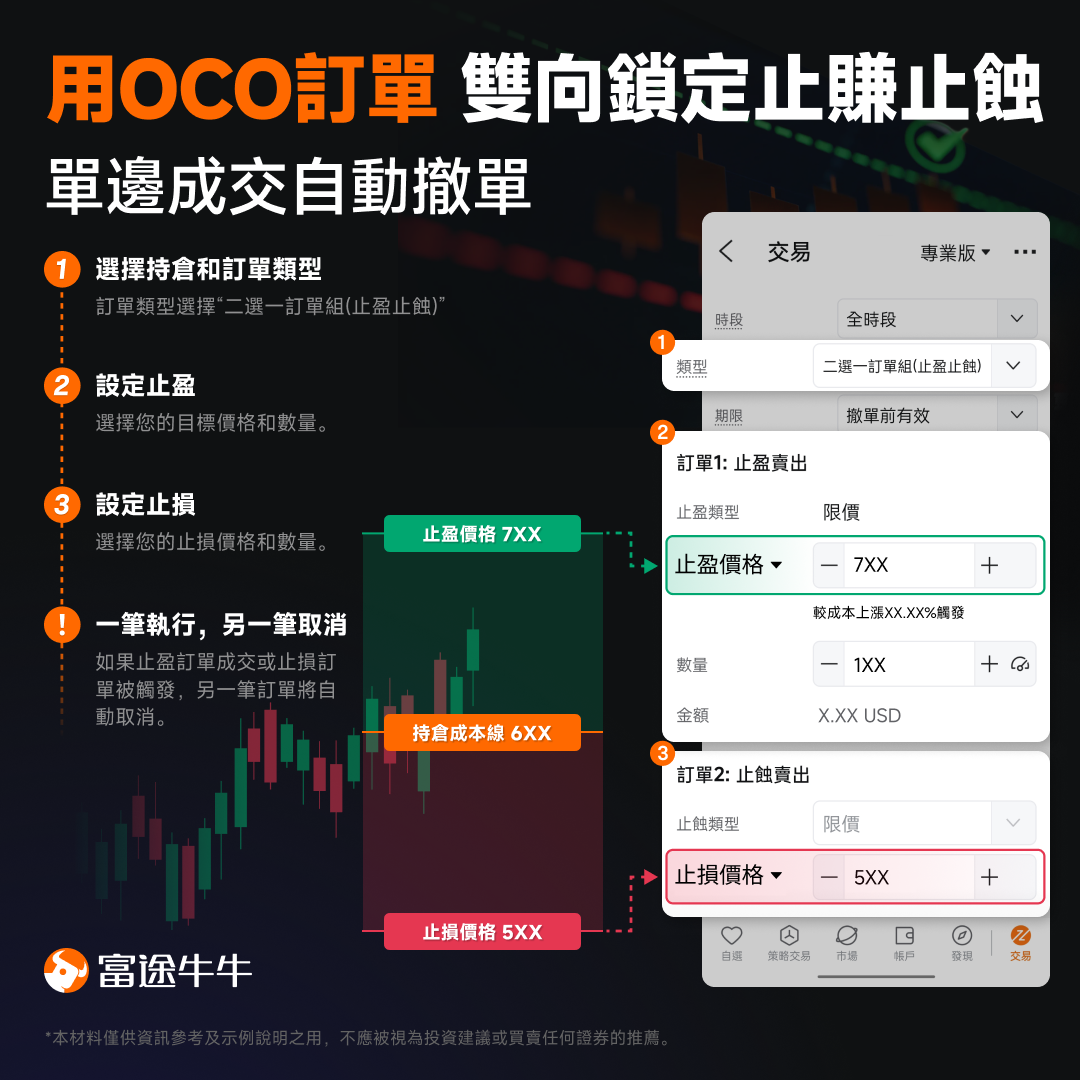
Market conditions are volatile. Rather than rushing to chase trends after the direction becomes clear, it is better to prepare in advance. OCO (One-Cancels-the-Other) orders allow you to place two linked orders simultaneously; when one is executed, the other is automatically canceled, enabling you to respond flexibly to various market movements.
Editor/Liam