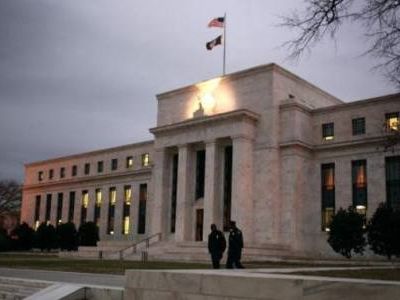
Nick Timiraos believes that, following the August CPI figure's stronger-than-expected reading, the likelihood of the Federal Reserve raising interest rates this week has surged, while Warsh's hawkish stance on inflation has left him with virtually "no room to retreat." With just seven weeks before the election, whether Warsh raises rates will directly test how long Trump's "trust" in him can endure. Previously, Warsh maintained a balance between the White House and the Fed through a strategy of "speaking less and avoiding provocation"; after this meeting, silence will no longer serve as a shield.
Last year, Trump pushed the Federal Reserve to cut interest rates; now, the chair he personally appointed has been forced by the market to the brink of a rate hike.
On September 14, Nick Timiraos, known as the "New Fed News Agency," wrote in The Wall Street Journal that Federal Reserve Chair Kevin Warsh is about to face a critical decision: amid persistently stubborn inflation and rising energy prices, should he announce an interest-rate hike at this week's policy meeting?
 Timiraos argues that, over the past few months, a series of public statements by Powell have left him with virtually no room to hold steady. The August CPI figure, which came in higher than expected, has effectively closed off his last possible retreat. Meanwhile, the White House has adopted an ambivalent stance—while verbally professing "100% respect for independence," it has also signaled that it would not be "too pleased" with further rate hikes.
With just seven weeks remaining until the U.S. midterm elections, if Powell chooses to raise interest rates, it will directly test the "trust" that Trump has touted for him over the past several months. But if he refrains from raising rates, how will Powell's credibility hold up? Previously, Powell maintained a balance between the White House and the Federal Reserve through a strategy of "speaking less and avoiding provocation," but after this meeting, silence will no longer serve as a shield.
How did Wash corner himself?
Following his appointment as Fed Chair in May, Jerome Powell delivered a hawkish signal on inflation at his first press conference in June, prompting market expectations that he would take more aggressive action. However, at the subsequent policy meeting, he opted to keep interest rates unchanged—without offering a convincing rationale for why, after such a strong stance, policy remained on hold.
As a result, long-term interest rates rose rather than fell during his speech. Nick Timiraos wrote in his article that this signaled "investors' uncertainty about whether his hawkish rhetoric would translate into concrete policy."
In August, Walsh sought to correct this perception in a keynote address. He stated, "There is little evidence that borrowing conditions are restraining the economy," and added that the summer's favorable inflation data had not convinced him that the underlying trend had improved. In effect, these remarks paved the way for a rate hike.
But it was the September CPI data that truly "closed the final door." Nick Timiraos wrote, "August's key consumer price index rose more than expected, reversing the improvement seen over the previous two months"—a trend that had initially been viewed as preliminary validation of the Federal Reserve's own projections. Following the release of the data, market expectations for a rate hike this week surged to around 90 percent.
More critically, the data were released during the Fed's pre‑meeting "quiet period," leaving no officials able to step in and tamp down market expectations. With the September 17 policy meeting fast approaching, Mr. Wash's room for maneuver is steadily narrowing.
What's hidden behind the White House's "100% support"?
On the eve of this week's meeting, Kevin Hassett, Director of the White House National Economic Council, publicly stated on television Sunday that inflation is improving and that the Federal Reserve has no need to raise interest rates. He also emphasized that Trump "100% respects Kevin Warsh's independence" and will "100% support" any decision made by the Federal Reserve.
This statement sounded quite respectable, but Hassett immediately added: Trump "wouldn't be too pleased" about interest-rate hikes.
He also argued that if the Federal Reserve adjusts interest rates as an election approaches, it would "damage its reputation for non‑partisanship." Nick Timiraos offered a reverse interpretation of this logic in his article: if the White House publicly calls for rate cuts, yet the Fed chooses to hold steady despite broad market expectations of hikes, that too could lead observers to suspect that Powell is pandering to the president who appointed him.
In other words, no matter how Wash chooses, there will always be those who question his motives. This is precisely the core dilemma of the Federal Reserve's independence.
Trump and the Federal Reserve: From "War" to "Truce"
Last year, Trump launched "the most sustained public pressure on the Federal Reserve in decades." He repeatedly attacked former Chairman Powell and even threatened to file a fraud lawsuit against him. He appointed his economic advisor, Stephen Miran, to the Federal Reserve's Board of Directors, and Miran voted in favor of accommodative policies at all six meetings he attended. Trump also sought to remove Federal Reserve Director Lisa Cook—marking the first time a president has attempted to dismiss a Fed Director—but his effort ultimately failed after the Supreme Court intervened, though the case remains unresolved to this day.
With Wash's arrival, this "war" was temporarily brought to an end. Trump repeatedly stated that he "trusted Wash to do the right thing," a remark that allowed Wash to sidestep the kind of public attacks Powell had faced.
But Nick Timiraos pointed out that this "truce" is conditional. Raising interest rates seven weeks before the election will directly test how long Trump's "trust" can last.
Notably, Walsh himself publicly criticized the Federal Reserve last year for cutting interest rates too slowly. When asked whether this stance was influenced by the president who might nominate him, he told CNBC, "Birds change their feathers when the time is right—adapt to the circumstances. This has nothing to do with this president."
Wash's Position: Independence or Isolation?
In the face of widespread speculation from the outside world, Mr. Walsh has consistently emphasized his independence in public statements.
"They chose an independent person to do an independent job, which is exactly what I plan to do," Wash said during a congressional hearing this summer.
Nick Timiraos also revealed a detail in his article: people who have spoken with Walsh said that Walsh believes the Fed under Powell made matters worse by making some "unnecessarily confrontational remarks"—such as publicly describing how tariffs drive up prices or openly defending the Fed's independence. Walsh's strategy is to "speak less and avoid provocation."
This low-key approach has, to some extent, kept the peace with the White House. But if a rate hike is indeed announced this week, silence will no longer serve as a shield.
What do economists think?
On this rate hike, the economics community is far from united.
Douglas Holtz-Eakin, a former director of the Congressional Budget Office and a Republican economist, offered a rather straightforward assessment. He said that until July, he had believed it was unnecessary for Walsh to risk antagonizing the White House ahead of the midterm elections. However, since July, Walsh's public statements—coupled with the economic landscape shaped by the energy crisis and the AI boom—have left him "with nowhere to stand."
"His hand was forced," Holz-Eakin said. "Kevin Warsh is an outstanding politician; he'll have to find a way to handle this."
He also predicted possible future developments: Trump and Walsh could tacitly allow Trump to publicly criticize Walsh while Walsh silently endures; or Trump might simply change the subject, pretending nothing happened. "Trump will deflect rather than confront head-on, because he can't admit he made a mistake," Holz-Eakin said.
However, Michael Strain, a conservative economist at the American Enterprise Institute (AEI), holds a different view. He argues that interest rates should have been raised in July, but since no action was taken then, intervening now, just weeks before the election, is ill-timed.
"The unfortunate reality for the Federal Reserve is that it cannot ignore the fact that President Trump harbors extreme hostility toward this important institution," Strain said. He believes investors will digest the news of "another hold" much more quickly than the Fed can recover from its conflict with Trump.
Future Trajectory: After the Armistice
How resilient is the Federal Reserve's principle of independence in the face of political pressure?
The article notes that adjusting interest rates around elections is not unprecedented—the Federal Reserve has undertaken similar moves ahead of political conventions in 1988, 1994, 2004, 2018, and again in 2022 during the Biden administration. Historically, the intersection of monetary policy and electoral cycles has been far from uncommon.
But the current peculiarity is that Trump's hostility toward the Federal Reserve has been thoroughly documented, while every move made by Wash is being magnified and interpreted.
Holz‑Ikin's assessment may be the most pragmatic: whatever the outcome, Warsh will need to demonstrate that he is making decisions based on economic data rather than political pressure.
Editor/lambor