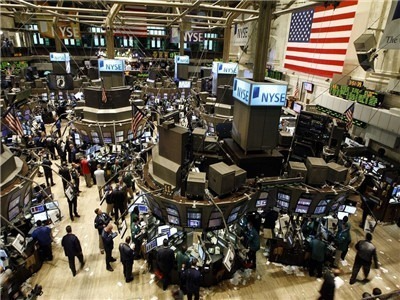
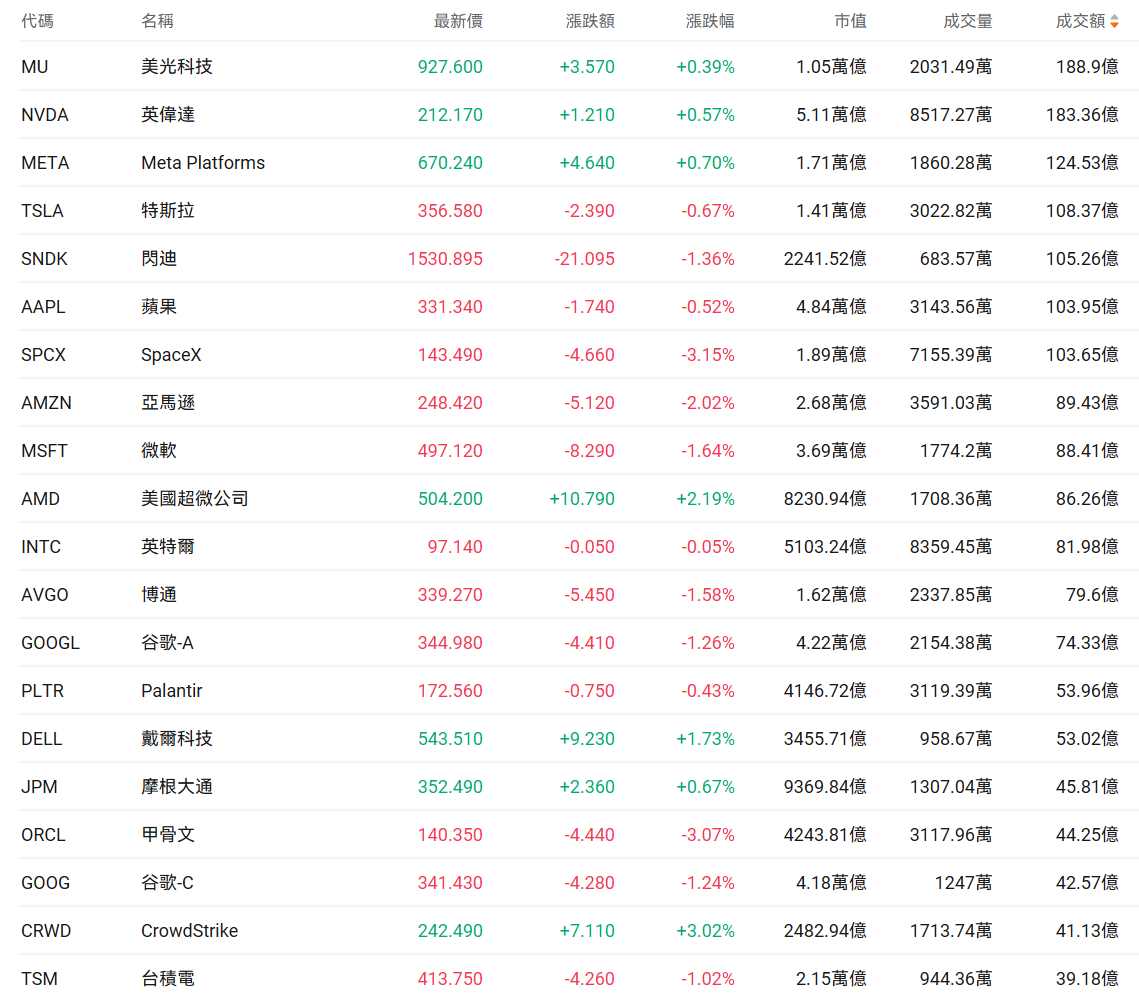
No. 1 in U.S. stock trading volume on Tuesday $Micron Technology (MU.US)$Closed up 0.39%, with trading volume of $18.89 billion.
On September 15, Micron announced the successful demonstration and validation of the world’s first 512GB DDR5 RDIMM memory module, which has completed testing on multiple server platforms. This product raises the maximum DDR5 memory capacity per dual-socket server beyond 12TB, providing greater memory capacity for workloads such as large-scale AI inference, in-memory databases, and high-density virtualization. Both AMD and Intel have initiated active validation of the module, which supports transmission rates of up to 9200 MT/s.
For data center operators, another key advantage of this ultra-high-density memory module is energy efficiency. Compared to configurations using four 128GB modules, a single 512GB module reduces operating power consumption by more than 60%, potentially lowering data center electricity usage while increasing memory capacity.
 No. 2 $NVIDIA (NVDA.US)$Closed up 0.57%, with trading volume of $18.336 billion.
Jensen Huang, CEO of NVIDIA, stated that ensuring artificial intelligence safety does not require new laws and regulations, as market mechanisms already provide sufficient constraints.
On September 15, Jensen Huang made these remarks at the Salesforce Dreamforce conference in San Francisco. In a conversation with Salesforce CEO Marc Benioff, he emphasized that companies should manage their own product release schedules to ensure that launched products gain market acceptance.
Jensen Huang’s comments directly address the widespread debate over AI governance approaches. As regulators and legislators discuss how to regulate AI, this perspective from the head of the world’s largest AI chip supplier serves as a significant industry bellwether.
No. 3 $Meta Platforms (META.US)$ Closed up 0.70%, with trading volume of $12.453 billion.
Meta’s third-generation proprietary AI chip, the MTIA 450, is scheduled to begin deployment in data centers in the first half of next year, with the fourth generation expected to enter data centers by the end of 2027. Meta has committed to deploying proprietary chips over the next 12 months at a scale equivalent to more than 1 gigawatt of power consumption. Yee Jiun Song, Vice President of Engineering at Meta, stated that compared to NVIDIA’s current shipments, the proprietary chips offer higher efficiency and lower energy consumption when running AI models.
No. 4 $Tesla (TSLA.US)$Closed down 0.67%, with trading volume of $10.837 billion.
When asked at the All-In Summit why Tesla and$SpaceX (SPCX.US)$Despite increasingly close ties, they remain independent, Musk called it a “good question” and hinted that the relationship between the two parties could ultimately lead to action. “With all this collaboration across so many levels, when there is such close cooperation in so many areas, who can imagine what actions might be taken,” he said.
Rank 5 $SanDisk (SNDK.US)$Closed down 1.36%, with trading volume of USD 10.526 billion.
Rank 6 $Apple (AAPL.US)$ Closed down 0.52%, with trading volume of USD 10.395 billion.
Rank 7 $SpaceX (SPCX.US)$ Closed down 3.15%, with trading volume of USD 10.365 billion.
Morgan Stanley released a research report on embodied AI, the space industry, and SpaceX, arguing that robotics and the space sector will reshape the global economic landscape, with an impact analogous to that of electricity in the modern economy. The firm assigned an Overweight rating to SpaceX with a target price of USD 300, indicating significant upside potential from current levels. Morgan Stanley noted that current market pricing reflects only the value of Starlink and aerospace operations, while the option value of enterprise AI and orbital computing power is largely unpriced. However, it also highlighted multiple uncertainties, including technological iteration, geopolitical risks, and slower-than-expected commercialization, urging investors to adopt a balanced perspective on long-term industry opportunities.
Rank 8 $Amazon (AMZN.US)$Closed down 2.02%, with trading volume of USD 8.943 billion.
Amazon Web Services (AWS) stated that data access remains unavailable for some data centers in the Persian Gulf region due to damage sustained during the conflict between the United States and Iran. In its latest status update, AWS reported that data stored exclusively in the Bahrain data center and certain network zones in the United Arab Emirates (UAE) is currently inaccessible. Earlier, two AWS data centers in Bahrain were damaged in attacks at the onset of the conflict, with the extent of damage exceeding their service design tolerances. AWS indicated that most customers have restored operations through backups or by migrating to data centers in other countries. However, data in one availability zone in the UAE remains inaccessible, and engineering teams are working to restore resources in two additional availability zones. The company expects to provide further updates on the recovery of facilities in Bahrain early next year.
Ranked 9th $Microsoft (MSFT.US)$Closed down 1.64%, with trading volume of USD 8.841 billion.
Ranked 10th $Advanced Micro Devices (AMD.US)$Closed up 2.19%, with trading volume of USD 8.626 billion.
Ranked 11th $Intel (INTC.US)$ Closed down 0.05%, with trading volume of USD 8.198 billion.
Ranked 12th $Broadcom (AVGO.US)$Closed down 1.58%, with trading volume of USD 7.96 billion.
In a recent interview, Chen Fuyang addressed concerns that a potential slowdown in the development of cutting-edge AI models could impact the chipmaker's business, emphasizing that the company remains committed to its long-term revenue targets.
Mr. Tan made these remarks as investors grew uneasy over an article published last weekend by Anthropic CEO Dario Amodei, which advocated for slowing the pace of model development. Mr. Amodei’s views received support from OpenAI CEO Sam Altman and Elon Musk, prompting investors in AI infrastructure suppliers to reassess their expectations for computing power demand during Monday’s trading session.
Ranked 13th $Alphabet-A (GOOGL.US)$ Closed down 1.26%, with trading volume of USD 7.433 billion.
On September 15 local time, Google announced the launch of two real-time audio models, Gemini 3.8 Live and Gemini 3.8 Live Extended Thinking, describing them as its most advanced real-time conversational models to date. These models not only facilitate more natural and fluid voice interactions but also enable tool invocation, visual information processing, and execution of complex tasks without interrupting the conversation.
Specifically, Gemini 3.8 Live focuses on large-scale, low-cost natural voice applications, supporting real-time visual understanding and multilingual dialogue. Gemini 3.8 Live Extended Thinking further incorporates deep reasoning capabilities, allowing it to "think" while speaking and complete multi-step tasks in the background while the user continues to interact. Google stated that the latter ranked first in Artificial Analysis's Speech-to-Speech Quality Index with a score of 82.6.
14th Place $Palantir (PLTR.US)$ Closed down 0.43%, with trading volume of $5.396 billion.
15th Place $Dell Technologies (DELL.US)$ Closed up 1.73%, with trading volume of $5.302 billion.
According to documents disclosed by the U.S. Securities and Exchange Commission (SEC) on September 15,$Dell Technologies (DELL.US)$Director SL SPV-2, L.P. sold 72,100 shares of common stock at an average price of $558.74 per share on September 11, for a total value of approximately $40.3123 million.
Director Silver Lake Partners IV, L.P. sold 81,000 shares of common stock at an average price of $558.79 per share on September 11, for a total value of approximately $45.2467 million.
Director Silver Lake Partners V DE (AIV), L.P. sold 41,400 shares of common stock at an average price of $558.74 per share on September 11, for a total value of approximately $23.151 million.
Peter Trizzino sold 37,700 shares of common stock at an average price of $560.16 per share on September 11, for a total value of approximately $21.1376 million.
16th Place $JPMorgan (JPM.US)$ Closed up 0.67%, with trading volume of $4.581 billion.
Ranked 17th $Oracle (ORCL.US)$Closed down 3.07%, with trading volume of $4.425 billion.
Oracle has launched a new round of layoffs, with certain teams seeing double-digit reduction rates. The total headcount for fiscal year 2026 is expected to decrease by approximately 21,000 compared to the previous year, representing a decline of about 13%. The company is financing the expansion of its AI infrastructure by compressing labor costs. The news triggered a sharp drop in the stock price of over 5%, bringing the year-to-date decline to approximately 25%. Wall Street remains cautious regarding its return on investment; Morgan Stanley maintained its "Neutral" rating, noting that margin conversion is key to valuation reassessment.
Ranked 19th $CrowdStrike (CRWD.US)$ Closed up 3.02%, with trading volume of $4.113 billion.
Ranked 20th $Taiwan Semiconductor (TSM.US)$Closed down 1.02%, with trading volume of $3.918 billion.
Co-Chief Operating Officer (Co-COO) Y.J. Mii likened artificial intelligence to a child with extraordinary abilities but no concept of right or wrong, explaining why the company has adopted a cautious approach to using this technology.
As one of the biggest beneficiaries of the global AI data center boom, Taiwan Semiconductor prioritizes the protection of its proprietary technology. The foundry giant, which serves tech behemoths such as NVIDIA (NVDA.US) and Apple (AAPL.US), is particularly cautious about using AI to process sensitive R&D information.
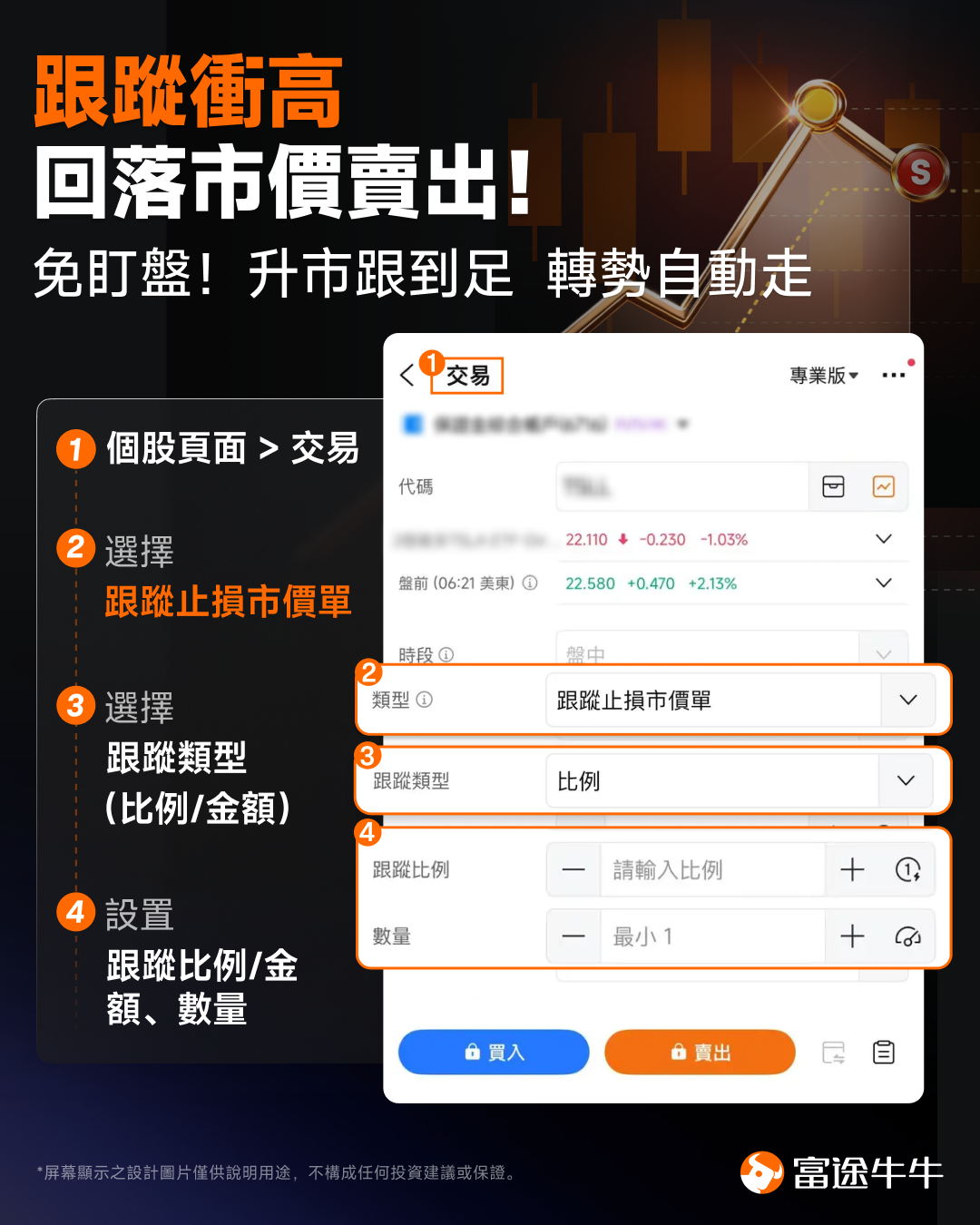
No need to monitor the market constantly; fully capture upside trends and automatically exit when the trend reverses! Futu's trailing stop-loss market orders dynamically monitor stock prices based on preset amounts or percentages, helping you lock in gains while controlling potential pullbacks. When the price hits the stop-loss level, the system immediately executes a market order.
Please note that slippage may occur during periods of high stock price volatility. Additionally, if the trailing percentage is set too narrowly, short-term minor fluctuations may trigger premature exits. Experience the trailing stop-loss order feature now to automate selling at peak prices!
Editor/Liam