The three major U.S. stock indices all closed lower on Tuesday. The energy sector benefited from rising oil prices, gaining 2.3%. Crypto-related stocks came under pressure,$Coinbase (COIN.US)$falling 10.1%, while Strategy declined 5.4%. The yield on the 10-year U.S. Treasury note touched 5.04% intraday, reaching its highest level in nearly 20 years. WTI crude oil rose 4.4% to break above $106, hitting an April high; Brent crude gained 2.9% to close near $109.
U.S. stocks extended their decline on Tuesday. Under the dual pressure of a sharp rise in oil prices and the 10-year U.S. Treasury yield breaking through 5%, the market shifted entirely into risk-off mode. The energy sector stood out as the sole performer, while the other ten sectors all closed lower, with investors generally adopting a wait-and-see approach ahead of the Federal Reserve's interest rate decision.
Most large-cap technology stocks moved lower,$SpaceX (SPCX.US)$dropping 3.15%,$Amazon (AMZN.US)$declining 2.02%,$Microsoft (MSFT.US)$falling 1.64%, Google dropped 1.26%,$Tesla (TSLA.US)$down 0.67%, Apple fell 0.52%, Meta rose 0.7%,$NVIDIA (NVDA.US)$up 0.57%.
$Crypto (LIST20010.US)$ broadly declined,$Circle (CRCL.US)$plunging more than 11%, Coinbase dropped over 10%, and Strategy fell by more than 5%. The failure of the Clarity Act to pass the procedural vote in the U.S. Senate dealt a significant blow to the crypto industry's efforts to establish a comprehensive regulatory framework.
Cybersecurity concepts continued their upward trend, $CrowdStrike (CRWD.US)$ rising more than 3% to hit new highs.
The energy sector posted broad gains,$Devon Energy (DVN.US)$、$ConocoPhillips (COP.US)$rising more than 3%,$Occidental Petroleum (OXY.US)$、$Chevron (CVX.US)$、$Exxon Mobil (XOM.US)$rose over 2%.
Dave & Buster's shares plunged 19% after the company reported second-quarter revenue that missed market expectations. Shares of healthcare software company Waystar rose 7.1% as the firm explores various strategic alternatives, including a potential sale.
The Nasdaq Golden Dragon China Index closed down 1.14% at 5,765.90 points. Among actively traded Chinese concept stocks, XPeng fell 4.5%, Li Auto dropped 3.3%, and Xiaomi declined 2.8%,$Baidu (BIDU.US)$fell 1.64%, Alibaba rose 0.1%, and Tencent gained 1.1%,$NetEase (NTES.US)$rose 1.3%.
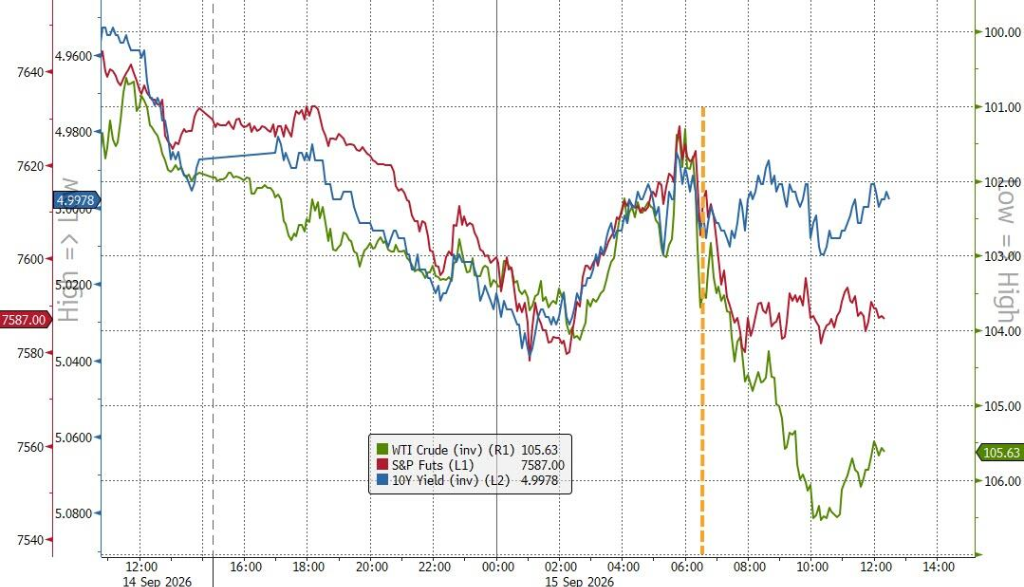
The primary market driver of the day was the crude oil market. With geopolitical tensions in the Middle East continuing to escalate and little substantive progress in diplomatic negotiations, WTI crude oil closed up 4.4%, breaking through $106 to reach its April high; Brent crude rose 2.9%, closing near $109.
The surge in oil prices pushed diesel futures to record highs, further transmitting inflationary pressures to the bond market. The yield on the 10-year U.S. Treasury note touched 5.04% during intraday trading, marking its highest level in nearly two decades.
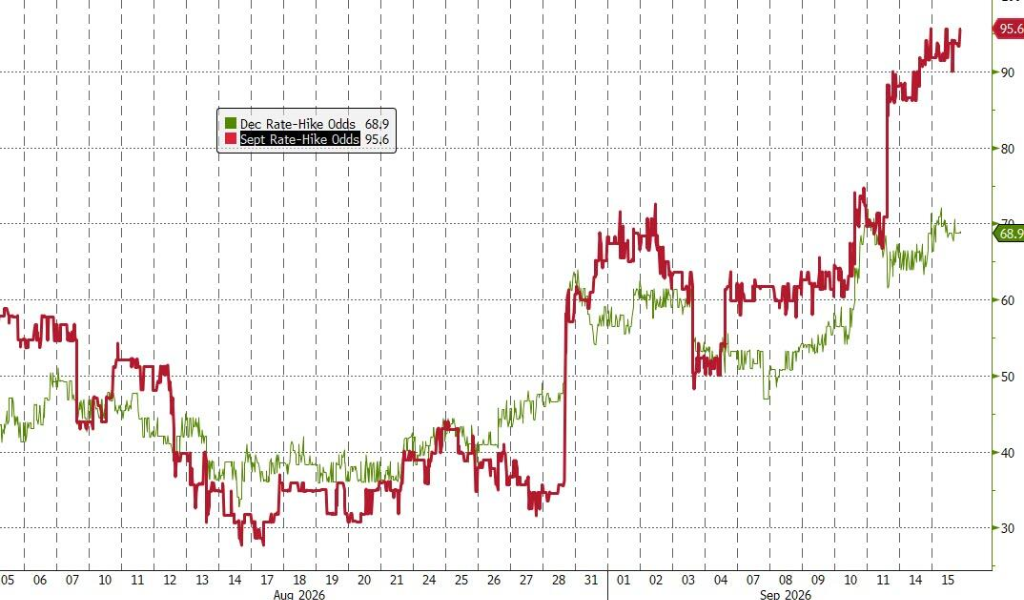
According to the CME FedWatch Tool, the market is now pricing in a 95% probability of a 25-basis-point rate hike by the Federal Reserve this week, while the probability of a hike in December has also risen to 70%.
Seema Shah, investment strategist at Principal Asset Management, stated:
Market debate has shifted from "whether" to "how much" tightening is required to restore price stability.
WTI crude oil hit its April high as multiple supply shocks converged.
Factors driving oil prices higher accumulated further on Tuesday. In the Middle East, Iran explicitly stated it would refuse negotiations until its demands were met, dashing market expectations for a diplomatic de-escalation.
Saudi Arabia's oil pipelines, a critical alternative route bypassing the Strait of Hormuz during potential US-Iran conflict scenarios, remain closed, with market participants divided on the timeline for their restoration. Meanwhile, sources familiar with the matter revealed that Saudi Aramco is delaying crude oil shipments to some European customers this month; Libya has been forced to shut down several oil fields due to the closure of the Hamada-Zawiya pipeline and may declare force majeure.
Rebecca Babin, a senior energy trader at CIBC Private Wealth Group, noted:
The crude oil market is caught between the physical reality of ongoing supply losses and rhetoric suggesting a potential de-escalation. Ultimately, the market will place greater weight on actual barrel volumes and infrastructure status.
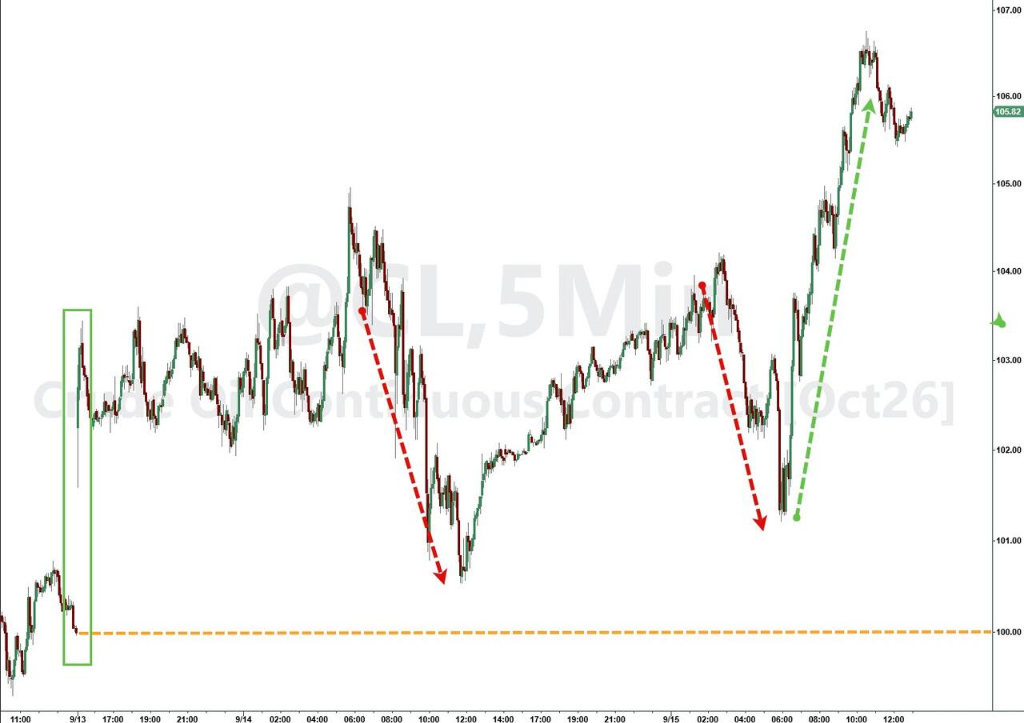
On Tuesday, WTI crude oil rose 4.4%, breaking above $106 to touch its April high, while Brent crude gained 2.9%, closing near $109.
Pressure in the refined products market is particularly pronounced. Despite calls for an energy ceasefire, Ukraine and Russia continue to strike each other's critical infrastructure. Kyiv reported attacking the Syzran refinery in Russia's Volga region overnight.
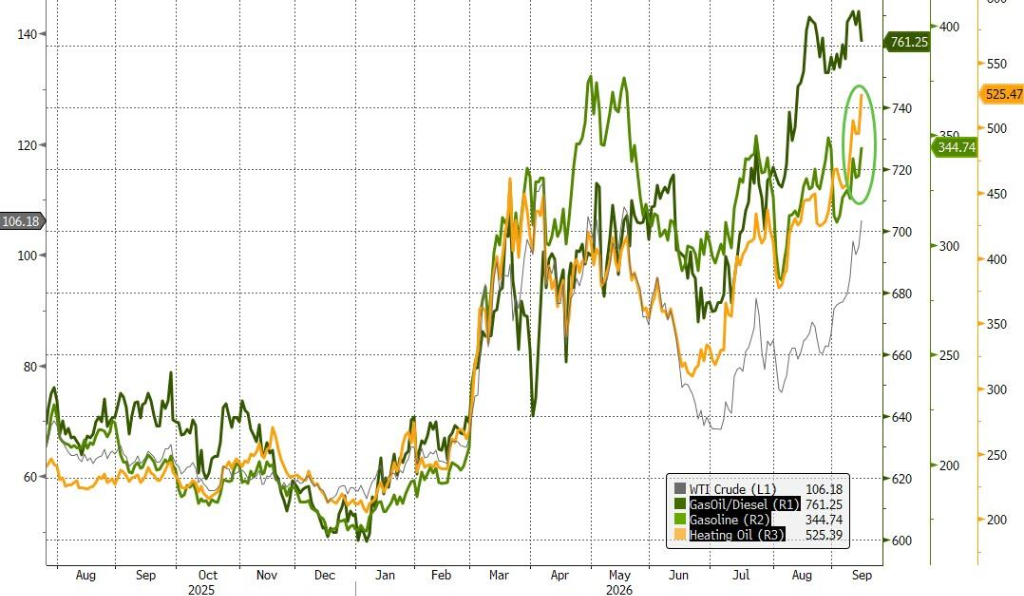
US diesel prices subsequently hit record highs, with retail prices rising to $6.26 per gallon, representing a cumulative increase of over 80% in nine months. The resulting ripple effects, including higher transportation costs and intensified food inflation, are exerting direct upward pressure on the CPI.
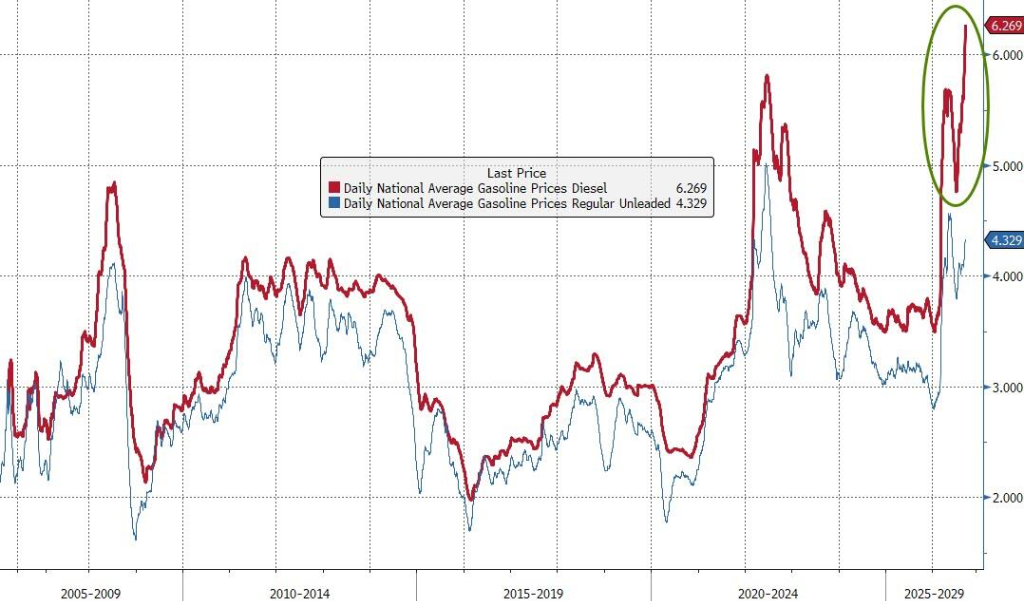
Nomura strategist Charlie McElligott warned that the oil market has become a "hot potato," carrying the risk of triggering severe volatility in interest rates. He specifically highlighted that the "diesel and energy shortage shock" is materializing, with shipping disruptions in the Red Sea further cutting off Asian supply flows. The market has begun pricing in the possibility of the US government exercising the "nuclear option"—banning crude oil exports—thereby pushing the WTI-Brent spread to a significant premium.
Demand for the 20-year U.S. Treasury auction hit a record low, while the 10-year yield approached a 20-year high.
The U.S. Treasury market came under pressure on Tuesday. The $13 billion auction of 20-year Treasuries held that day yielded dismal results, with foreign demand falling to historic lows and the auction yield hitting a record high, further exacerbating strain on the bond market.
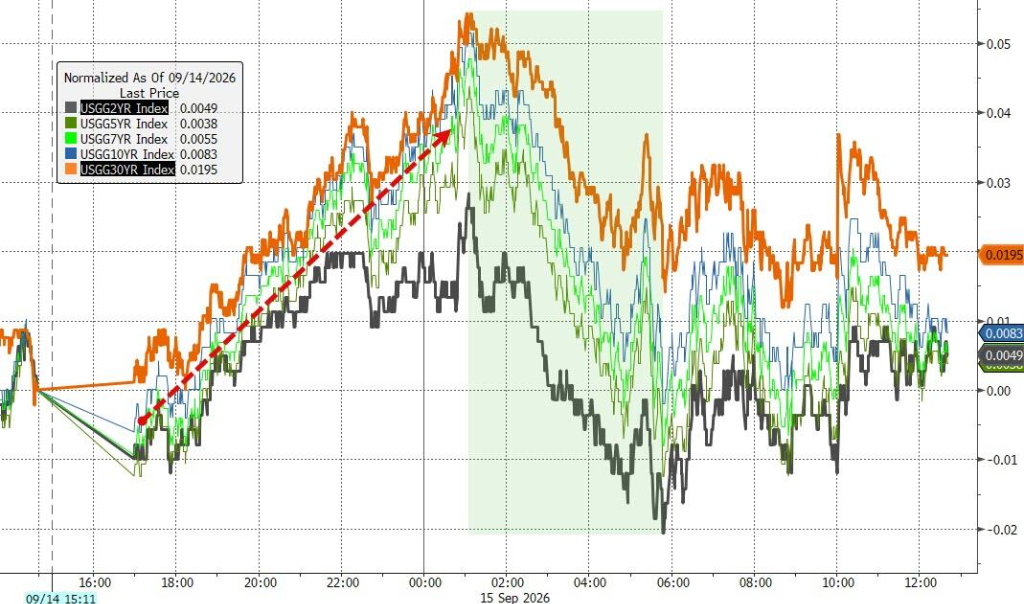
The yield on the 10-year U.S. Treasury note touched 5.04% intraday, its highest level since 2007, prompting a rise in bond volatility.
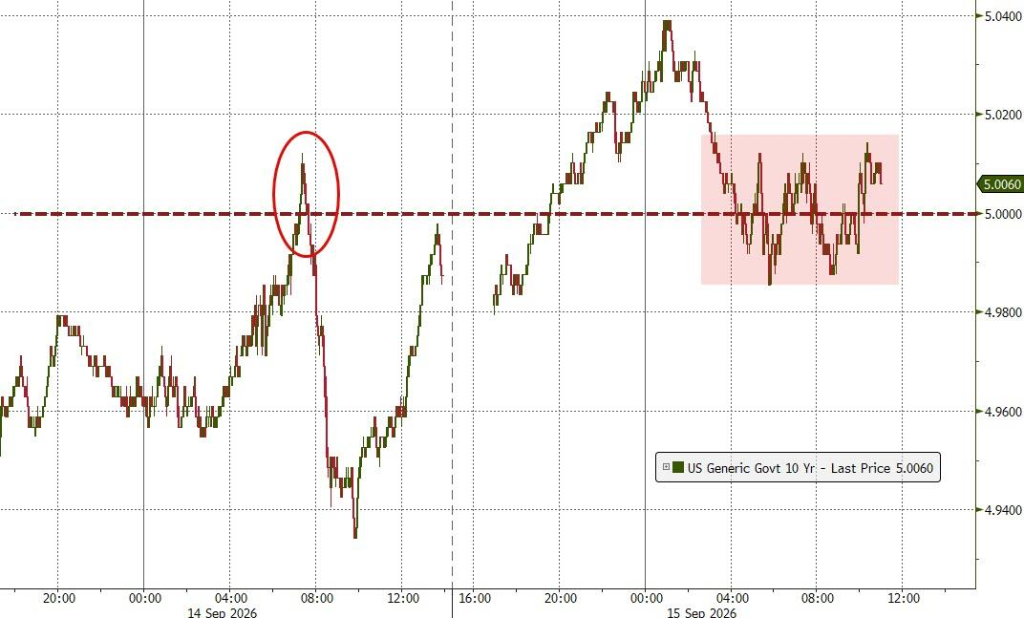
Darrell Cronk of Wells Fargo & Co described the current predicament facing equities as akin to "running a marathon with ankle weights":
Higher interest rates have increased the discount rate investors use to value future earnings, while higher energy costs are eroding consumer purchasing power and compressing profit margins.
He concluded that the market must "work harder" to achieve earnings growth, even as investors become increasingly unwilling to pay premium valuations.
Paul Nolte, a senior wealth advisor at Murphy & Sylvest, stated that the current situation is "unlikely to involve a one-off rate hike, but rather a series of hikes," noting that oil prices are the root cause of inflation and are beginning to permeate other areas of the market.
U.S. stocks saw gains only in the energy sector, while technology stocks faced pressure, leading to a broad shift toward defensive positioning.
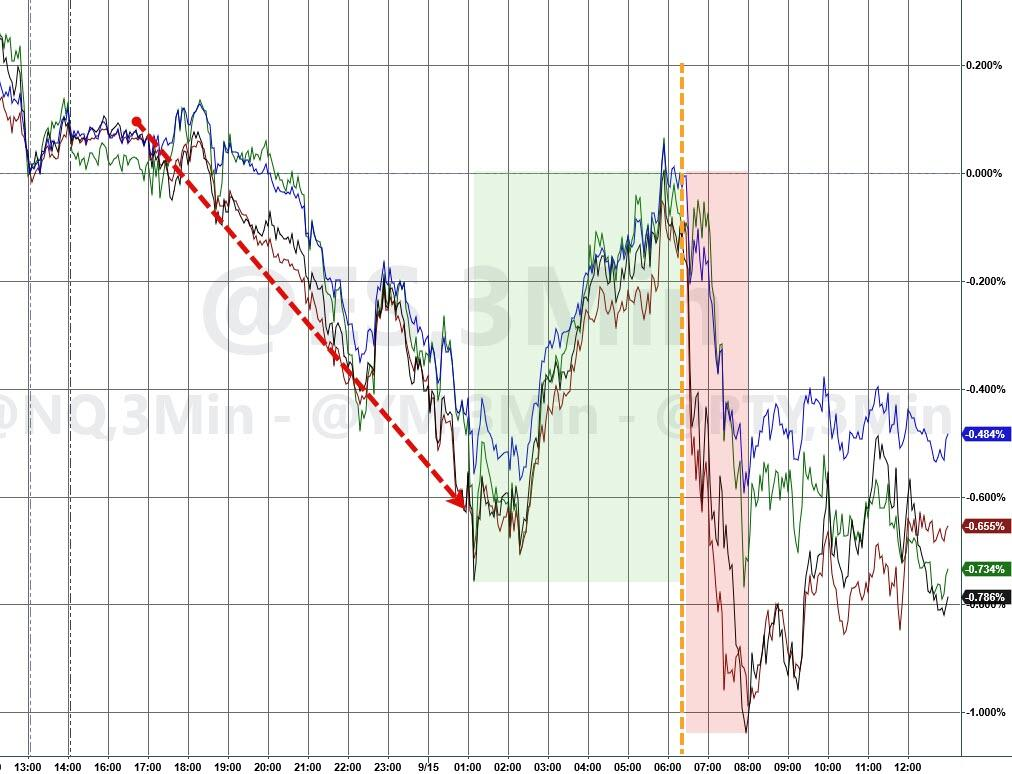
Major U.S. stock indices rose briefly before the market open but were immediately sold off thereafter, as investors grew concerned about the Federal Reserve's statement, dot plot, and press conference scheduled for the following day.
Peter Tuz, President of Chase, attributed the current market hesitation to a confluence of three pressures:
With rising fuel prices (particularly diesel), a rate hike tomorrow all but certain, and concerns over a potential slowdown in the AI ecosystem, why should investors actively enter the market before these uncertainties dissipate?
All three major U.S. stock indices closed lower on Tuesday. The Dow Jones Industrial Average fell 328.09 points, or 0.63%, to close at 52,093.11;$S&P 500 Index (.SPX.US)$the Nasdaq Composite dropped 34.25 points, or 0.45%, to close at 7,585.73;$Nasdaq Composite Index (.IXIC.US)$and the S&P 500 declined 204.84 points, or 0.78%, to close at 25,981.57.
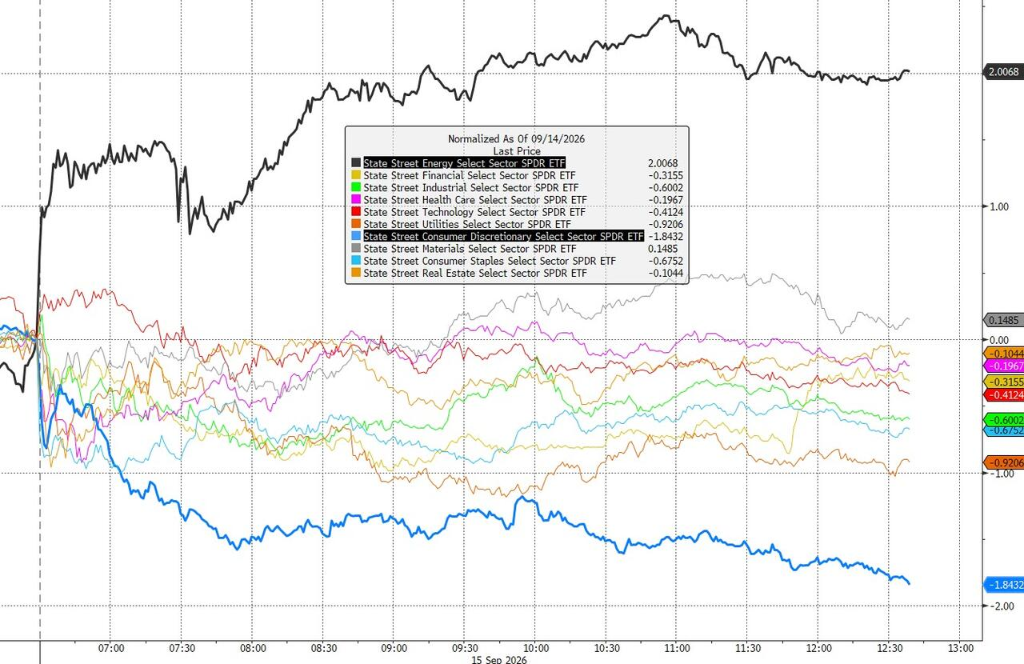
Among the eleven sectors of the S&P 500, Energy was the only sector to record gains, rising 2.3% benefiting from higher oil prices; Consumer Discretionary led the declines.
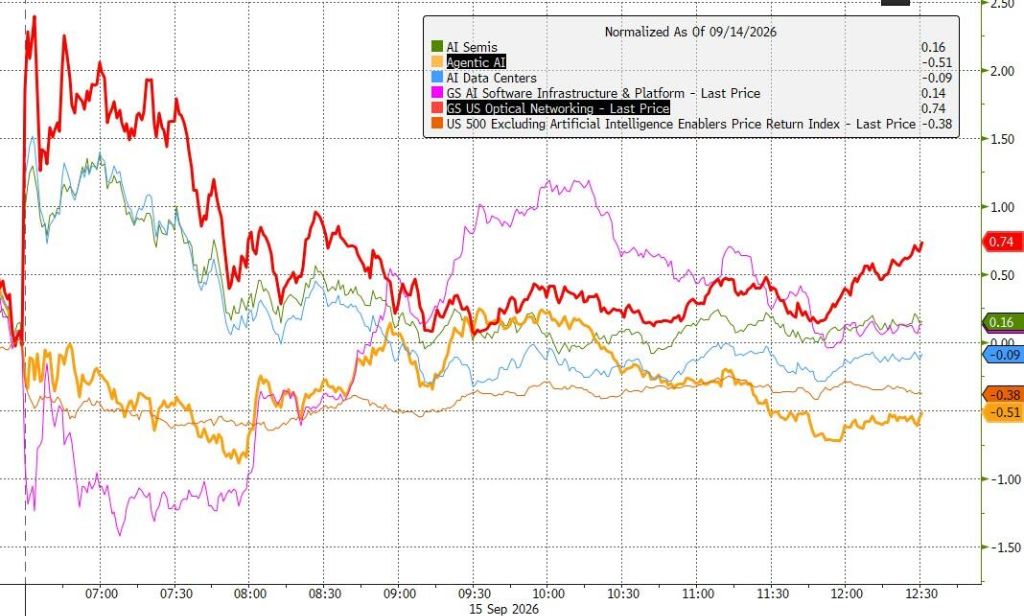
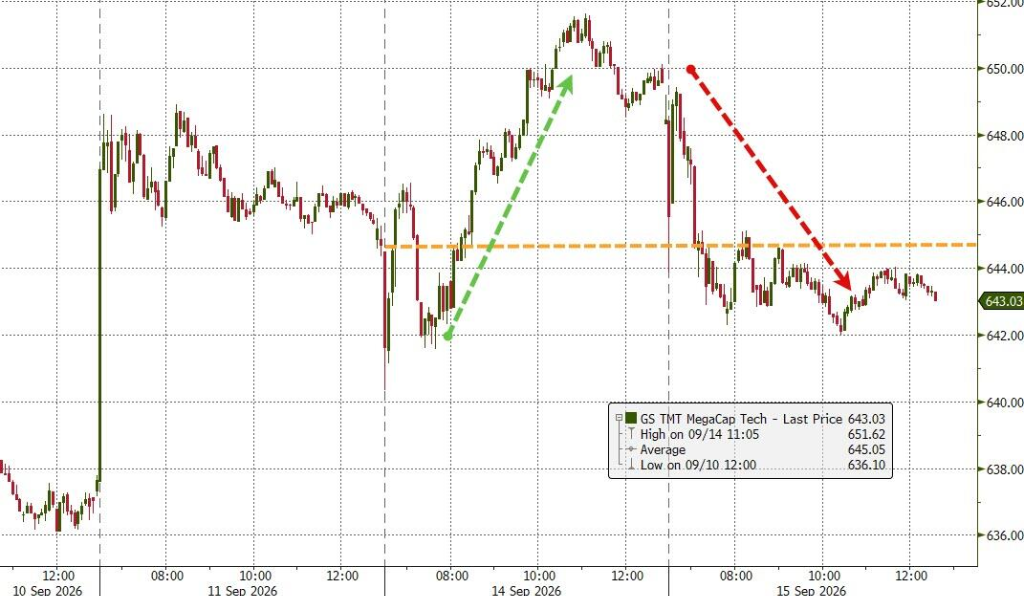
AI-related stocks attempted to stabilize and rebound early in the session, but losses widened later, with most closing in line with the broader market's decline.$PHLX Semiconductor Index (.SOX.US)$It managed only a 0.4% gain, failing to make a substantive recovery from Monday's sharp drop.
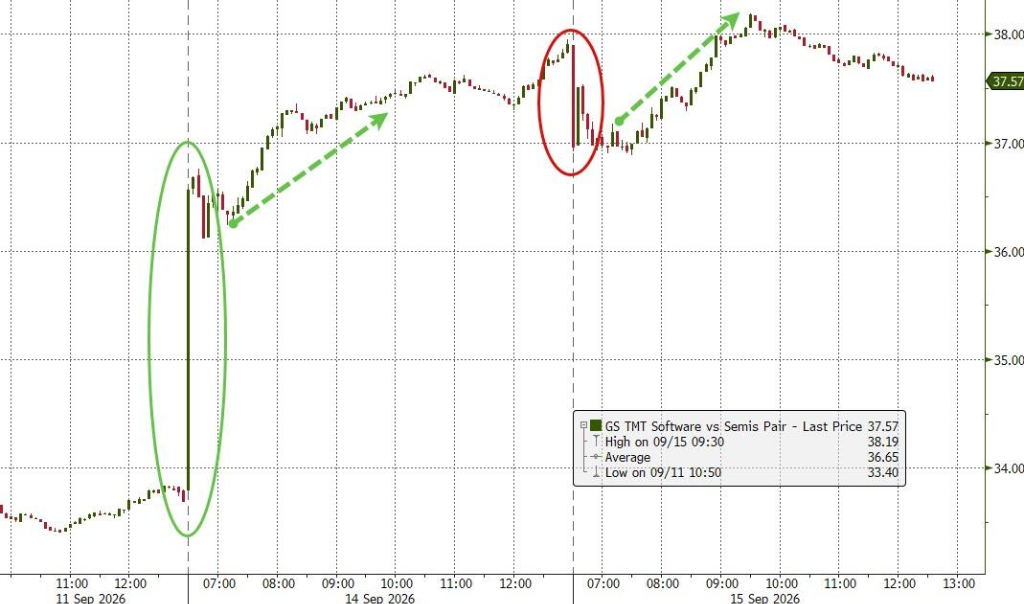
The software sector once again outperformed the semiconductor sector today.
Large-cap stocks erased yesterday's gains.
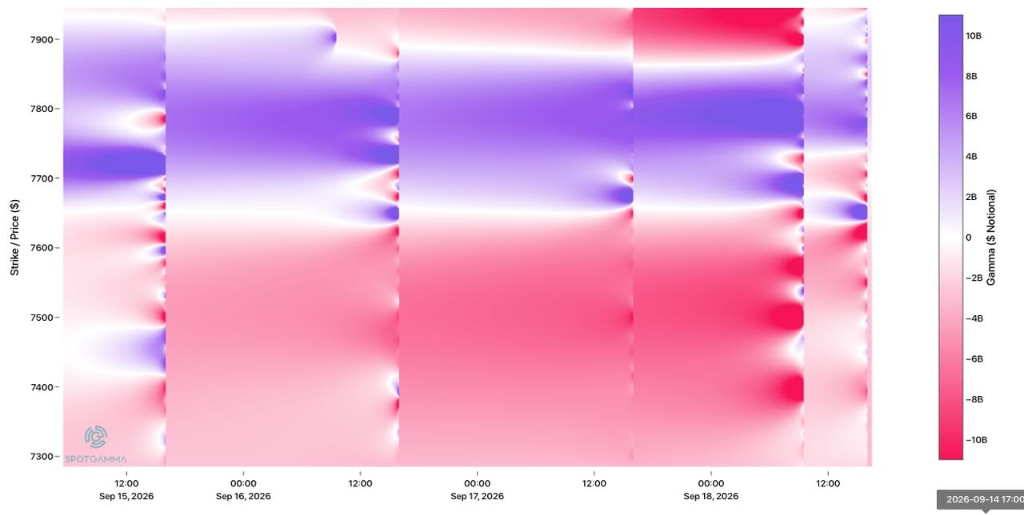
From an options structure perspective, the S&P 500's Gamma exposure continues to deteriorate, having entered negative Gamma territory below 7,625 points. This implies that further downside in the index will force market makers to passively sell futures, exacerbating the decline, with levels below 7,600 considered high-risk zones.
At the individual stock level, Dave & Buster's plunged 19% after its second-quarter revenue missed expectations; Waystar rose 7.1% following a Reuters report that it is exploring strategic options, including a sale.
Cryptocurrency-related stocks came under pressure, with Coinbase falling 10.1% and Strategy declining 5.4%.
The U.S. Senate failed to advance comprehensive cryptocurrency legislation, as the CLARITY Act fell short by one vote in a procedural vote. Prediction markets subsequently saw a sharp decline in the perceived probability of the bill's ultimate passage.
$Bitcoin (BTC.CC)$Sharp decline; the U.S. dollar serves as a safe haven
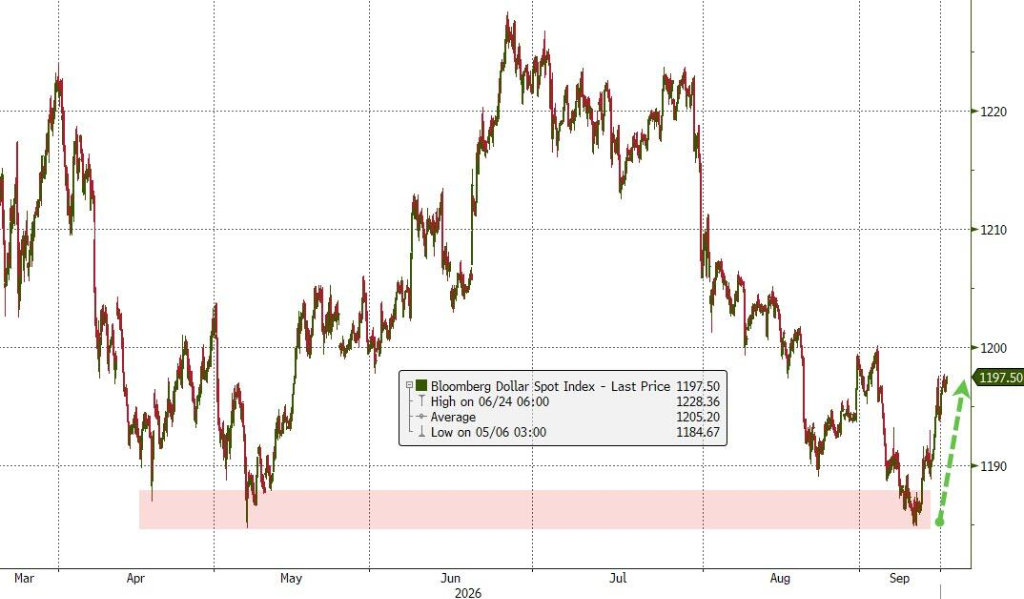
In the foreign exchange market, the U.S. dollar rose to the previous day's high, driven by safe-haven demand, making it one of the few assets to benefit on the day.
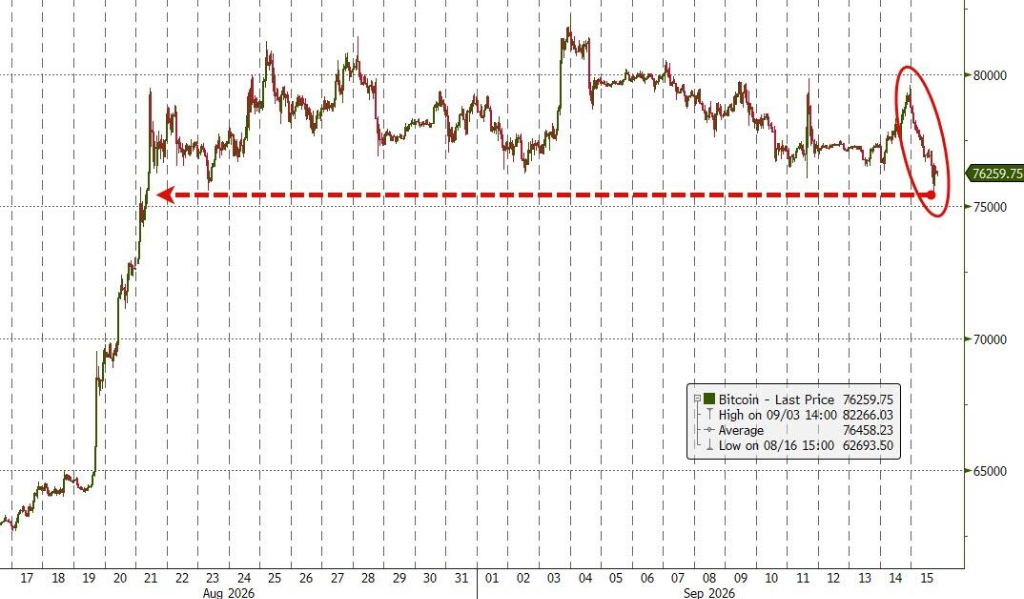
Bitcoin retreated sharply on Tuesday, wiping out all gains from the previous trading session and falling back to near one-month lows.
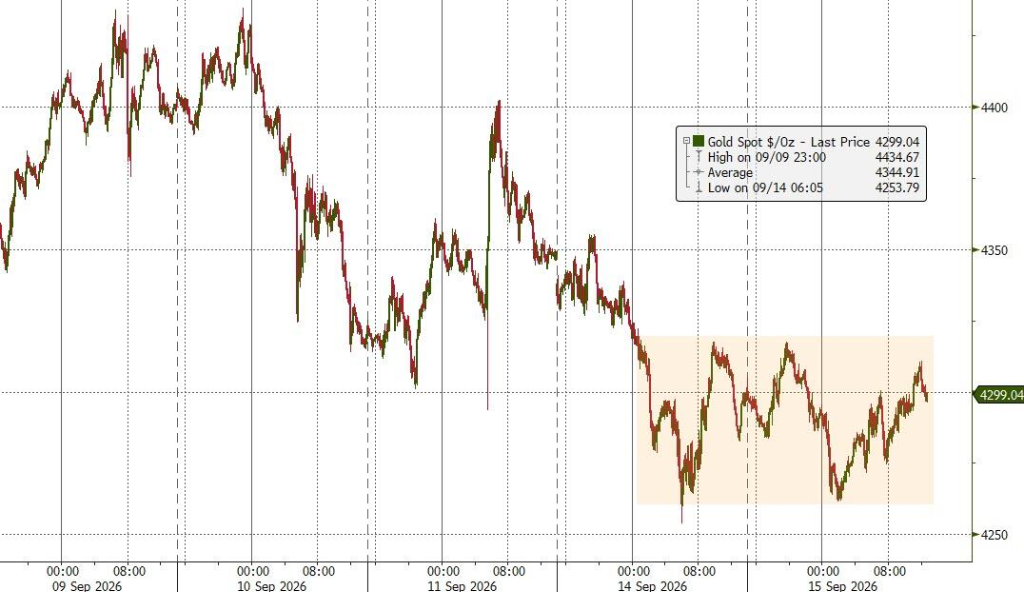
Gold remained largely flat, hovering around $4,300, as the strengthening dollar failed to provide significant support to gold prices.
Company News
[Jensen Huang: The AI industry does not need new safety regulations]
NVIDIA CEO Jensen Huang stated at an event held on Tuesday$Salesforce (CRM.US)$that the AI industry "does not need any new laws or regulatory measures." He reiterated his previous view that the notion of a trade-off between safety and speed in AI development is a "false premise," asserting that both can be achieved simultaneously. "Companies can proceed at their own pace until they are confident that their products will be accepted by the market. Market forces are already in place. Companies have the ability to decide independently not to release technologies or products that could cause harm." Earlier this week, Huang participated in a live phone call with U.S. President Trump at an event, where both pushed back against recent calls to slow down AI development.
[Amazon states data recovery hindered at some AWS facilities in Bahrain and the UAE]
Amazon Web Services (AWS) stated that data access remains unavailable for some data centers in the Persian Gulf region due to damage sustained during the conflict between the United States and Iran. In its latest status update, AWS reported that data stored exclusively in the Bahrain data center and certain network zones in the United Arab Emirates (UAE) is currently inaccessible. Earlier, two AWS data centers in Bahrain were damaged in attacks at the onset of the conflict, with the extent of damage exceeding their service design tolerances. AWS indicated that most customers have restored operations through backups or by migrating to data centers in other countries. However, data in one availability zone in the UAE remains inaccessible, and engineering teams are working to restore resources in two additional availability zones. The company expects to provide further updates on the recovery of facilities in Bahrain early next year.
[OpenAI collaborating with Anthropic and Google to advance AI safety efforts]
According to reports, OpenAI is working with its main competitor Anthropic and Google's (GOOG.O) DeepMind to develop measures addressing artificial intelligence safety concerns. This move further bolsters industry efforts to mitigate growing anxieties over the potential economic and security threats posed by the technology. Chris Lehane, Global Head of Policy at OpenAI, stated on Tuesday that the company has been collaborating with Anthropic and Google for several weeks. He added that OpenAI believes coordination among these three AI companies on safety issues does not require antitrust exemptions. "Rather than competing against each other, we should work together to prioritize safety," Lehane said. He noted that there are ample precedents for coordination on AI safety among enterprises, citing the aviation industry: "There have been many instances in the past where companies have worked to assist one another in enhancing safety standards."
[Meta plans to deploy new self-developed ARKE chip in the first half of next year]
Meta plans to begin deploying its new self-developed ARKE chip in data centers during the first half of next year. The company stated that this initiative will reduce costs and energy consumption when running artificial intelligence models. Meta first announced its plan to develop proprietary AI chips in 2023 and is currently testing the third generation of this series, codenamed MTIA 450, also known as Arke. The next-generation product, codenamed 500 or Astrid, is expected to complete its design phase within approximately one month and will be deployed in data centers by the end of 2027. Meta anticipates broader adoption of this product in the future.
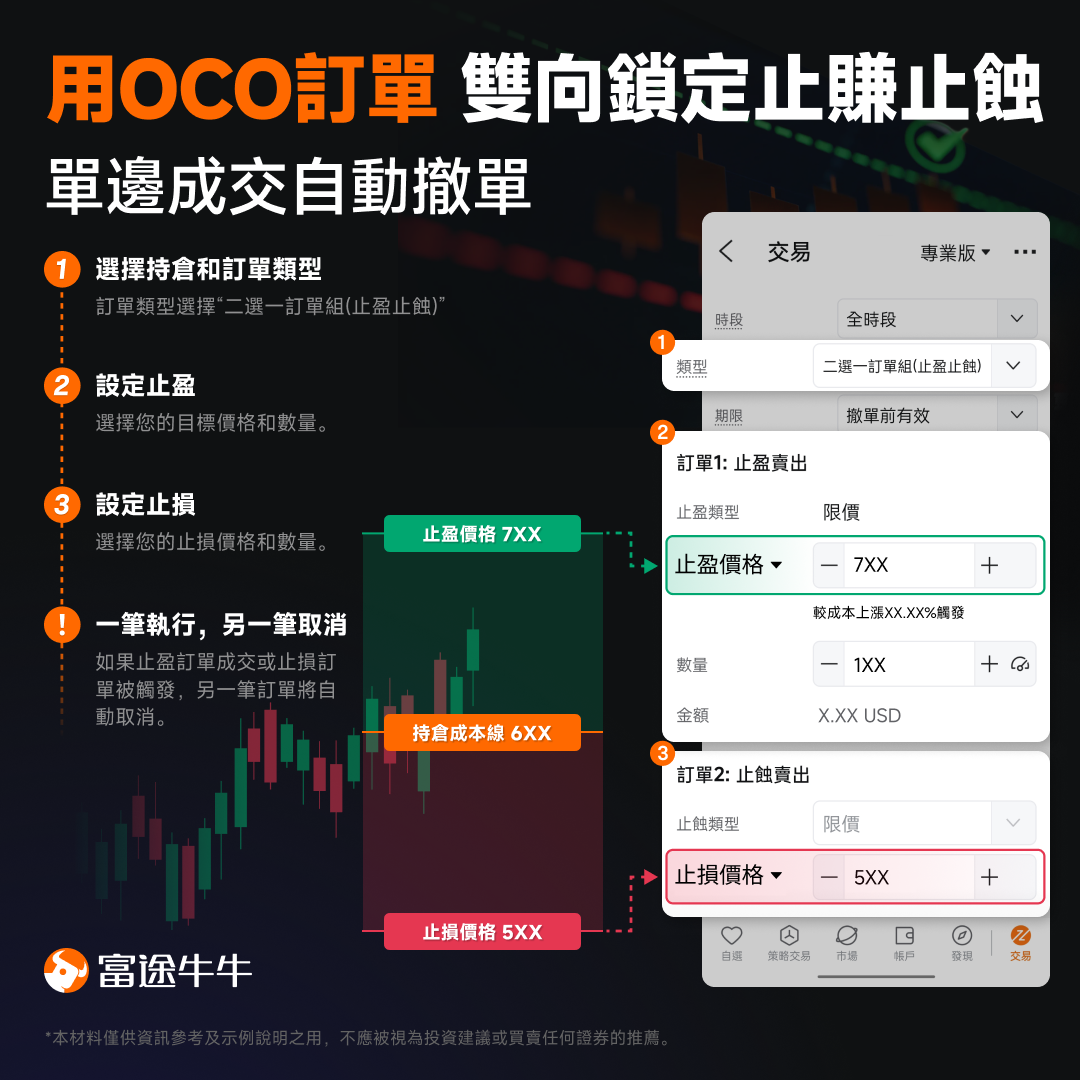
Market conditions are volatile. Rather than rushing to chase trends after the direction becomes clear, it is better to prepare in advance. OCO (One-Cancels-the-Other) orders allow you to place two linked orders simultaneously; when one is executed, the other is automatically canceled, enabling you to respond flexibly to various market movements.
Editor/Liam