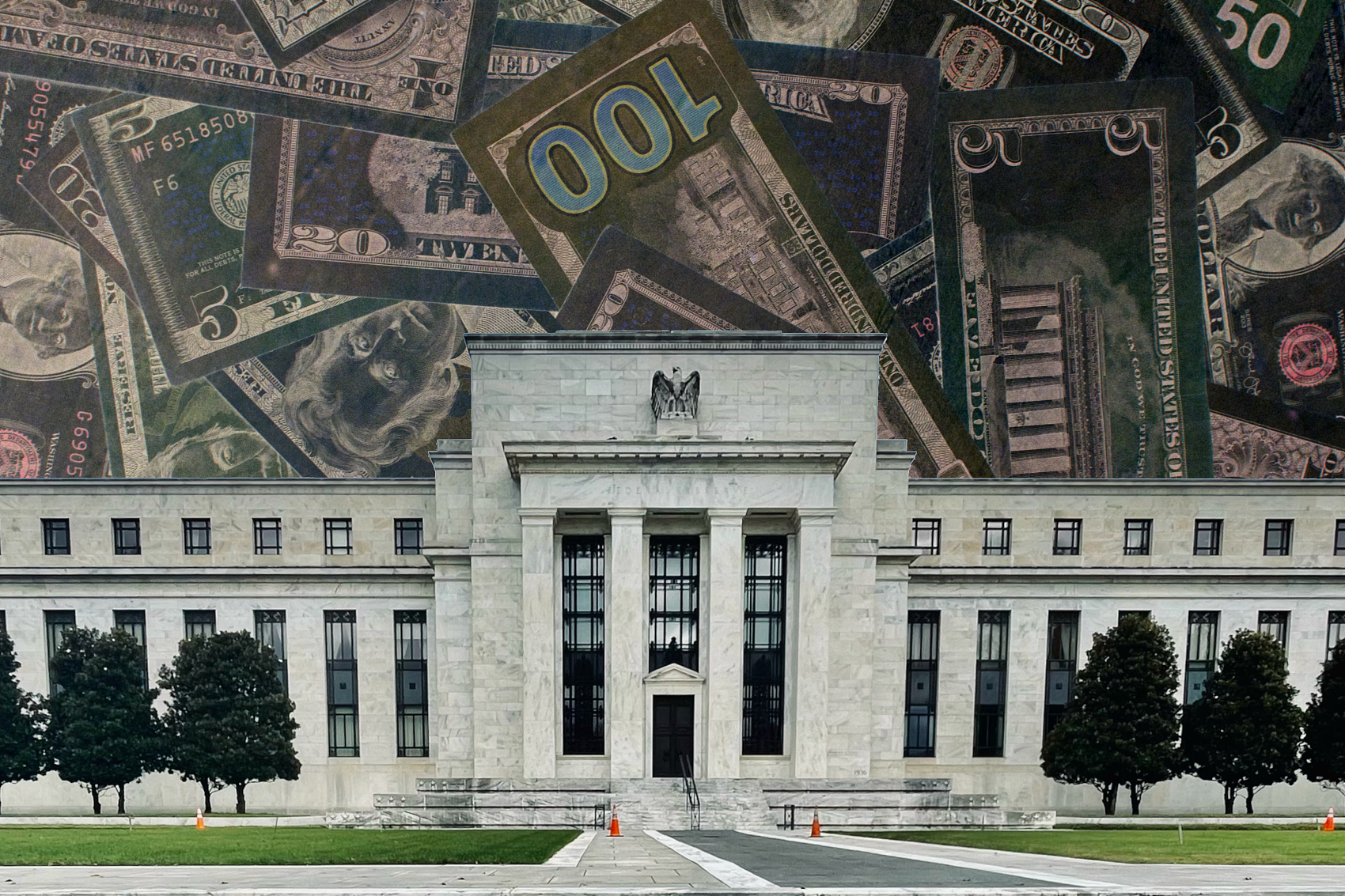
The Federal Reserve resumed raising interest rates after a three-year pause, and the market responded with sell-offs. Chairman Powell adopted a hawkish tone, stating outright that inflation "has failed to pass the test," while the dot plot suggests two more rate hikes by 2026. Goldman Sachs warned that if inflation does not turn a corner in the fourth quarter, the risk of more aggressive front-loaded rate hikes cannot be ignored. Meanwhile, the White House has publicly voiced its dissatisfaction, and the political pressure behind Trump's silence may become the next market variable.
The Federal Reserve resumed raising interest rates after a three-year pause, prompting an immediate sell-off in the markets, while Wall Street's interpretation of this policy shift has largely been hawkish.
On Wednesday, the Federal Reserve unanimously raised its benchmark interest rate by 25 basis points to a range of 3.75%–4.00%, marking the first rate hike since 2023. At the press conference, Fed Chair Jerome Powell stated that the move was intended to "remove some accommodation" and bring financial and credit conditions into closer alignment with the policy target. This language was widely interpreted by markets as a signal of further rate increases—prompting the yield on the two-year U.S. Treasury note to climb to a more than two-year high and sending equities to their intraday lows.
 The dot plot shows that Fed officials' median forecast projects one additional rate hike by 2026, with the peak interest rate at 4.125% and no rate cuts in 2027. Goldman Sachs's trading desk noted that this outcome is more hawkish than previously expected; the firm had anticipated a "dovish hike," meaning a rate increase accompanied by only limited signals of further tightening, but the actual result fell far short of that scenario. Meanwhile, the White House has expressed dissatisfaction with this decision, with spokesperson Kush Desai telling Fox News that the rate hike "lacks sufficient economic justification."
Press conferences drive market volatility, with Wash's tone clearly hawkish.
According to Bloomberg's Fed watcher Chris Antsey, the market volatility on this Federal Reserve policy‑setting day once again stemmed primarily from the press conference, rather than from the FOMC statement itself. The statement was brief, adding only a single sentence noting that domestic spending remains resilient, and it offered no forward guidance, merely stating in passing that this rate hike is intended to "support a more timely return to the 2% inflation target."
Antsey believes that Walsh adopted a generally hawkish tone. At the press conference, he cited three factors that have changed since the June monetary policy meeting: the economy and hard data have continued to strengthen; inflation trends "have failed to pass the test"; and the geopolitical landscape has also shifted, with "hotspots impossible to ignore." Walsh further emphasized that current broad financial conditions remain far from restrictive levels, and this rate hike merely removes "one dose of accommodation."
Antsey noted that although Walsh did not offer specific forward guidance, his reference to "removing one dose of accommodation" signaled that, absent a shift in the data, he remains open to further rate hikes. Investors interpreted this in the same way, prompting a rise in the yield on the two-year U.S. Treasury note and a corresponding decline in equity markets.
The dot plot is more hawkish than expected, and Goldman Sachs warns of the risk of front-loading rate hikes.
In its post-meeting briefing, Goldman Sachs' trading desk noted that the dot plot results significantly exceeded the firm's expectations. Specifically, 12 officials favored two additional rate hikes by 2026, while four even projected a cumulative 75 basis-point increase over the year, with only two officials leaning toward a single hike this year. Meanwhile, the Federal Reserve revised several economic forecasts upward: GDP growth for 2026 was raised from 2.2% to 2.3%, the inflation forecast was adjusted up from 3.3% to 3.4%, and the unemployment rate forecast was lowered from 4.3% to 4.1%.
On the inflation trajectory, PCE inflation is projected to reach 3.7% this year and ease to 2.3% next year; however, the dot plot indicates that inflation will not return to the 2% target until 2029. Based on this, Goldman Sachs concludes that there is a clear divergence between Warsh's hawkish tone and the inflation path depicted in the dot plot. If inflation fails to reverse course in the fourth quarter, the Federal Reserve may opt for more aggressive, front-loaded rate hikes rather than settling for just one hike.
Notably, when asked about the current level of interest rates relative to the neutral rate r*, Mr. Walsh explicitly stated that this academic concept is difficult to translate directly into "today's policy decisions," thereby avoiding a clear articulation of his policy stance.
The White House expressed dissatisfaction, and Trump's stance has become the next focal point.
The key headline from Bloomberg also clearly outlines the overall contours of this decision: the Federal Reserve unanimously raised interest rates by 25 basis points; the median dot plot projection indicates one additional rate hike in 2026; 16 officials expect at least one more rate increase this year; and President Bullard explicitly stated that inflation is too high and has persisted for too long, with upside risks to inflation and relatively balanced risks in the labor market.
Furthermore, following the Federal Reserve's announcement of a rate hike, the White House swiftly responded. Spokesperson Kush Desai told Fox News that, from the administration's perspective, the Fed's decision to raise rates "lacks particularly strong economic justification," a statement that clearly carried a critical tone.
Trump himself has repeatedly called publicly for interest-rate cuts, and as of this report's publication, he had not yet commented on the latest 25-basis-point rate hike. Analysts generally believe that if the Federal Reserve continues to raise rates going forward, political pressure from the White House will intensify significantly.
Editor/lambor