
UBS Group strategist Staunovo believes that the Federal Reserve's 25-basis-point rate hike to 3.75%–4% will weigh on gold prices in the short term and could trigger outflows from gold ETFs. However, he emphasized that this rate increase was in line with expectations and does not alter the long-term fundamentals of gold. Global debt expansion, a medium-term weakening of the U.S. dollar, expectations of Fed rate cuts next year, and central banks' continued gold purchases all provide structural support.
Gold has recently faced headwinds from the Federal Reserve's tightening policy, but UBS Group believes this is not enough to undermine the metal's long-term investment rationale.
According to Wallstreetcn, on September 16, the Federal Reserve raised the target range for the federal funds rate by 25 basis points to 3.75%–4.00% and signaled that further rate hikes may be forthcoming this year.
 UBS Group strategist Giovanni Staunovo characterized the meeting as "ending a long pause in hawkish rate hikes," believing that rising U.S. real interest rates and a stronger dollar will weigh on gold prices in the short term, while also warning that the substantial inflows into gold ETFs in August may face outflows.
However, Staunovo also noted that this rate hike was fully anticipated by the market and does not alter gold's long-term investment appeal. He cited rising global debt levels, expectations of a medium-term weakening of the U.S. dollar, and the prospect of Fed rate cuts next year as key factors supporting gold demand, while viewing a price pullback to around $4,000 per ounce as an opportunity to increase holdings.
With the rate hike now in effect, a short-term correction is unavoidable, but the long-term fundamentals remain intact.
The Fed's latest rate hike decision was in line with broad market expectations, but the updated dot plot indicates that most officials anticipate at least one additional rate increase before year-end, further reinforcing a hawkish stance.
Staunovo stated that this backdrop "remains a bearish factor for gold in the near term," as the opportunity cost of holding a non-yielding asset rises accordingly.
He also noted that gold ETFs posted substantial net inflows in August, driven primarily by market concerns over the Federal Reserve's independence and rising government debt levels. However, with this week's meeting signaling a hawkish tone, some of these positions may come under pressure to take profits or unwind.
Staunovo believes that short-term volatility cannot obscure gold's deeper structural underpinnings. He identifies the following factors as long-term bullish drivers: mounting concerns about fiscal sustainability amid persistently rising global debt, expectations of a prolonged U.S. dollar weakness, the possibility of Fed rate cuts next year, and ongoing geopolitical uncertainty at elevated levels.
He also noted that gold's resilience during periods of rising real interest rates suggests that conventional rate‑based valuation models "capture only part of the story."
Concerns about the accessibility of reserve assets, sanctions risks, and doubts about fiscal sustainability are prompting policymakers to gradually reduce their reliance on U.S. dollar‑denominated holdings, while gold—being an asset unlinked to any institutional credit—stands to benefit.
Central bank gold purchases provide structural support, with the target price seen as high as $5,400.
Central bank demand remains a key pillar for gold prices. Data show that the People's Bank of China increased its gold holdings by roughly 20 metric tons in August, marking the 22nd consecutive month of purchases; meanwhile, the National Bank of Poland and the Central Bank of Uzbekistan each added approximately 8 metric tons.
Staunovo maintains its forecast of 750 to 1,000 metric tons of annual gold purchases by central banks, believing this will provide "significant structural support" for gold prices.
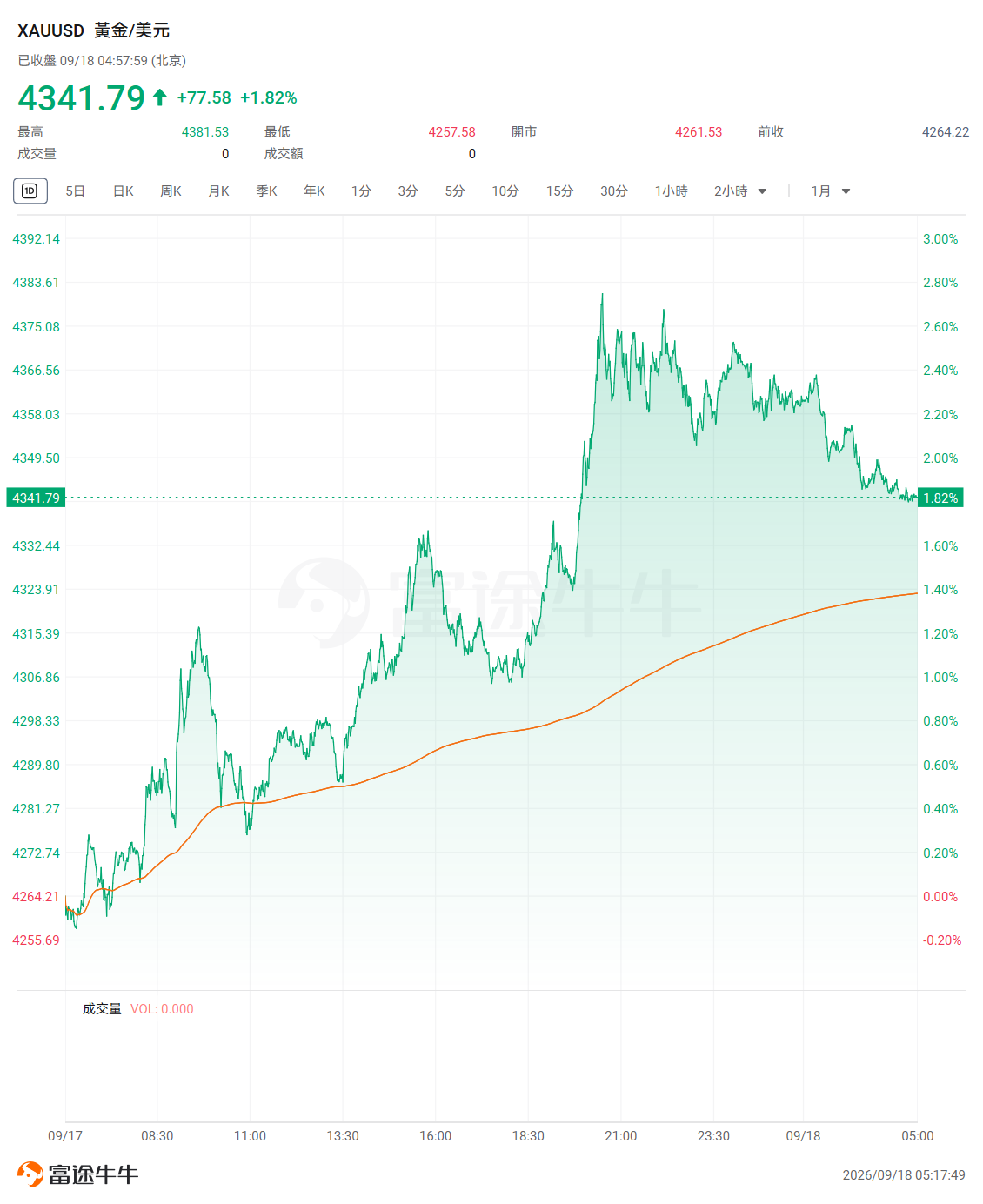
Based on the spot price of $4,342 per ounce on September 18, UBS Group has set a series of phased price targets: reaching $4,600 by December 2026, rising to $5,000 by March 2027, further increasing to $5,200 by June 2027, and hitting $5,400 by September 2027.
Staunovo wrote:
We believe gold's long-term investment appeal remains positive, and a price pullback to around $4,000 would present a favorable opportunity to increase holdings.