Macro News Highlights
Trump: The next step in the Iran war—a "major decision"—is coming soon.
In an interview with Axios, Trump stated that he is approaching a critical decision point regarding the war with Iran and is considering whether to resume large-scale military operations. He plans to hold talks on September 22, on the sidelines of the United Nations General Assembly in New York, with the leaders of Saudi Arabia, the United Arab Emirates, Qatar, Bahrain, Kuwait, and Oman, seeking his allies' views on the next phase of the conflict. According to U.S. officials, Trump and Defense Secretary Austin have instructed the U.S. military to maintain its current troop levels in the Middle East at least through the end of the year. Trump also said that Iran remains in direct contact with the United States and hopes to reach an agreement.
Saudi Arabia reportedly proposed a two-week ceasefire to the Houthi rebels, while the United States said the oil pipeline could be restored relatively quickly.
 According to Lebanese media, Saudi Arabia has proposed a two-week ceasefire to the Houthi rebels via Oman, while also offering to ease the blockade on Yemen and allow greater humanitarian aid to enter, hoping to use the pause to advance a comprehensive agreement. The Houthis, however, are demanding a "final and comprehensive" settlement. Later, U.S. Energy Secretary Jennifer Granholm stated that three pumping stations along Saudi Arabia's east–west oil pipeline had been attacked, with two sustaining only minor damage and expected to resume operations relatively quickly. The pipeline plays a key role in transporting Saudi crude exports around the Strait of Hormuz via the Red Sea.

Following the rate hike, U.S. equities in the energy and technology sectors have historically outperformed; Goldman Sachs: the pace of yield increases is more critical.
Jefferies' analysis of rate-hike cycles since 1983 shows that, 12 months after the first rate hike, the U.S. equity energy and information technology sectors delivered average returns of 22.4% and 15.4%, respectively. Another sample from Charles Schwab indicates that, over the same period, real estate underperformed the S&P 500 by a median of 4.3 percentage points, making it the worst-performing sector. Goldman Sachs notes that the key factor influencing U.S. equities is the pace of yield increases: at current volatility levels, a 50-basis-point rise in the 10-year Treasury yield over one month, or a 30-basis-point jump in two weeks, could exert significant pressure. The firm believes that tech companies, by boosting growth expectations through capital spending and R&D, may offset some valuation headwinds; whether AI investments translate into productivity gains and earnings growth remains a critical variable.
Castle Securities: The worst of the U.S. stock market is behind us, and the AI sector will lead gains in October.
Scott Rubner, a strategist at Castle Securities, believes U.S. equities have reached a near-term bottom and that market dynamics are beginning to improve. He advises investors to take advantage of the window for further pullbacks before month-end by adding to core holdings on dips. In a client note, Rubner notes that while September's weakness is not yet over and stocks could remain under pressure over the next two weeks, the supply-and-demand balance in the market is quietly shifting. He expects the artificial intelligence sector, which has been hit hard, to stabilize and rebound first in October, paving the way for broader market participation. He adds that technology and communication services stocks together account for roughly 50% of the S&P 500's total market capitalization; once the AI sector's outperformance is confirmed and spreads throughout earnings season, "the magnitude of the rally could well extend far beyond the initial wave of leading stocks."
"New Bond King" Gundlach warns: The next U.S. recession could trigger a fiscal crisis.
Jeffrey Gundlach, CEO of DoubleLine Capital, said the next U.S. recession could spark a debt crisis, driving long-term Treasury yields sharply higher. Speaking at an event in New York, he noted that if a recession were to occur, the U.S. budget deficit could easily reach 12% of GDP, with annual interest payments climbing to roughly $3 trillion. He believes the government might step up intervention to stem bond sell-offs, citing scenarios such as the Federal Reserve re‑implementing "Operation Twist" or reducing coupon payments on existing bonds through debt restructuring. Gundlach added that fiscal sustainability would come under heightened scrutiny during a downturn.
Anthropic reveals: Claude now leads 26% of its internal AI research and development efforts.
Anthropic announced that, as of August, Claude was already leading approximately 26% of its internal AI research and development efforts—up significantly from less than 1% in February—and that over 90% of the related tasks have reached an AI‑assisted or higher level of automation. The company defines "leading" as a setup in which humans provide high-level guidance and oversight while AI handles most of the detailed execution. Currently, roughly 30,000 AI agents are simultaneously engaged in the company's research and engineering projects. Anthropic noted that Claude has not yet achieved fully autonomous operation in the R&D tasks it has been tested on, and plans to make its internal processes and data available to independent third-party evaluators to validate its safety practices.
Rate hikes do not alter the long-term bullish outlook for gold; both Goldman Sachs and UBS Group have set target prices at $5,400.
Goldman Sachs stated that, despite the Federal Reserve's rate hikes, it is maintaining its gold price forecast of $5,400 per ounce by the end of 2027. UBS strategist Giovanni Staunovo believes that rising real interest rates and a stronger U.S. dollar will weigh on gold prices in the short term and could trigger outflows from gold ETFs; however, global debt expansion, expectations of a medium-term weakening of the U.S. dollar, and the prospect of Fed rate cuts next year continue to support long-term demand. UBS projects gold prices to reach $4,600 by the end of 2026, and to rise to $5,000, $5,200, and $5,400 by March, June, and September 2027, respectively, while keeping its forecast for central banks' annual gold purchases at 750 to 1,000 tonnes.
U.S. stock market行情
Wall Street emerges from the shadow of interest-rate hikes, with tech stocks staging a broad rally and the Nasdaq surging nearly 1.7%.
On Thursday Eastern Time, U.S. stocks staged a sharp rally as oil prices retreated, Treasury yields declined, and strong employment data eased market concerns about the Federal Reserve raising interest rates. Technology shares led the broad market advance, lifting the Nasdaq by nearly 1.7%. "The market has refocused on sectors that had been hit hard earlier by expectations of Fed rate hikes," said Robert Pavlik, senior portfolio manager at Dakota Wealth. "Investors are gradually stepping in to buy following the pullback."
At the close, the Dow Jones Industrial Average rose 317.95 points, a gain of 0.62%, to 51,779.85; the S&P 500 climbed 85.93 points, up 1.14%, to 7,637.74; and the Nasdaq Composite advanced 439.87 points, a rise of 1.69%, to 26,418.30.

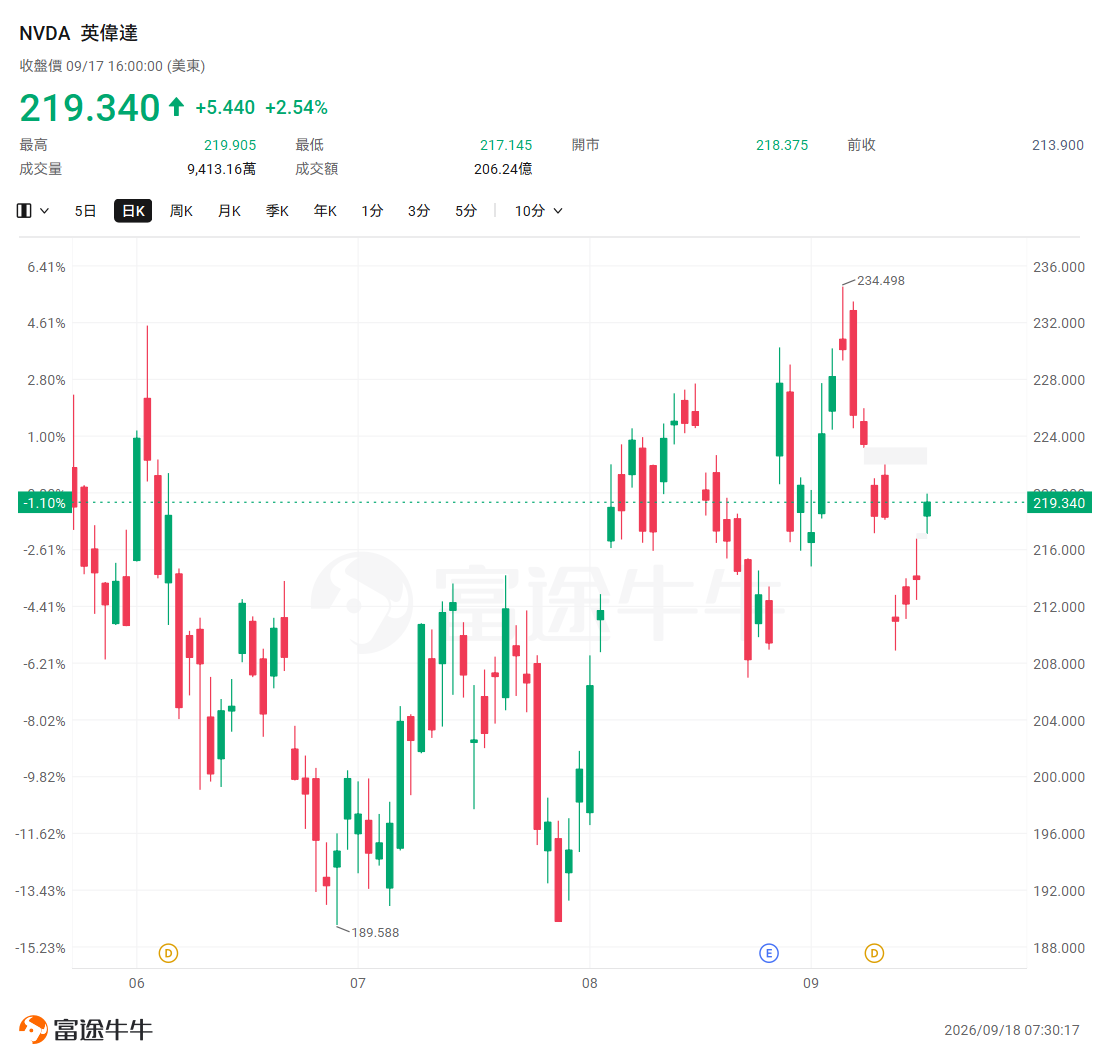
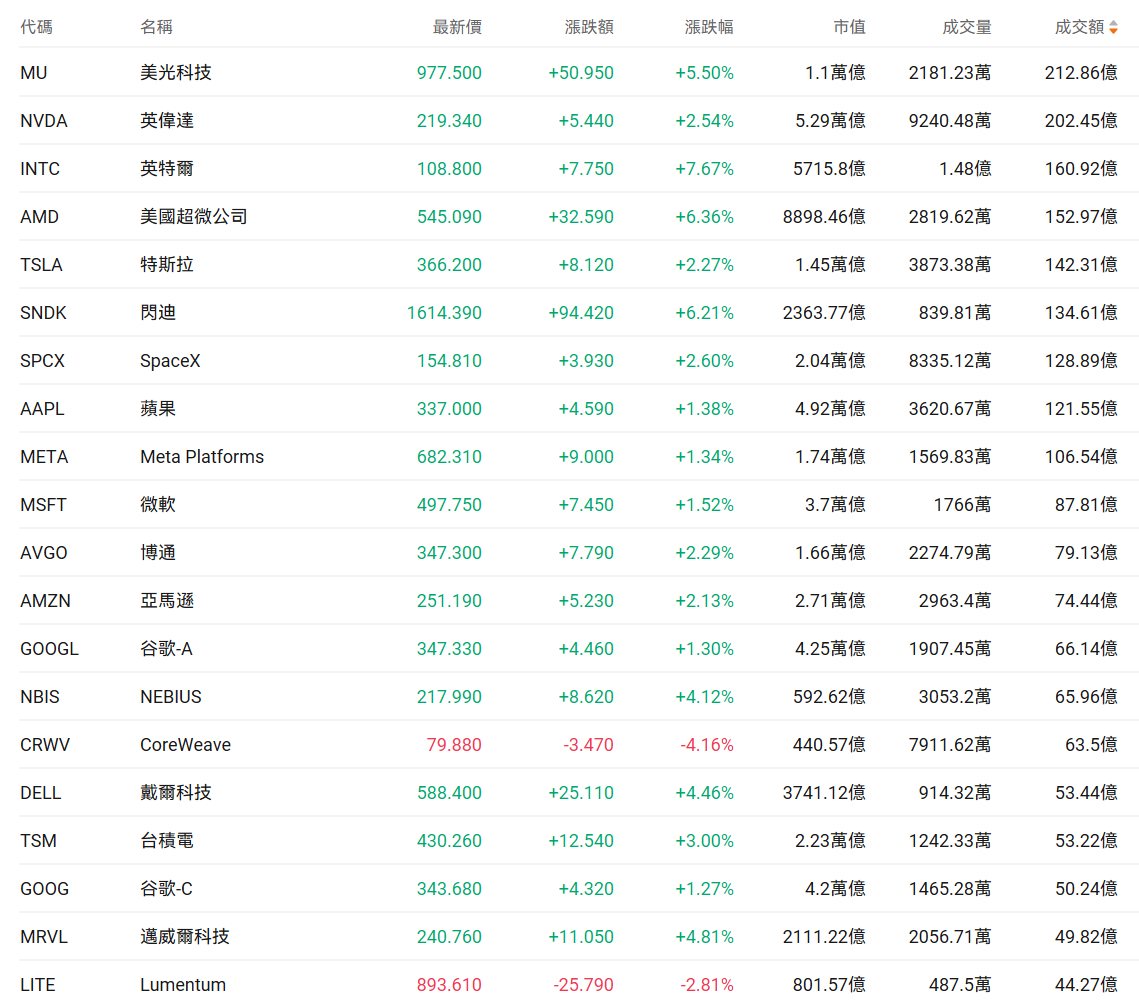
$Star Technology Stocks (LIST2518.US)$Across the board, NVIDIA rose 2.54%, Tesla gained 2.27%, Amazon increased by 2.13%, Microsoft climbed 1.52%, Meta advanced 1.34%, Apple went up 1.38%, and Google edged up 1.3%.
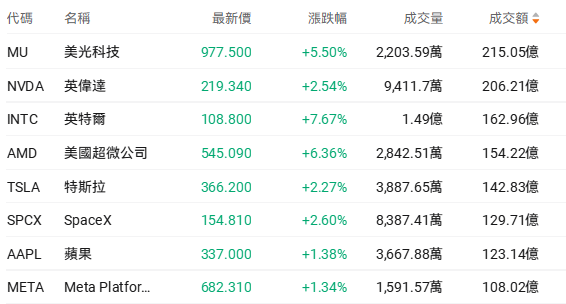
$Cryptocurrency Concept Stocks (LIST20010.US)$Related stocks rose, with Circle up 5.8%, Robinhood up 5.2%, and Coinbase up 5.8%, after the U.S. Securities and Exchange Commission (SEC) announced a five-year exemption for tokenized stock trading. So-called "tokenized stocks" refer to the conversion of traditional shares into digital tokens via blockchain technology, enabling them to be traded on blockchain platforms.
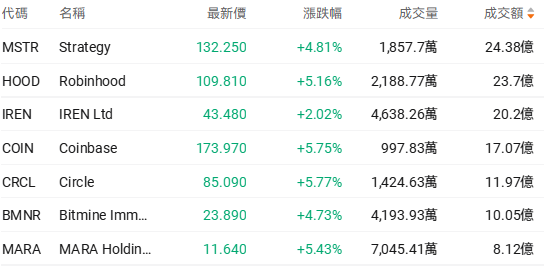
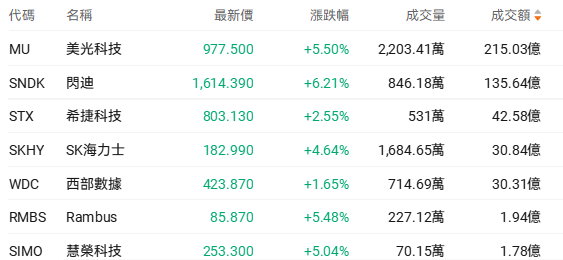
$Storage Concept (LIST23925.US)$Rebound: SanDisk rose more than 6%, and Micron gained over 5%.
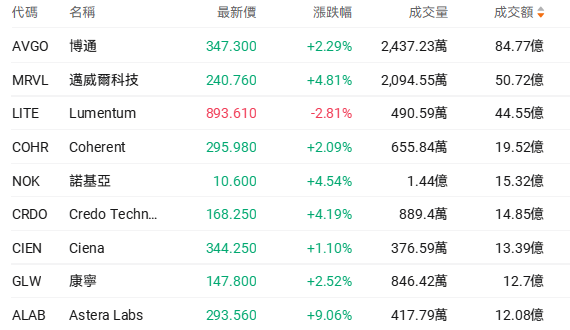
$Optical Communications (LIST23979.US)$Rising, Marvell gained nearly 5%, while Broadcom and Coherent rose by 2%.
$Popular Chinese Stocks (LIST2517.US)$In the market, ASE Technology rose 5.3%, XPeng gained 2.5%, Baidu advanced 1.7%, Alibaba increased by 1.2%, Xiaomi climbed 0.73%, Tencent edged up 0.1%, while NetEase fell 1% and PDD Holdings declined 1.3%.
Individual Stock Information
Jensen Huang expects NVIDIA's chip sales to double next year, citing supply-side bottlenecks.
$NVIDIA (NVDA.US)$CEO Jensen Huang stated at a summit in Scotland that, as AI makes inroads into industries such as healthcare, manufacturing, and financial services, the company expects its chip sales next year to double this year's level. He noted that nearly every country where the company operates is eager to invest in AI; the current bottleneck is not demand but the capacity to produce chips. NVIDIA is diversifying its supply chain and securing multi-year supply agreements for critical components. The company had previously projected revenue growth of approximately 70% in the next fiscal year; Jensen Huang also emphasized that AI products must undergo rigorous testing, and unsafe offerings should be delayed.
Palantir CEO: AI developers should take responsibility for their own products and should not rely on government regulation.
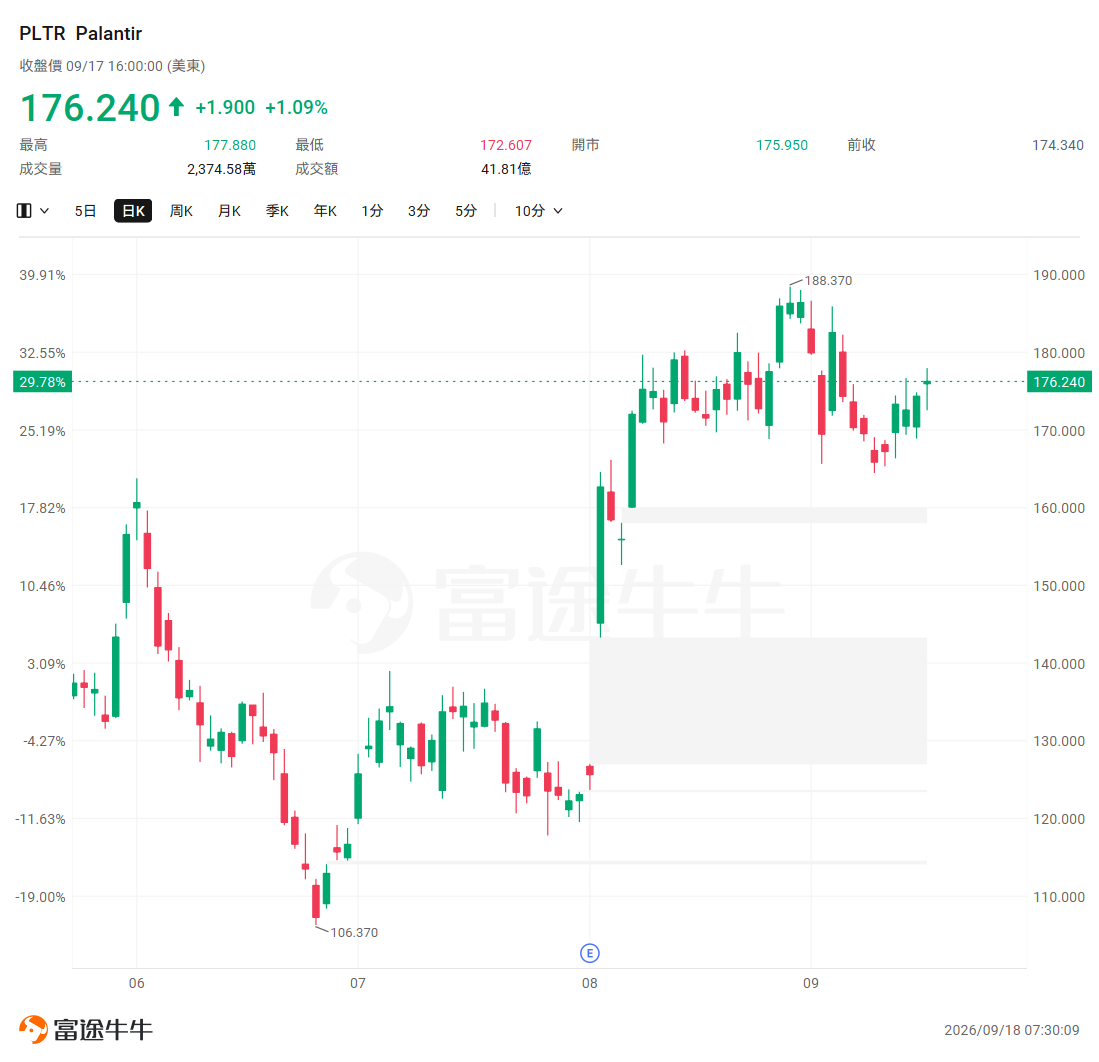
$Palantir(PLTR.US)$CEO Alex Karp told CNBC that, in the face of AI safety risks, the first line of defense should be developers taking responsibility for their own actions; after disclosing risks, companies need to explain what measures they are taking to address them. In response to Anthropic CEO Dario Amodei's suggestion to bring in independent third-party evaluators to oversee companies' compliance with safety standards, Karp believes implementation would be quite complex, requiring both experts with specialized knowledge and addressing trust issues arising from employment relationships between experts and companies. NVIDIA CEO Jensen Huang also stated this week that AI companies have a responsibility to ensure product safety, and if a product is unsafe, its release should be suspended until improvements are made.
SpaceX is considering purchasing data from a bankrupt startup to expand Grok's training resources.
According to Bloomberg, citing sources familiar with the matter,$SpaceX(SPCX.US)$Its AI division is reportedly holding informal discussions to acquire customer information and operational data from struggling or defunct startups, with the aim of training the Grok model. Previously, the company relied primarily on data from the social platform X and an internal "AI mentor" team to enhance the model's performance in fields such as finance and science. At a recent internal meeting, Musk stated that he would leverage all of SpaceX's data to train Grok. Former Starlink employee Jack Garabedian has taken over the data team, overseeing workflow improvements, regular meetings, and adjustments to training‑data objectives.
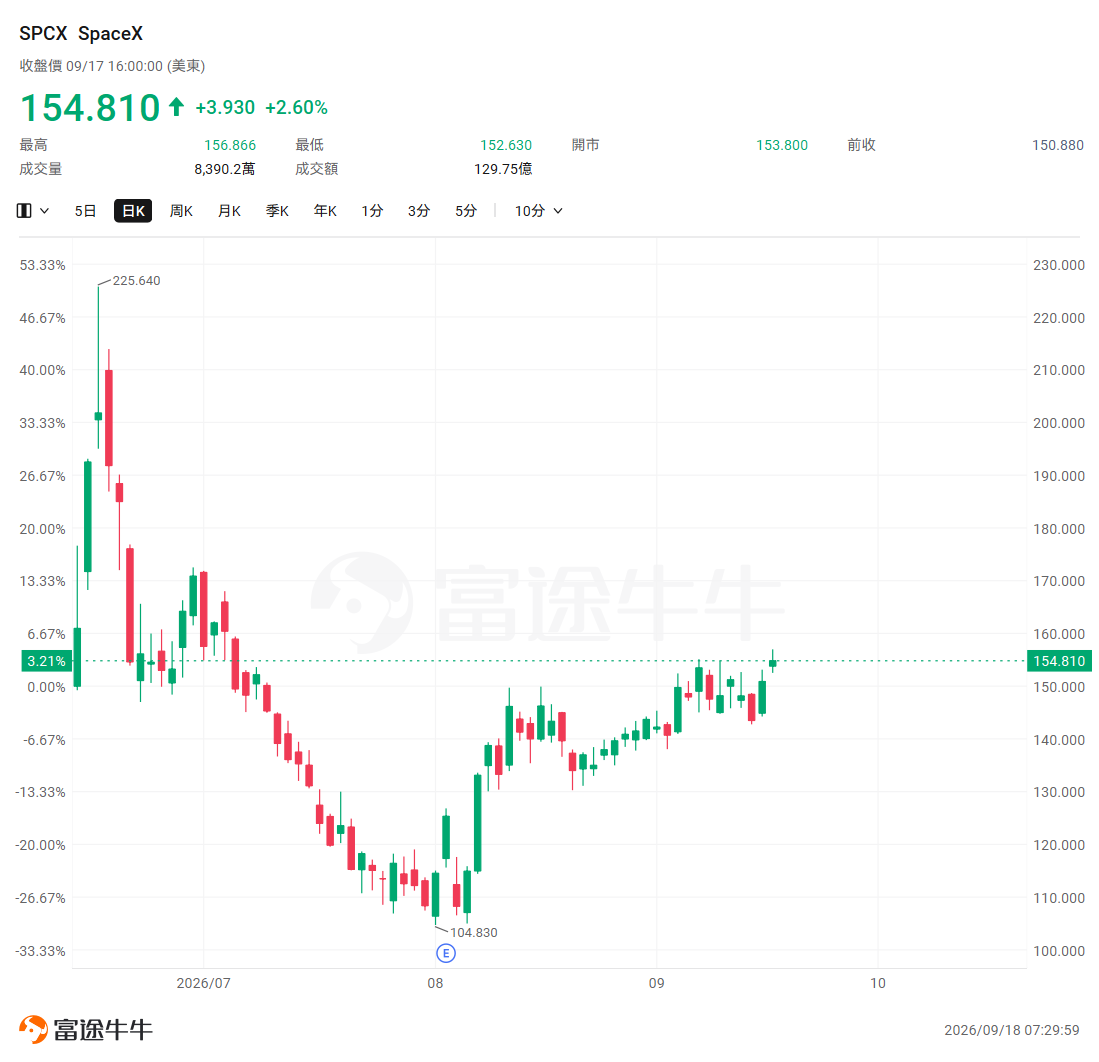
Lucid has teamed up with Bolt to deploy at least 25,000 autonomous taxis across Europe.
$Lucid Group(LCID.US)$It has signed a memorandum of understanding with the ride-hailing platform Bolt, planning to deploy at least 25,000 autonomous taxis in multiple European cities based on Lucid's upcoming mid-size vehicle platform. The two parties will jointly develop a vehicle platform meeting L4-level standards starting from the product development phase, expected to adopt NVIDIA's Hyperion autonomous driving architecture. Lucid CEO Silvio Napoli stated that the first batch of vehicles is slated for launch as early as 2028, and the collaboration will also help expand the company's production capacity at its Saudi Arabian plant. Bolt aims to deploy 100,000 autonomous vehicles on its platform by 2035.
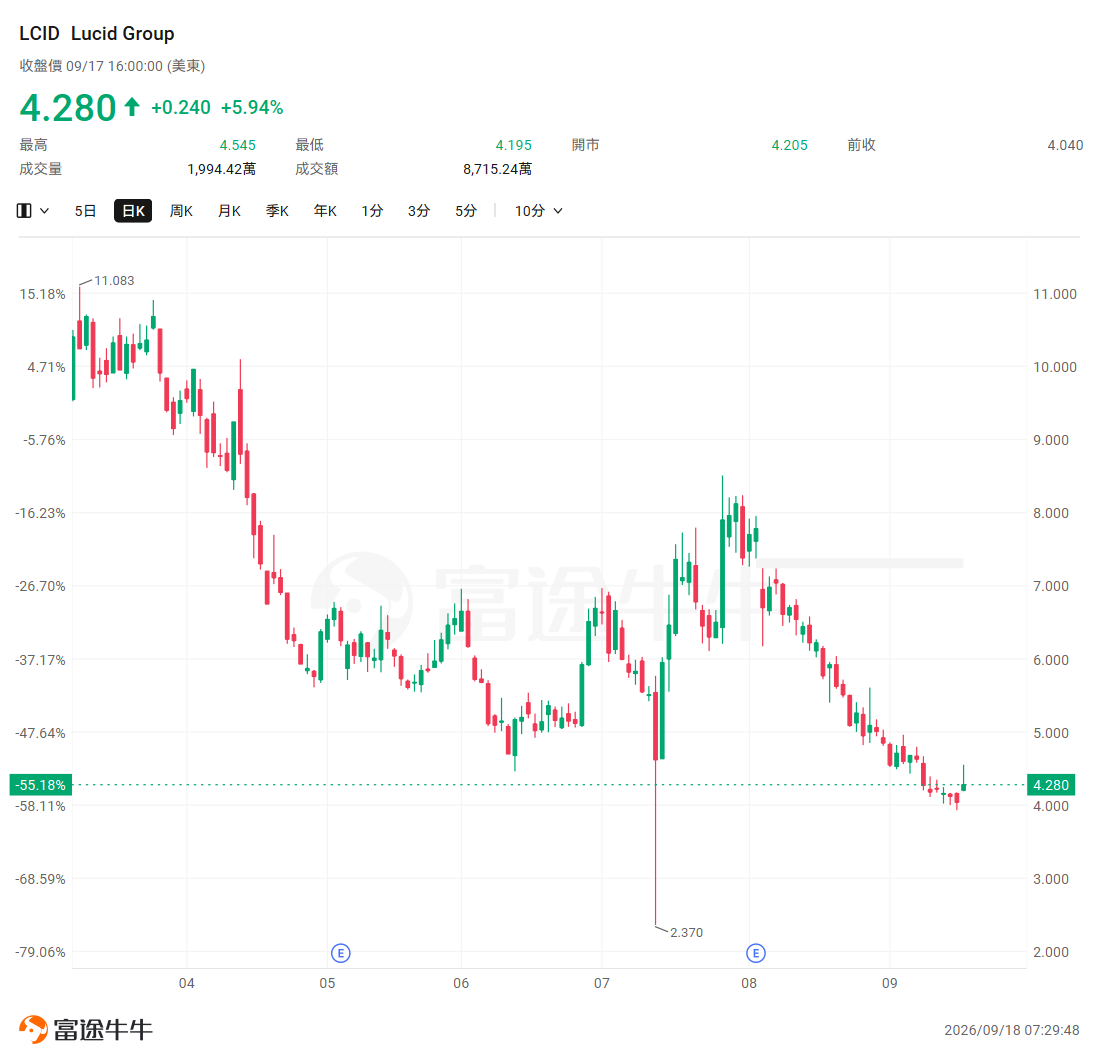
CleanSpark plans to issue $2.23 billion in bonds to build Meta-related AI infrastructure.
According to Bloomberg, citing sources familiar with the matter,$CleanSpark(CLSK.US)$Seeking to raise approximately US$2.23 billion through an initial high-yield bond offering, to be used for construction and…$Meta Platforms(META.US)$Related artificial intelligence infrastructure. This bond issuance has a five-year maturity, with an initial yield of approximately 8.5%, about two percentage points above the average yield of BB-rated corporate bonds tracked by Bloomberg. Trading commenced on Thursday, and order book size has already matched the proposed offering size. According to Bloomberg data, this marks the first high-yield bond issuance tied to Meta's data centers.
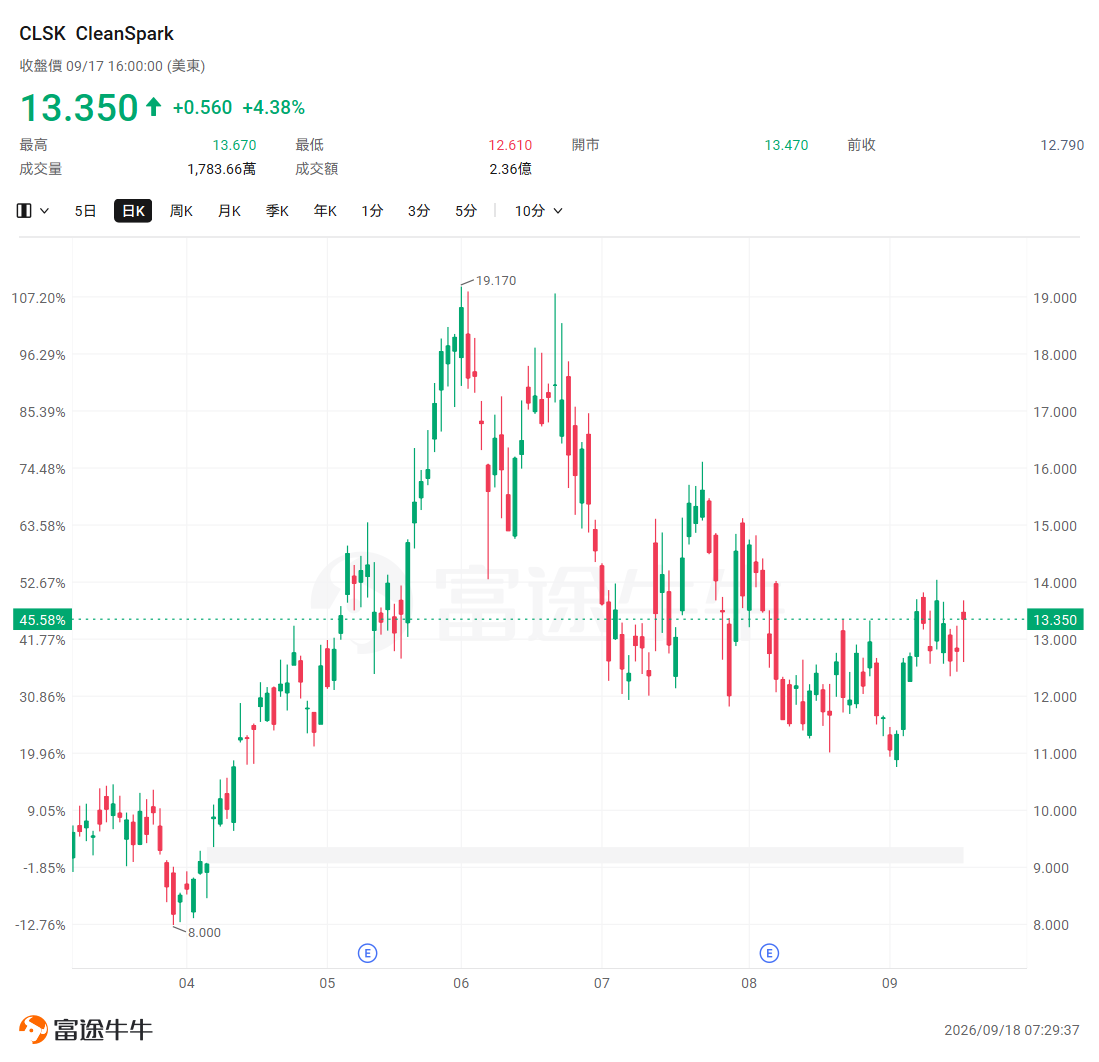
Salesforce's Investor Day spotlighted the AI "interface revolution," with Wall Street optimistic about the software industry's transformation.
At the Investor Day event held on September 17,$Salesforce(CRM.US)$Positioning AI as an "interface revolution" has earned positive feedback from Wall Street. Citi analyst Tyler Radke noted that the company is building a new layer of interaction between users, enterprise data, and cutting-edge models through AI Force—integrating Claude, Slack, and Agentforce Coworker—enabling users to engage directly with AI agents rather than traditional software applications. Meanwhile, William Blair analyst Arjun Bhatia described this trend as "headless," arguing that it represents the inevitable path for existing software to integrate AI, and praised AI Force for extending the headless experience across multiple platforms.
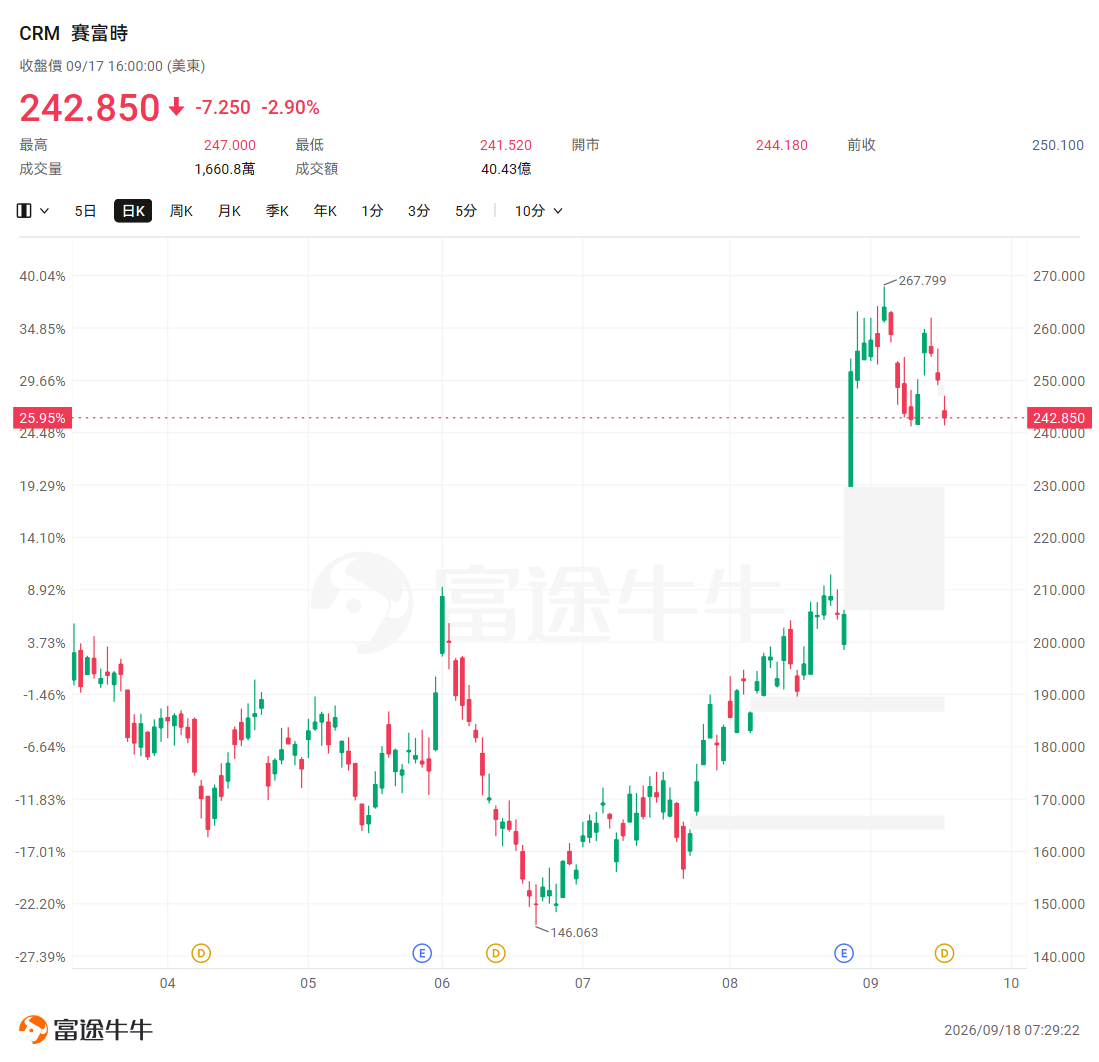
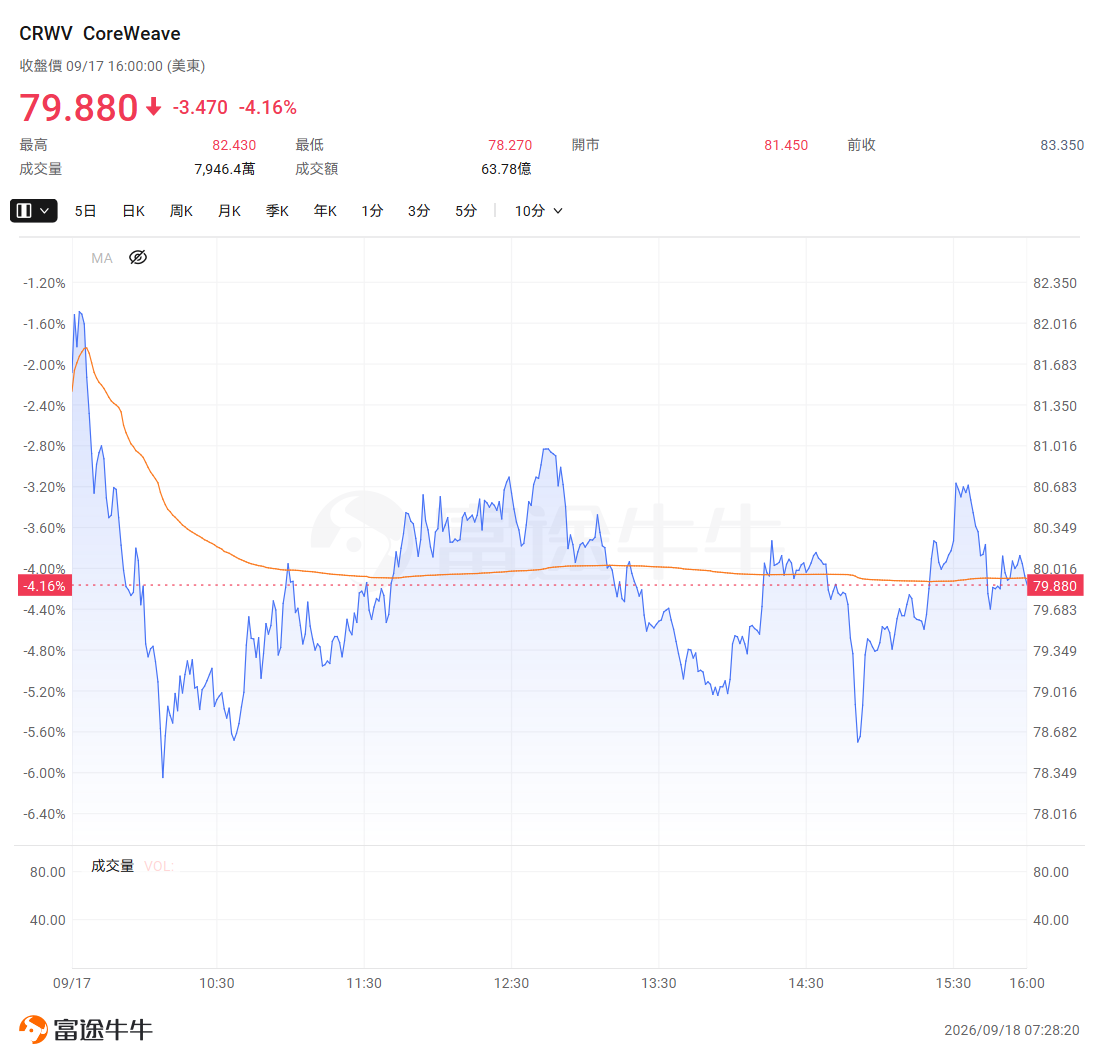
CoreWeave plans to issue $3 billion in convertible bonds and launch a share offering at market prices totaling 35 million shares.
$CoreWeave(CRWV.US)$It announced plans to issue $3 billion of senior convertible bonds due in 2033, while also launching a market‑based offering of up to 35 million shares. The convertible bonds include a $500 million over‑allotment option; if fully exercised, the offering size would increase to $3.5 billion. Proceeds will be used for general corporate purposes, with a portion allocated to derivative agreements related to the offering. According to sources, the bond's coupon range is being discussed at 2.375% to 2.875%, with pricing expected Thursday evening. Underwriters include Morgan Stanley, Goldman Sachs, JPMorgan, and Wells Fargo & Co.
Top 20 in Trading Volume
Hong Kong Stock Market Outlook
Southbound capital increased its holdings in Hong Kong stocks by over HK$3.3 billion, with net purchases of Zhipu exceeding HK$1.8 billion and net sales of Alibaba surpassing HK$400 million.
On Thursday, September 17, southbound capital net purchased HK$3.363 billion worth of Hong Kong stocks.
$Zhipu (02513.HK)$、$JianTao Laminate Board (01888.HK)$、$Tencent (00700.HK)$They recorded net purchases of HK$1.829 billion, HK$306 million, and HK$241 million, respectively.
$Alibaba-W(09988.HK)$、$China National Offshore Oil Corporation (00883.HK)$、$MINIMAX-W(00100.HK)$They were net sold off by HK$425 million, HK$417 million, and HK$308 million, respectively.
MaiFuShi plans to raise approximately HK$500 million to expand its AI computing capacity and token‑manufacturing facilities.
$MicroPort (02556.HK)$The company plans to issue 9.8328 million shares at HK$50.85 per share, with the subscription price equal to the day's closing price, expecting to raise approximately HK$499.7 million net. All proceeds will be allocated to expanding and optimizing its full-stack token factory, including building or leasing AI data centers domestically and internationally, procuring GPU servers and related equipment, constructing computing‑power clusters, and developing models and a model‑management platform. The company will also advance its inference engine, operator optimization, multi‑model scheduling, and fine‑tuning of domain‑specific models to reduce per‑token costs and improve response efficiency, with the raised funds expected to be fully utilized by the end of September 2027.
Today's Focus
Keywords: U.S. stock market's "Triple Witching Day," Bank of Japan monetary policy press conference, Xinghuan Technology's after-hours trading
On the economic data front, the U.S. August industrial production month-on-month figure will be released at 9:15 p.m. Eastern Time.
On the major events front, at 14:30, Bank of Japan Governor Kazuo Ueda held a monetary policy press conference. On U.S. stock market's "Triple Witching Day," index futures, index options, and individual stock options all expire simultaneously.
Regarding new shares,$StarRing Technology (06727.HK)$Hong Kong stock after-hours trading.
 Want to pick stocks or analyze them? Curious about holding opportunities and risks? For all your investment questions,Just ask Futubull AI!

Editor/rocky