
Macro News
Progress in US-Iran mediation impacts energy pricing; oil prices retreat from five-month highs
According to a Reuters report on October 20, Iranian President Pezeshkian discussed mediation arrangements with Pakistani Army Chief of Staff Munir in Tehran, prompting markets to reassess the prospects for ceasefire negotiations. Brent crude touched an intraday high of $111.99, a five-month peak, before closing down 0.69% at $108.79; the November WTI contract fell 1.80% to close at $101.79. Meanwhile, Houthi forces continued to claim attacks on Saudi infrastructure, though Saudi Arabia has not confirmed these incidents, and reports of attacks on Gulf shipping vessels continue to circulate. Russian diesel flows to Turkey and Brazil have resumed following the suspension of relevant US sanctions. Currently, US officials are urging refineries to increase output and discussing the restart of idle facilities. As of the time of reporting, no formal agreement to end the war had been announced by the US and Iran.
Risks in the French bond market intensify; Bessent downplays spillover effects as safe-haven assets show divergent performance
 According to a Bloomberg report on October 20, US Treasury Secretary Bessent stated in a 2WAY interview that he does not expect turmoil in the French bond market to spread widely to other markets. Ongoing protests in France, fiscal deficits, and difficulties in advancing the budget continue to draw attention to its sovereign debt risks. Reuters reported on the same day that traditional safe-haven assets showed divergent performance: the US dollar has risen approximately 4% since February, the Swiss franc has appreciated more than 2% against the euro, and German government bonds have attracted investors seeking safety. Some institutions prefer holding short-term bonds to mitigate the impact of long-term fiscal and debt uncertainties. Although gold did not rise in tandem with all shocks, demand from central banks continues to provide support. The report noted that capital is not concentrating in a single safe-haven asset, as energy shocks, tech stock volatility, and sovereign debt pressures intertwine.

Anthropic's massive compute commitments exposed; pre-IPO financial disclosures face renewed scrutiny
According to a draft IPO prospectus for Anthropic reviewed by The Wall Street Journal on October 20, the company reported a net loss of approximately $80.7 billion in the first half of the year, of which about $72 billion stemmed from accounting charges related to changes in the valuation of financing instruments, which does not equate to current cash consumption. Revenue during the same period increased from approximately $1.1 billion in the previous year to $16.3 billion, with AI infrastructure spending nearing $9 billion. The report indicated that the company's potential future investment in acquiring compute power could reach up to $750 billion, including arrangements still under negotiation. According to Reuters, citing information from an investor meeting, the company's third-quarter revenue rose 45% quarter-on-quarter to $16.8 billion, and it claimed to have achieved profitability on an adjusted basis for the quarter. Valuations discussed by some attending investors were around $1.5 trillion, lower than the previous expectation of approximately $2 trillion, and formal listing arrangements have not yet been determined.
Waiting for the final drop? Morgan Stanley: This round of adjustment may conclude with a catch-up decline in high-quality stocks
Morgan Stanley strategist Michael Wilson pointed out that the market currently presents an intriguing structure: the quality factor has broken through its 52-week high, while the equal-weighted S&P 500 Index has fallen nearly 4% over the same period, with significant declines observed in many ordinary stocks. The core heavyweight stocks supporting the index are the only ones that have not yet been significantly impacted. Wilson believes that mid-term corrections often end with a final catch-up decline in quality stocks—and this corrective drop may instead signal an opportunity for the market to add positions, rather than presage the end of the economic cycle. At that point, the narrowing gap between the resilient S&P 500 and the heavily battered ordinary stocks may constitute a genuine window for risk entry.

Surge in applications for data centers on US public land draws simultaneous attention to electricity, water usage, and approvals
According to an analysis released on October 20 by the US research institute Center for Western Priorities, records from the Bureau of Land Management show at least 35 active applications for data centers and related facilities, involving more than 24,000 acres of public land across six western states. Among these, 17 are suspected applications for data center parks, 13 are for supporting infrastructure such as transmission lines, water pipes, communication lines, and roads, while the remaining 5 are difficult to classify. Some applications may be located within the same park, so they do not necessarily represent 17 independent projects. The institute stated that one plan in Utah covers over 9,000 acres and intends to use small modular reactors, which have not yet been commercially deployed, for power supply; developer Copia has submitted 16 applications across five states.
US Stock Market Overview
Major indices closed mixed; SpaceX shares strengthened post-earnings
On Tuesday (October 20), the three major U.S. stock indices closed mixed. During early trading, reports emerged that "Iran and the United States are about to reach an agreement," but diplomats involved in the Iran-U.S. negotiations later stated that the reports were inaccurate. As a result, losses in international oil prices narrowed, and U.S. stocks gave up some of their earlier gains. At the close, the Dow Jones Industrial Average rose 1.02% to 52,495.88 points; the S&P 500 Index gained 0.28% to 7,712.57 points; and the Nasdaq Composite Index fell 0.02% to 26,424.82 points.

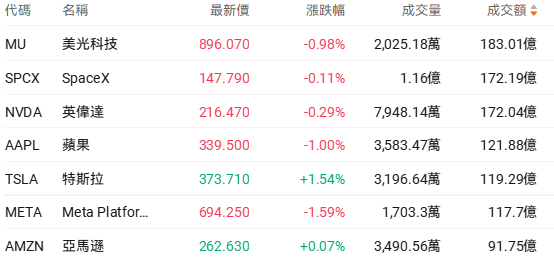
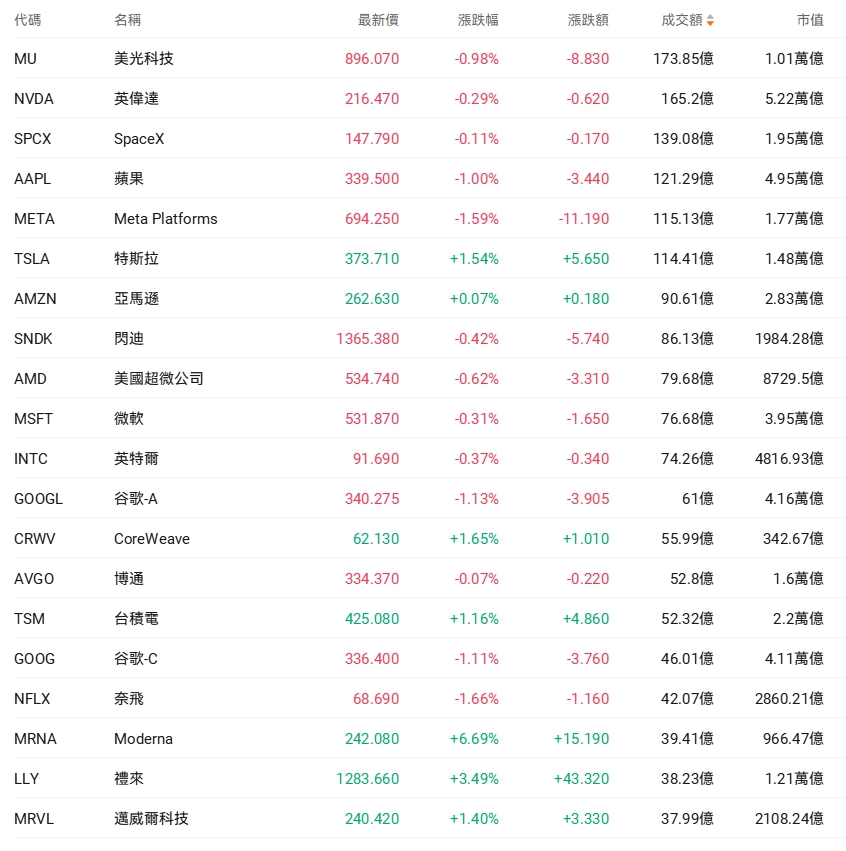
$Star Tech Stocks (LIST2518.US)$ Among mega-cap stocks (ranked by market capitalization), NVIDIA fell 0.29%, Apple dropped 1%, Alphabet Class C declined 1.11%, Microsoft slipped 0.31%, Amazon rose 0.07%, Meta Platforms fell 1.59%, and Tesla gained 1.54%.
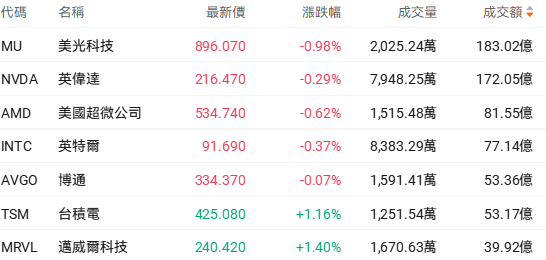
$Philadelphia Semiconductor Index (.SOX.US)$ The index fell 0.29%, with 11 constituent stocks rising and 19 declining. Lam Research dropped 3.21%, ARM Holdings fell 3.07%, ASML Holding declined 0.99%, AMD slipped 0.62%, Intel fell 0.37%, and Broadcom dipped 0.07%.
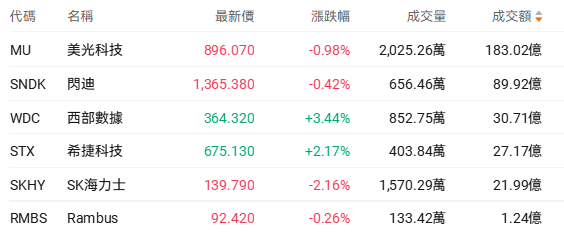
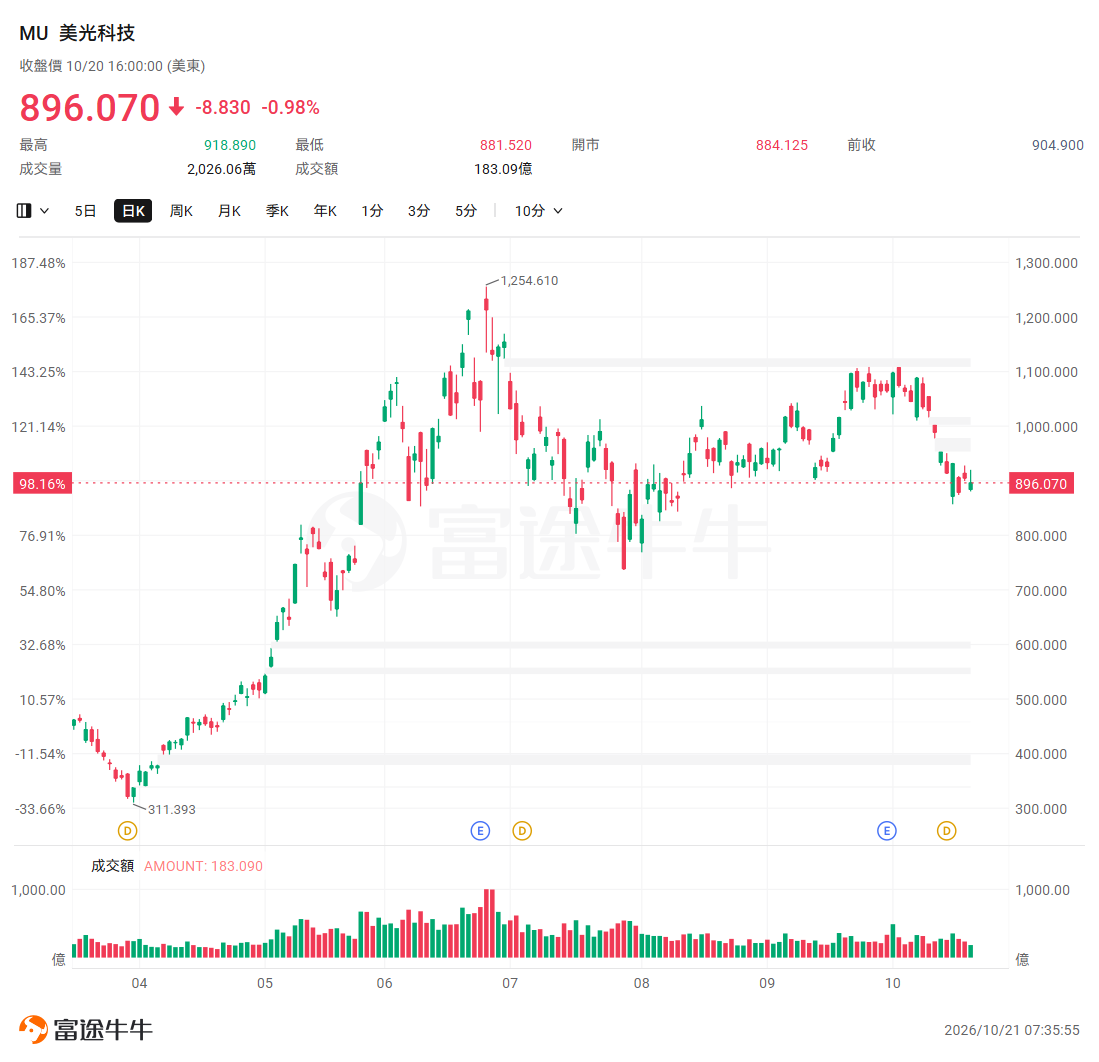
$Memory Concept Stocks (LIST23925.US)$ Memory stocks showed mixed performance: Western Digital rose 3.44%, Seagate Technology gained 2.17%, SanDisk fell 0.42%, Micron Technology dropped 0.98%, and SK Hynix declined 2.16%. $Roundhill Memory ETF(DRAM.US)$ fell 1.26%.
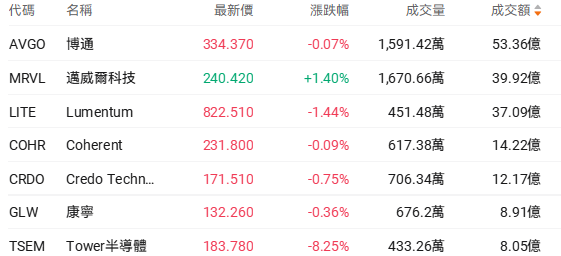
$Optical Communications (LIST23979.US)$ In the sector, $Roundhill Photonics & Optics ETF(LYTE.US)$ dropped 0.25%. AAOI fell 1.87%, Lumentum declined 1.44%, CRDO slipped 0.75%, Coherent dipped 0.09%, and Marvell Technology rose 1.4%.
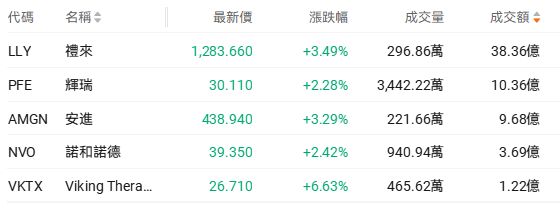
$Weight-Loss Drug Concept(LIST2152.US)$ Leading the gains, $Kailera Therapeutics (KLRA.US)$ rose 12.77%, $Viking Therapeutics (VKTX.US)$ rose 6.63%, Amgen rose 3.29%, and Novo-Nordisk A/S rose 2.42%. Eli Lilly and Co rose 3.49%, hitting a new high, as the company plans to seek expanded indications for its gastrointestinal disease therapies.
$Popular Chinese ADRs (LIST2517.US)$ Most stocks moved higher, with Hesai up 8.28%, XPeng Group up 7.6%, Li Auto up 5.67%, Pony AI up 5.39%, and Zai Lab up 4.24%. TAL Education Group fell 2.61%, and Tencent Music Entertainment fell 1.15%.
Stock News
SpaceX Q3 revenue grew 161%, AI revenue surged 830% and achieved operating profitability
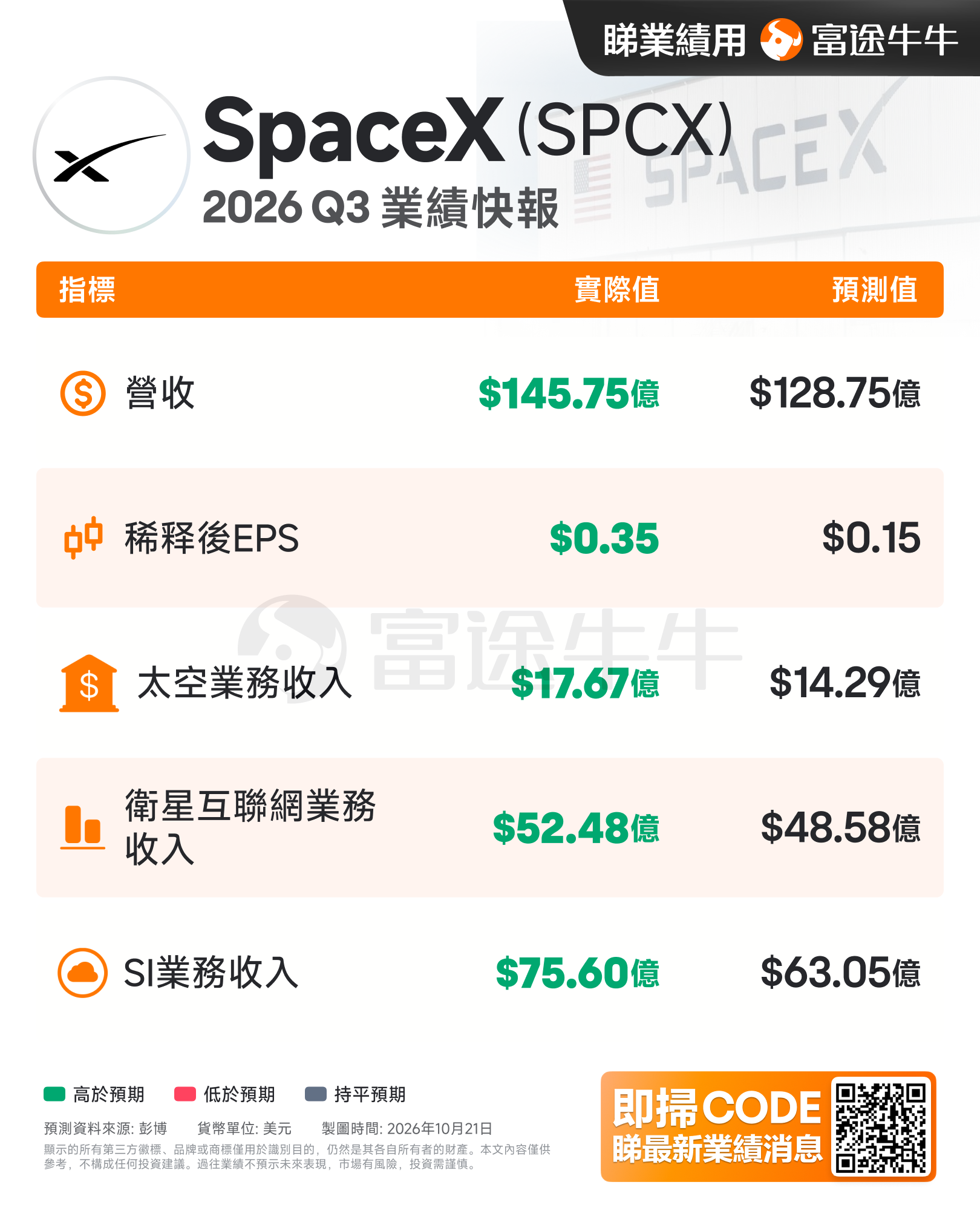
According to $SpaceX (SPCX.US)$ the Q3 financial report released after the market close on October 20, the company's revenue was $14.575 billion, a year-on-year increase of 161%; net profit was $4.4 billion, compared to a loss of $1.1 billion in the same period last year; adjusted EBITDA increased to $8.809 billion. Superintelligence business revenue was $7.56 billion, a year-on-year increase of approximately 830%, surpassing the Connectivity business for the first time, with an operating profit of $431 million, compared to a loss of $1.722 billion in the same period last year. Connectivity business revenue was $5.248 billion, a year-on-year increase of 69%, with an operating profit of $2.367 billion. Starlink consumer subscribers reached 13.6 million at the end of the period, an increase of 1.6 million from the previous quarter, with average monthly revenue per user rising 5% month-over-month to $69. The company's capital expenditures for the quarter were $19.593 billion, including $16.444 billion related to AI, bringing nominal compute capacity to 1.7 gigawatts at the end of the period.
SpaceX and Tesla establish special committee to formally explore potential merger
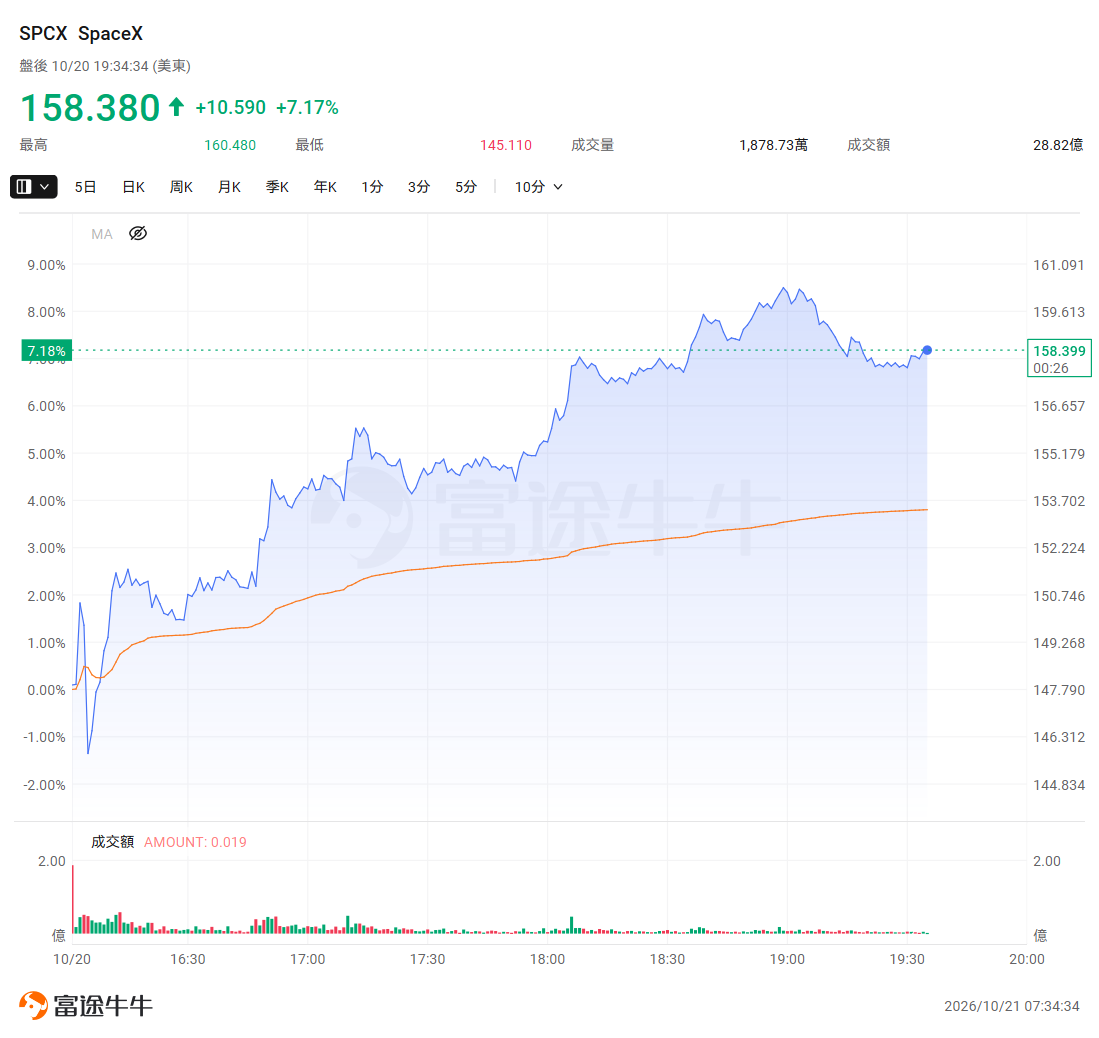
According to a Reuters report on the evening of October 20, Elon Musk $SpaceX (SPCX.US)$ confirmed for the first time during an earnings conference call that SpaceX and $Tesla (TSLA.US)$ Tesla have each established special committees to discuss a potential merger between the two companies. He stated that while he personally believes a merger is a good idea, he will not participate in the special committee's discussions due to conflicts of interest, and the final decision remains subject to shareholder approval. This statement advances previous market speculation about the transaction to the stage of corporate confirmation of formal discussions, although neither party has announced an agreement or disclosed valuations, share exchange ratios, or completion timelines. Musk also indicated that SpaceX’s annualized revenue run rate could reach $500 billion to $1 trillion by the end of 2027. SpaceX shares rose as much as 8% in after-hours trading following these remarks and the release of financial results.
Super Micro Computer’s preliminary revenue significantly exceeded guidance, with gross margin revised upward accordingly
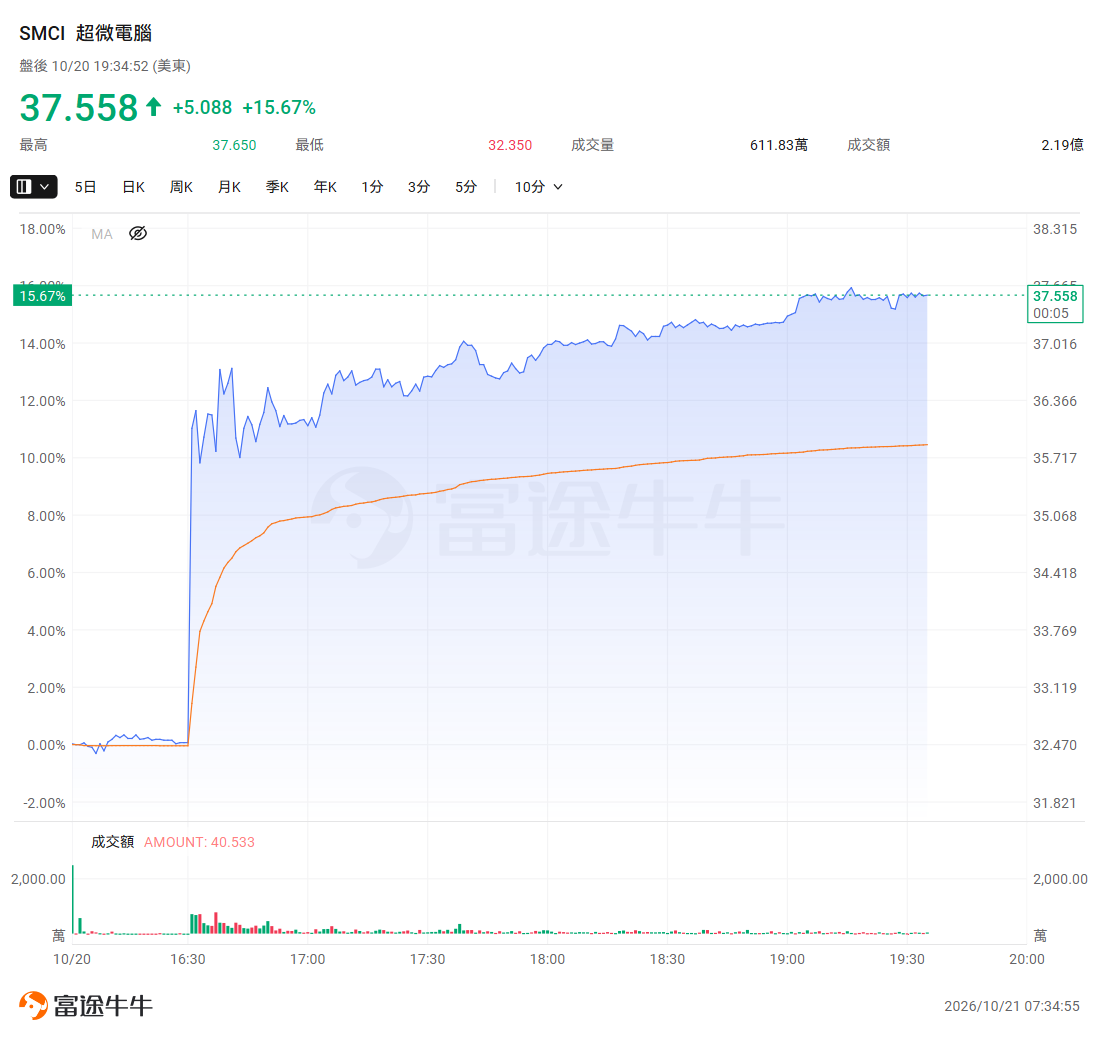
According to $Super Micro Computer (SMCI.US)$ the preliminary business update released after hours on October 20, revenue for the first quarter of fiscal year 2027, ending in September, is projected at $18.5 billion to $19.5 billion, significantly higher than the previous guidance of $14.5 billion to $15.5 billion, representing a approximately 26.7% increase in the midpoint compared to the original guidance. The company cited increased demand for AI platforms as the primary driver. Gross margin is expected to be 12.0% to 12.5%, also higher than the previously guided range of 10.4% to 10.8%, mainly driven by changes in customer and product mix. Super Micro Computer’s stock rose as much as 16% in after-hours trading, $Dell Technologies (DELL.US)$ and $Hewlett Packard Enterprise (HPE.US)$ while related stocks rose by approximately 6% and 5%, respectively. This disclosure represents only unaudited preliminary estimates and does not yet provide complete profit, cash flow, or full-year outlook figures. The company is scheduled to release its official quarterly results and hold a conference call on November 3.
Workers at Micron Technology’s Taoyuan plant plan to strike on Thursday, potentially severely impacting the company’s chip production schedule
Due to disagreements with $Micron Technology (MU.US)$ Micron Technology regarding employee bonuses and profit-sharing, workers at Micron’s Taoyuan factory in Taiwan have decided to launch a strike this Thursday to support the Micron Taichung Union. The second round of negotiations between the Micron Taichung Union and Micron will take place on Thursday. The Taoyuan Union stated that this action will coincide with mediation meetings between Micron and the Taichung Union to increase pressure on the company to propose specific plans for sharing profits with employees. Mediation between Micron Technology and the Taoyuan Union concluded in September without reaching an agreement. In early October, the union obtained authorization from its members to hold a strike. The Taoyuan Union did not specify how long the solidarity strike would last, stating that more details would be announced on Thursday.
Amazon has taken early delivery of a large batch of NVIDIA server racks, with some equipment awaiting deployment due to insufficient power supply.
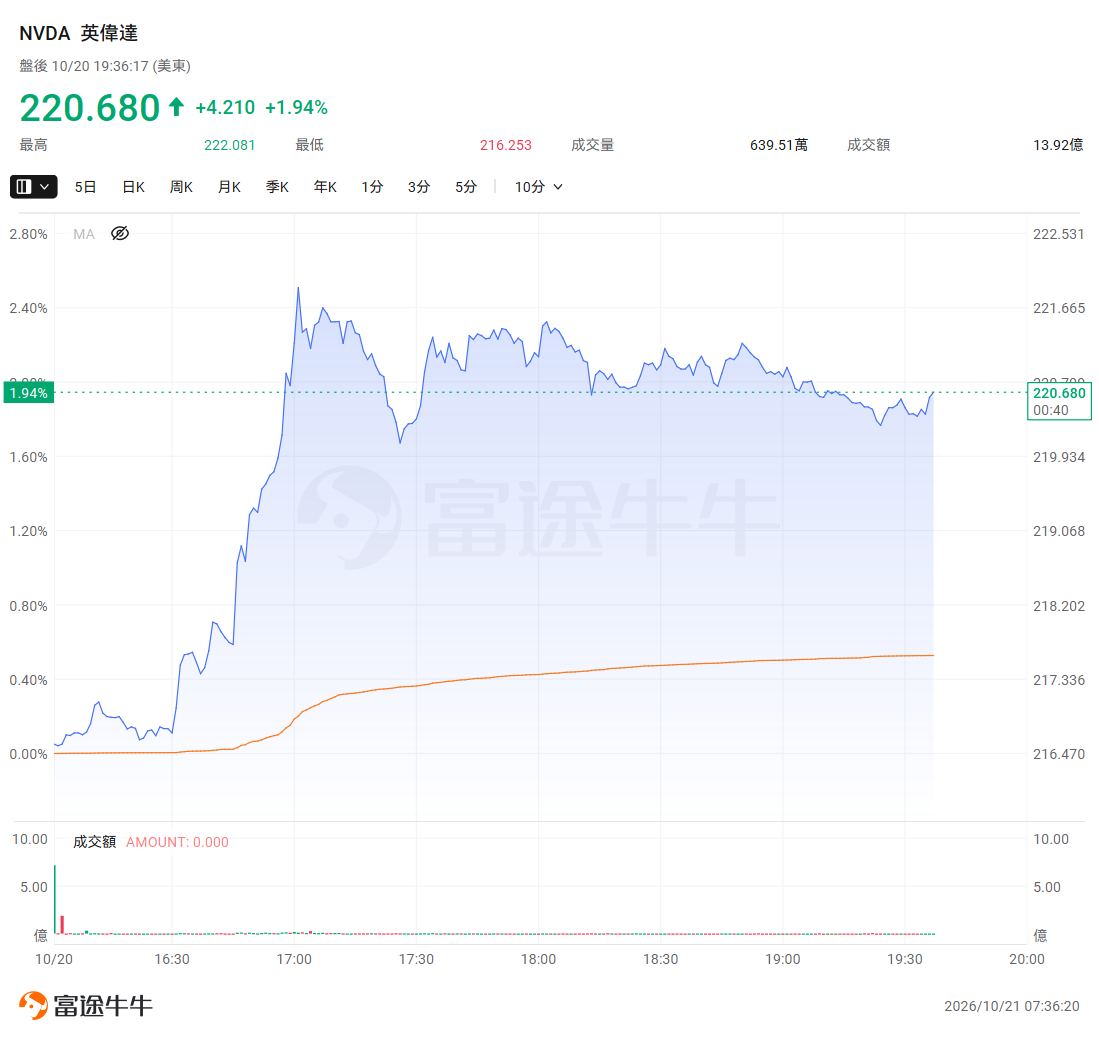
According to Business Insider on October 20, citing internal emails and sources familiar with the matter, $Amazon (AMZN.US)$ AWS has initiated an early rack acceptance process, planning to receive approximately $5 billion worth of $NVIDIA (NVDA.US)$ GB300 racks before final deployment, with an expected additional monthly intake of around $3 billion thereafter. Although some sites have space for equipment, they lack sufficient power capacity, causing completed hardware to be stored temporarily in transit warehouses. Previously, AWS typically took ownership of racks only upon their arrival at data centers; the new process allows it to pay for and recognize certain assets earlier in the supply chain. An Amazon spokesperson stated that pre-positioning equipment near deployment sites is a standard operational arrangement and denied that the company faces an overall lack of deployment pathways. The report notes that Amazon’s capital expenditure for the year is projected at approximately $220 billion, while free cash flow turned negative in the previous quarter.
Netflix lowers full-year advertising revenue guidance, expecting further slowdown in Q4 revenue growth
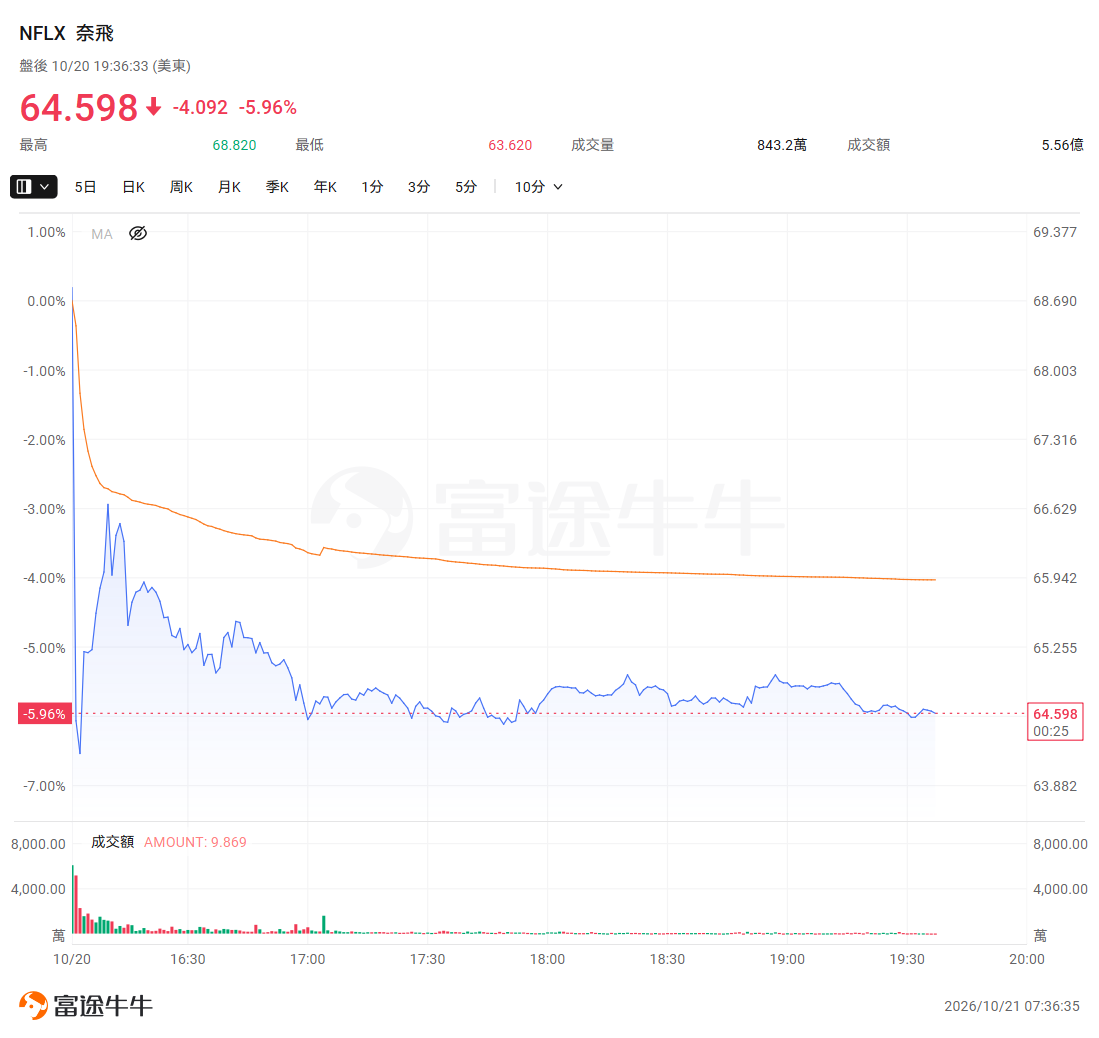
According to $Netflix (NFLX.US)$ the letter to shareholders released after market close on October 20, the company’s Q3 revenue reached $12.874 billion, up 11.8% year-on-year; net profit was $3.664 billion, with diluted earnings per share (EPS) of $0.87; operating margin stood at 34.6%, higher than 28.2% in the same period last year. Q4 revenue is projected at $13.442 billion, representing an 11.5% year-on-year increase, marking the fourth consecutive quarter of slowing growth; EPS is expected to be $0.67, with operating margin declining to 26%. The company has reduced its full-year advertising revenue guidance from approximately $3 billion to $2.7 billion, citing slower-than-expected rollout of certain ad product features. Full-year targets for revenue and operating margin are set at $51.1 billion and 31.5%, respectively. Free cash flow in Q3 amounted to $2.884 billion, and the company repurchased approximately $4.8 billion worth of stock. Netflix’s share price fell following the earnings release.
Supply constraints for Apple’s iPhone Duo persist
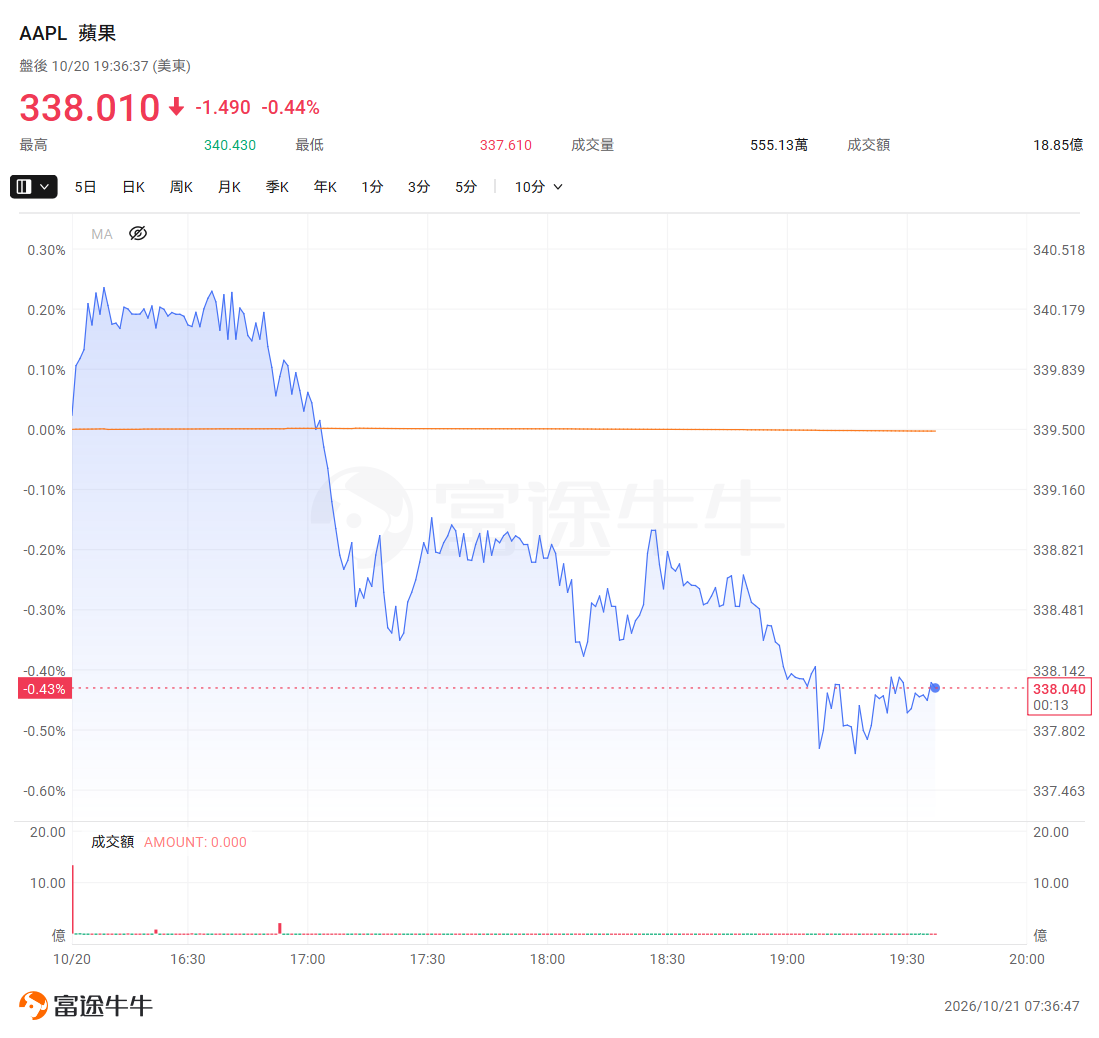
Currently, $Apple (AAPL.US)$ Apple is facing severe supply limitations for its first foldable iPhone. The device is scheduled to officially go on sale in retail stores this Friday. Apple stated that pre-order demand has been “extraordinary” but did not indicate whether it plans to increase production. Morgan Stanley noted that on the first day of pre-orders, estimated online delivery times for certain iPhone Duo models had already extended to approximately 14 weeks—the longest wait time for a new iPhone model recorded by the firm in a decade. JPMorgan analysts expect Apple to ship approximately 8 million to 9 million Duo units this year, below the previous estimate of around 10 million, due to supply constraints.
Top 20 by Trading Volume
Hong Kong Stock Market Preview
Southbound capital reduced its holdings in Hong Kong stocks by over HK$1.7 billion, with net purchases of Tencent exceeding HK$1.1 billion and net sales of Lenovo Group surpassing HK$700 million.
On October 20 (Tuesday), southbound capital recorded net sales of Hong Kong stocks totaling HK$1.723 billion.
$Tencent (00700.HK)$、$CNOOC (00883.HK)$、$MINIMAX-W(00100.HK)$Recorded net purchases of HK$1.148 billion, HK$275 million, and HK$181 million, respectively;
$Lenovo Group (00992.HK)$ 、 $SMIC (00981.HK)$ 、 $Alibaba-W (09988.HK)$Subject to net sales of HK$728 million, HK$572 million, and HK$338 million, respectively.
CATL's Q3 revenue grew by 58.6%, with profit growth diverging from operating cash flow trends.
According to $CATL (03750.HK)$ the third-quarter report disclosed on the evening of October 20, the company's revenue for the third quarter reached RMB 165.221 billion, a year-on-year increase of 58.58%; net profit attributable to shareholders was RMB 21.246 billion, up 14.54% year-on-year; and net profit excluding non-recurring items was RMB 18.862 billion, up 14.86% year-on-year. For the first three quarters, revenue totaled RMB 442.137 billion, and net profit attributable to shareholders was RMB 64.530 billion, representing increases of 56.19% and 31.60%, respectively. During the same period, net cash flow from operating activities was RMB 61.625 billion, a year-on-year decrease of 23.60%; R&D expenses amounted to RMB 18.517 billion, an increase of approximately 22.9% year-on-year. As of the end of September, the company's total assets stood at RMB 1.183174 trillion, an increase of 21.37% from the beginning of the year, while accounts receivable and inventory rose to RMB 112.912 billion and RMB 144.770 billion, respectively. The report also disclosed that investment income for the first three quarters was RMB 9.066 billion, a year-on-year increase of 73.11%.
Montage Technology forecasts Q3 profit to increase by over 150%, with a rising proportion of next-generation DDR5 products.
According to $Montage Technology (06809.HK)$ the earnings preview disclosed on the evening of October 20, Q3 revenue is expected to be approximately RMB 2.079 billion, representing a year-on-year increase of 46% and a quarter-on-quarter increase of 10.9%; net profit attributable to shareholders is projected at RMB 1.2 billion to RMB 1.3 billion, up 153.6% to 174.7% year-on-year; net profit excluding non-recurring items is estimated at RMB 950 million to RMB 1.05 billion, rising 152.6% to 179.2% year-on-year. The company stated that AI inference and agent applications are driving demand for server CPUs, memory modules, and interconnect chips, with the shipment proportion of third-, fourth-, and fifth-generation DDR5 RCD chips increasing. Revenue from interconnect chips is forecast at RMB 2.047 billion, a 49.3% year-on-year increase, with gross margin expected to range between 68% and 68.5%, an improvement of 2.31 to 2.81 percentage points year-on-year. The company anticipates continued growth in demand for related products in the fourth quarter.
China Mobile's profit declined by 7.9% in the first three quarters, while cash flow improved alongside computing power infrastructure development.
According to $China Mobile (00941.HK)$ the unaudited results released on the evening of October 20, operating revenue for the first three quarters totaled RMB 780.3 billion, down 1.8% year-on-year; profit attributable to shareholders was RMB 106.2 billion, a 7.9% year-on-year decline. Main business revenue stood at RMB 657.7 billion, down 3.7% year-on-year, while other business revenue reached RMB 122.6 billion, up 9.9% year-on-year; EBITDA was RMB 247.5 billion, decreasing 6.7% year-on-year. Mobile customers totaled 1.014 billion at period-end, with 702 million 5G network customers and 342 million broadband internet customers. Net cash inflow from operating activities amounted to RMB 185.3 billion, an increase of approximately 15% year-on-year, while construction in progress rose from RMB 61.8 billion at the beginning of the year to RMB 97.6 billion. The company stated it will continue to integrate the layout of communication networks, computing power networks, and intelligent networks, accelerating expansion in the computing power market; the profit margin attributable to shareholders during the period was 13.6%, compared to 14.5% in the same period last year.
Today's Focus
Keywords: Jensen Huang speech, Tesla, Meta Platforms earnings report
Regarding economic data, South Korea released import and export figures for the first 20 days of October; semiconductor export performance will provide clues for observing AI and memory demand. At 14:00, the UK will release its September CPI, Retail Price Index, and public sector net borrowing; at 22:30, the US EIA crude oil inventory data for the week ending October 16 will be published.
In terms of financial events, Jensen Huang will deliver the GTC keynote address from 17:00 to 19:00 Beijing time. At 16:00, ECB Executive Board Member Cipollone will speak; at 21:00, Bank of England Governor Bailey will deliver remarks.
The World Intelligent Connected Vehicles Conference is being held, and the 19th China-EU Investment, Trade, and Science and Technology Cooperation Fair opened on the same day. US Treasury Secretary Bessent and investor Druckenmiller will also attend the event in New York.$JPMorgan (JPM.US)$—$Robinhood(HOOD.US)$Investor conference; the event is not open to the media.
In terms of performance,$IBM Corp(IBM.US)$ 、 $AT&T (T.US)$It will release its earnings before the U.S. stock market opens,$Tesla (TSLA.US)$ 、 $Meta Platforms (META.US)$ 、 $Lam Research (LRCX.US)$ and $Texas Instruments (TXN.US)$It will release its earnings after the U.S. stock market closes. Specifically, Meta's earnings call is scheduled for 4:30 a.m. Eastern Time on Thursday, and Tesla's Q&A livestream is set for 5:30 a.m. Eastern Time.
 Looking to select or analyze stocks? Want to understand the opportunities and risks in your portfolio? For all investment-related questions,simply ask Futubull AI!

Editor / Rocky