Macro News Highlights
U.S. Treasury yields posted their biggest single-day drop in more than three years, as investors reassess growth and AI‑related financing risks.
According to media reports, on October 22, the yield on the 10-year U.S. Treasury note fell by 19.3 basis points to 4.952%, dropping below 5% for the first time in a month and marking the largest single-day decline since March 2023. Meanwhile, the two-year yield declined by 18.8 basis points to 4.635%, and the 30-year yield slipped by 15.1 basis points to 5.286%. Concerns over France's fiscal risks, rising energy prices weighing on consumption and growth, and a sell-off in tech stocks all contributed to increased demand for U.S. and German government bonds. The report notes that even with oil prices and inflation remaining elevated, the bond-buying activity may reflect weakening expectations for economic growth. This round of rate cuts is also accompanied by worries about the returns on AI investments; thus, valuation support for tech stocks must be assessed alongside pressures on earnings and financing. Next week's Federal Reserve meeting will continue to test this repricing dynamic.
Trump once again threatened to use force against Iran, while Iran warned it would expand the scope of its retaliation.
 On October 22, reports indicated that Trump told reporters at the White House that the United States has already launched a severe strike against Iran and may take further military action, while reiterating that Iran must not be allowed to possess nuclear weapons. He acknowledged that war could carry a political price. That same day, The Atlantic quoted U.S. officials as saying that Trump is considering launching a multi-day strike against Iran after the midterm elections. According to ABC, Iranian officials have warned that if their country's officials or civilian infrastructure are attacked, they will retaliate by targeting U.S. interests in the region, as well as the infrastructure and assets of countries involved in the conflict. Additionally, the Islamic Revolutionary Guard Corps has threatened to designate Gulf data centers and undersea internet cables as targets. Iranian Foreign Minister Zarif stated that Iran is prepared for both diplomacy and war.
Saudi Aramco's headquarters evacuated, sending Brent crude surging 4% to a five-month high.
According to a Reuters report on October 22, Saudi Aramco has ordered employees at its Dhahran headquarters to evacuate and work remotely. Six sources familiar with the matter confirmed the arrangement, though the specific reasons for the evacuation remain unclear, and the company did not immediately respond. Earlier this month, Houthi forces carried out an attack that set multiple floors of the headquarters ablaze. Meanwhile, Saudi civil aviation authorities reported that the death toll from the attack on Dammam Airport has risen to two, with eight others injured. Concerns over energy infrastructure and shipping security drove Brent crude up 4% to $113.17 per barrel, marking its highest closing price since May, while U.S. crude gained 2.4% to $99.47. The report also noted that the United States and Israel are reportedly discussing another strike against Iran following the U.S. midterm elections.
Blackstone's CEO refutes the AI bubble theory: demand is growing in a "parabolic" fashion.
Has the AI investment boom already turned into a bubble? Divisions on Wall Street are widening. Jon Gray, president of Blackstone Group, recently stated that today's AI infrastructure buildout differs markedly from past investment bubbles: companies are not first expanding capacity on a massive scale and then waiting for demand to materialize; instead, they are actively building infrastructure to keep pace with rapidly growing demand. On Thursday, Gray noted that Ode, the AI consulting venture co-founded by Blackstone and the AI company Anthropic, currently cannot even meet customer demand. He described the shift in demand as "parabolic growth," arguing that this is fundamentally different from the situation during the telecom bubble of the 1990s. Yet just days earlier, Ken Griffin, founder of Citadel Investment, said investors can be "almost certain" that we are in an AI bubble.
OpenAI is reportedly close to closing a funding round of up to $30 billion, with a pre-money valuation of approximately $1.25 trillion.
According to a CNBC report on October 22, citing sources familiar with the matter, OpenAI is nearing completion of a new funding round valued at up to $30 billion, with a pre-money valuation of approximately $1.25 trillion, led by investors from the United Arab Emirates and Coatue. The company has told investors it aims to secure signed commitments by the end of next week, though the final size of the round remains under discussion. The report describes this financing as a transitional step ahead of a potential IPO; CFO Sarah Friar previously told employees that an IPO could take place in 2027. In addition to equity financing, the company is also negotiating commercial agreements to secure additional computing capacity in the UAE. In March of this year, OpenAI closed a $122 billion funding round, valuing the company at $852 billion post‑money.

In the Hong Kong stock market, 152 listing applications have lapsed, and 16 A-share companies have terminated their plans to list in Hong Kong.
According to Wind data, as of October 22, 152 companies had seen their Hong Kong‑listed IPO applications marked as "withdrawn." Meanwhile, 16 A‑share firms have abandoned plans to list in Hong Kong, including Linglong Tire, Unisplendour Corporation, Kotai Power, Huahai Qingke, Wondershare Technology, Nandu Power, ENN Group, Huaheng Bio, Northland, Dayang Motor, Lakala, Three Squirrels, Hande Information, Air China Ocean Shipping, Borui Pharmaceutical, and ChineseAll. From IPO applications lapsing to companies near the brink of listing announcing delays in their offerings, to some A‑share firms ultimately scrapping their Hong Kong‑listing plans, the resurgence in market enthusiasm is revealing diverging considerations among issuers regarding timing, valuation levels, and financing costs.
U.S. stock market行情
Chips, memory, and optoelectronics stocks plunged sharply, while the Nasdaq tumbled 2.6%.
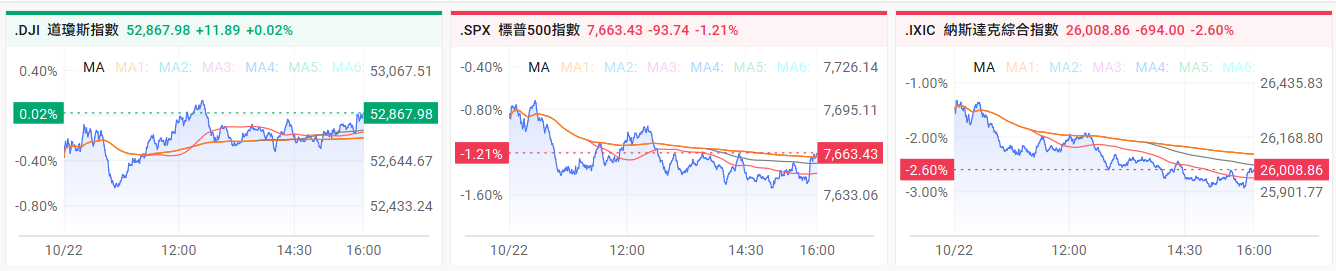
On Thursday, October 22, U.S. stock market tech stocks weakened noticeably as concerns about AI companies' spending resurfaced, compounded by escalating geopolitical tensions. At the close, the Nasdaq Composite fell 2.6% to 26,008.86; the S&P 500 dropped 1.21% to 7,663.43; and the Dow Jones Industrial Average edged up 0.02% to 52,867.98, marking its third consecutive gain.
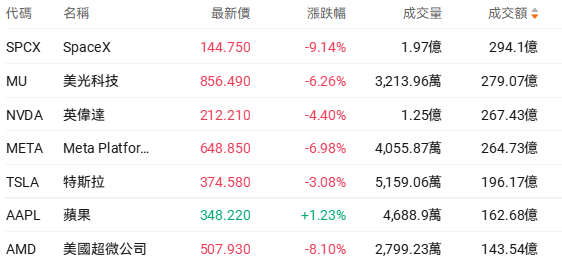
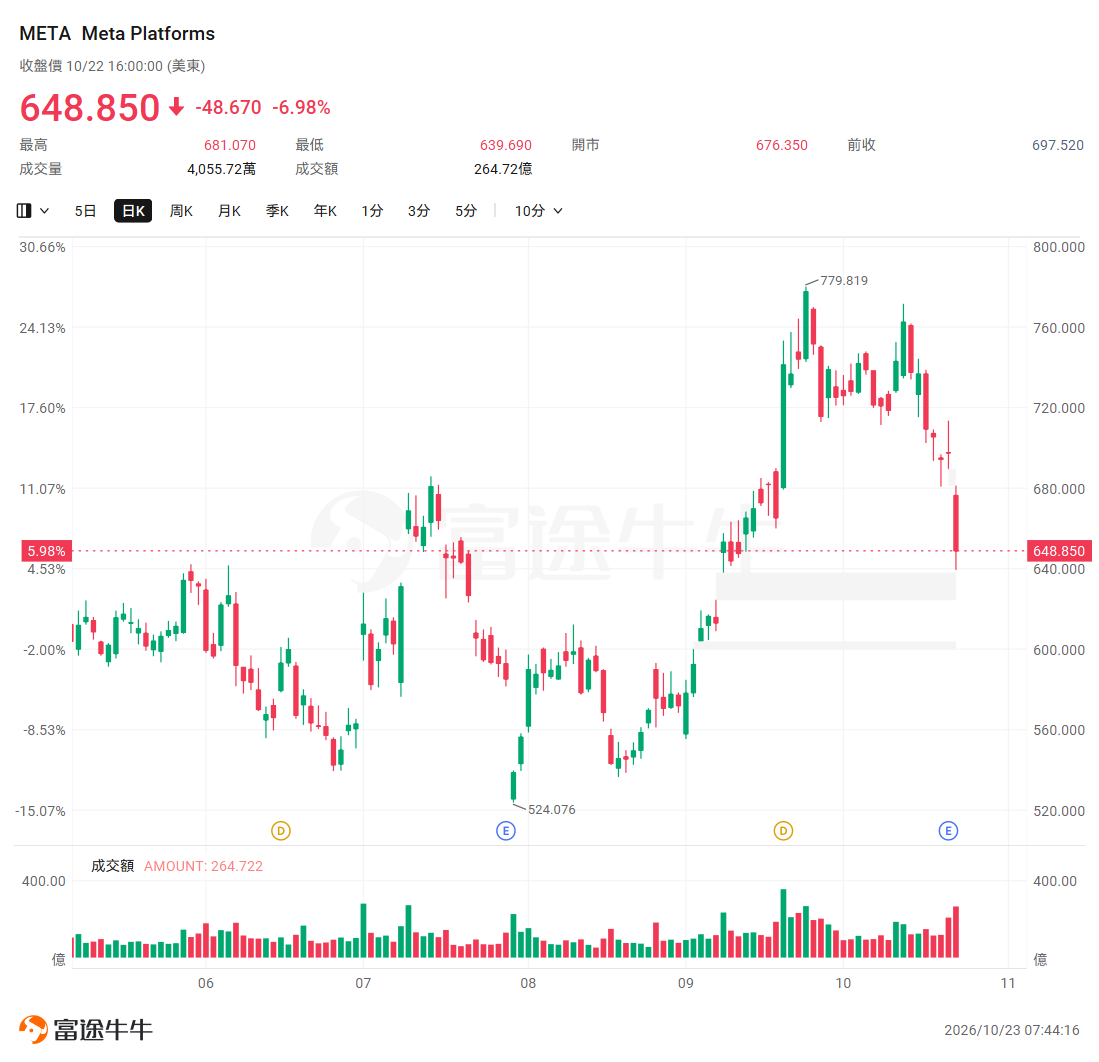
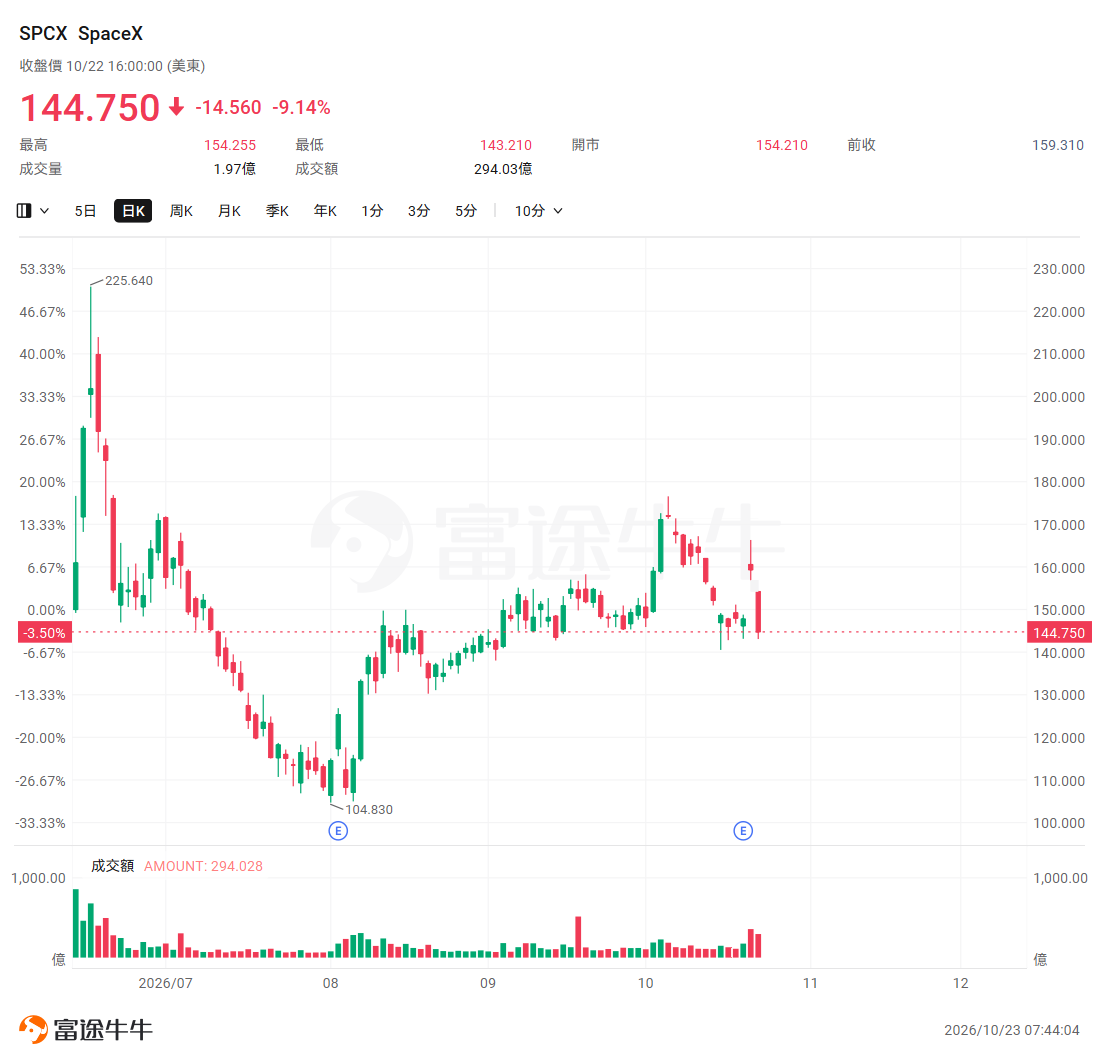
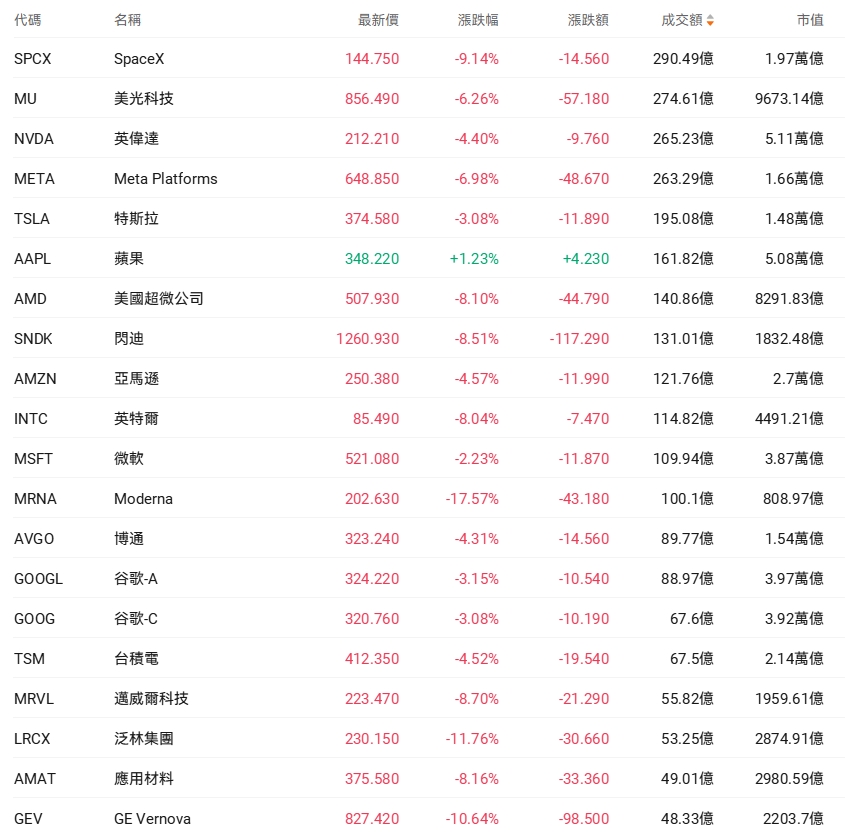
$Star Technology Stocks (LIST2518.US)$Overall, there were sharp declines: (ranked by market capitalization) NVIDIA fell 4.4%, Google C dropped 3.08%, Microsoft declined 2.23%, Amazon slid 4.57%, SpaceX tumbled 9.14%, Meta dipped 6.98%, and Tesla fell 3.08%.
$Philadelphia Semiconductor Index (.SOX.US)$It fell 6.72%, with all 30 constituent stocks declining; MTSI dropped 15.87%, and Integra fell 13.12%. Taiwan Semiconductor declined 4.52%, Broadcom slipped 4.31%, AMD fell 8.1%, ASML Holding dropped 6.93%, Intel tumbled 8.04%, and Applied Materials plunged 8.16%.
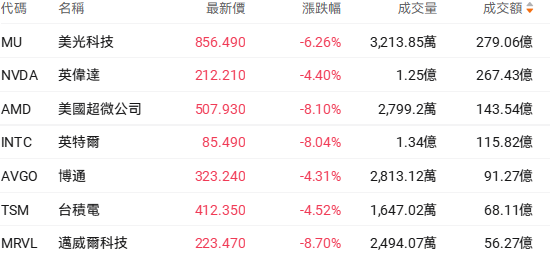
$Storage Concept (LIST23925.US)$Heavy losses: SanDisk fell 8.51%, SK Hynix dropped 8.07%, Seagate Technology declined 7.86%, Western Digital slid 6.43%, and Micron Technology tumbled 6.23%.
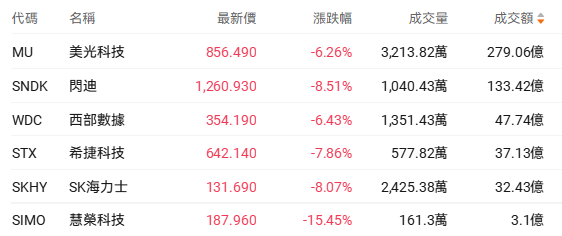
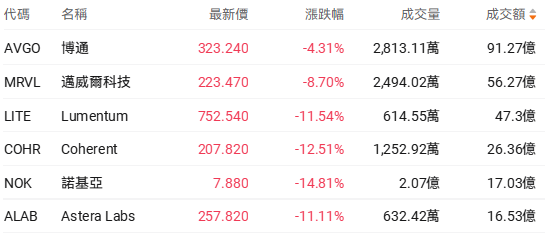
$Optical Communications (LIST23979.US)$On the other hand, Coherent fell 12.51%, AAOI dropped 11.96%, Lumentum declined 11.54%, and Marvell Technology slid 8.7%.
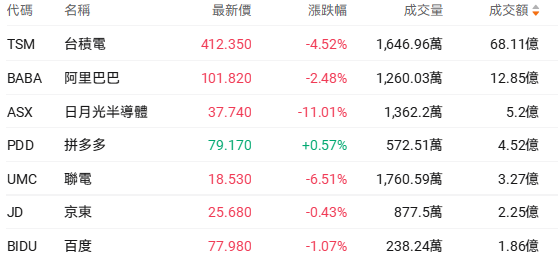
$Popular Chinese Stocks (LIST2517.US)$Most stocks declined, with JD Pharma down 8.93%, Hesai down 7.96%, GDS Holdings down 6.07%, and Kingsoft Cloud down 5.37%; Miniso rose 3.55%, and Tencent Music rose 1.9%.
Individual Stock News
Apple rose more than 1% against the market trend, hitting a new high, as the foldable-screen iPhone Duo went on sale today.
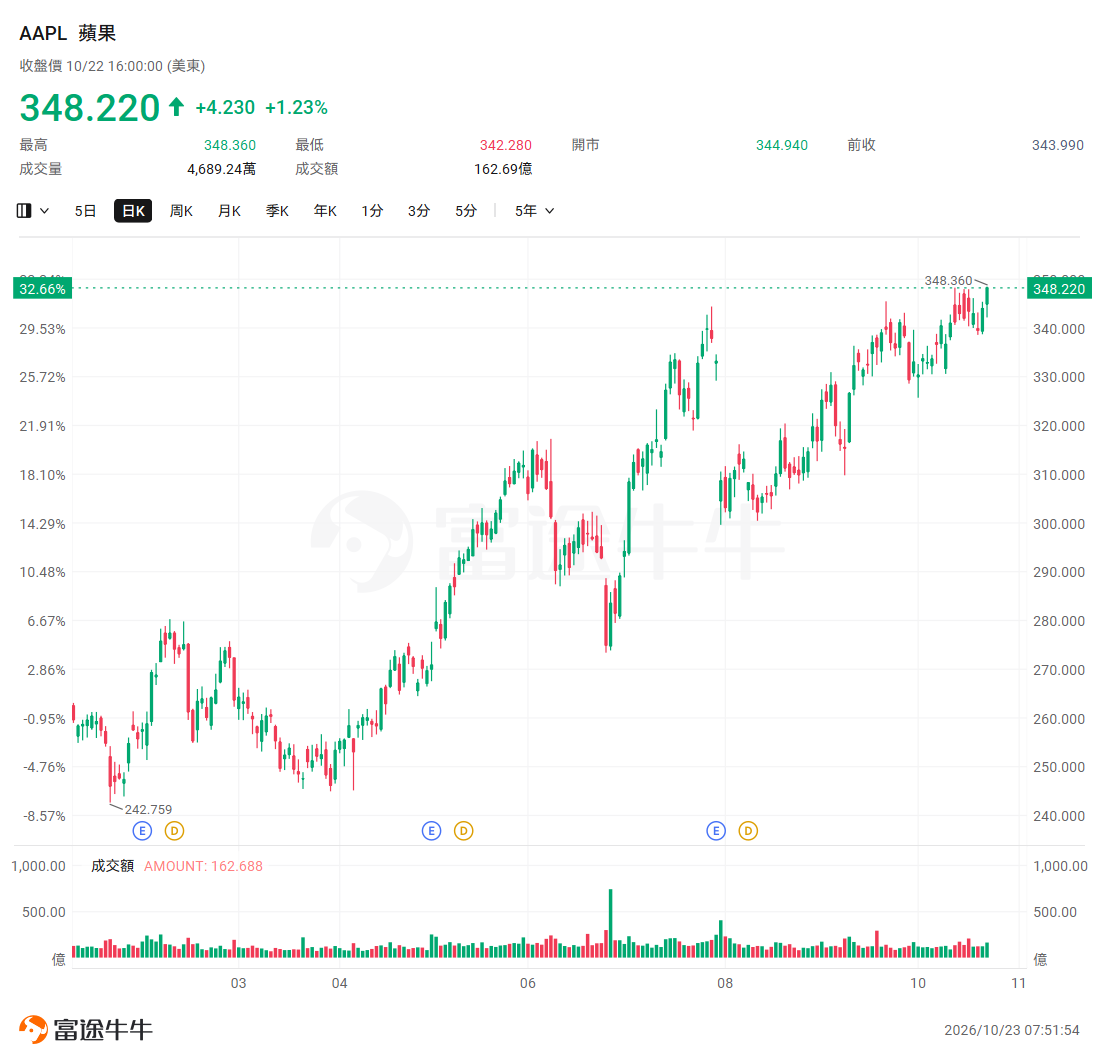
October 22,$Apple(AAPL.US)$It closed up 1.23% at $348.22, marking the second consecutive trading day to hit a new all-time closing high; intraday, it reached as high as $348.36, with a total market capitalization of approximately $5.08 trillion. According to a Reuters report on October 22, Apple's first foldable smartphone, the iPhone Duo, will officially go on sale on October 23, with a starting price of $1,999. Just minutes after pre-orders opened, estimated delivery dates have already been pushed back to late January next year. Apple stated that customer response has been extremely strong, and for the initial launch in markets including mainland China, Hong Kong, Japan, and India, supplies will be available only to customers who placed online orders. IDC forecasts that Apple will account for 31% of global foldable smartphone sales and 44% of sales revenue this year, and by 2027, it will become the category's top seller in both volume and value.
Jensen Huang: AI computing power demand is extremely robust, but a shortage of capital is constraining the expansion of "New Cloud."
$NVIDIA (NVDA.US)$CEO Jensen Huang said Thursday that market demand for the computing power of "neocloud" is extremely strong, but a shortage of capital is constraining the industry's growth. Speaking at NVIDIA's GTC conference in Berlin that day, Huang stated: "Looking at the fundamentals, market demand for the computing power of next-generation cloud service providers is exceptionally robust." He also noted that these companies possess extraordinary capabilities. Next-generation cloud service providers are an emerging category of cloud computing firms that purchase large numbers of servers equipped with AI chips and then lease that computing power to AI companies. He added: "At present, the missing link is the working capital needed to fuel these companies' growth… With demand surging across all AI sectors, there is a shortage of capital." Huang further remarked: "The scale of funding required by the AI industry far exceeds what companies can currently secure, but this issue will ultimately be resolved."
SpaceX is reportedly in talks to secure 80,000 U.S. communication sites, accelerating the rollout of its terrestrial mobile network.
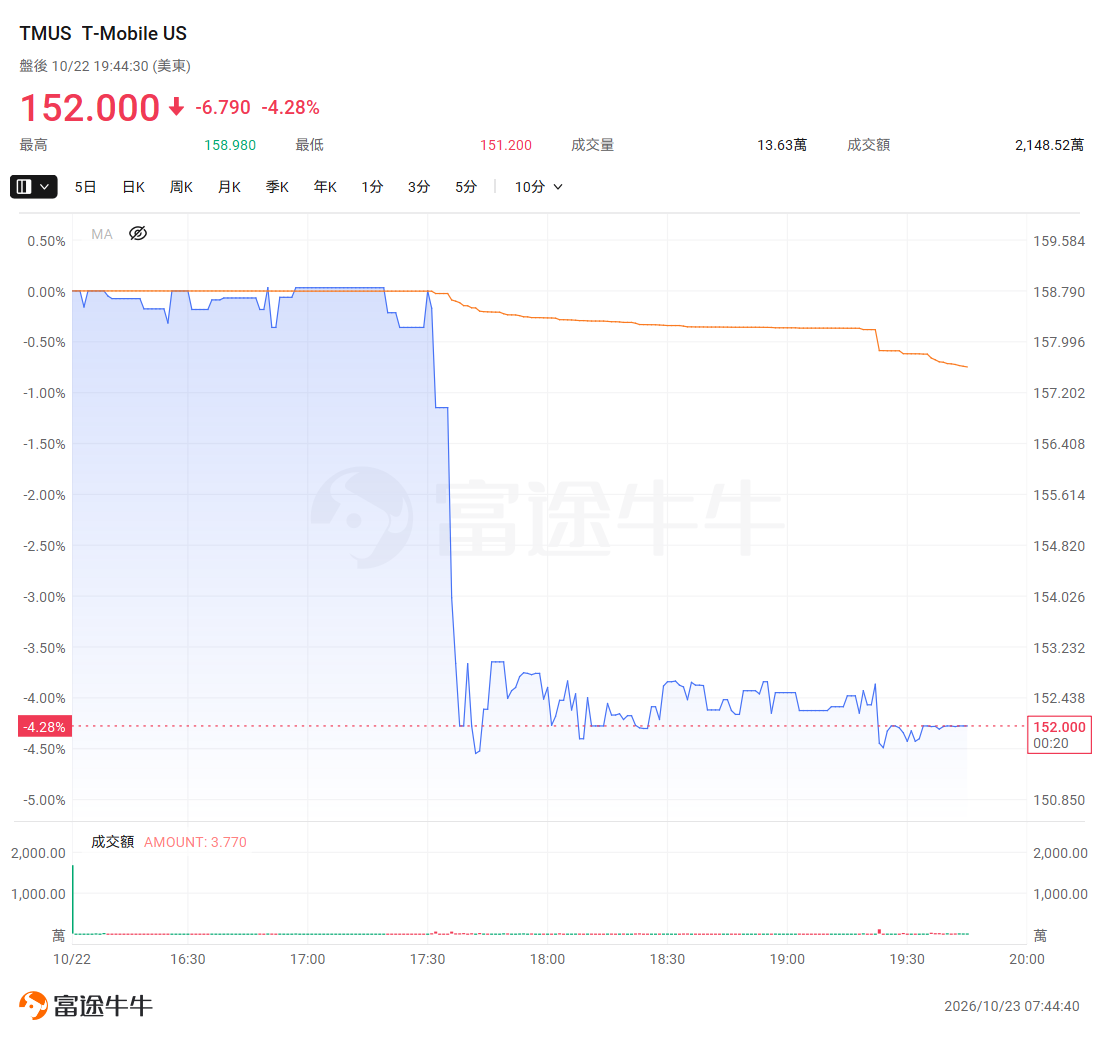
According to a Bloomberg report on October 22, citing sources familiar with the matter,$SpaceX(SPCX.US)$It is currently in talks with telecommunications infrastructure companies to secure access to at least 80,000 sites nationwide, with discussions involving Crown Castle, potentially paving the way for the development of a fourth national mobile operator in the United States. Reuters later reported that TD Cowen estimates the cost of building a nationwide terrestrial network could exceed $80 billion, requiring many years and substantial additional investment. According to data from the Wireless Infrastructure Association, the U.S. had approximately 158,500 dedicated communication towers last year, meaning 80,000 sites would represent roughly half that number. The companies involved have yet to confirm specific lease agreements, so the scale of these negotiations should not be construed as finalized contracts. Following the release of this news,$AT&T(T.US)$ 、 $Verizon(VZ.US)$and$T-Mobile US(TMUS.US)$After hours, the stock fell by roughly 4.2% to 5%, drawing attention to the potential competitive landscape between tower operators and telecom carriers.
Meta disclosed a multi-year payment commitment of approximately $825 billion, raising concerns about the financing burden of its computing‑power expansion.
According to$Meta Platforms(META.US)$On October 22, the company filed its quarterly report with the U.S. Securities and Exchange Commission. As of the end of September, it had outstanding operating and finance lease obligations totaling approximately $355.73 billion, primarily related to data centers, energy assets, and network infrastructure, which are scheduled to become effective over the remainder of this year through 2036. In addition, the company has irrevocable contractual commitments of about $454.52 billion, mainly for third-party cloud capacity, servers, energy services, and consumer hardware, with approximately $45.85 billion and $121.41 billion maturing in 2026 and 2027, respectively. The company also carries contingent cloud‑capacity procurement obligations of up to $14.72 billion over the next five years, which could be reduced if the supplier allocates that capacity to other customers. Together, these items amount to roughly $825 billion and represent multi-year arrangements rather than current‑period capital expenditures or fully recognized liabilities; furthermore, $10.8 billion in cash is restricted under infrastructure‑agreement escrow requirements.
Grok Accelerates Commercialization: SpaceX Teams Up with NVIDIA and Others to Build an AI Collaboration Network
On Thursday, October 22,$SpaceX(SPCX.US)$On its official website, the company announced the launch of the "SpaceX Super Intelligence Partner Network." According to the press release, the network brings together two types of partners. SpaceX stated that, through this partner program, "partners can access the training, tools, and support they need when collaborating with our shared customers." The release also noted that more than 130 companies have already been granted early access, including…$Snowflake(SNOW.US)$Tech companies such as Databricks, along with consulting firms like Bain & Company and Booz Allen Hamilton, have also joined the initiative. Media analysts view this move as SpaceX's effort to encourage the business community to adopt its AI products and expand their commercial applications. For a long time, SpaceX has been seen as lagging behind competitors like OpenAI and Anthropic in this area.
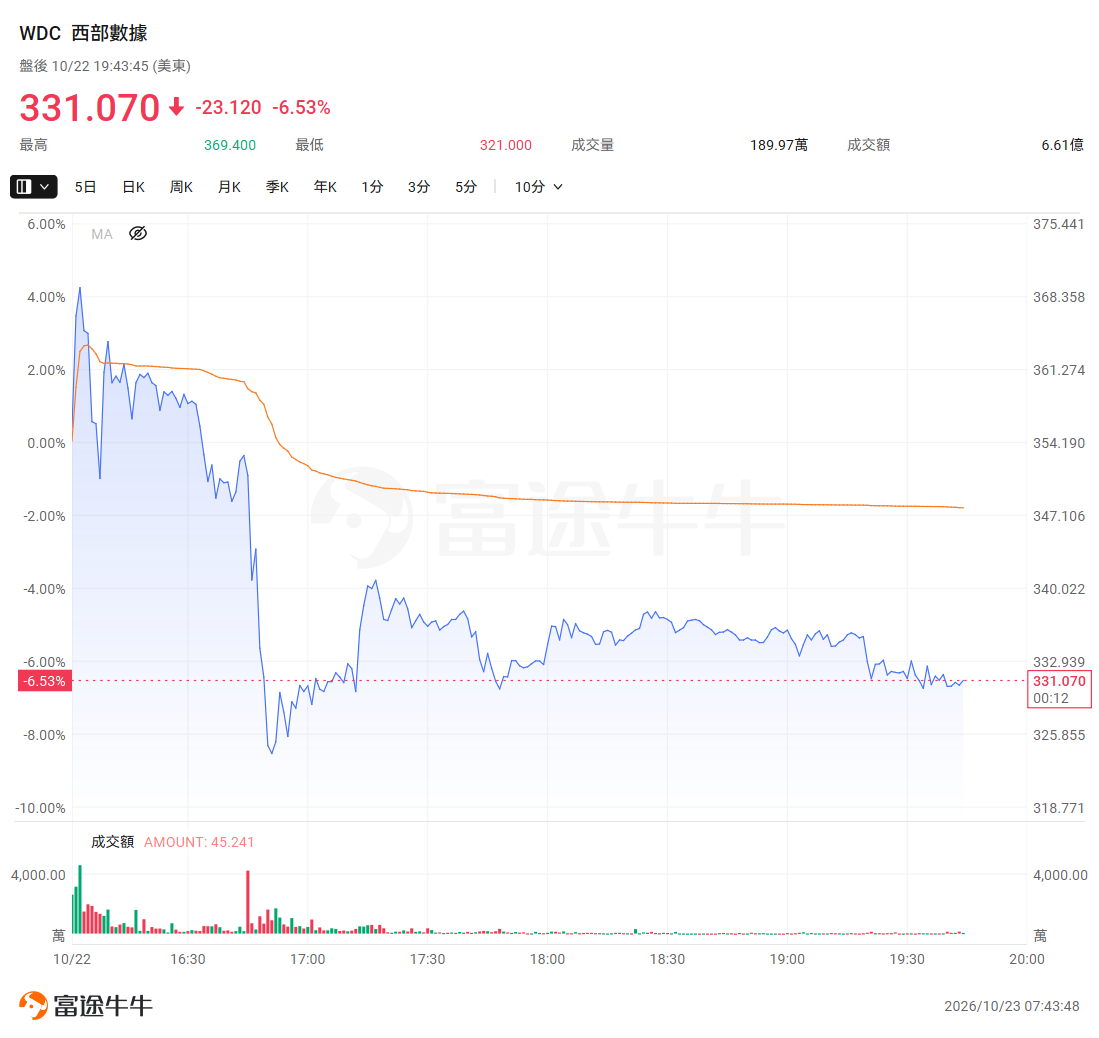
Western Digital's revenue grew 55%, and its guidance for next quarter's revenue and earnings per share remains raised.
According to$Western Digital (WDC.US)$After the market closed on October 22, the company reported that for the first quarter of fiscal year 2027, ending October 2, revenue totaled $4.381 billion, up 55% year over year and 17% quarter over quarter. Adjusted earnings per share were $4.64, a 161% increase from the same period last year. Adjusted gross margin stood at 58.1%, up 14.2 percentage points year over year, while adjusted operating margin reached 49.1%. The company attributed its strong performance to rising demand for storage capacity and improved pricing. For the next quarter, revenue is expected to range between $5.0 billion and $5.2 billion, with adjusted EPS projected at $5.60 to $6.00 and an adjusted gross margin of 60% to 61%. Operating cash flow for the quarter was approximately $1.604 billion, and free cash flow came in at about $1.38 billion. The quarterly dividend was raised by 17% to $0.175 per share. Despite these better-than-expected results, the stock price continued to decline, as the realization of storage‑demand growth and a cooling of AI‑related trading activity kept the market in a tug‑of‑war.
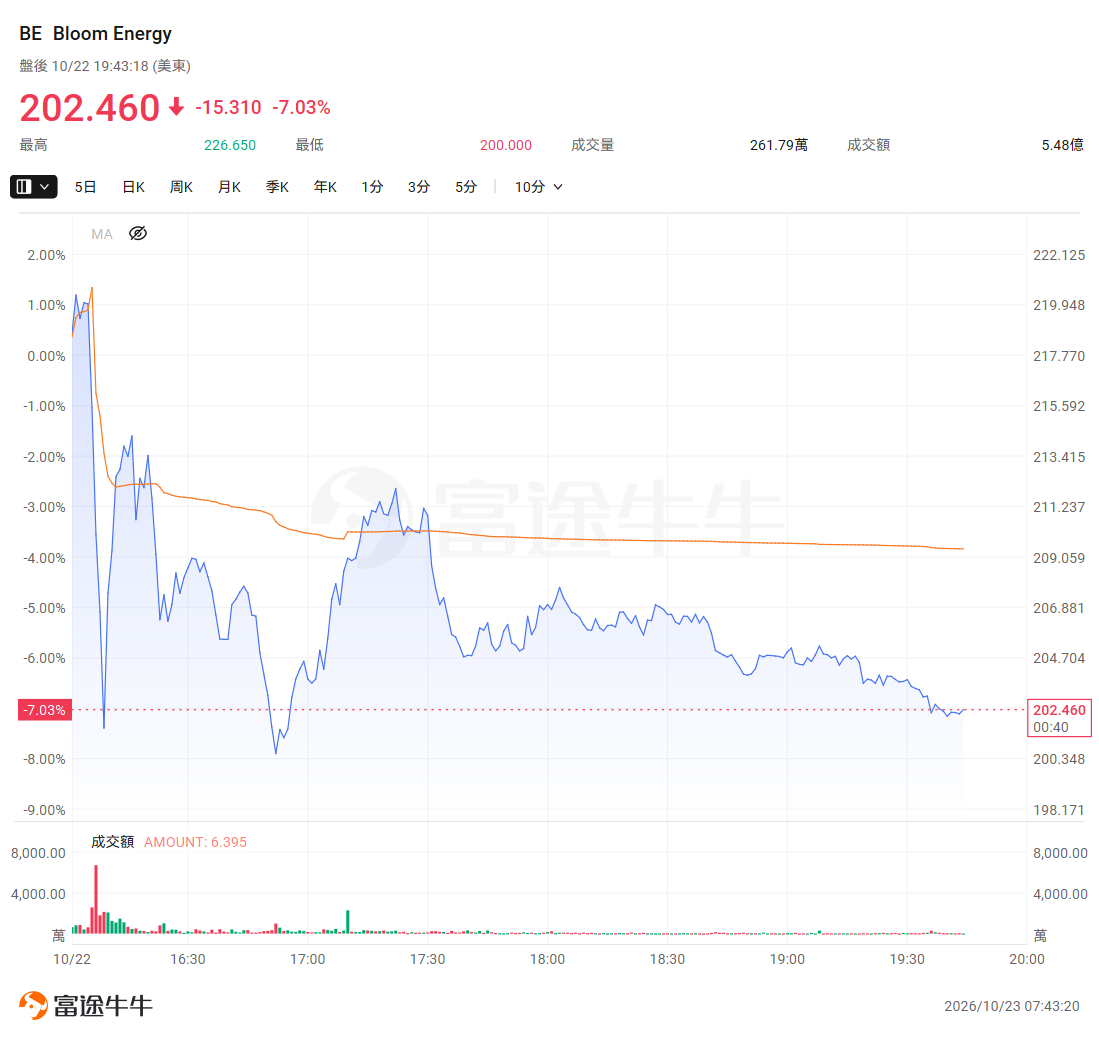
Bloom Energy's revenue grew by 138% and it raised its full-year guidance, but operating cash flow remains to be improved.
According to$Bloom Energy(BE.US)$On October 22, following the market close, the company reported third-quarter revenue of $1.236 billion, up 138.1% year over year; product revenue reached $1.074 billion, an increase of 179.4%; and net profit attributable to common shareholders was $250 million, compared with a loss of $23.09 million in the same period last year. Adjusted earnings per share came in at $0.94, with an adjusted gross margin of 34.5%. The company raised its full-year outlook for the third time, lifting its revenue target to $4.4 billion to $4.6 billion and its adjusted EPS range to $3.10 to $3.40. However, operating cash flow posted a net outflow of approximately $27.15 million for the quarter, capital expenditures totaled about $153 million, and increases in accounts receivable, contract assets, and inventory tied up additional working capital. Shares fell roughly 7% in after-hours trading, as rising on-site power demand coincided with higher working-capital usage, making cash‑flow dynamics an important metric beyond earnings performance.
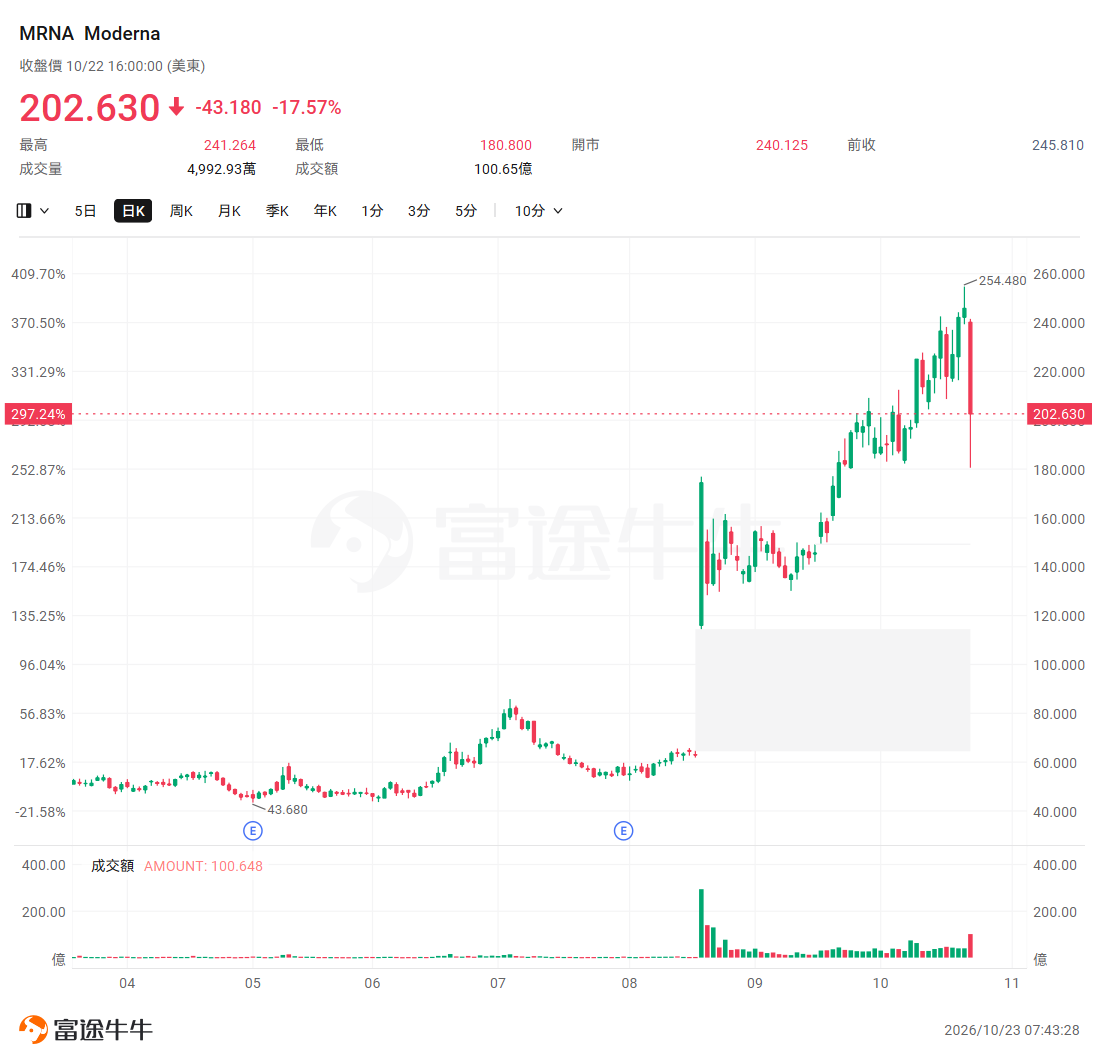
Moderna's cancer vaccine data were disclosed ahead of schedule, showing promising efficacy but prompting a reassessment of its high valuation.
According to a Reuters report on October 22,$Moderna(MRNA.US)$and$Merck & Co. (MRK.US)$Detailed Phase 3 results for Moderna's personalized melanoma vaccine appeared ahead of schedule on a cancer‑related website, and the two companies subsequently released the data. Compared with Keytruda alone, the intismeran combination therapy reduced the risk of cancer recurrence or death by 42% and the risk of distant metastasis or death by 38%. The study enrolled more than 1,100 patients, but overall survival data are not yet mature. Oncology experts interviewed by STAT believe the findings represent a significant advance in the field. Nevertheless, Moderna's stock plunged more than 25% during trading as the market reassessed the high expectations embedded in its earlier gains and questioned whether the efficacy could be extended to other cancer types. The full results were originally scheduled to be presented on Saturday at the European Society for Medical Oncology annual meeting.
Top 20 in Trading Volume
Hong Kong Stock Market Outlook
Southbound capital reduced its holdings in Hong Kong stocks by over HK$9.2 billion, while net buying Tencent amounted to nearly HK$500 million.
On Thursday, October 22, southbound capital sold HK$9.218 billion worth of Hong Kong stocks.
$Tencent (00700.HK)$ 、$Weilu Technology Co., Ltd. (01196.HK)$、$Southern Hang Seng Technology (03033.HK)$They recorded net purchases of HK$489 million, HK$251 million, and HK$192 million, respectively.
$Alibaba-W(09988.HK)$、$SMIC (00981.HK)$、$Wuxi Bio (02269.HK)$They were net sold off to the tune of HK$1.677 billion, HK$911 million, and HK$642 million, respectively.
China Telecom's profits fell 14.8% in the first three quarters, with its smart‑business segment and cash flow drawing close attention.
According toChina Telecom (00728.HK)On the evening of October 22, the company announced its unaudited results prepared in accordance with International Financial Reporting Standards. For the first three quarters, operating revenue totaled RMB 382.402 billion, down 3.7% year over year; profit attributable to shareholders reached RMB 26.207 billion, a decline of 14.8% compared with the same period last year. Revenue from core businesses amounted to approximately RMB 359.3 billion, including about RMB 313.1 billion from telecommunications services and roughly RMB 46.2 billion from smart‑related businesses. Operating cash flow stood at RMB 98.436 billion, while capital expenditures totaled RMB 43.956 billion. The company stated that, excluding the impact of adjustments to VAT classification, core‑business revenue remained stable and profits continued to grow. At quarter‑end, the company had 445 million mobile subscribers, with 330 million on 5G networks—net additions of 6.62 million and 28.58 million, respectively, during the first three quarters. Moving forward, the company will continue to advance its computing‑power network, the Xingchen TokenHub, and intelligent‑agent applications, while accelerating the commercialization of token‑based operations and AI‑driven solutions.
Today's Focus
Keywords: Global PMI; U.S. inflation expectations; ESMO opening; American Express earnings report
On the economic data front, at 07:30, Japan's September CPI and core CPI will be released; at 14:00, the UK's seasonally adjusted retail sales for September will be published; at 15:15, 15:30, and 16:00, the preliminary October PMIs for France, Germany, and the Eurozone will be announced in succession; at 16:30, the UK's preliminary October manufacturing and services PMIs will be released. In the evening, at 20:30, Canada's August retail sales will be published; at 21:45, the preliminary October S&P Global manufacturing and services PMIs for the U.S. will be released; and at 22:00, the final readings for the U.S. October University of Michigan Consumer Confidence Index and one-year inflation expectations will be announced.
On the economic and financial front, the ESMO Congress opened in Madrid and will run through the 27th; meanwhile, the Global Developers' Summit and the International Embodied Intelligence Skills Competition are being held in Shanghai, with the events continuing until the 25th, focusing on advancements in robotics, embodied intelligence, and related industry chains.
In terms of performance,$American Express (AXP.US)$The company will release its third-quarter results in the pre-market session of the U.S. stock market, with the earnings call scheduled for 8:30 p.m. Beijing time. As for the Hong Kong stock market,$China Unicom (00762.HK)$The key financial and operational metrics for the first three quarters have been disclosed.
 Want to pick stocks or analyze them? Curious about your portfolio's opportunities and risks? For all your investment questions,Just ask Futubull AI!

Editor/rocky