
Global tech stocks have faced a massive sell-off; according to Goldman Sachs, net sales totaled about $20 billion over the past two weeks, and the volatility premium for tech stocks has risen to the 98th percentile of its five-year range. Market attention is focused on earnings reports from tech giants, as investors assess the returns on AI investments and the sustainability of financing. JPMorgan believes that a buying window may emerge in early November, but it will still be necessary to wait for position unwinding, earnings validation, and a narrowing of credit spreads.
The tech sector is under multiple pressures: hedge funds are sharply trimming their exposure, volatility warning signs are flashing, and at the same time, rising AI‑related financing costs and spreading credit risks are subjecting this AI boom to increasingly severe funding challenges.
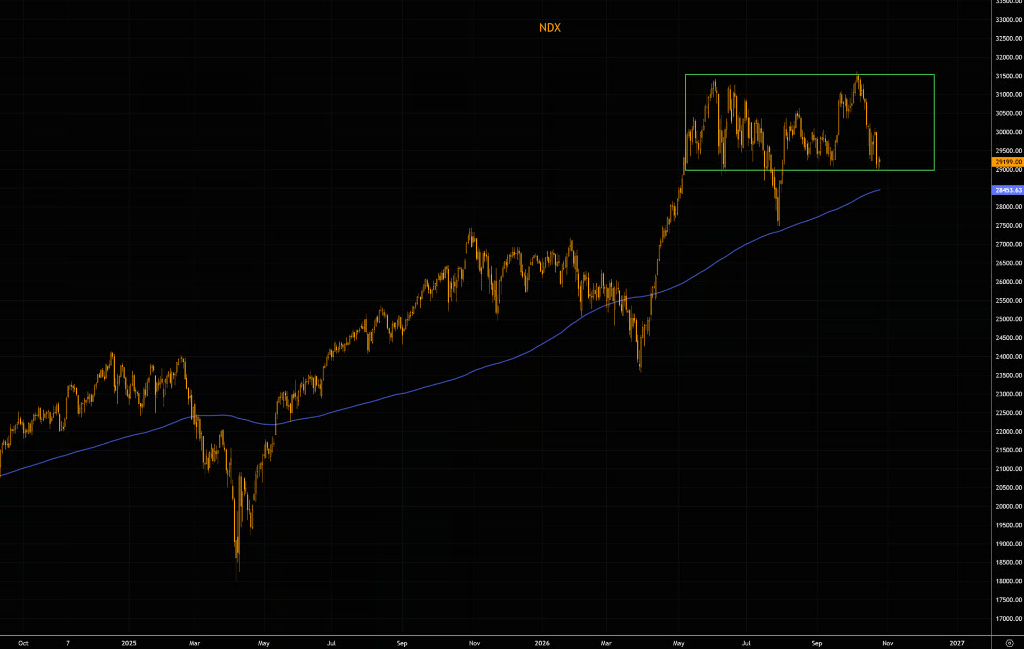
Over the past two weeks, according to Goldman Sachs data, global technology stocks have seen net outflows of approximately $20 billion, with selling pressure reaching an extreme level of -3.3 standard deviations. The Nasdaq 100 Index (NDX) remains trapped within its trading range since May, with the 29,000-point futures threshold and the 200-day moving average around 28,500 points below it forming the most critical technical support zone at present.
 At JPMorgan, analyst Privorotsky noted that although AI demand remains robust, the financing environment is tightening—AI infrastructure debt financing has already exceeded $500 billion this year, and the funding costs for hyperscale cloud service providers have risen by approximately 120 basis points compared with earlier levels. The financing link between NVIDIA and its GPU customers is being viewed as a potential conduit for credit risk transmission; if GPU operators face tighter liquidity, the pressure could ripple upstream to their suppliers.
Position cleaning: strikingly similar to July
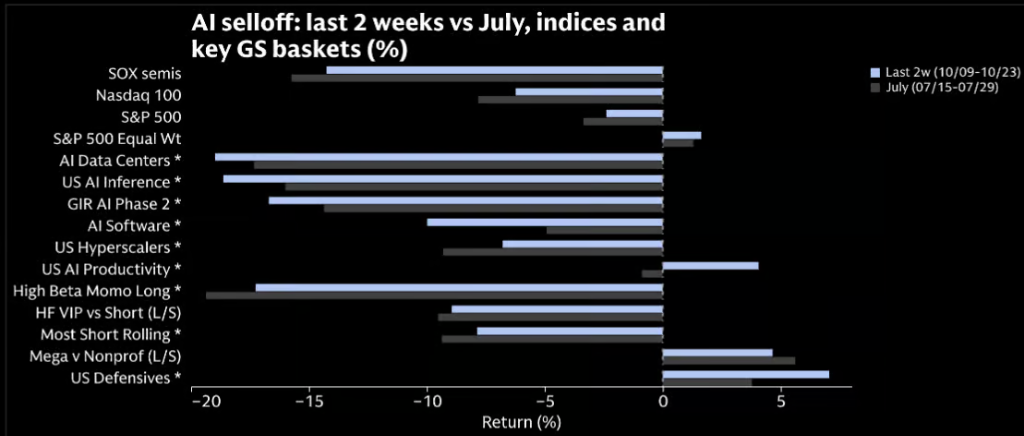
The scale and intensity of this round of sell-offs in tech stocks have reminded the market of the correction in July this year.
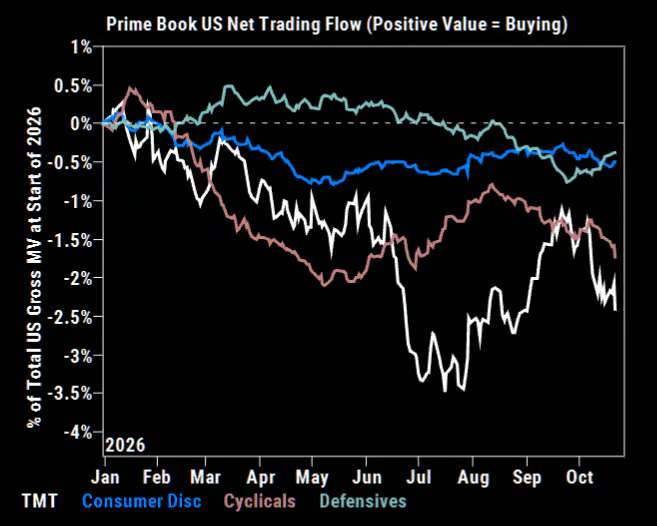
Goldman Sachs data show that over the past two weeks, the TMT sector has seen cumulative sales of approximately $20 billion, nearing the $23 billion recorded during the July sell-off. The most heavily impacted securities have exhibited nearly identical price trends. The key difference is that the S&P 500 has fallen by only about 2.4% in this round, compared with a 3.4% decline in July, indicating relatively more subdued volatility at the index level.
Meanwhile, Goldman Sachs' risk appetite indicator posted one of the largest single-day declines on record, falling to its lowest level since April 2025. The TMT sector's fundamental net exposure has dropped to a year-to-date low, though overall exposure remains at the 63rd percentile—meaning that while net positions have been pared back, total leverage still represents a key potential vulnerability.
Tech Panic Premium: As High as the 98th Percentile
Panic has not been evenly distributed across the market; instead, it is heavily concentrated in the technology sector.
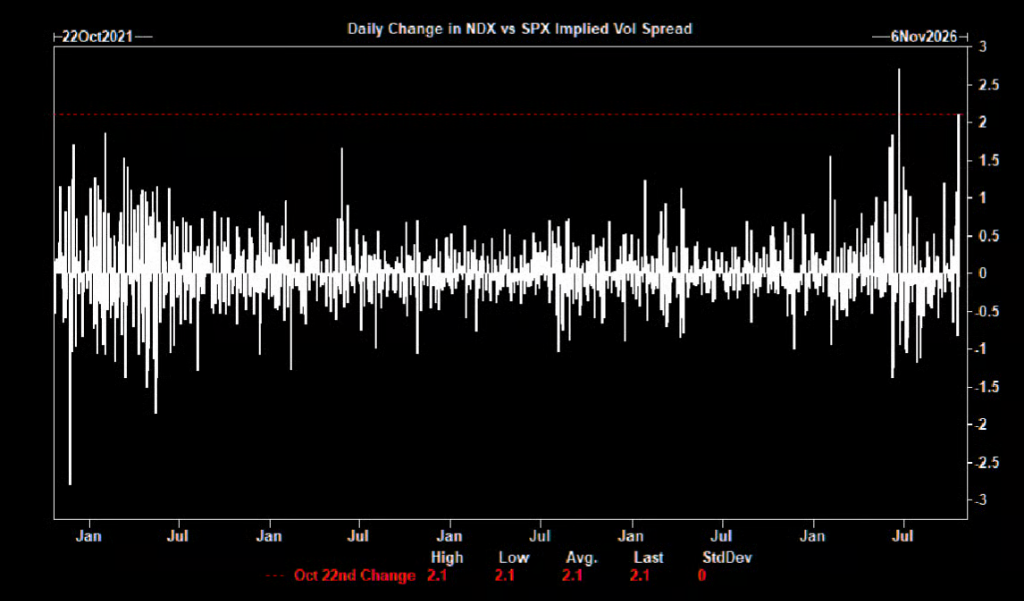
Goldman Sachs analysis shows that the volatility spread between the NDX and the SPX has widened rapidly to the 98th percentile of its five-year range, with last Thursday's single-day expansion marking the second-largest on record in the past five years. Volatility pricing specific to the technology sector is now at an exceptionally expensive level relative to overall market-wide volatility, creating potential relative-value trading opportunities. Correlation among AI-related stocks has strengthened significantly, yet index-level volatility remains relatively subdued.
AI Financing Test: Ultra-Large-Scale Cloud Providers Emerge as a Key Variable
This week, Google, Microsoft, and Amazon have released their earnings reports in quick succession, and the market's attention has shifted beyond capital expenditure guidance itself.
According to JPMorgan, AI infrastructure debt issuance has already exceeded $500 billion this year, while the financing costs for ultra-large cloud service providers have risen by about 120 basis points. Against this backdrop, the questions that truly matter to the market are: whether backlog orders can be effectively converted into revenue, and how the next round of investment expansion will secure funding.
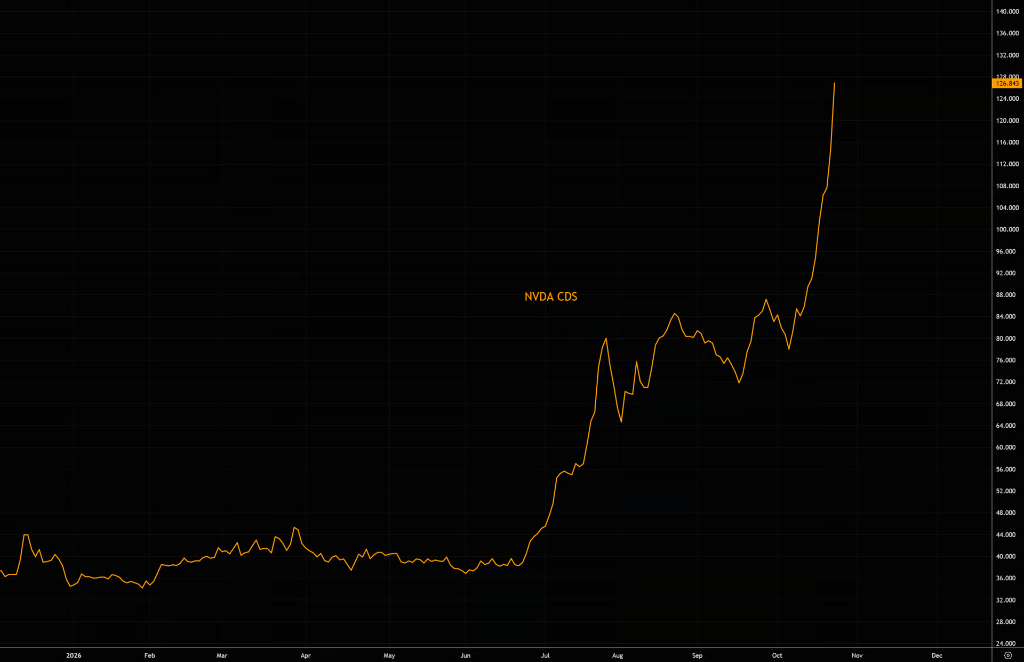
Notably, AI-related credit default swap (CDS) spreads have widened significantly recently, but JPMorgan believes this largely reflects banks' proactive purchase of protection to hedge their expanding data-center exposures, rather than a deterioration in fundamentals. The widening spread between CDS and cash bonds may be creating new relative-value opportunities.
Credit transmission risk in the NVIDIA ecosystem
JPMorgan has identified the financing relationships between NVIDIA and its GPU customers as a potential transmission channel for AI credit stress.
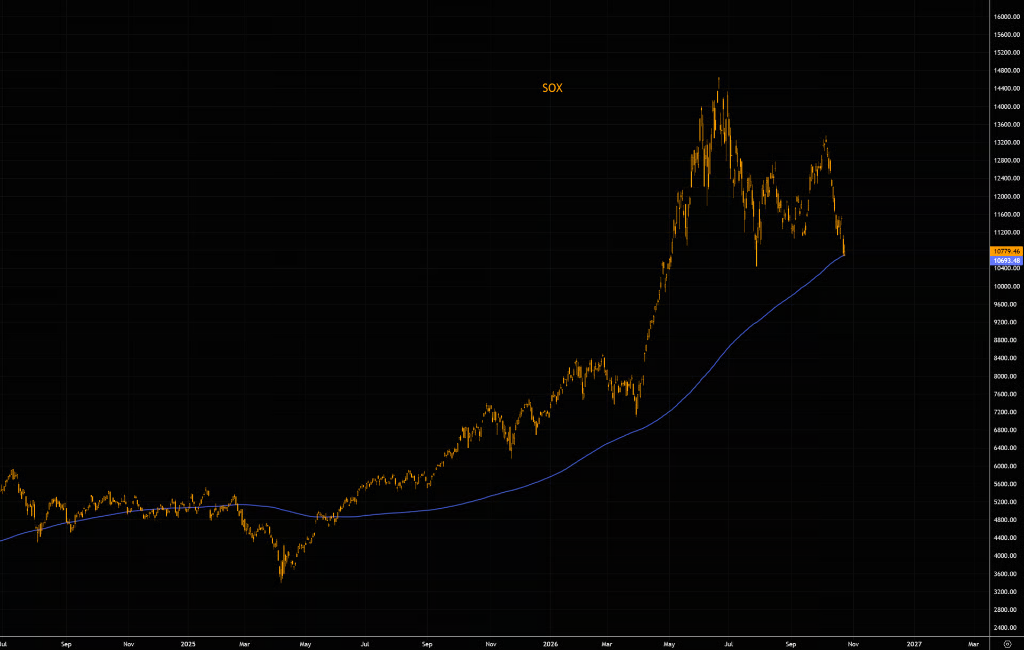
GPU operators represented by CoreWeave rely on customer financing and credit support to sustain the expansion of their AI infrastructure. While this model fuels growth, it also creates highly correlated downside risks: should GPU operators face a funding crunch, pressure will ripple upstream along the supply chain, ultimately reverberating back to upstream suppliers such as NVIDIA. The Philadelphia Semiconductor Index (SOX) is currently testing the 200-day moving average for support, adding an important technical reference point to this risk pathway.
U.S. investment: Asia benefits—but is also the first to suffer.
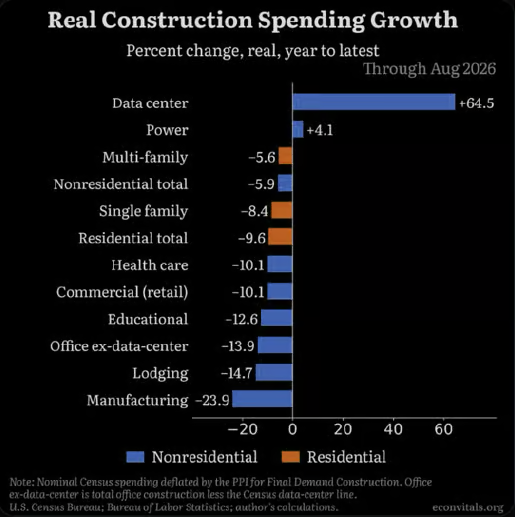
While the AI‑driven surge in capital spending is boosting domestic demand in the United States, substantial capital flows are also heading overseas, creating asymmetric spillover effects.
According to data from TS Lombard, technology exports account for nearly 20% of South Korea's GDP. This implies that if AI‑related capital spending were to contract sharply, Asian export‑oriented economies would bear the brunt, facing a disproportionately severe impact—while the actual boost to the U.S. domestic economy might fall far short of what the apparent scale of investment suggests.
AI Crash Paradox: Rate-Sensitive Sectors May Unexpectedly Benefit
Dario Perkins, an economist at TS Lombard, puts forward a counterintuitive argument: the end of the AI investment boom may not necessarily spell an all‑encompassing economic disaster.
He argues that the rapid expansion of AI-related capital spending is currently fueling inflation and keeping interest rates elevated, thereby exerting sustained pressure on rate‑sensitive sectors such as real estate. Should AI capital expenditure decline sharply, the Federal Reserve would gain room to cut rates more aggressively, rekindling demand in non‑tech industries and cushioning the broader economy against a downturn. In other words, the next wave of beneficiaries after the current AI boom subsides may well be precisely those sectors that were marginalized during this earlier surge.
Potential buying window: Conditions are not yet fully in place.
JPMorgan maintains a constructive outlook on the fundamentals of the technology sector, while also cautioning against risks such as insufficient sustainability in semiconductor pricing and financing pressures in the emerging neocloud space; the software sector, by contrast, remains relatively resilient.
The firm believes a potential buying window may emerge in early November, but the necessary conditions have yet to fully materialize: positions must be further and more thoroughly unwound; ultra‑large cloud players need to confirm their capital‑expenditure trajectories; semiconductor earnings must withstand scrutiny; and credit spreads will need to return to a narrower range. If any of these conditions remain unmet, the sustainability of a rebound becomes questionable. For investors, the current market offers neither an unequivocal signal to liquidate nor an unconditional opportunity to buy at the bottom—perhaps the answer lies in this week's earnings reports from several tech giants.
Editor/Deng