
① Morgan Asset Management is optimistic about the long-term demand for AI, focusing on returns across the industry chain and application opportunities; ② U.S. equity earnings are expected to broaden by 2027, with bonds, energy, and infrastructure attracting attention; ③ Active ETFs are targeting income and downside protection, while alternative investments emphasize liquidity.
Cailian Press, October 30 (Reporter Wu Yuqi): "We aim to engage in AI‑driven investing, while also ensuring that not everything is reliant on AI," said Paul Quinsee, Global Head of Equities at J.P. Morgan Asset Management, during the 2026 J.P. Morgan Asset Management Asia-Pacific Media Summit held in Singapore, as he outlined the firm's investment strategy for 2027.
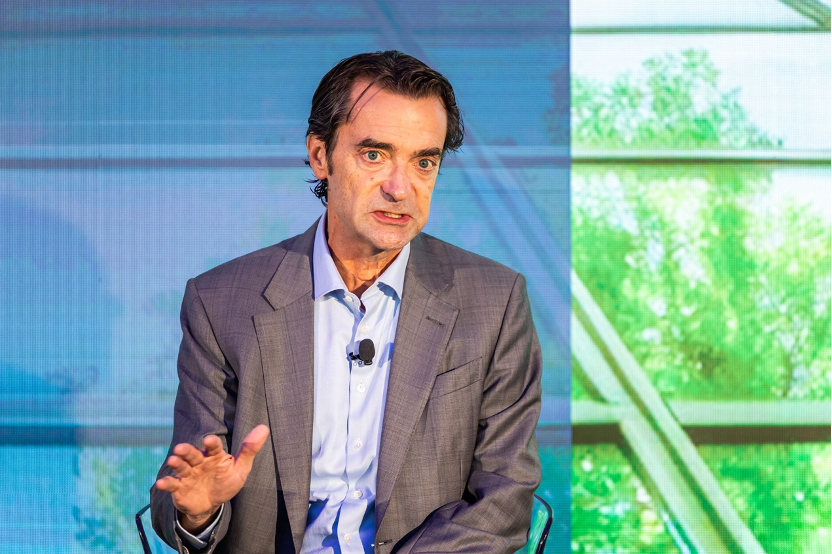
Paul Quinsee, Global Head of Equities at J.P. Morgan Asset Management
 AI remains one of the most discussed investment themes at this summit. Several investment professionals at J.P. Morgan Asset Management maintain a positive outlook on AI's long-term demand, but when it comes to whether capital expenditures will translate into corporate profitability, when investment returns will trickle down to end‑users, and what opportunities lie beyond tech stocks, heads of different business units offer varied perspectives.
For investors already heavily allocated to U.S. technology stocks, J.P. Morgan Asset Management recommends seeking additional sources of return across investment styles, regions, and asset classes. Beyond equities, bond coupons, energy infrastructure, healthcare, and private‑market investments are all drawing attention. On the product side, actively managed ETFs are being deployed to address specific investment needs such as cash‑flow generation and downside protection, while, with private markets becoming more accessible to high‑net‑worth clients, the liquidity of underlying assets has also emerged as a key area of discussion.
AI demand remains robust, and investment opportunities are spreading throughout the industry chain.
Whether AI capital expenditures can be sustained was the central focus of this summit.
Geng Ngarmboonanant, Deputy Head of Multi‑Asset Solutions Research and Head of Macro and Policy Research at J.P. Morgan Asset Management, believes that AI‑related capital spending and resilient U.S. consumer demand continue to underpin economic growth. He forecasts that U.S. GDP growth will decelerate to around 2% over the next 12 months. Fiscal tax rebates, a stabilizing labor market, and the wealth effect from equity markets are expected to remain supportive of consumption.
Regarding inflation, Geng Ngarmboonanant believes that current pressures stem primarily from supply-side shocks such as tariffs and energy costs. If these shocks gradually subside, inflation is expected to ease; however, it remains important to monitor whether rising energy prices trigger second-round effects.
From a corporate perspective, Jason Yum, an equity research analyst and portfolio manager in the United States, argues that a single, uniform return on investment cannot be used to assess the entire AI industry value chain.
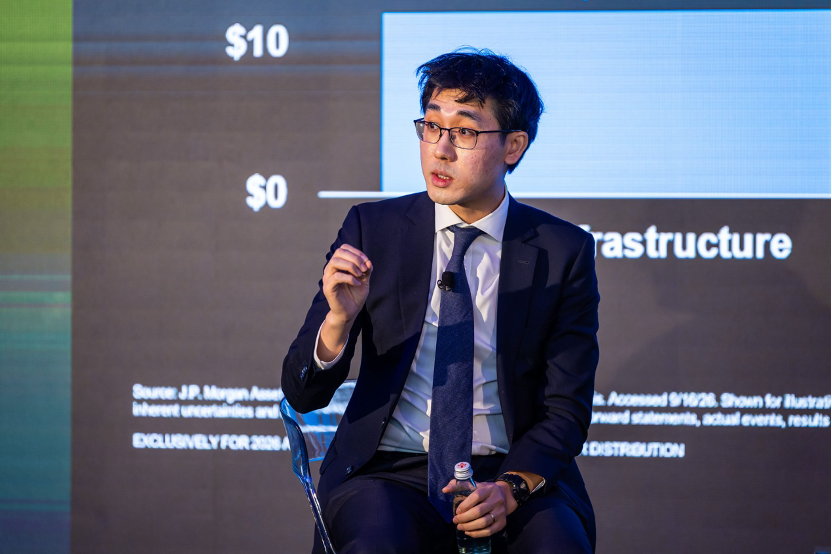
Jason Yum, U.S. equity research analyst and portfolio manager
He pointed out that the costs associated with data center construction—such as equipment, networking, and power—are relatively easy to estimate; the real source of significant variation lies in the revenue generated per unit of computing power. While some cloud‑infrastructure businesses deliver decent returns on investment, their operations remain far from straightforward; by contrast, certain cutting‑edge model developers boast unit‑level economic performance that is considerably more attractive.
Regarding the trend of tech giants ramping up debt‑financed investments in AI, Jason Yum argues that such decisions should be evaluated in light of a company's operating cash flow and overall leverage levels. One should not conclude that these investments lack returns simply because capital expenditures are rising and free cash flow has turned negative.
Feedback from Asian supply chains indicates that AI-related demand remains robust.
Oliver Cox, Portfolio Manager for Emerging Markets and Asia-Pacific Equities at J.P. Morgan Asset Management, said that during recent visits to Asian companies, his team found that supply has yet to fully catch up with demand, with actual demand continuing to exceed earlier expectations. He remains optimistic that the AI‑related capital‑expenditure cycle will persist for an extended period, and that opportunities extend beyond the chip sector: semiconductor materials, substrates, packaging and testing, as well as networking equipment, all harbor companies worthy of attention.

Oliver Cox, Portfolio Manager for Emerging Markets and Asia-Pacific Equities at J.P. Morgan Asset Management
However, Oliver Cox also cautions that a long-term bullish outlook on AI does not preclude short-term volatility in related stocks, and it is unwise to assume that companies with strong past performance will continue to lead.
Jason Yum is adopting a more optimistic stance toward AI applications. He believes that the revenue generated by AI need not merely replace traditional software markets; many workflows previously performed manually could also open up new market opportunities for software companies. Familiar user interfaces, robust security measures, and well‑established management frameworks will help enterprise customers further embrace AI.
Oliver Cox also focuses on changes at the application level. He notes that, at present, the AI industry's primary sources of revenue and growth remain concentrated in semiconductors and data centers; as technology advances, higher returns are expected to gradually shift toward the application layer. In the Asian market, there are already examples of AI enhancing operational efficiency in areas such as human resources software, gaming, and IT services.
Xu Changtai, Chief Market Strategist for Asia-Pacific at J.P. Morgan Asset Management, believes that corporate adoption of AI remains in its early stages. Following the rollout of new tools by the technology function, finance leaders will conduct a thorough review of costs and returns, while security and governance teams will also weigh in on decision‑making. As a result, companies may adopt a more cautious approach at certain phases, which could temper the pace of short‑term adoption.
U.S. equity opportunities are expanding to more companies, and there is also room for deployment in the bond and private‑equity markets.
Regarding the stock market in 2027, Paul Quinsee remains relatively optimistic, with his outlook largely grounded in corporate earnings.
He observed that earnings growth is spreading across more markets and companies, and U.S. equity markets are no longer driven solely by a handful of large tech firms; an increasing number of companies, including small-cap stocks, are now taking part.
For investors who have already increased their U.S. asset allocations—particularly those holding substantial positions in large-cap technology stocks—Paul Quinsee recommends enhancing diversification across both style and region, seeking opportunities in value‑oriented strategies, as well as in Europe, Japan, and emerging markets.
Paul Quinsee also closely monitors the sustainability of AI‑related capital expenditures. Large‑scale investments require robust funding, and their implementation may be constrained by physical limitations and policy considerations. The technology sector's competitive landscape evolves rapidly; today's market leaders may not be able to sustain their advantage over the long term, underscoring the need for ongoing fundamental analysis.
In the fixed-income market, Bob Michele, Chief Investment Officer and Head of Global Fixed Income, Currencies, and Commodities at J.P. Morgan Asset Management, places great value on the coupon income that bonds can currently deliver.
He believes that bond investments can generate coupon income and, should yields decline in the future, may also deliver capital gains from price appreciation. Beyond the United States, markets such as Japan and Australia offer attractive opportunities as well. Duration management, positioning along the yield curve, and credit selection are all areas where active management can add value.
Regarding AI‑related financing, Bob Michele stressed the need to differentiate between borrowers' risk profiles. Companies with established operations and robust operating cash flows do not face the same credit risks as entities that rely heavily on the delivery of future projects and the realization of commercial revenues. He also identified persistent inflationary pressures and sharp interest‑rate hikes as tail risks—though relatively low in probability, they warrant close attention.
In the private markets, Jed Laskowitz, Global Head of Private Markets and Customized Solutions at J.P. Morgan Asset Management, is optimistic about the long-term investment demand in energy and infrastructure.
He believes that this demand stems not only from the construction of AI‑powered data centers, but also from broader trends such as electrification, the energy transition, and the growing emphasis on energy security across nations. Healthcare and life sciences are likewise key areas of focus. AI is driving advances in drug discovery, and major pharmaceutical companies are bolstering their product pipelines through acquisitions of smaller firms, creating opportunities for private‑equity investment in this space.
Charles Wu, Head of the Alternative Investment Strategy Team for Asia-Pacific at J.P. Morgan Asset Management, is particularly bullish on core infrastructure. He notes that these assets deliver essential public services, and for some projects, revenue over the next 10 to 15 years can be highly predictable thanks to regulated tariffs or long-term contracts. Regulated utilities in the United States also remain a key area of focus, as tightening electricity supply is creating attractive investment opportunities.
In the private equity space, James Burdis, Head of Global Strategic Relationships and Alternative Investments for Private Wealth at J.P. Morgan Asset Management's Asia-Pacific region, places greater emphasis on investing in small and medium-sized enterprises. He believes that fund managers can create value by enhancing operational efficiency, and that exit strategies need not rely solely on IPOs; they can also exit by selling companies to other private equity firms.
Active ETFs place greater emphasis on investment objectives, while alternative investments require managing liquidity expectations.
In addition to asset allocation strategies, how to tailor products to meet diverse investment needs was also a key topic at this summit.
According to data cited by Philippe El-Asmar, Head of ETFs, Digitalization, and Direct Sales for Asia-Pacific at J.P. Morgan Asset Management, actively managed ETFs currently account for roughly 11.4% of the global ETF market size, yet they already represent nearly 30% of net inflows into ETFs.
In his view, the ETF industry is evolving from passive index tracking and active investment management to a stage where products are designed around specific investment outcomes. He refers to this shift as "ETF 3.0."
Investors no longer simply choose which index to track; they can first define their investment objectives—such as generating cash flow or managing downside risk—and then select strategies that align with those goals.
Hamilton Reiner, Chief Investment Officer of Morgan Asset Management's U.S. Core Equity Team and Head of U.S. Equity Derivatives Strategy, explains that the fundamental trade-off in options‑based income strategies is to forgo some of the potential upside in exchange for current income.
During market rallies, this type of strategy typically captures only a portion of the gains; when markets decline, stock selection and option premiums help cushion losses; and in sideways markets, dividends and option premiums serve as key sources of income.
Hamilton Reiner emphasized that strategy design must balance cash flow with participation in market upside, and should not prioritize income distributions at the expense of eroding the fund's net asset value. Investors need to thoroughly understand a product's return and risk profile across different market environments.
Regarding the Asian actively managed ETF market, Philippe El-Asmar noted that different regions still have varying requirements in areas such as derivatives usage, portfolio transparency, and tracking error relative to benchmarks, and that ongoing investor education will be essential for the sector's continued development.
The private‑placement market is opening further to high‑net‑worth clients, and it likewise requires addressing the alignment between product structures and the characteristics of underlying assets.
Jed Laskowitz, Global Head of Private Markets and Customized Solutions at J.P. Morgan Asset Management, cautions that structuring private‑market assets within products that offer certain redemption provisions does not alter the liquidity of the underlying assets themselves. Charles Wu likewise stresses that, for wealth clients new to alternative investments, managing liquidity expectations is especially critical.
Dan Watkins, CEO of Morgan Asset Management for the Asia-Pacific region, also noted in the opening discussion that expanding investment channels in the private markets requires first taking into account clients' liquidity needs, risk profiles, and investment objectives.
Regarding the asset management industry's own development, Dan Watkins also discussed the changes brought about by AI. He believes that AI models and tools will gradually become standard across the sector, with differentiation among asset managers increasingly hinging on how they leverage data, derive investment insights, and implement effective AI governance.
Dan Watkins also emphasized that global investment capabilities must remain aligned with local execution. As the industry continues to evolve, maintaining curiosity, a willingness to keep asking probing questions, and the ability—and psychological resilience—to adapt to change are all critical for both employees and leaders at asset management firms.
Editor/Deng