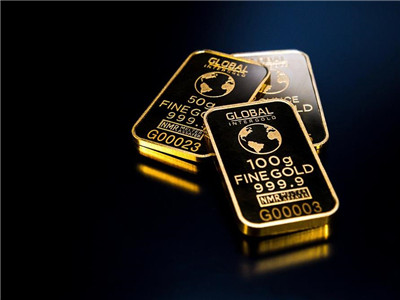
① International gold prices fell below $4,000 per ounce this week. However, the gold market may soon find respite due to index rebalancing; ② Year-to-date, international gold prices have cumulative declined by nearly 10%. Société Générale commodity analysts stated in a report on Thursday that this sharp decline could generate over $3 billion in buying interest for gold.
As persistent high U.S. inflation forces the Federal Reserve to increasingly adopt a hawkish stance, international gold prices fell below $4,000 per ounce this week and dropped below $3,900 on Thursday. However, the gold market may soon find respite due to index rebalancing.
Year-to-date, international gold prices have cumulative declined by nearly 10%. Société Générale commodity analysts stated in a report on Thursday that this sharp decline could generate over $3 billion in buying interest for gold, as funds need to rebalance their exposure to broader commodity benchmarks, including the Bloomberg Commodity Index (BCOM).
 Analysts at the bank stated that the annual rebalancing, scheduled from January 8 to 14, is expected to make gold the biggest beneficiary.
Meanwhile, analysts expect silver to also see $2.5 billion in capital inflows due to index rebalancing.
Analysts explained that the anticipated buying pressure is largely a mechanical result of commodity market performance this year. Although gold and silver prices have been under pressure, energy prices have surged significantly due to conflicts in the Middle East, causing severe imbalances in commodity index weights.
Funds tracking these benchmarks need to reduce exposure to outperforming commodities and increase allocations to underperforming assets to return their portfolios to target weights.
The bank estimates that gold's weight in the BCOM needs to increase by approximately 3 percentage points from current levels, while its weight in the S&P GSCI will rise by about 1 percentage point.
Société Générale analysts also noted that while rebalancing is expected to bring substantial buying interest, the impact will be concentrated on specific futures contracts. The bank estimates that index funds will sell approximately $17.2 billion worth of February gold futures while buying about $20.5 billion worth of April gold futures, resulting in a net inflow of approximately $3.3 billion.
Analysts further pointed out that during the rebalancing period, buying volume for April gold futures will amount to approximately 56% of their typical daily trading volume, indicating that capital flows may create concentrated buying pressure on specific contracts.
During Asian trading on Friday, international gold prices rebounded significantly from the declines of previous days, climbing back above $3,900 per ounce, with gains reaching as much as 1% at one point.
On Thursday, gold prices plunged nearly 3%, marking the third consecutive day of losses and falling to their lowest level in over a year. This decline followed dimming hopes for peace in the Middle East, which drove up oil prices and heightened market concerns about accelerating inflation and rising interest rates. Spot gold closed down 2.78% at $3,876.35 per ounce, while U.S. gold futures for December delivery fell 2.9% to settle at $3,885.30 per ounce.
Edited by lambor