
Top News
As of press time on Tuesday, the three major futures indexes showed mixed performance: Dow Jones futures were up 0.20%, Nasdaq futures fell 1.20%, and S&P futures declined by 0.61%.

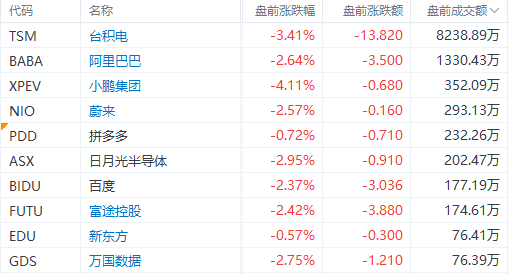
WTI crude oil futures main contract rose, with an increase exceeding 4% as of the latest quote.
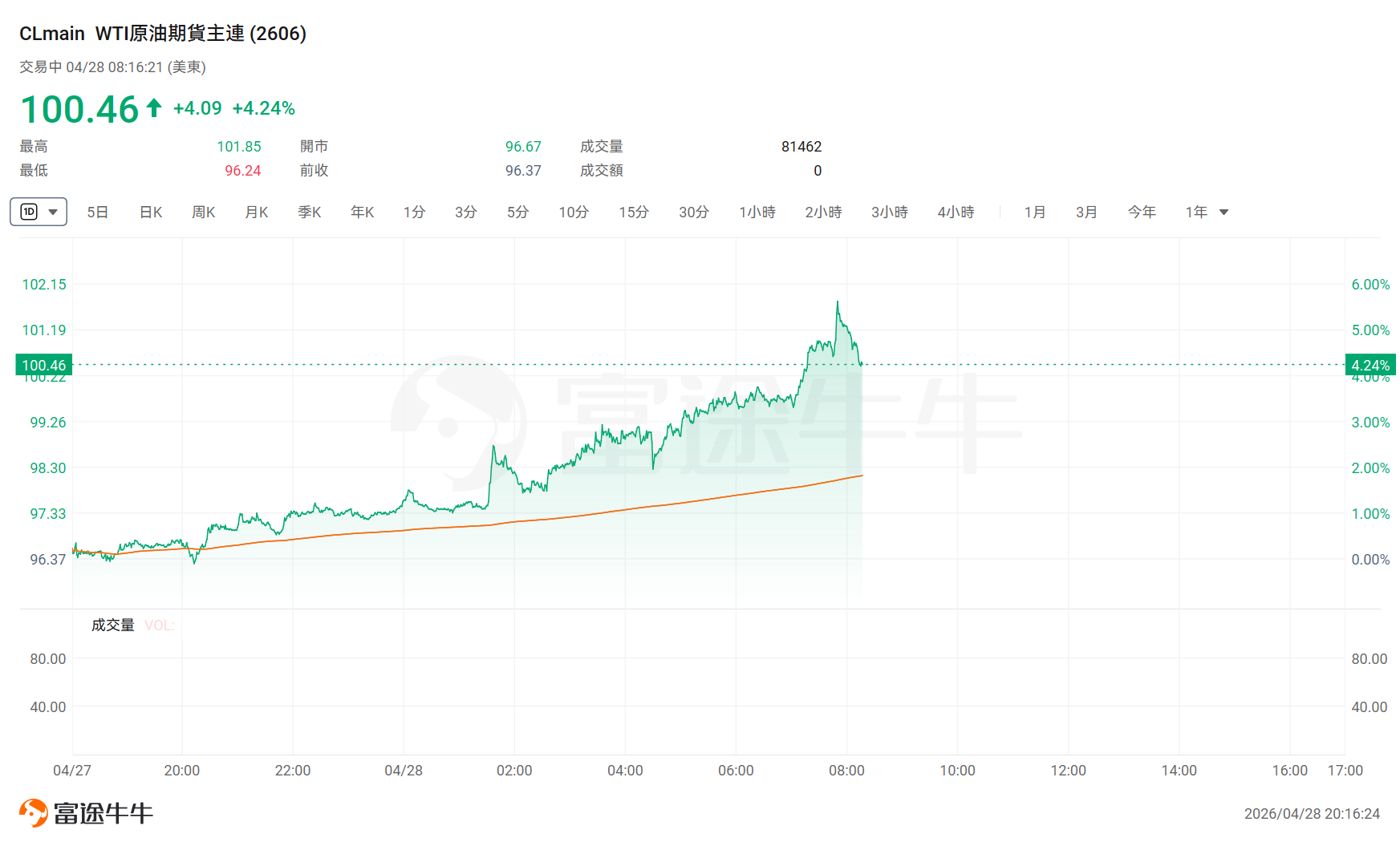
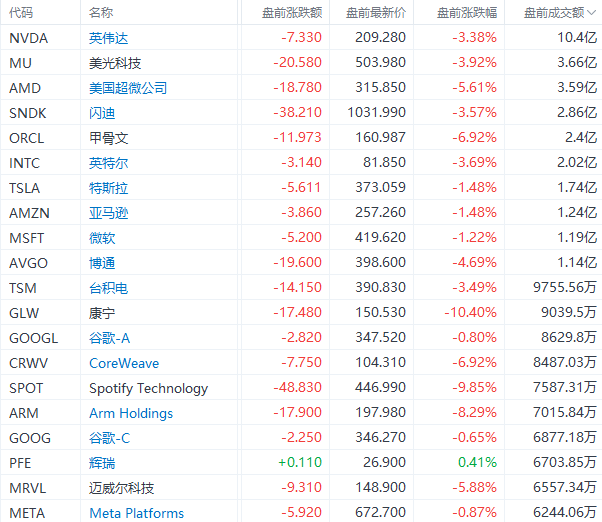
$Star Tech Companies (LIST2518.US)$Pre-market trading saw widespread declines, with Oracle down nearly 7%, AMD down nearly 6%, and Broadcom down nearly 5%.
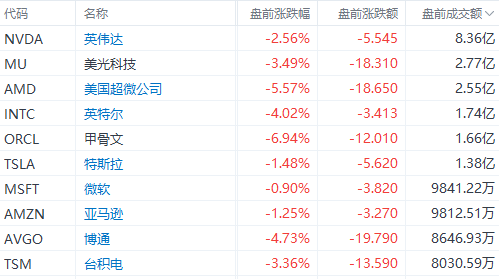
 $China Concept Stocks (LIST2517.US)$Pre-market trading was broadly lower, with XPeng Group falling over 4%, Taiwan Semiconductor dropping more than 3%, and Alibaba and Nio both declining over 2%.
Individual Stock News
OpenAI's Growth Slowdown Shakes the Market! Associated Stocks Under Pressure
Following reports that OpenAI recently failed to meet its internal targets for user growth and sales, concerns have resurfaced about whether the substantial investments by technology companies in artificial intelligence (AI) infrastructure can yield reasonable returns. A series of stocks associated with OpenAI have experienced declines. Data showed that SoftBank Group's stock listed in Japan plummeted by up to 11% on Tuesday. In pre-market trading on Wall Street on the same day, shares of several core partners of OpenAI also fell— $Microsoft (MSFT.US)$ down 0.5%, $NVIDIA (NVDA.US)$ Down over 1%, $Advanced Micro Devices (AMD.US)$ Fell more than 3%, $Oracle (ORCL.US)$ 、 $CoreWeave (CRWV.US)$ another stock fell nearly 5%.
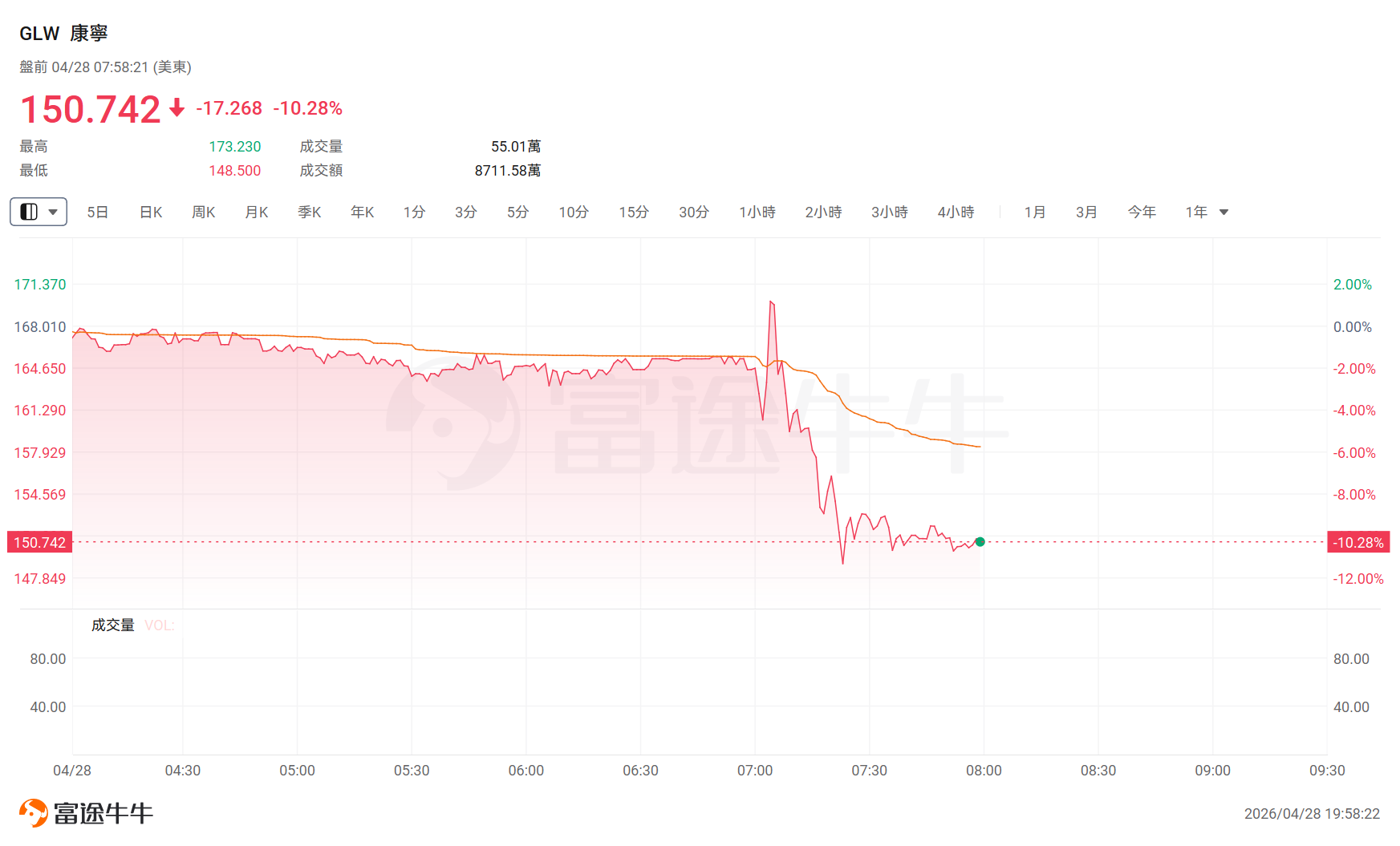
Corning, a concept stock in the optical communications sector, fell over 10% in pre-market trading.
Optical communication concept stock $Corning (GLW.US)$The stock plummeted over 10% in pre-market trading despite reporting core sales of $4.345 billion in Q1, a year-over-year increase of 18%, and core earnings per share of $0.70, reflecting a 30% year-over-year rise.
General Motors' U.S. shares surged over 5% in pre-market trading.
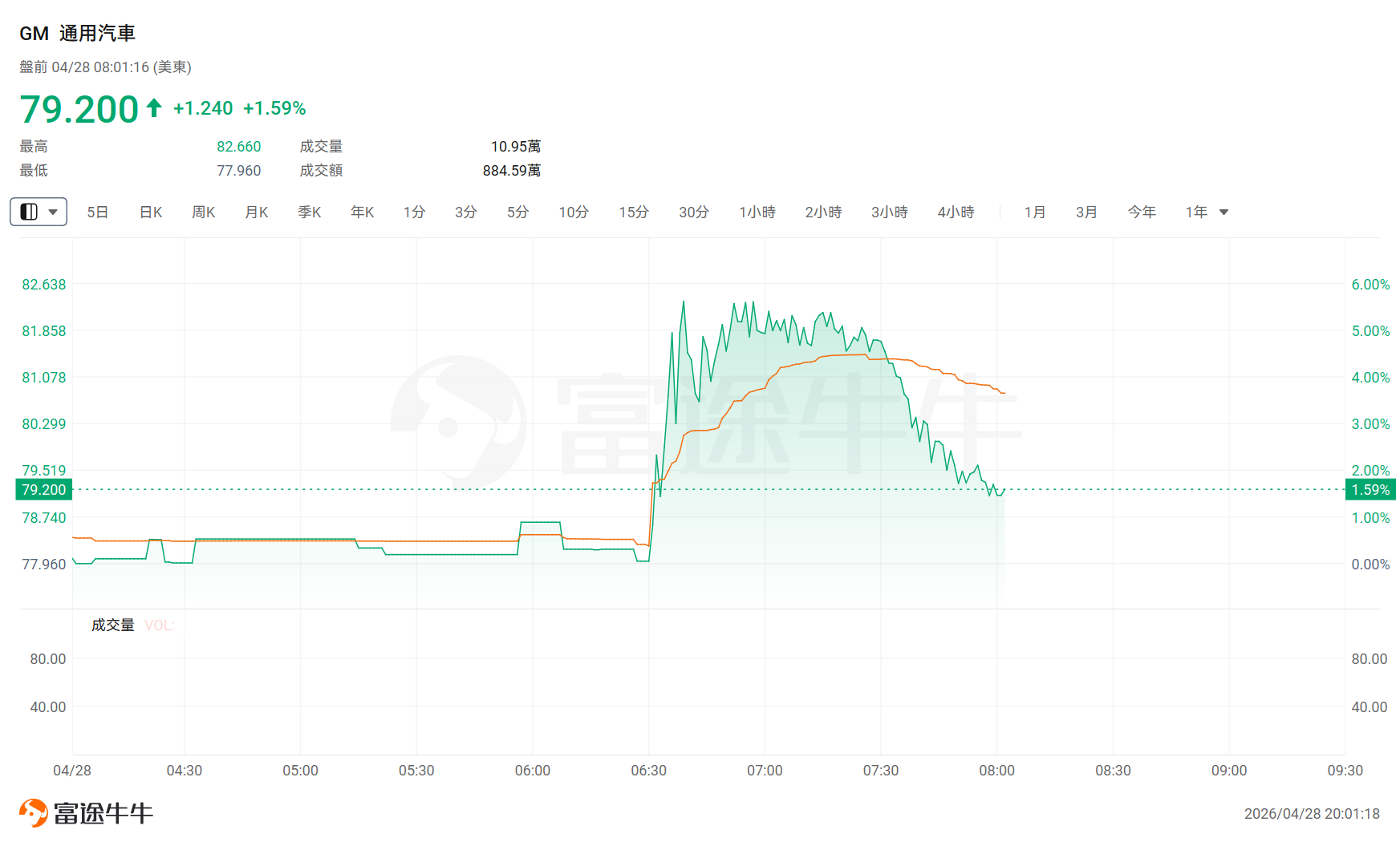
$General Motors (GM.US)$General Motors' U.S. shares once surged over 5% in pre-market trading, but as of the latest quote, they are now up 1.59%. In Q1, revenue reached $43.62 billion, slightly above market expectations of $43.4 billion, while adjusted earnings per share were $3.70 compared to market expectations of $2.60.
Palantir's expansion faces obstacles: German military publicly rejects cooperation; American AI defense software encounters setbacks in Europe.
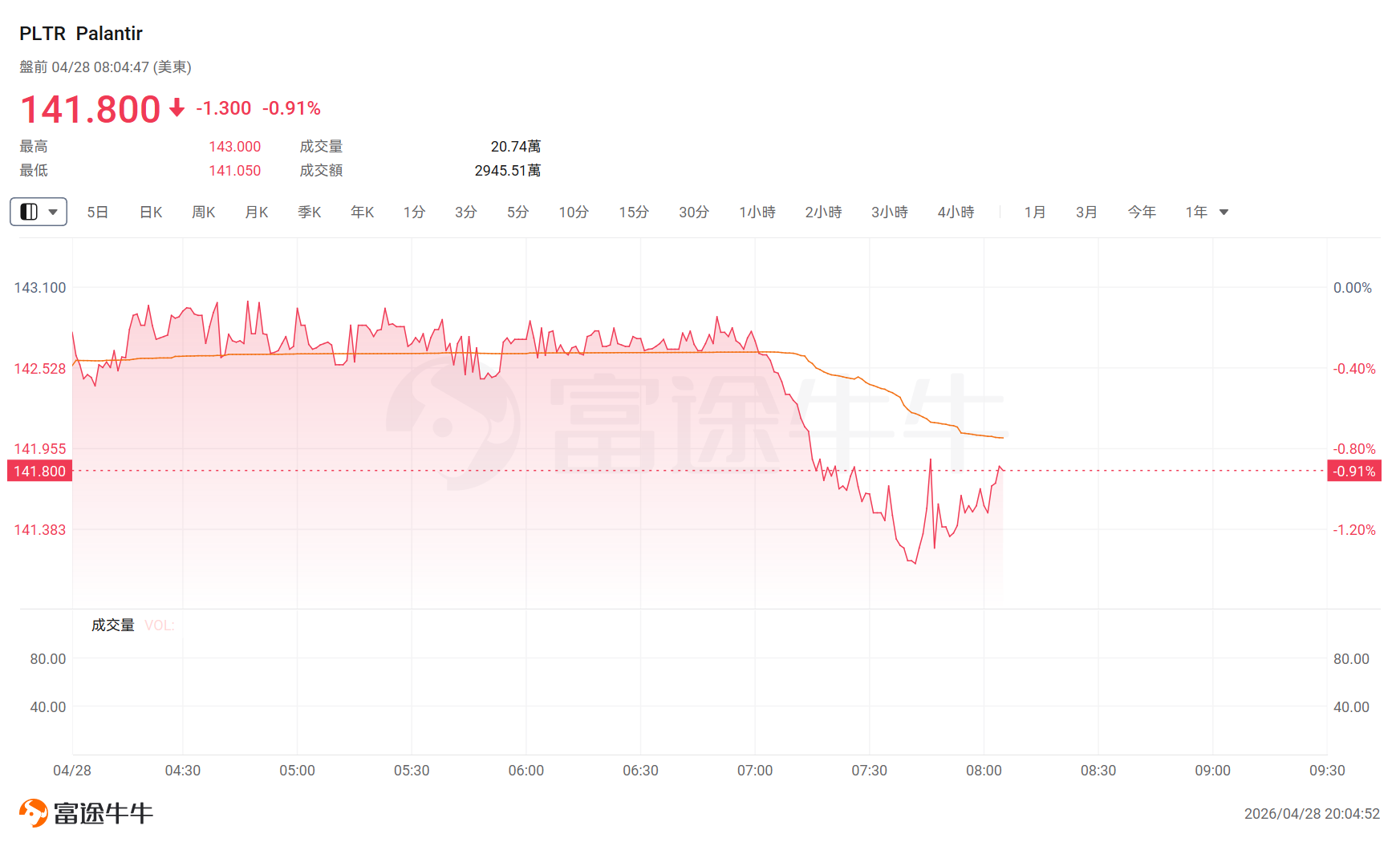
A senior German military officer told the media that the German armed forces currently have no plans to award a contract to the U.S.-based data analytics and defense software company. $Palantir (PLTR.US)$ Local media quoted Thomas Daum, who is in charge of cyber defense for the German military, as saying on Tuesday: "At this point, I see absolutely no indication that this will happen."
Daum’s wording was more direct than any previous diplomatic language. While the German military is actively seeking to leverage technologies such as artificial intelligence to rapidly analyze battlefield data in order to achieve faster data processing and tactical responses than humans, when it comes to core national databases, the bottom line is clear-cut—"Although we are very interested in the capabilities this system could offer if applied to our own databases, allowing corporate personnel access to national-level databases is simply unimaginable at present."
"Do no evil" becoming a thing of the past? Google refuses to follow Anthropic's lead in signing a classified AI cooperation agreement with the U.S. Department of Defense.
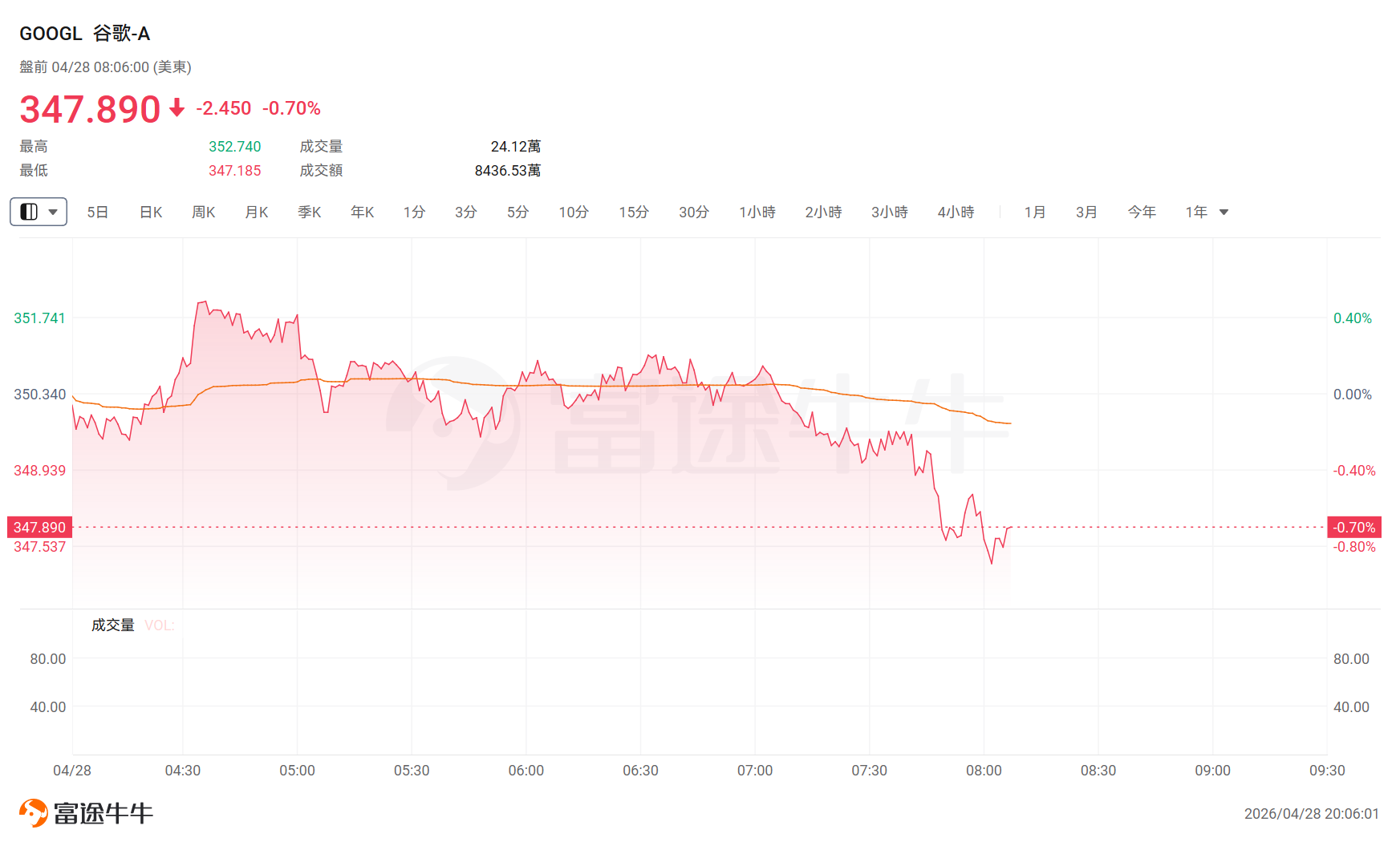
According to media reports citing people familiar with the matter, $Alphabet-C (GOOG.US)$ has joined the growing list of tech companies signing agreements with the U.S. Department of Defense, allowing its artificial intelligence (AI) models to be used for classified work. The report states that the agreement permits the U.S. Department of Defense to use Google's AI models for "any lawful government purpose." This aligns Google with OpenAI and Elon Musk’s xAI, both of which have also signed agreements to provide AI models for classified purposes.
Classified networks are used to handle a wide range of highly sensitive tasks, including mission planning and weapons targeting. According to the report, Google's agreement with the U.S. Department of Defense requires the company to assist in adjusting the security settings and filters of its AI as per government requirements. The contract includes provisions stating: 'Both parties agree that AI systems shall not be used for domestic mass surveillance or autonomous weapons (including target selection) without appropriate human oversight and control.' However, the report adds that the agreement also stipulates that Google does not have the authority to control or veto decisions regarding legitimate government actions.
Barclays disclosed a £66 billion exposure to non-bank loans, with MFS’s collapse leading to cumulative provisions of £200 million in losses.
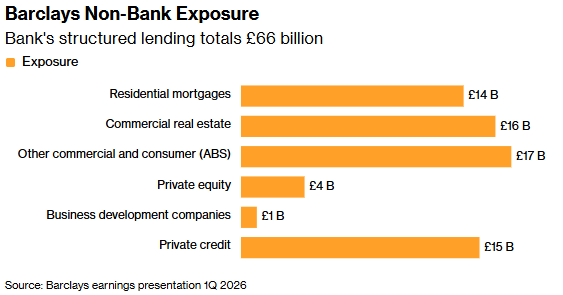
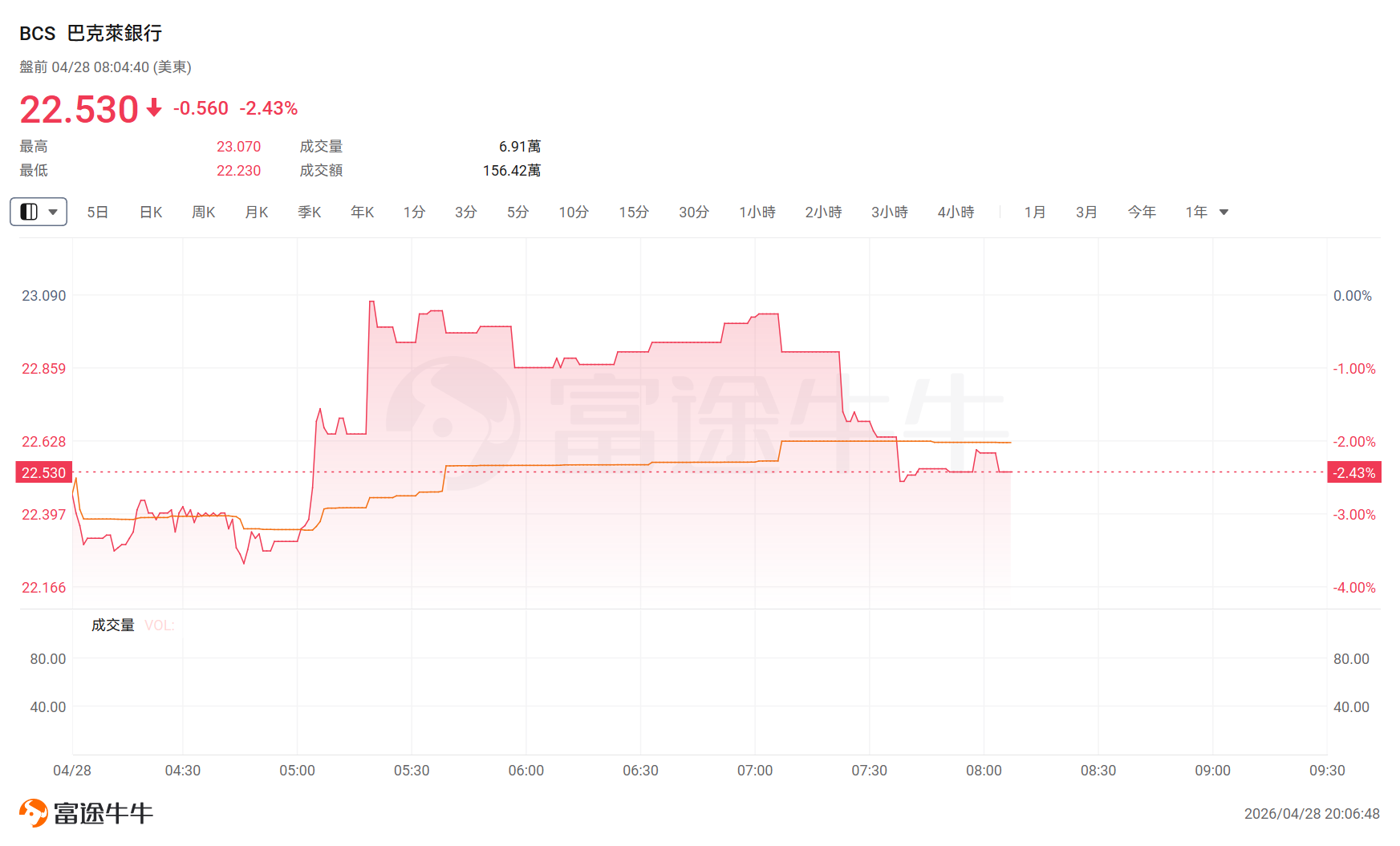
$Barclays (BCS.US)$ revealed its structured finance exposure to non-bank entities, amounting to £66 billion (approximately $89.2 billion), becoming the latest bank to disclose risk exposure in this area, which has recently made investors uneasy.
The British bank stated that the aforementioned exposure is primarily distributed across securitized products, “leaning towards primary counterparties capable of frequently reporting collateral performance.” Additionally, as of the end of the first quarter, Barclays’ exposure to private credit funds was approximately 15 billion pounds.
Another 1 billion pounds of exposure is linked to Business Development Companies, a common fund structure for packaging direct loans.
Barclays had previously indicated that it is scaling back parts of its asset-backed lending business after incurring losses due to the collapse of Market Financial Solutions Ltd. and Tricolor Holdings.
Barclays announced its first-quarter earnings on Tuesday, with profits meeting market expectations. The bank recorded a 200-million-pound (approximately 270-million-dollar) impairment loss related to MFS due to its exposure to a single company. This negative impact was offset by robust trading performance, leading to solid results in its investment banking division.
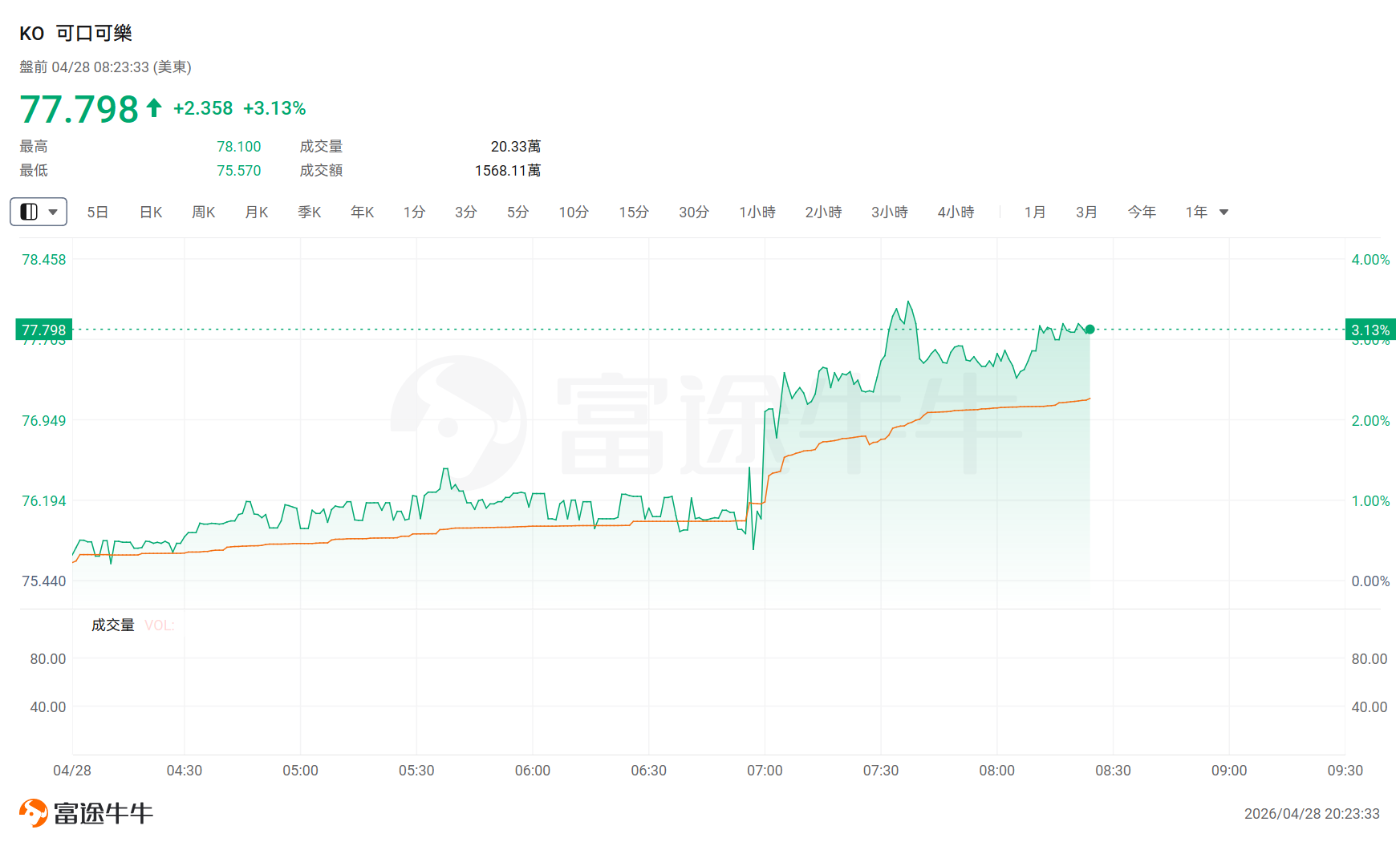
Coca-Cola Q1 Revenue Exceeds Expectations at $12.5 Billion; Mini-Packaging and Health-Oriented Strategies Pay Off, Full-Year Profit Guidance Raised
In the first quarter of 2026,$Coca-Cola (KO.US)$In the first quarter of 2026, revenue reached $12.5 billion and comparable EPS was $0.86, both surpassing expectations. Organic growth was 10%, with concentrate contributing 8 percentage points; operating margin improved to 35.0%. The mini-packaging and premium pricing strategies showed significant results, led by zero-sugar beverages and tea categories. Operating profit in the Asia-Pacific region declined by 14%, marking the only weak spot. The company raised its full-year comparable EPS growth guidance to 8%-9%.
Global Macro
JPMorgan and Blackrock are increasing their holdings in European short-term bonds to lock in yields, betting that Lagarde will adopt a more dovish stance than the market expects.
Following a recent sharp sell-off in European short-term government bonds, several large asset management firms, including JPMorgan Asset Management, Blackrock, and MFS Investment Management, are proactively increasing their positions in this asset class in an attempt to lock in current levels before yields retreat. Their core rationale is that the market has overestimated the likelihood of significant interest rate hikes by the European Central Bank within the year.
Middle East conflicts drive up inflation expectations, causing short-term government bond yields to soar.
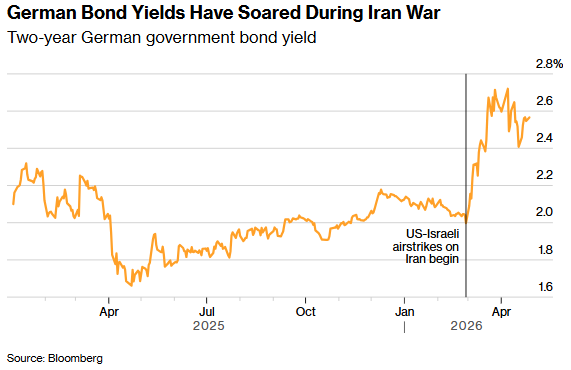
In recent months, driven by inflationary pressures triggered by the Middle East conflict, markets widely anticipate that the European Central Bank (ECB) will be compelled to implement significant interest rate hikes. The yield on Germany's two-year government bonds, which are most sensitive to interest rate changes, has climbed to its highest level in nearly two years.
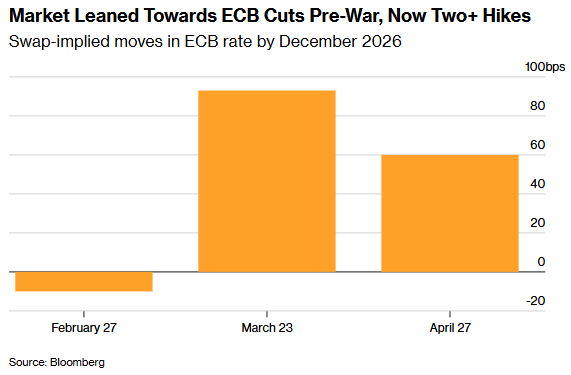
Currently, market pricing implies an expectation of approximately 60 basis points in ECB rate hikes within the year. The key question is whether this expectation will materialize.
This Thursday, the ECB will announce its latest interest rate decision and issue its outlook on economic prospects. At present, markets have almost entirely ruled out the possibility of a rate hike this week — whereas as late as the end of March, traders had priced in a 90% probability. ECB officials have repeatedly emphasized their reluctance to make hasty decisions, favoring a data-dependent wait-and-see approach. Lagarde’s remarks at the press conference will serve as the first test to verify the accuracy of the aforementioned institutional assessments.
Does the stock market bathed in light really need Hormuz?
Dongwu Securities analyst Chen Li notes that AI computing power stocks are experiencing remarkable gains, but the substantial price gap between crude oil spot and futures signals potential risks. The optical communications industry’s aggressive pursuit of low-power technologies like CPO and LPO essentially represents a technical hedge against energy anxiety stemming from computing demands — global energy instability has made electricity costs a marginal variable for AI expansion. Should the Iran conflict persist and result in prolonged crude oil supply disruptions, rising energy costs could erode valuations and demand, underscoring the need to balance the enthusiasm for 'light' with the constraints of 'oil'.
AI Disrupts the Most Obscure Link: Terminal Value Fluctuations Are Reassessing the Entire U.S. Stock Market
In a report released on April 27, Goldman Sachs estimated that approximately 75% of the S&P 500 Index's current equity value is derived from terminal value, nearing the highest levels in twenty-five years and echoing the optimism seen during the dot-com bubble era. Goldman Sachs also calculated that a one-percentage-point decline in long-term growth assumptions would lead to an approximate 15% reduction in the enterprise value of S&P 500 constituents; for high-growth stocks, the impact could reach as high as 29%.
Goldman Sachs stated that the debate surrounding AI disruption — and the resulting uncertainty in terminal value — is expected to persist for at least several quarters. 'The threat of disruption will likely remain a persistent headwind until AI applications enter a more mature phase.'
Powell's 'Farewell Day' + Mag Seven Earnings Night: What Does the Market Have to Withstand the Pressure?
April 29 will be the most crowded trading day of the year.
Three major events are squeezed into the same day: at 10 a.m. local time, the Senate Banking Committee will vote on Kevin Warsh's nomination as Powell’s successor; at 2 p.m., the FOMC will issue its interest rate statement—this is Powell’s last as Federal Reserve Chair; after market close, Microsoft, Alphabet, Meta, and Amazon will release their Q1 earnings reports.
Market expectations are clear—the CME FedWatch shows a near 100% probability of maintaining rates unchanged, the Nasdaq closed at a record high last week, and 82% of companies reporting this quarter have exceeded expectations. Three events, three optimistic expectations, all lined up independently.
The problem lies in the fact that these optimistic expectations share the same foundation: if the Fed can continue to 'look through' oil prices at $108, keeping the interest rate path unchanged, the forward P/E ratio of 25x for tech stocks can be 'sustained.' Any hawkish signal from Powell or any crack in the Magnificent Seven earnings reports could trigger seismic reactions.
Top 20 pre-market trading volume stocks in the U.S.
Reminder of the US stock market macroeconomic calendar
(The following times are in Beijing Time)
20:15 US Weekly ADP Employment Change for the Week Ending April 11 (in thousands)
 Looking to pick stocks or analyze holdings? Want to understand opportunities and risks in your portfolio? For all your investment-related questions, just ask Futubull AI!

Editor/Lee