Market Snapshot
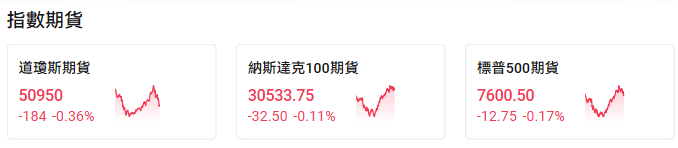
As of press time, futures for the three major U.S. stock indices showed a mildly lower and volatile pre-market trend. Dow Jones Industrial Average futures fell 0.36%, S&P 500 futures declined 0.17%, and Nasdaq 100 futures dropped 0.11%.
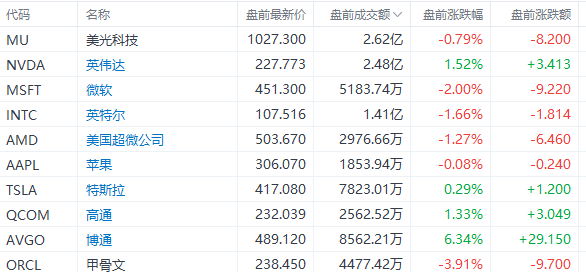
$Star Tech Companies (LIST2518.US)$ Pre-market trading was mixed, with Broadcom up more than 6% and Oracle down nearly 4%.
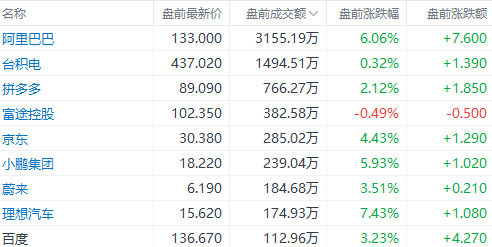
$China Concept Stocks (LIST2517.US)$ Most stocks rose in pre-market trading, with Li Auto up over 7%, Alibaba gaining more than 6%, and XPeng Group rising nearly 6%.
Individual Stock News
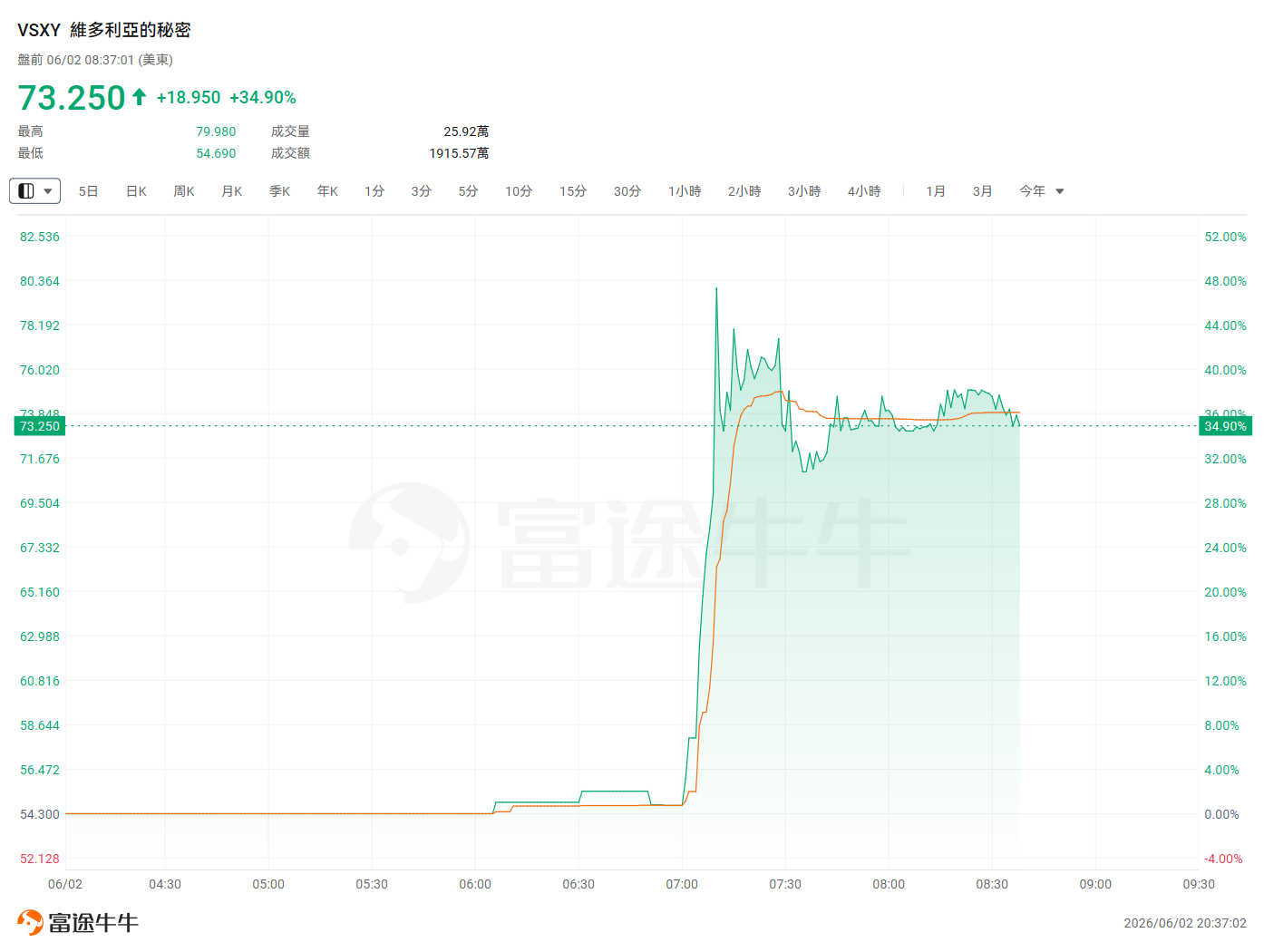
 Victoria's Secret surged nearly 50% in U.S. pre-market trading after the company issued second-quarter sales guidance that exceeded expectations.
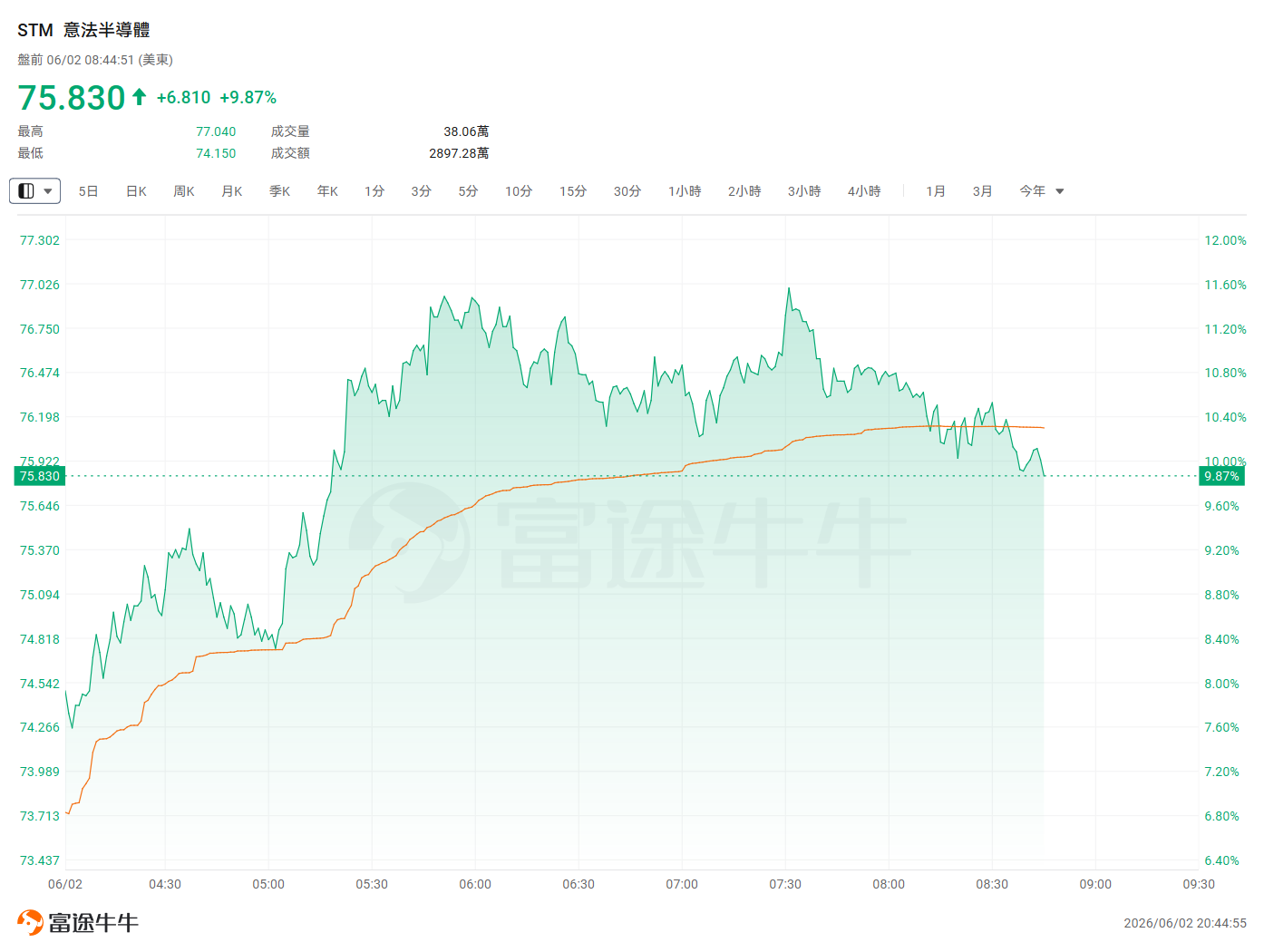
STMicroelectronics shares rose more than 10% in pre-market trading in the U.S.
$STMicroelectronics (STM.US)$ On Tuesday, it announced an upward revision of its full-year revenue target for its data center business, citing sustained strong demand driven by AI infrastructure and progress in capacity expansion.
Kioxia Investor Day: First dividend ever due to AI; samples of tenth-generation flash memory to be delivered this summer; average annual capital expenditure of JPY 470 billion
The explosive growth in AI inference workloads is transforming $Kioxia Holdings (285A.JP)$ a flash memory manufacturer long plagued by cyclicality into a core supplier of data center infrastructure.
At its Investor Day on June 2, Kioxia announced it would implement a progressive dividend policy—the company’s first dividend commitment since its initial public offering. Concurrently, the company disclosed that samples of its tenth-generation BiCS FLASH memory will begin shipping this summer and outlined an average annual capital expenditure of approximately JPY 470 billion for fiscal years 2026 through 2028, a significant increase from FY25 levels.
The announcement of its inaugural dividend has opened the door to new investor segments—particularly institutional investors with dividend requirements and Japanese retail investors who can now consider adding Kioxia to their portfolios. According to Bloomberg, Kioxia’s stock, which had performed modestly since its listing at the end of 2024, has surged more than 30-fold over the past year amid the AI-driven market rally. The company achieved a net cash position in Q1 of FY26 and provided an operating margin guidance of 74% for the quarter.
SK Hynix: Plans to double memory production capacity over five years; shortages to persist until 2030
SK Hynix announced it will double its wafer production capacity over the next five years. Chairman Choi Tae-sun confirmed that the global memory chip supply shortage could persist until 2030. The company’s market capitalization has surpassed $1 trillion for the first time, and it holds a 58% share of the HBM market. Goldman Sachs has significantly raised its 2028 operating profit forecast for the company by 24%.
Following in the footsteps of Dell and Lenovo, server giant Hewlett Packard Enterprise reported revenue far exceeding expectations and significantly raised its guidance.
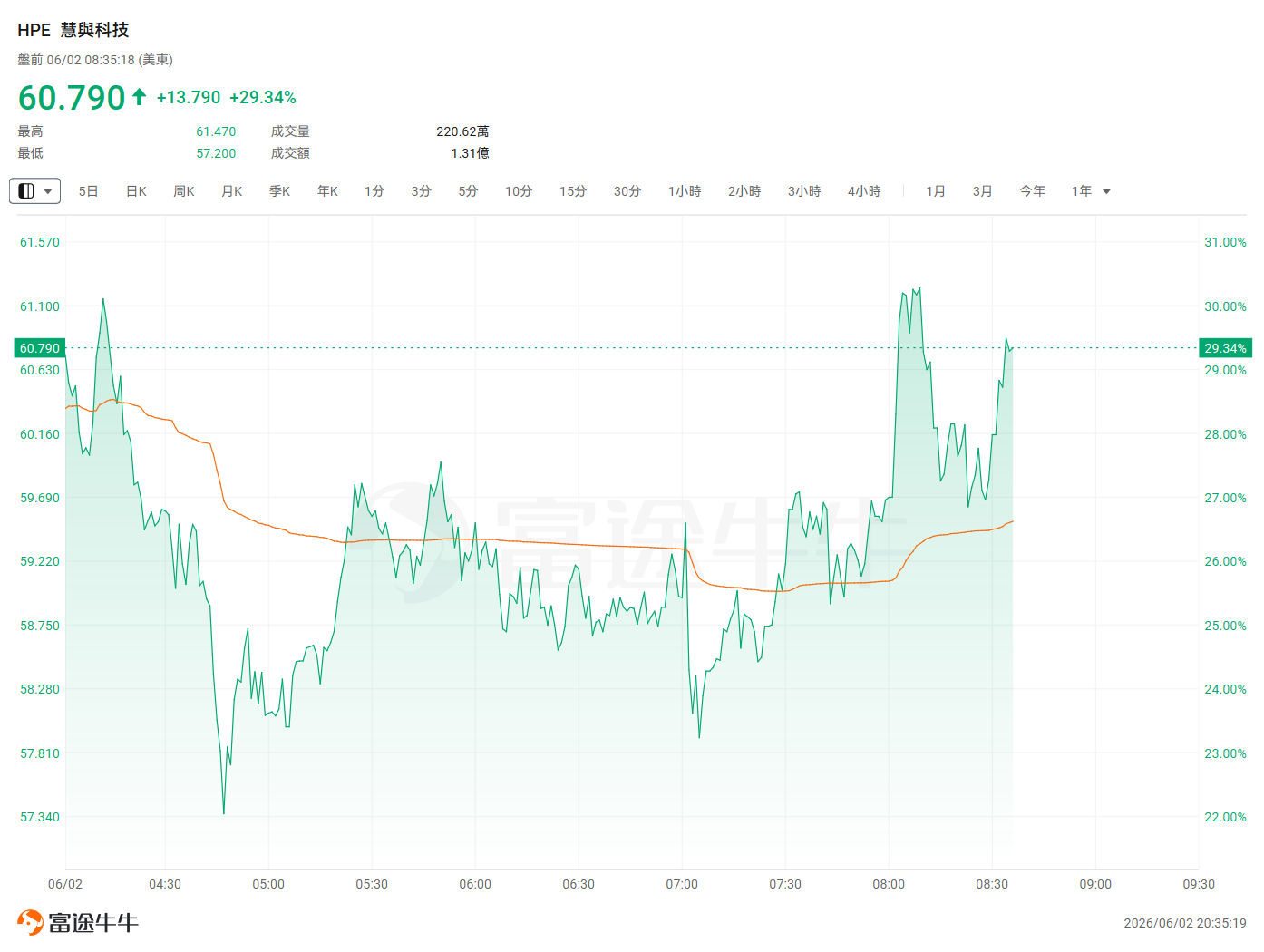
After the U.S. market close on June 1,$Hewlett Packard Enterprise (HPE.US)$reported second-quarter fiscal results, with Q2 revenue reaching $10.7 billion, up 40% year-over-year, exceeding analyst expectations by approximately $900 million.
Network revenue surged 148% year-over-year, while server revenue also beat expectations by nearly $1 billion. Adjusted earnings per share came in at $0.79, far surpassing the market consensus of $0.53—the largest positive earnings surprise since 2018.
Arm: On Track to Achieve $15 Billion AI Chip Revenue Target Ahead of Schedule
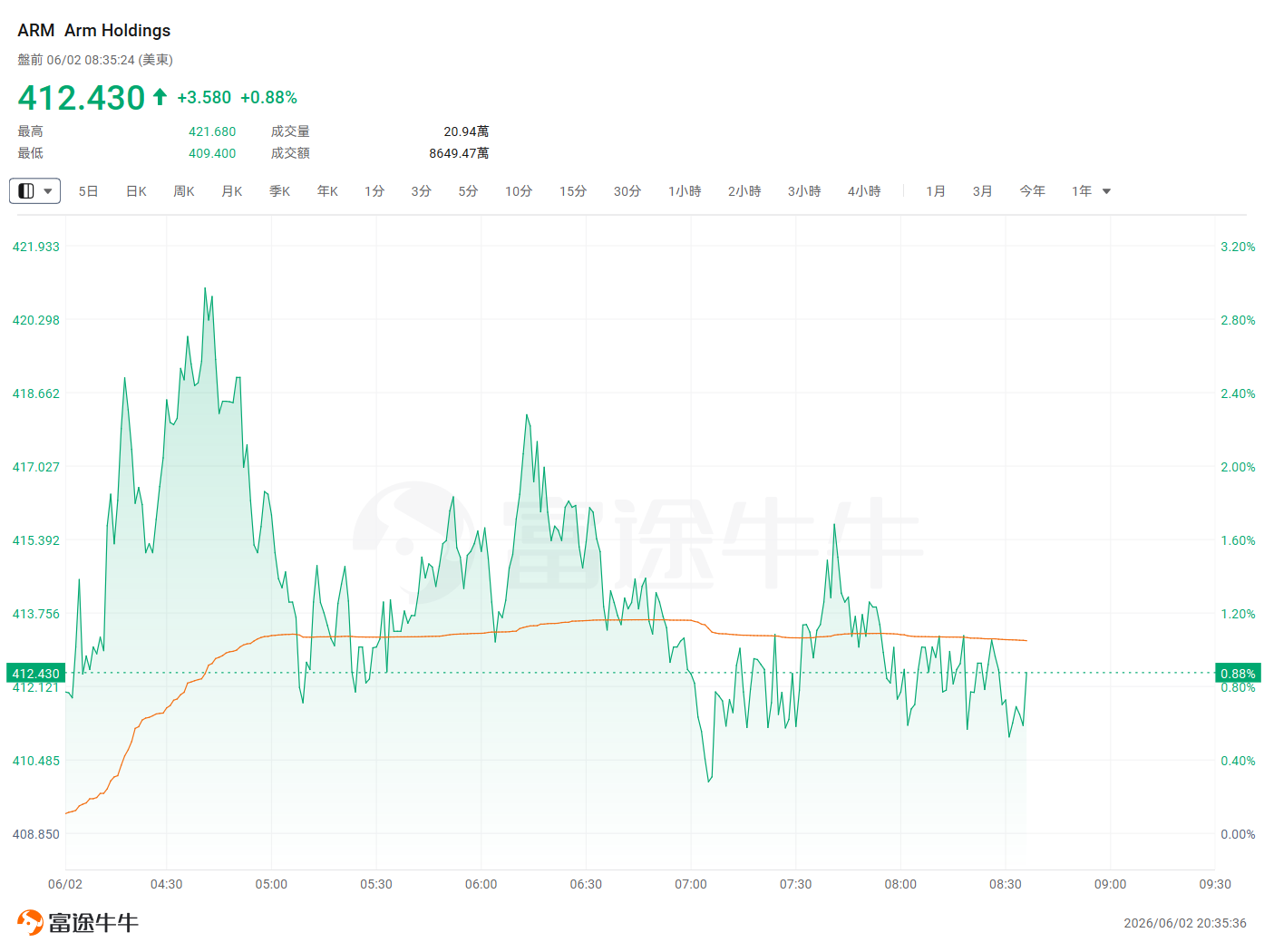
$Arm Holdings (ARM.US)$ The CEO stated that due to stronger-than-expected demand fueled by the AI boom, Arm Holdings is on track to achieve its goal of $15 billion in sales of its self-designed chips earlier than anticipated. CEO Rene Haas expressed that he is “very confident” the company will reach this target by the end of the decade, though there are signs it could happen even sooner. Arm announced it will begin selling self-designed chips—a major strategic shift for the company. Meta Platforms has become the first major customer for Arm’s inaugural chip (AGI CPU).
Jensen Huang: NVIDIA has sufficient production capacity to meet chip demand, and the Vera CPU will become a new major growth driver; N2X and N3X are already under development.
① NVIDIA CEO Jensen Huang stated that despite supply constraints, the company has sufficient capacity to meet the robust market demand for CPUs and GPUs driven by AI.
② Jensen Huang announced NVIDIA’s first PC-based super chip, RTX Spark (N1X), revealed that N2X and N3X are under development, and disclosed plans to launch a smaller-sized N1 chip.
Jensen Huang and Marvell CEO in joint discussion: The future of AI hinges not on computing power but on connectivity—'Use copper whenever possible; use optics only when absolutely necessary!'
After taking the stage, Huang set the tone with a single sentence: "Ladies and gentlemen, the next trillion-dollar company"—referring directly to Marvell. The audience erupted in applause. According to an article by Wall Street News, this moment underscored NVIDIA’s previously announced $2 billion strategic investment in Marvell and marked the latest milestone in the two companies’ joint efforts to advance AI data center infrastructure.
With the release of its most recent quarterly earnings, the market is closely watching how much Marvell stands to benefit from the AI supercomputing cycle. In response, Murphy delivered a compelling performance: a decade ago, data center revenue accounted for less than 10% of Marvell’s total; last quarter, that figure exceeded 75% and is accelerating at an annual rate of approximately 40%. Based on its latest guidance, Wall Street analysts widely expect Marvell’s revenue next year to reach a staggering $16.4 billion.
IBM plans to invest over $10 billion in quantum computing over the next five years, with the goal of delivering the world's first large-scale, fault-tolerant quantum computer by 2029.
$IBM Corp (IBM.US)$ Announced plans to invest more than $10 billion in quantum computing over the next five years. This investment will span research and development, capital expenditures, manufacturing scale-up, ecosystem partnerships, and mergers and acquisitions. These areas are collectively designed to accelerate IBM’s quantum roadmap toward delivering the world’s first large-scale, fault-tolerant quantum computer by 2029. IBM has a clear roadmap to deliver IBM Quantum Starling—the world’s first large-scale, fault-tolerant quantum computer—by 2029, capable of performing 20,000 times more operations than current systems. Starling will lay the foundation for IBM Quantum Blue Jay, a system that will execute one billion quantum operations on 2,000 qubits. These systems will provide the transformative scale required for quantum technology to address the most challenging and currently intractable problems in science and industry. With support from the U.S. Department of Commerce, IBM recently announced plans to launch Anderon, the world’s first pure-play quantum wafer foundry. IBM will invest $1 billion in cash into Anderon, along with significant intellectual property, assets, and a highly skilled workforce.
NVIDIA Spectrum-X Ethernet silicon photonics technology is now in full mass production, delivering five times higher network energy efficiency compared to conventional transceivers.
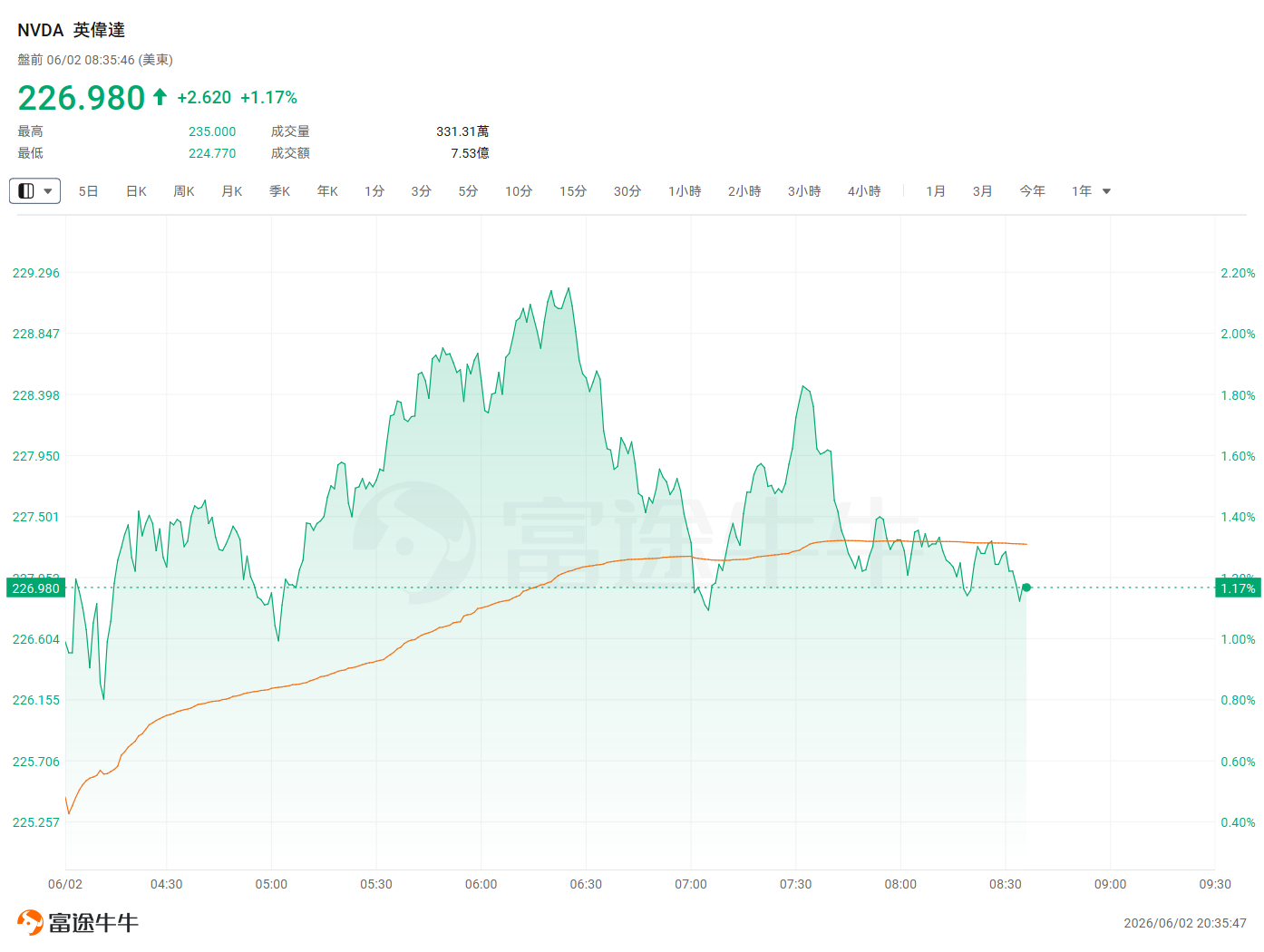
$NVIDIA (NVDA.US)$It was announced that NVIDIA Spectrum-X Ethernet silicon photonics technology is now in full mass production. The next-generation Spectrum-X switches are built using co-packaged optics (CPO) technology, enabling horizontal and cross-regional scaling of AI factories based on the NVIDIA Vera Rubin platform within data centers. Spectrum-X Ethernet silicon photonics technology exemplifies NVIDIA’s full-stack co-design philosophy. Compared to networks using traditional transceivers, Spectrum-X delivers five times higher energy efficiency, five times greater AI uptime, and 1.3 times faster deployment.
Tesla's Shanghai Gigafactory Achieves Highest Monthly Deliveries of the Year in May, Up Nearly 40% Year-over-Year
According to the latest statistics from the China Passenger Car Association,$Tesla (TSLA.US)$Giga Shanghai delivered over 85,000 electric vehicles in May, setting a new monthly delivery record for 2026, with a year-over-year increase of 39.4% and a month-over-month rise of 8%. As Tesla’s largest global export hub, Giga Shanghai accounts for more than half of the company’s total global deliveries. The six-seat luxury SUV Model Y L produced at Giga Shanghai is being rapidly delivered to multiple Asia-Pacific markets, including Singapore, Australia, South Korea, Thailand, and the Philippines.
Intel’s Lip-Bu Tan: CPU demand continues to grow, with many CEOs calling to request additional supply.
$Intel (INTC.US)$CEO Lip-Bu Tan stated in a media interview at COMPUTEX Taipei that CPU demand is rising while supply remains constrained. Over the past four weeks, numerous CEOs have called him directly requesting more CPUs—a significant opportunity for Intel.
Microsoft Build Conference kicks off today: On-device AI for Windows takes center stage, shaking up the high-end PC landscape.
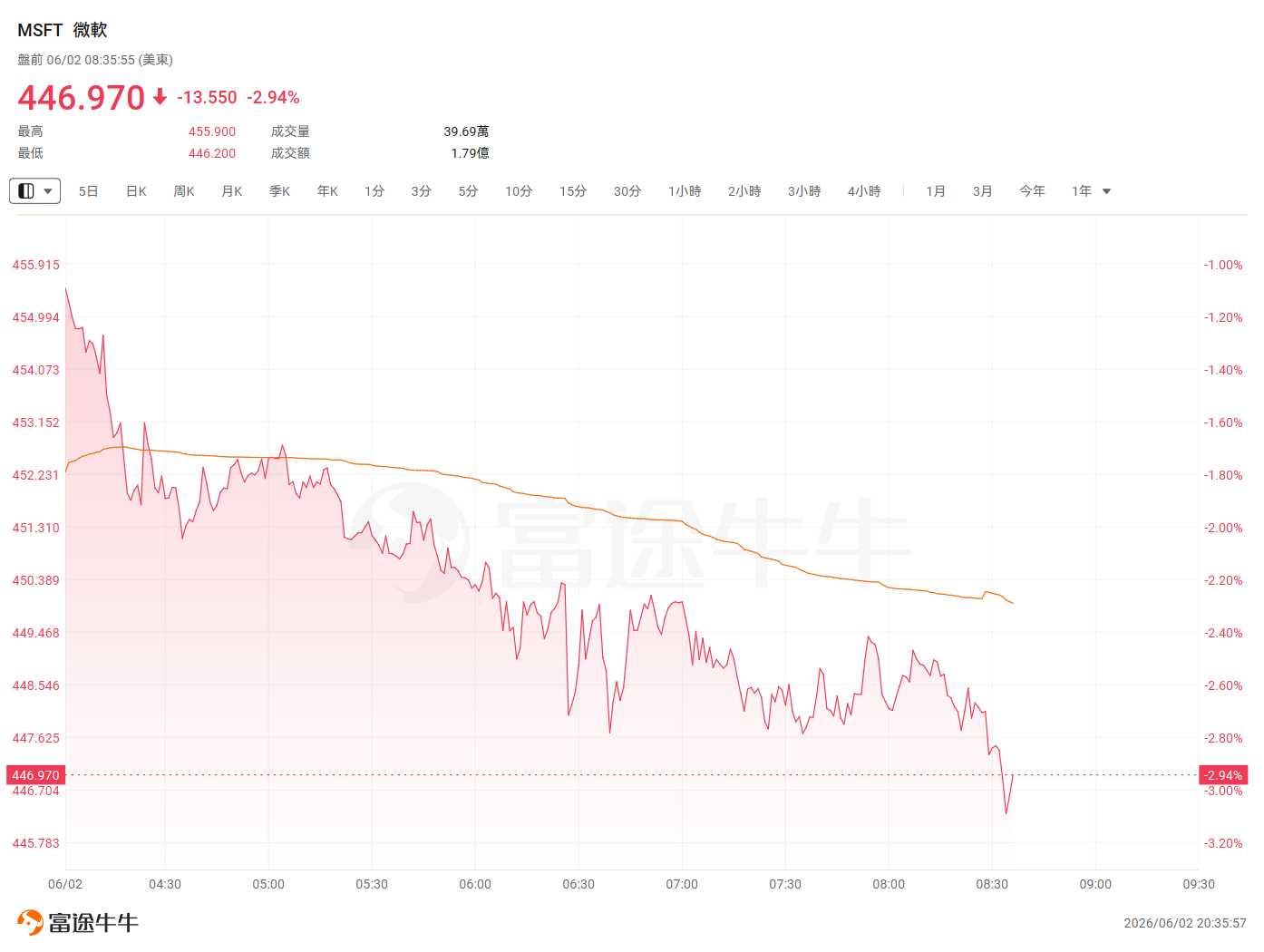
$Microsoft (MSFT.US)$The Build 2026 developer conference will be held on June 2–3 at Fort Mason in San Francisco, with a focus on practical applications of cutting-edge AI technologies. A series of new AI models are expected to be unveiled, including a code-specialized model designed to enhance the competitiveness of GitHub Copilot, Microsoft’s code assistant. Although GitHub Copilot previously held a first-mover advantage in AI-powered coding assistance, its market share has been steadily eroded by competitors such as Cursor and Claude Code.
Global Macro
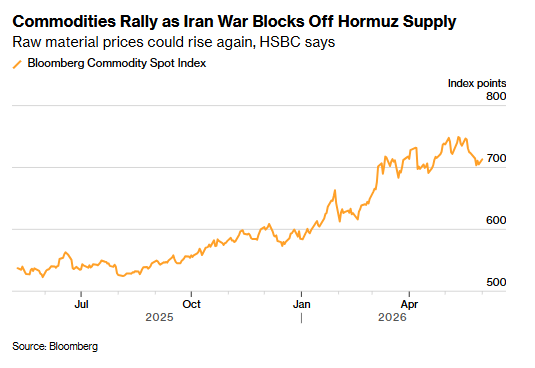
Unlike previous supercycles! HSBC warns: commodities are caught in a 'super squeeze'—a prolonged closure of the Strait of Hormuz could trigger a 'tipping point.'
Escalating tensions near the Strait of Hormuz continue to disrupt the pricing dynamics of global commodity markets. HSBC Holdings contends that commodity markets are now in a state of 'super squeeze.' If the Strait of Hormuz remains effectively closed, inventories will be further depleted, potentially pushing certain commodities toward a critical 'tipping point.'
Notably, HSBC strictly distinguishes the current trend from historical commodity 'super cycles.' The bank’s analyst team, including Paul Bloxham, explicitly stated that the overall commodity cycle remains in what is termed a 'super bull market,' but 'this is fundamentally different from earlier super cycles, as the core driver of the current rally stems from supply shocks rather than systemic demand surges.'
Memory Super Cycle Provides a Floor; Korean Won Poised for Appreciation — 'Memory Chip Duopoly' Continues to Fuel South Korea's Bull Market Rally
A senior trader with over 25 years of experience at Wall Street financial giant State Street stated that the Korean won could stage a significant rebound in the second half of this year, as persistent selling pressure from foreign investors on local Korean equities continues to ease amid a super bull market in Korea’s stock market—fueled by a 'memory supercycle' attracting global capital inflows—and as a sustained current account surplus, driven by surging global demand for memory chips, supports the Korean currency.
Seo Ji-wang, Head of FX Trading and Sales in the Markets Division at State Street’s Seoul branch, said in a media interview that if global risk sentiment continues to improve alongside substantial foreign investor re-entry into Korean equities, the USD/KRW exchange rate could strengthen toward just above 1,400 won per U.S. dollar by year-end—a relatively robust level. On Tuesday, the won traded in the foreign exchange market at around 1,517 won per U.S. dollar.
Reserve Bank of India Reportedly Sold $12 Billion in Gold to Shore Up Foreign Exchange Reserves
Based on publicly available data, Bloomberg Economics indicated that the Reserve Bank of India may have sold part of its gold reserves to shield its foreign exchange assets from spillover effects stemming from the conflict in the Middle East.
Senior India Economist Abhishek Gupta wrote in a report that over the two weeks ending May 22, the Reserve Bank of India likely sold approximately USD 12 billion worth of gold reserves while purchasing USD 7.5 billion in foreign exchange assets.
Although India raised import tariffs on gold—which should have increased the value of its gold and dollar-denominated assets—the reported value of gold reserves held by the central bank declined. Gupta argues this suggests the Reserve Bank is selling gold.
PIMCO, a leading asset manager, stated that the recent rise in U.S. Treasury yields is not driven by artificial intelligence; the primary culprits remain inflation and expectations of further interest rate hikes.
PIMCO identified escalating geopolitical tensions in the Middle East as the core driver behind the recent Treasury sell-off. In a recent report, Lotfi Karoui, Multi-Asset Credit Strategist at the firm, explicitly noted that the conflict involving Iran has heightened inflation risks and prompted markets to reassess the Federal Reserve’s policy trajectory—making this explanation more compelling than the narrative that AI-related financing is pushing up long-term rates. The report stated: 'The structural pressure stemming from AI infrastructure investment is real, but its impact unfolds gradually and has not driven the yield movements currently capturing investor attention.'
With energy prices surging, U.S. inflation has already begun to heat up. The U.S. Consumer Price Index (CPI) rose 0.6% month-over-month in April, climbing to a year-over-year rate of 3.8%—the highest level since May 2023. Market expectations that the Federal Reserve, under newly appointed Chair Kevin Warsh, might soon initiate rate cuts have significantly cooled.
As U.S.-Iran negotiations have once again stalled, traders are increasingly betting that the Fed’s next move will be a rate hike. Current interest rate swap data indicates that markets have fully priced in a rate increase by March 2027, with the probability of a Fed rate hike before December exceeding 60%.
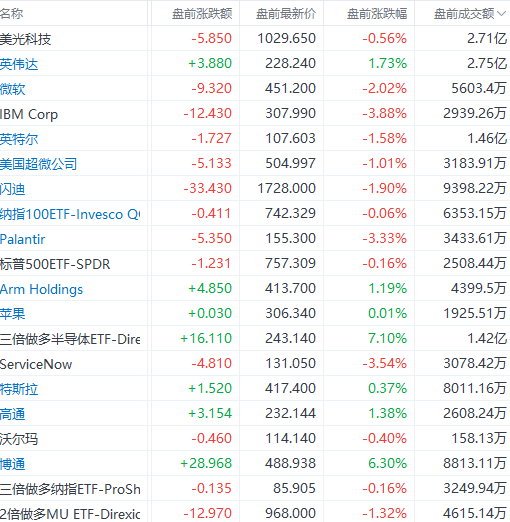
Top 20 pre-market trading volume stocks in the U.S.
Reminder of the US stock market macroeconomic calendar
(The following times are in Beijing Time)
22:00 U.S. April JOLTs Job Openings (in ten thousands)
 Looking to pick stocks or analyze them? Want to know the opportunities and risks in your portfolio? For all your investment-related questions,just ask Futubull AI!

Editor/Lee