
Market Snapshot
U.S. nonfarm payrolls for May, seasonally adjusted, rose by 172,000, exceeding market expectations of an 85,000 increase. The U.S. unemployment rate held steady at 4.3% in May, unchanged for the second consecutive month and in line with market forecasts.
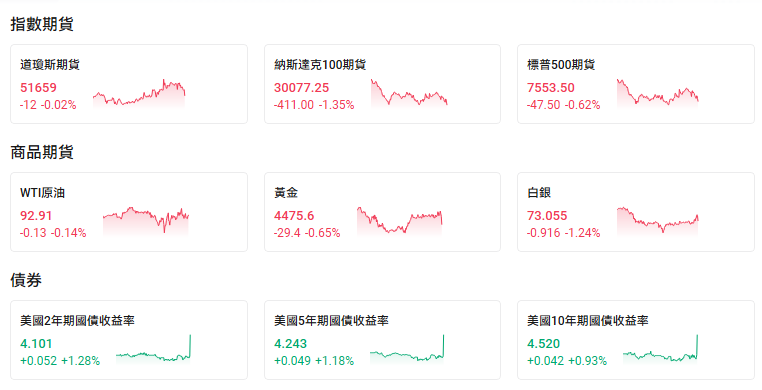
Following the release of the data, as of this report, futures on the three major U.S. stock indices declined, gold prices fell, the U.S. dollar index rose, and U.S. Treasury yields increased.
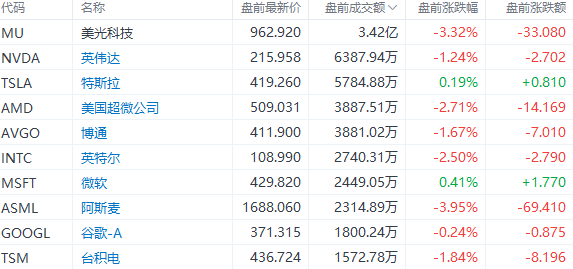
$Star Tech Companies (LIST2518.US)$ The pre-market session was generally weak, with ASML Holding and Micron Technology both down more than 3%.
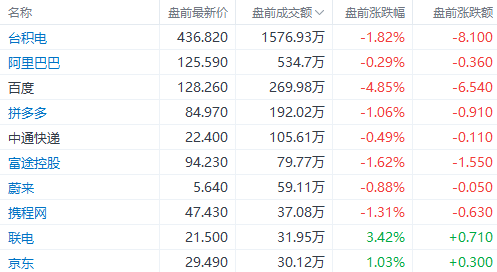
 $China Concept Stocks (LIST2517.US)$ Broad pre-market declines were observed, with United Microelectronics rising over 3% and Baidu falling nearly 5%.
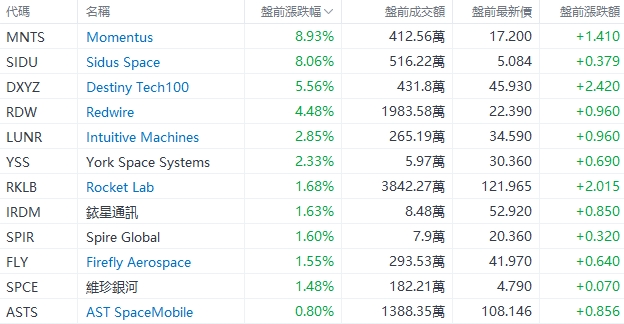
$Space (LIST2556.US)$ Sector surged in pre-market trading, $Momentus (MNTS.US)$ 、 $Sidus Space (SIDU.US)$ Surged over 8%.
Individual Stock News
Broadcom CEO Discusses Largest AI Chip Bet
$Broadcom (AVGO.US)$ President and CEO Hock Tan delivered remarks at the Bloomberg Technology 2026 conference on semiconductor demand, AI scaling, and revenue outlook. Goldman Sachs previously cautioned against extrapolating Broadcom’s below-consensus guidance to the entire semiconductor sector, yet market attention remains focused on the long-term demand thesis for custom AI chips (ASICs). As a core supplier of custom AI chips to tech giants such as Google and Meta, Broadcom’s assessment of AI chip demand serves as a key barometer for the broader semiconductor industry.
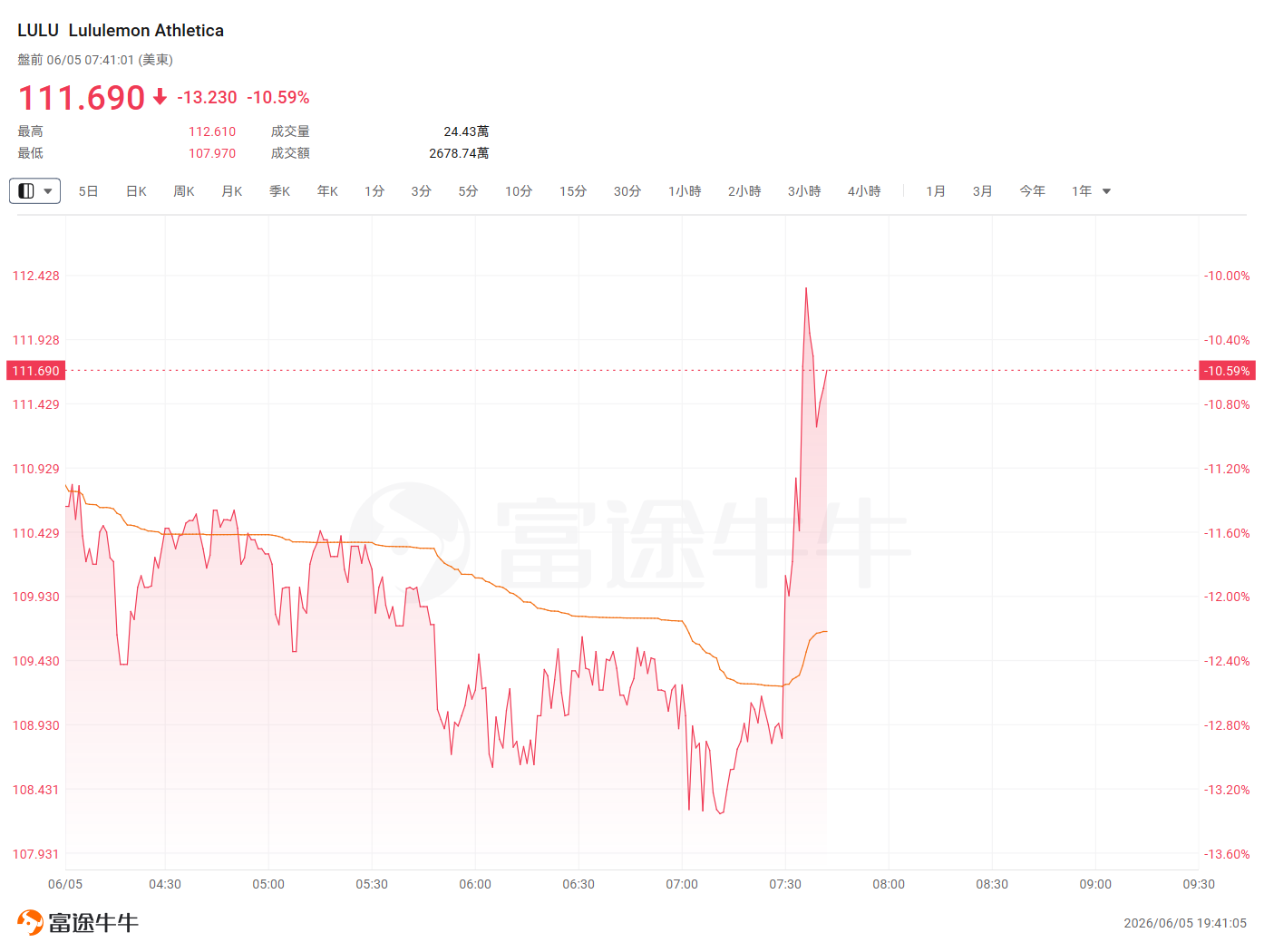
Downgraded Earnings Guidance Intensifies Concerns Over Growth Recovery! Lululemon Athletica Plunges 10% in Pre-Market Trading
Yoga apparel leader $Lululemon Athletica (LULU.US)$ U.S. stocks plunged 10% in pre-market trading on Friday, as the company lowered its quarterly and full-year earnings guidance. Combined with slowing domestic consumer demand in the U.S., intensifying industry competition, and rising import tariffs increasing costs, market concerns over the company’s ability to return to profitability have rapidly intensified.
Glass substrates are expected to reach commercialization by 2027, with rising costs of Taiwan Semiconductor’s CoWoS packaging accelerating adoption of this technology.
According to South Korean media reports, glass substrates are expected to enter early commercialization in 2027, begin capacity ramp-up in 2029, and achieve full-scale mass production starting in 2030. The report states that $NVIDIA (NVDA.US)$ and $Alphabet-C (GOOG.US)$ are the most likely end customers to adopt this technology first, as both companies are the most influential players in the AI accelerator chip market. $Taiwan Semiconductor (TSM.US)$ Rising CoWoS costs are accelerating the adoption of this technology. A CoPoS pilot production line has already been established, aligning with industry projections of early commercialization in 2027 and full-scale mass production by 2030. Currently, NVIDIA and Google may be the first to adopt it, while major players such as Intel, Samsung Electro-Mechanics, and SKC have already begun strategic moves to secure positions in this emerging segment.
Jensen Huang Revisits South Korea to Spotlight Robotics: NVIDIA Bets with Korean Firms on the Next Golden Opportunity
$NVIDIA (NVDA.US)$ CEO Jensen Huang arrived in South Korea this Friday, marking his second visit to the country in seven months. He publicly stated that the robotics industry will become South Korea’s next major pillar industry, signaling NVIDIA’s deepening collaboration with local Korean enterprises—expanding beyond the existing chip supply chain into two new domains: robotics and AI-powered smart factories.
Upon arriving at Gimpo International Airport in South Korea from Taiwan, Jensen Huang told reporters, “As a global manufacturing hub, South Korea offers the ideal environment to deploy our in-house robotics and embodied AI technologies, empowering end-to-end industrial adoption across the entire domestic value chain.” In fact, South Korea is a leading manufacturing powerhouse in Asia, home to globally dominant manufacturers in semiconductors, consumer electronics, automobiles, and shipbuilding. He added, “Semiconductor manufacturing will fully transition toward robotics and AI-driven operations in the future, creating an exceptional window of opportunity for collaboration between NVIDIA and South Korea’s domestic semiconductor firms.”
During this visit to South Korea, Jensen Huang has finalized meeting schedules with five leading Korean conglomerates: Hyundai Motor, LG Group, SK Hynix, Samsung Electronics, and Naver. When asked what benefits his visit would bring to South Korea, he humorously replied, “I didn’t bring any gifts—but I’ve brought a massive volume of industrial orders for Korea.”
SpaceX’s Historic IPO Roadshow Turns into a Celebrity Event: Wall Street Titans Become Fans, Ignoring the Prospectus and Focusing Solely on Elon Musk
Elon Musk continues to captivate investors with his vision for the future. Zhitong Finance noted that as the retail-focused marketing campaign for this deal kicks off, any skepticism regarding $Space Exploration Technologies (SPCX.US)$ the record-breaking IPO—whether concerning valuation, the company’s growth trajectory, or technical execution—has been set aside. At an investor event hosted by Jamie Dimon at JPMorgan’s headquarters, many attendees lavished praise on the world’s richest person, extolling his character and choosing instead to focus on the grand vision ahead.
“This is an epic event,” said Sid Pagidipati, founder and chairman of Ayon Capital. “I believe this company will become the largest, most substantial, and most iconic enterprise in human civilization.” Although Pagidipati said he would initially cap his exposure at 1%, his support for SpaceX remains unwavering. “As long as Elon is alive, I have no doubts whatsoever,” he stated.
In-House Compute Capacity Falls Short! Apple’s New Siri Reportedly Leverages Google Cloud and NVIDIA Chips to Unlock Advanced AI Capabilities
According to reports, Apple plans to launch a new version of Siri as early as next week, with some complex queries handled via Google Cloud and $NVIDIA (NVDA.US)$ Blackwell B200 GPU processing. According to reports, the new version of Siri will also adopt NVIDIA confidential computing technology to ensure end-to-end encryption throughout the data processing pipeline.
Apple’s Worldwide Developers Conference (WWDC 2026) will officially take place from June 8 to 12, Pacific Time. One of the major highlights of this year’s event is Apple’s anticipated unveiling of a completely reimagined Siri—the most significant overhaul in nearly 15 years.
Media outlets noted that Apple’s decision to leverage Google Cloud and NVIDIA chips “runs counter to the company’s long-standing strategy of maintaining control over all critical components of its products.”
NVIDIA finalizes HBM4 supply chain: Three global memory giants jointly awarded Vera Rubin supply qualification
$NVIDIA (NVDA.US)$ CEO Jensen Huang confirmed for the first time that the company has completed qualification certification of the world’s three major memory chip manufacturers, which will supply NVIDIA’s AI accelerators with their most advanced high-bandwidth memory products.
Jensen Huang has formally approved Samsung Electronics, SK hynix, and Micron Technology (MU.US) to supply HBM4 memory, a critical component essential for NVIDIA’s next-generation Vera Rubin AI computing platform. These three companies dominate the global compute-class memory semiconductor market and are fiercely competing for NVIDIA’s highly lucrative supply contract. After departing for South Korea to begin a multi-day visit, Huang stated to the media: “All three suppliers have successfully passed qualification and entered full-scale mass production, and are now working at maximum capacity to meet the supply requirements for the Vera Rubin platform.”
During his appearance at Computex Taipei this week, Huang revealed that the Vera Rubin platform has now entered full mass production, with complete systems scheduled for official shipment in the third quarter of this year. This new AI system integrates NVIDIA’s Vera CPU and Rubin GPU clusters, with each server equipped with terabytes of HBM4 high-bandwidth memory.
In addition to the soon-to-be-mass-produced HBM4, the three memory manufacturers are also racing to launch next-generation HBM products. According to reports, AI chip giants such as NVIDIA and AMD (AMD.US) are pressuring HBM suppliers to enhance thermal management and low-power design capabilities. Starting with HBM5, Samsung and SK hynix will officially introduce chip-level heat dissipation technologies. At COMPUTEX, Samsung showcased an HBM5 prototype featuring its HPB (Heat Path Block) technology, while SK hynix unveiled its iHBM solution, which integrates cooling components directly into the package. Micron, meanwhile, is pursuing a different path by focusing on low-power designs and through-silicon-via trench cooling technology.
Global Macro
Morgan Stanley: Fed unlikely to hike rates this year despite Iran war pushing up oil prices
Andrew Sheets, Global Head of Fixed Income Research at Morgan Stanley, stated that if Federal Reserve policymakers deem a rate hike necessary this year, they are likely to downplay the impact of the Iran war on prices. On Thursday, Sheets said, “Our view is that the Fed would look through this. They would see it more as a growth shock than an inflation shock. Therefore, we don’t think this would be a catalyst for the Fed to raise rates.”
This assessment stands in subtle contrast to prevailing market expectations. Since Iran closed the Strait of Hormuz—a waterway that previously carried roughly one-fifth of the world’s oil and natural gas shipments—global energy prices have surged sharply. Crude oil prices have breached USD 120 per barrel, and U.S. retail gasoline prices have hit multi-year highs, directly elevating headline inflation. Nevertheless, Sheets argues that the Fed’s structural analytical framework would classify energy price increases driven by geopolitical conflict as a “temporary supply shock” rather than persistent, demand-driven inflation, and thus would not justify monetary tightening.
Trump’s $700 million bet on 'clean coal': Analysts say throwing money at a 'horse-drawn carriage' won’t reverse the industry’s structural decline
U.S. President Donald Trump announced that hundreds of millions of dollars in federal taxpayer funds would be used to build new coal-fired power plants, keep existing facilities operational, and construct a coal export terminal in California, in an effort to revive the U.S. coal industry.
Approximately $500 million of this plan originates from the Cold War-era Defense Production Act. This marks Trump’s latest move to support coal mining and coal-fired power generation despite opposition from environmentalists, who argue that coal exacerbates global warming and deteriorates air quality.
Speaking in the Oval Office on Thursday as he unveiled the plan, Trump stated: “Today, we are taking historic action to use clean, beautiful coal to lower energy prices and the cost of living for all Americans. Look at those successful countries—they’re all using coal.”
Amid dual pressures from blockades and sanctions, Iran's crude oil exports have fallen to a six-year low, with 67 million barrels stranded at sea.
U.S.-led maritime blockade operations are pushing Iran’s crude oil exports to the brink. Export volumes have plummeted by more than 90% in just two months, floating storage buffers are being rapidly depleted, and Iran’s energy exports now face their most severe crisis in six years.
According to shipping data firm Vortexa, Iran’s crude and condensate exports in May amounted to only 209,000 barrels per day (bpd), a sharp decline of approximately 84% from April’s 1.34 million bpd, while March exports were still close to 1.9 million bpd. Independent estimates from analytics firm Kpler are slightly higher, at around 260,000 bpd, but both figures indicate that Iranian exports have fallen back to levels seen between 2019 and 2020.
This collapse is directly impacting global crude supply expectations. Traders are increasingly concerned about whether sustained constraints on Iranian exports—combined with potential supply disruptions elsewhere in the Middle East—could exert further upward pressure on oil prices. Meanwhile, Iranian light crude has shifted from a recent premium to Brent to a discount—the first such occurrence in two months—indicating that market pricing mechanisms are already reflecting this pressure.
Databricks CEO: We don’t need AI to be smarter—just with longer context.
Ali Ghodsi, co-founder and CEO of Databricks, believes that artificial general intelligence (AGI) has already arrived, but the industry’s focus is misplaced—AI models do not need to become "smarter"; the real breakthrough lies in providing them with sufficient data context.
At a recent Bloomberg Tech event, Ghodsi shared his views on the current state of AI development. He noted that when he asks audiences, "How many of you believe AGI has already arrived?" typically only about 10% raise their hands. However, when he rephrases the question—"How many of you think the AI models you use daily are smarter than the people you interact with?"—the proportion jumps to roughly 90%. Ghodsi argues that this paradox demonstrates AI’s immense capabilities; the issue is not with the models themselves, but with how they are connected to the right data.
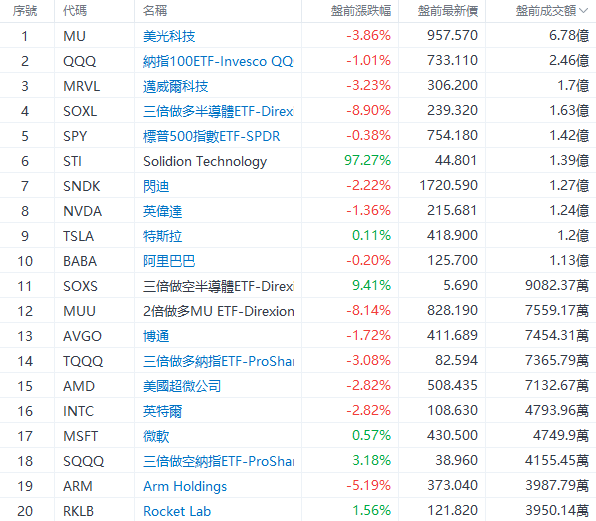
Top 20 pre-market trading volume stocks in the U.S.
Reminder of the US stock market macroeconomic calendar
(The following times are in Beijing Time)
20:30
U.S. Unemployment Rate – May
U.S. Nonfarm Payrolls (Seasonally Adjusted) – May (in ten thousands)
U.S. Average Hourly Earnings Year-over-Year Growth Rate – May
U.S. average hourly earnings month-over-month rate for May
 Looking to pick stocks or analyze them? Want to know the opportunities and risks in your portfolio? For all your investment-related questions,just ask Futubull AI!

Editor/Lee