Macroeconomic Highlights
Global oil prices plunged at the start of Monday's session as a pause in U.S.-Iranian hostilities sparked expectations of a ceasefire.
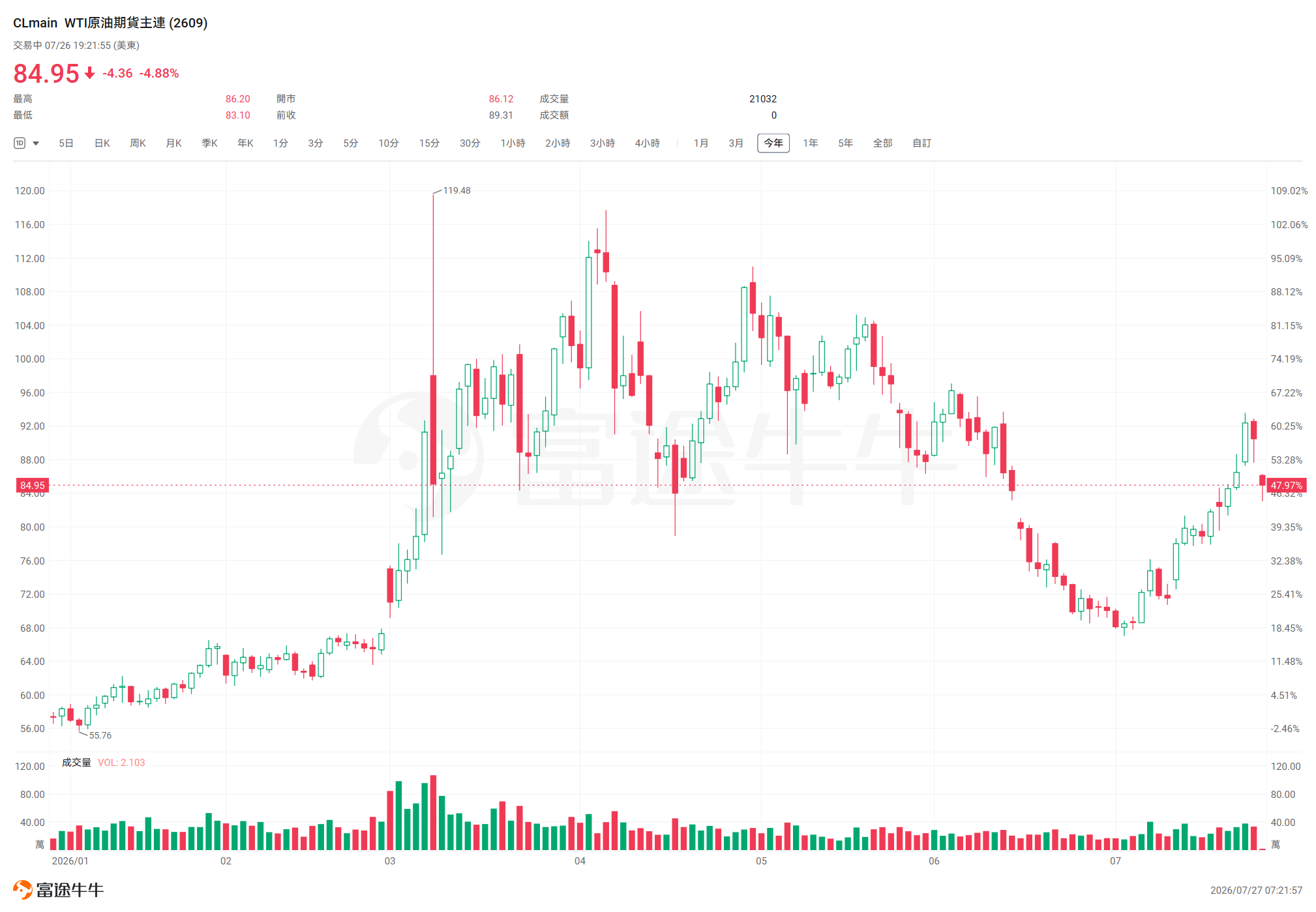
Oil prices dropped sharply at Monday’s open as traders assessed Middle East supply risks. The United States paused airstrikes on Iran over the weekend, while Houthi forces claimed attacks on targets inside Saudi Arabia. Brent crude futures, which closed lower on Friday, fell nearly 5% today to around $92 per barrel, while WTI crude futures slipped below $85. European natural gas prices一度 fell by 7.8%.
After 13 consecutive days of strikes on Iran, the United States halted operations late Friday, raising market questions about Trump’s next move. Iran’s army stated that Tehran had suspended its retaliatory actions. Nevertheless, Yemen’s Houthi forces claimed they attacked facilities operated by Saudi Aramco in the Red Sea port cities of Jazan and Yanbu on Saturday, though neither Riyadh nor Saudi Aramco immediately confirmed the claim.
 As the U.S.-Iran conflict has spread from the Strait of Hormuz to the Red Sea, Brent crude has surged approximately 30% this month, briefly surpassing $100 per barrel last week. Now nearing the end of its fifth month, the conflict has heightened concerns about global inflationary pressures, as war-driven price increases coincide with a loss of spare capacity in global fuel markets and sharp jumps in refined product prices.
Iranian Foreign Ministry: Information exchanges between Iran and the U.S. and mediation efforts are ongoing
Baghaei, spokesperson for Iran’s Foreign Ministry, stated that information exchanges between Iran and the United States continue, and mediators remain actively engaged. He noted that the Iran-U.S. memorandum of understanding is not a lengthy or complex document but rather a concise one containing only 14 clauses. The international community had expected the U.S. to fulfill its commitments “at least this time,” yet American actions have openly and seriously violated multiple provisions of the memorandum, marking the “third betrayal” of diplomatic efforts.
Saudi media: Iranian officials stated they have not withdrawn from negotiations and are willing to continue talks with the United States in multiple locations in Geneva.
According to combined reports from Al Arabiya and Saudi media outlet Al Hadath, Iran informed Pakistani officials that it has not withdrawn from negotiations but has temporarily suspended them. Iran reiterated the necessity of resuming talks during this impasse and stated its refusal to establish a new shipping lane through the Strait of Hormuz. Furthermore, Iran confirmed to Pakistan its willingness to continue negotiations (with the U.S.) in Geneva, Doha (Qatar), or Islamabad; it also requested that talks first address the Strait of Hormuz issue, followed by frozen assets, and finally the nuclear issue.
Trump: Ordered halt to airstrikes on Iran; if unable to secure everything wanted with 100% certainty, will consider resuming full-scale war
On July 25, U.S. President Trump ordered the military not to conduct new airstrikes against Iran that day, ending nearly two weeks—13 consecutive days—of daily strikes.
It is reported that Trump had previously approved military strike plans against Iran on a daily basis, but on the 25th, after receiving a new operational plan, he did not authorize its execution and instead directly ordered an immediate suspension of airstrikes for that day. It remains unclear whether this decision constitutes a one-day temporary pause or signals the beginning of a broader suspension of military operations.
Additionally, according to France's LCI television news: Trump stated regarding Iran, 'If we don't get 100% of what we want from Iran, we will absolutely consider resuming full-scale war.' When asked what message he had for European allies, Trump said, 'They are very lucky to have a friend like me.'

South Korean pension funds turned net buyers of KOSPI stocks for the first time this year, heavily increasing holdings in SK Hynix.
According to data from the Korea Exchange, pension funds—including the National Pension Service (NPS), one of the largest institutional investors in the Korean stock market—turned net buyers in the local equity market for the first time this month. As of July 24, the NPS and other pension funds had cumulatively purchased KOSPI-listed stocks worth KRW 68.4 billion (approximately USD 46.8 million) net since the beginning of July.
This marks the first monthly net purchase by pension funds this year, following six consecutive months of net selling. Specifically, SK Hynix was the most heavily bought stock by pension funds since July, with net purchases amounting to KRW 425.8 billion.
Lee Jae-myung Urges U.S. Investment in Korean Technology Sector
According to Yonhap News Agency, South Korean President Lee Jae-myung stated, 'South Korea and the United States should broaden their cooperation beyond the longstanding security alliance to include areas such as technology, innovation, and startups.' He emphasized that combining America’s world-class venture capital capabilities and global networks with Korea’s advanced technological prowess and manufacturing competitiveness would foster a new generation of globally competitive innovative enterprises.
Lee also called on U.S. venture capital firms to enhance collaboration and expand investments in Korea, pledging to create the world’s most attractive investment and entrepreneurial environment. He announced that Korea would reform its visa system to better attract overseas entrepreneurial talent and lay the groundwork for a collaborative ecosystem among domestic and international companies, research institutions, and investors. Additionally, he committed to supporting Korean startups in becoming globally competitive enterprises by linking privately managed and government-backed funds.
South Korea has reached a cooperation agreement worth USD 950 billion with global technology giants.
Kim Yong-beom, Director of the Policy Office at the Presidential Office of South Korea, stated that Korean conglomerates have reached agreements with global technology giants, including NVIDIA, to undertake a series of cooperative projects totaling USD 950 billion in value. Kim explained that these projects include a long-term agreement under which SK Group will supply high-performance semiconductors worth USD 750 billion to global technology companies, including NVIDIA. Additionally, Samsung Electronics will supply chips worth USD 200 billion to Broadcom.

U.S. Stock Market Update
Major indices diverged, with AI application software stocks showing strength.
On Friday in U.S. Eastern Time, the three major U.S. stock indices closed mixed, as news of Pakistan-mediated efforts to restart U.S.-Iran negotiations briefly boosted risk sentiment. At the close, the Dow Jones Industrial Average rose 235.60 points, or 0.46%, to 51,947.25; the Nasdaq Composite declined 161.87 points, or 0.64%, to 24,975.82; and the S&P 500 edged up 3.68 points, or 0.05%, to 7,411.98.

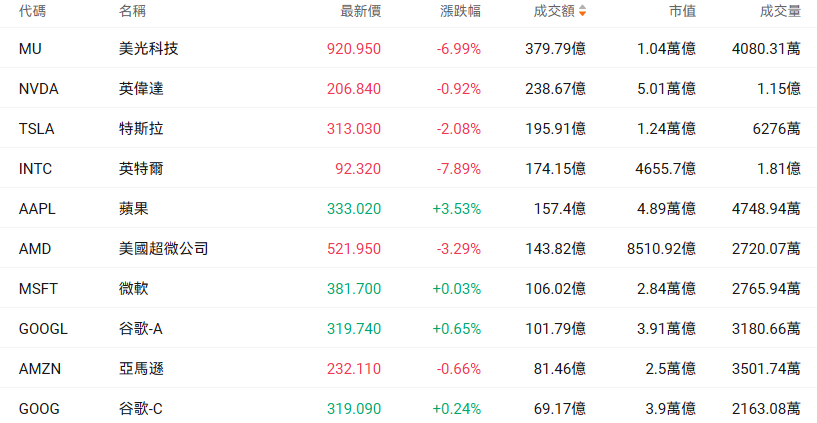
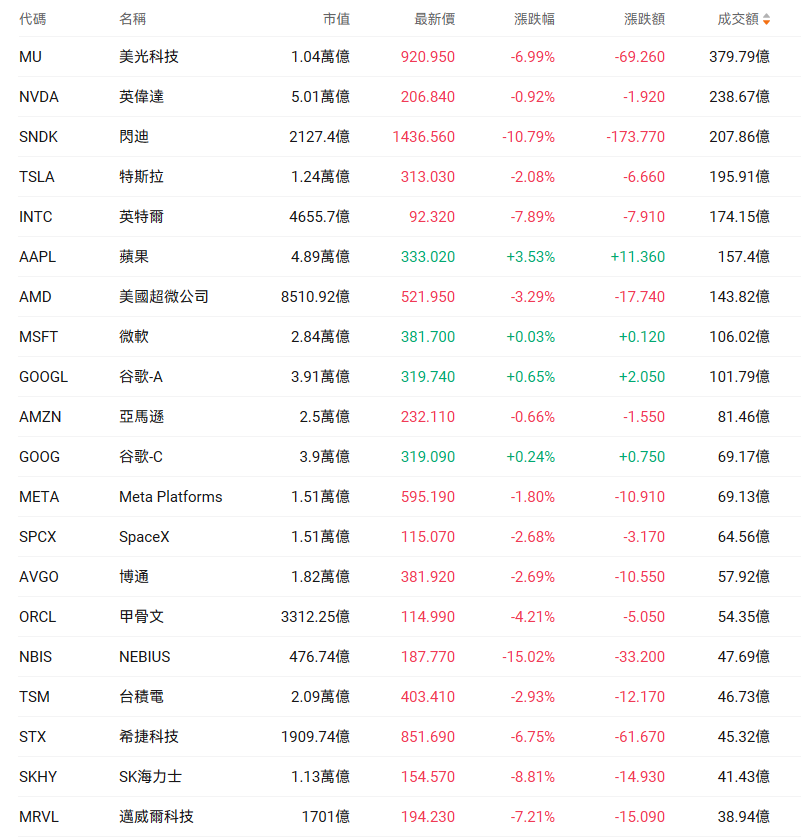
$Star Tech Stocks (LIST2518.US)$Most semiconductor and tech stocks declined, with Intel falling nearly 8%, Micron Technology down almost 7%, AMD dropping over 3%, Tesla slipping more than 2%, NVIDIA and Amazon each down nearly 1%, while Apple gained over 3% and Alphabet A rose nearly 1%.
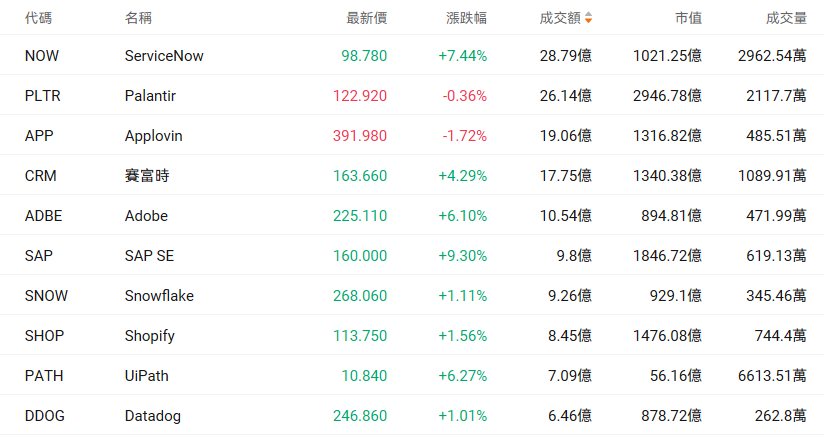
$AI Application Software Stocks (LIST23492.US)$Enterprise software stocks mostly advanced, with SAP SE up over 9%, Snowflake and ServiceNow rising more than 7%, Adobe and UiPath climbing over 6%, Salesforce gaining over 4%, Shopify and Datadog increasing more than 1%, while Applovin fell nearly 2%.
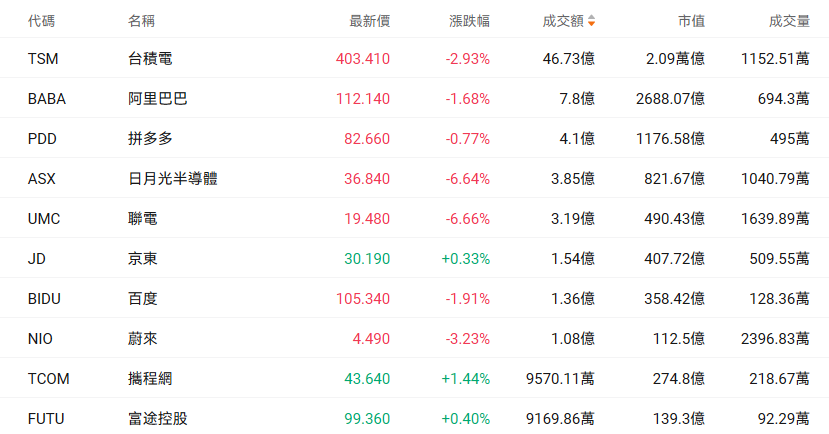
$Popular Chinese ADRs (LIST2517.US)$Most Chinese stocks listed in the U.S. declined, with the Nasdaq Golden Dragon China Index closing down 0.66%, though it posted a weekly gain of 2.8%. ASE Technology Holding and United Microelectronics each dropped nearly 7%, Nio fell over 3%, Taiwan Semiconductor declined nearly 3%, Alibaba and Baidu each slipped nearly 2%, PDD Holdings edged down almost 1%, JD.com rose slightly, and Trip.com gained over 1%.
Stock-specific news
NVIDIA Plans to Provide $250 Billion Financial Guarantee for OpenAI Data Center Project
According to The Wall Street Journal,NVIDIA (NVDA.US)NVIDIA is in talks to provide approximately $250 billion in financial guarantees to support a massive data center project—one of the largest financial transactions yet in the U.S. artificial intelligence boom. According to people familiar with the matter, NVIDIA’s guarantee would help OpenAI lease a 10-gigawatt (GW) data center project that SoftBank is developing in southern Ohio. The total cost of the project, including chips deployed inside the data center, could exceed $500 billion, making it the largest data center project announced to date.
Power for the project is controlled by the U.S. government and separately funded by Japan under a recent trade agreement. Commerce Secretary Lutnick participated in decisions regarding electricity allocation. Under the arrangement, NVIDIA will provide guarantees for a series of financing instruments to bolster lenders’ confidence in the security of project funding. Terms have not been finalized, and the deal could still fall through. The $250 billion guarantee would cover debt required for leasing and constructing the data center, but not the NVIDIA chips installed within it.
Signatories to NVIDIA’s open-weight model open letter have doubled to 50, with Google among new supporters
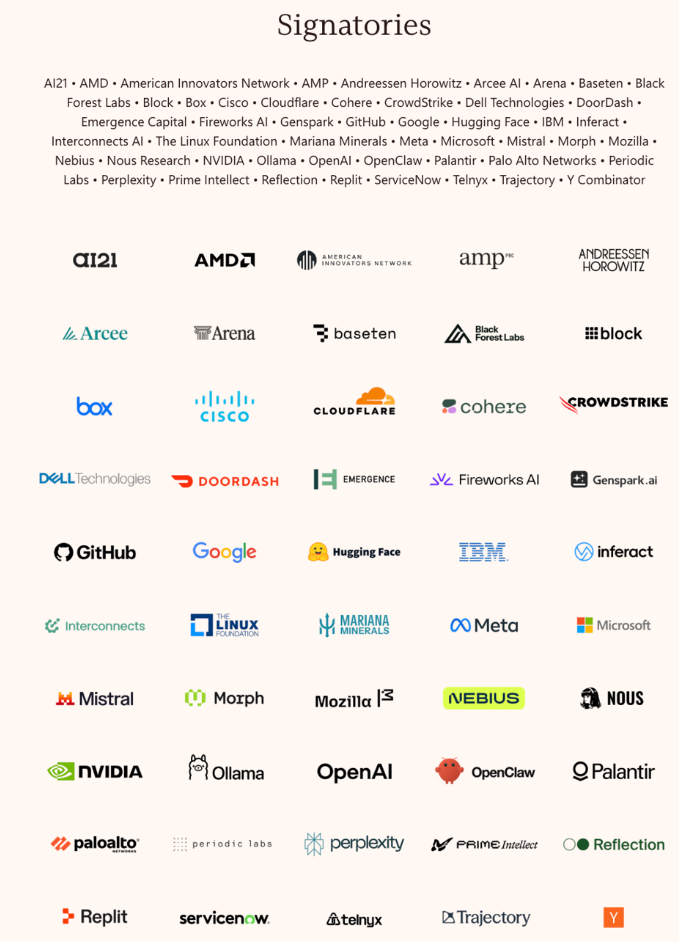
On July 24,NVIDIA (NVDA.US)CEO Jensen Huang posted on a social media platform sharing a letter titled “Open Weights and U.S. AI Leadership,” calling for the advancement of open-weight artificial intelligence models. The original version of the letter published by Huang included 25 signatories. It now has 50 signatories—double the initial number.
OpenAI is one of the 25 newly added organizations, along with other new signatories includingGoogle-C (GOOG.US)、$Advanced Micro Devices (AMD.US)$、Cisco (CSCO.US),、$Cloudflare(NET.US)$, GitHub,$Block (XYZ.US)$and Ollama. However, Anthropic and$Amazon (AMZN.US)$have never appeared on any version of the list, and their absence remains the most notable detail about the signatory roster.
SK Hynix's Q2 profit may hit a record high, with combined profits of South Korea's memory chip duopoly expected to exceed KRW 150 trillion
$SK Hynix (SKHY.US)$SK Hynix will announce its second-quarter results on the 29th. Following Samsung Electronics, SK Hynix is also expected to report record-high earnings for the second quarter of this year. According to a compilation by Yonhap Infomax, a Korean financial information provider, of reports issued by 14 securities firms over the past month, SK Hynix’s second-quarter revenue and operating profit are projected at KRW 84.0597 trillion and KRW 64.0899 trillion, respectively. The expected Q2 operating profit is approximately KRW 17 trillion higher than the company’s full-year operating profit of KRW 47.2 trillion in the previous year.
Adding the first-quarter operating profit of KRW 37.6103 trillion, SK Hynix’s operating profit for the first half alone is set to surpass KRW 100 trillion. Earlier this month, Samsung Electronics also released preliminary earnings, reporting strong performance from its Device Solutions (DS) division with an operating profit of KRW 89.4 trillion. If SK Hynix’s results meet market expectations, the combined Q2 operating profit of the two companies will exceed KRW 150 trillion.
Samsung Electronics announced it has signed a memorandum of understanding with Broadcom covering up to USD 200 billion worth of business in memory chips, foundry services, and advanced packaging through 2030
Samsung Electronics (005930.KR)stated that it has signed a memorandum of understanding with$Broadcom (AVGO.US)$Broadcom covering up to USD 200 billion worth of business in memory chips, foundry services, and advanced packaging through 2030; it will collaborate with Broadcom to develop Broadcom’s next-generation AI accelerators based on Samsung’s HBM technology. Samsung Electronics also stated it will provide sub-2-nanometer foundry processes and advanced packaging solutions.
“Big Short” investor Burry reportedly increases short positions in Micron and NVIDIA
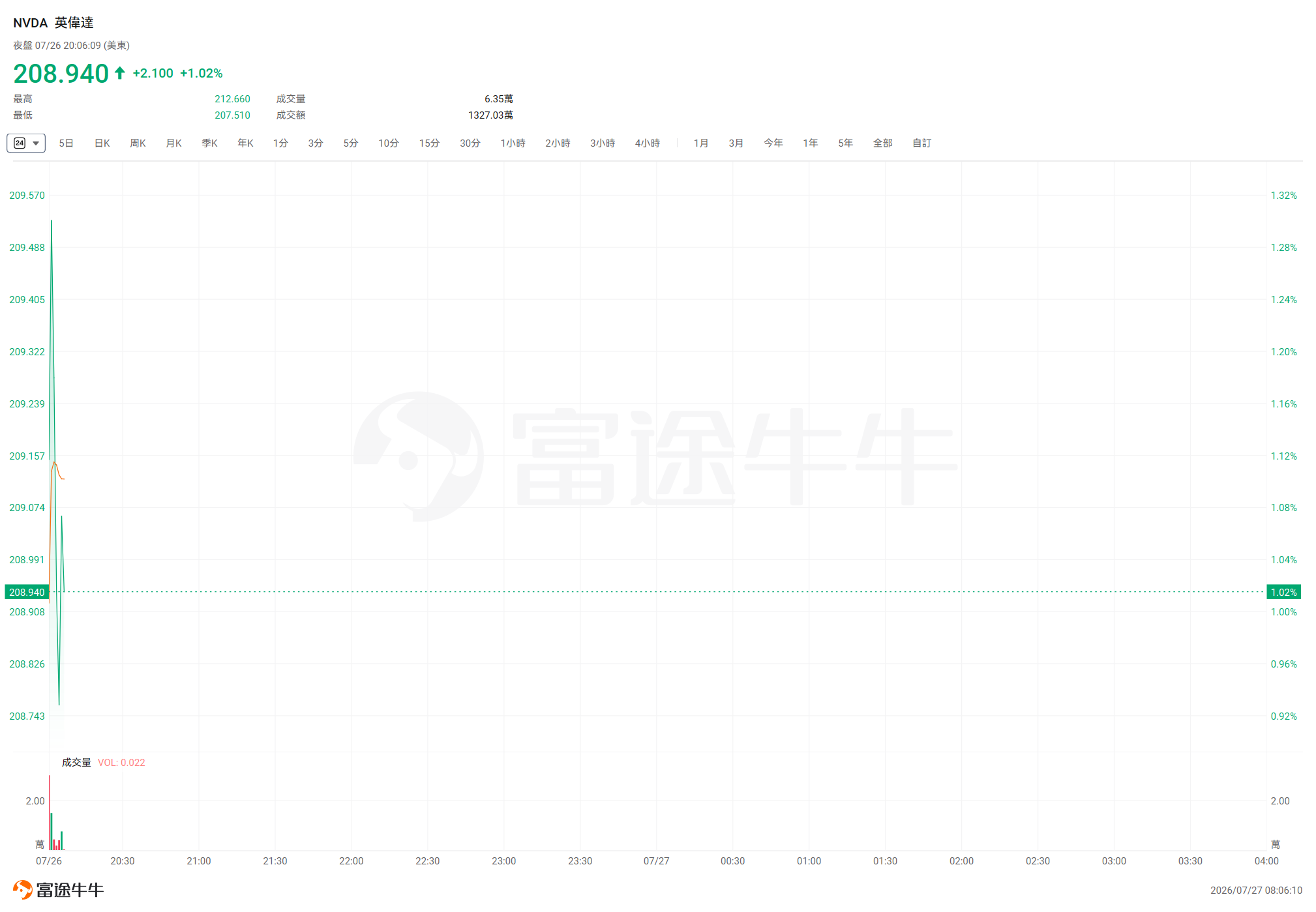
Michael Burry, known as the “Big Short” investor, continues to shortMicron Technology (MU.US)、NVIDIA (NVDA.US)and other semiconductor companies. In a Substack post, Burry stated that he further shorted Micron Technology (MU.O) at USD 933.86 and increased his short position in NVIDIA (NVDA.O) at USD 210.28. Burry also added to his short position in Caterpillar (CAT.N) at USD 893.49 and increased his short stake in the iShares Semiconductor ETF (SOXX) at USD 535.83.
Futurum: Raises AMD target price to USD 800, citing growth in the AI accelerator market
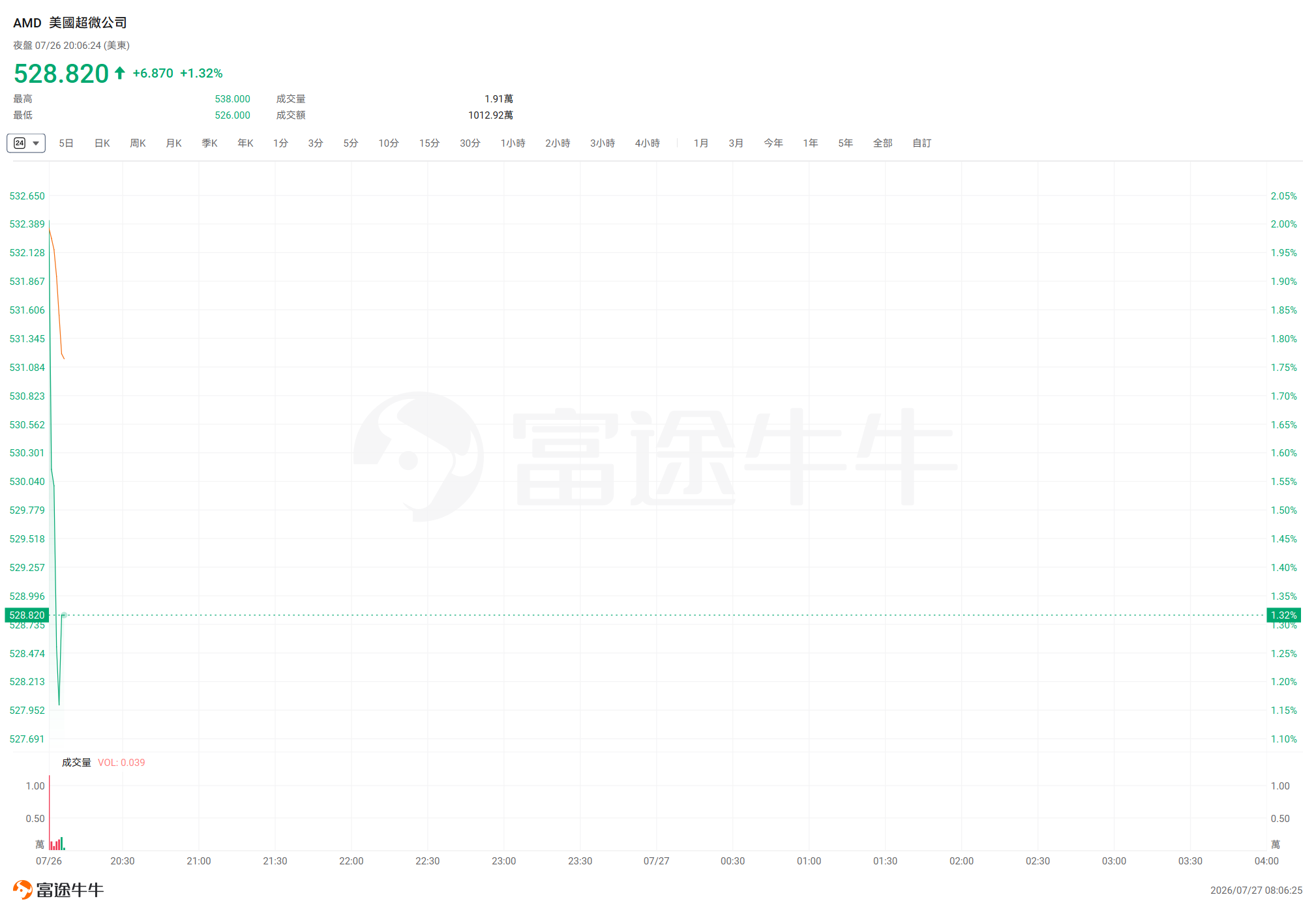
Futurum Equities has$Advanced Micro Devices (AMD.US)$raised its target price to $800, implying approximately 48% upside from the current share price, and listed it as one of its highest-conviction core investment holdings. AMD announced multiple significant partnerships at its Advancing AI 2026 conference, reflecting the rapid expansion of its hardware ecosystem and sustained growth in customer demand. Most notably, AMD entered into a 2GW AI computing deployment partnership with Anthropic, increasing the total committed capacity of AMD’s AI accelerators to 14GW.
Driven by continued procurement from large AI customers, Futurum estimates AMD’s GPU revenue will reach $38 billion next year, with growth fueled by its sixth-generation EPYC Venice server processors and the Helios rack-scale AI system. The Helios platform delivers 30% more tokens per dollar invested compared to competitors, enhancing inference efficiency for large AI models and reinforcing AMD’s competitive position in the AI accelerator market.
Futurum forecasts that the global addressable market for AI accelerators will expand to $1.4 trillion by 2030. AMD has already established a comprehensive product portfolio spanning GPUs, CPUs, and integrated AI platforms, positioning it to benefit sustainably from this growth.
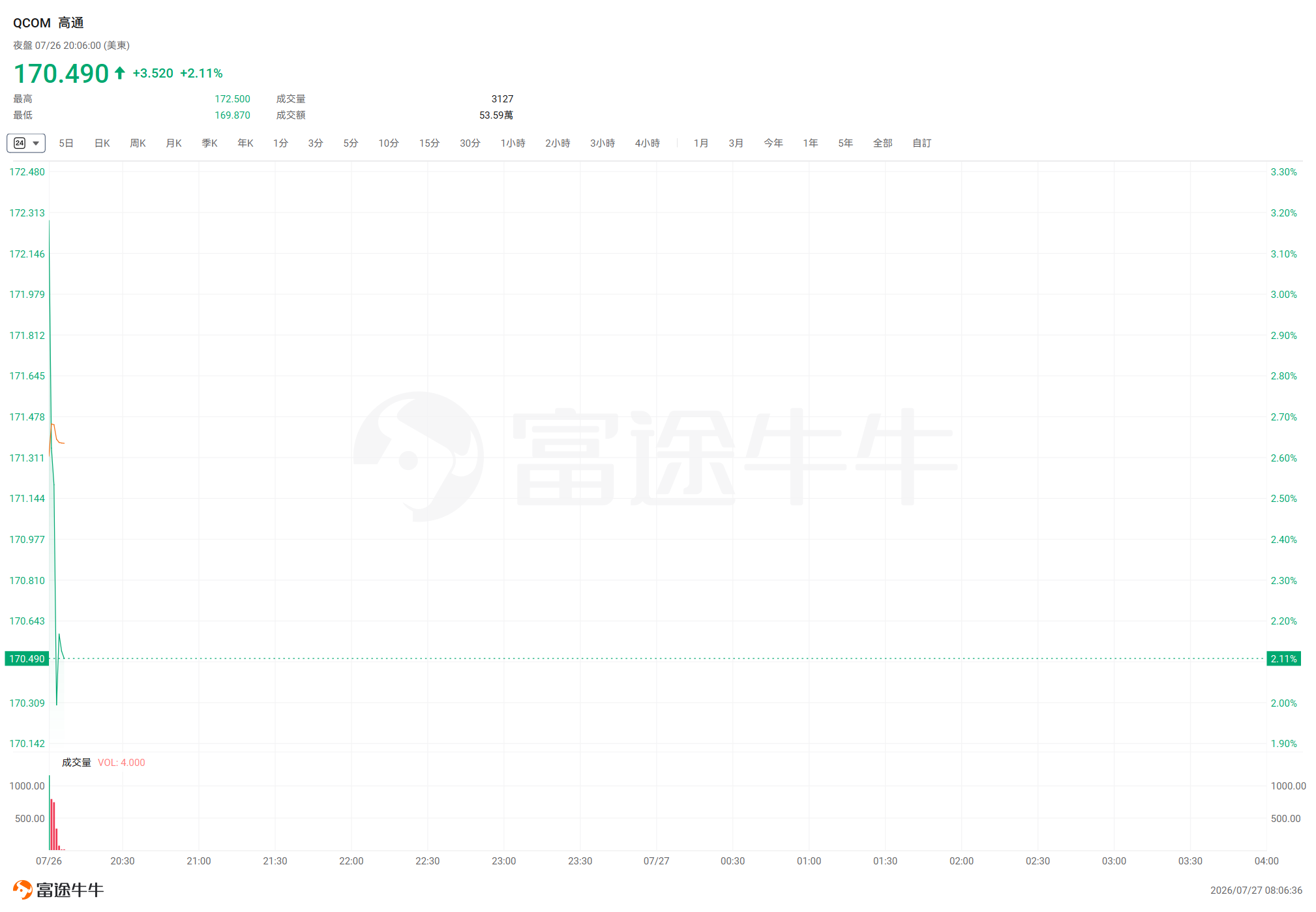
Citrini: The market is underestimating Qualcomm's long-term potential in the AI infrastructure market.
Research firm Citrini Research believes Wall Street may be underestimating Qualcomm’s long-term potential in the AI infrastructure market. The firm notes thatQualcomm (QCOM.US)Qualcomm is actively building out its AI data center capabilities through its new High Bandwidth Compute (HBC) architecture, strategic acquisitions, and support from major cloud customers, positioning it to become a significant competitor in AI infrastructure. Citrini points out that the market remains overly focused on Qualcomm’s near-term earnings, whereas the period from 2028 to 2029 warrants greater attention.
Although Qualcomm’s AI data center business is still in its early stages—with AI200 systems launching this year and large-scale deployments by hyperscalers expected later this decade—the semiconductor industry has historically reflected profitability expectations several years ahead rather than next quarter’s results. Therefore, 2028–2029 should be the focal point for valuation.
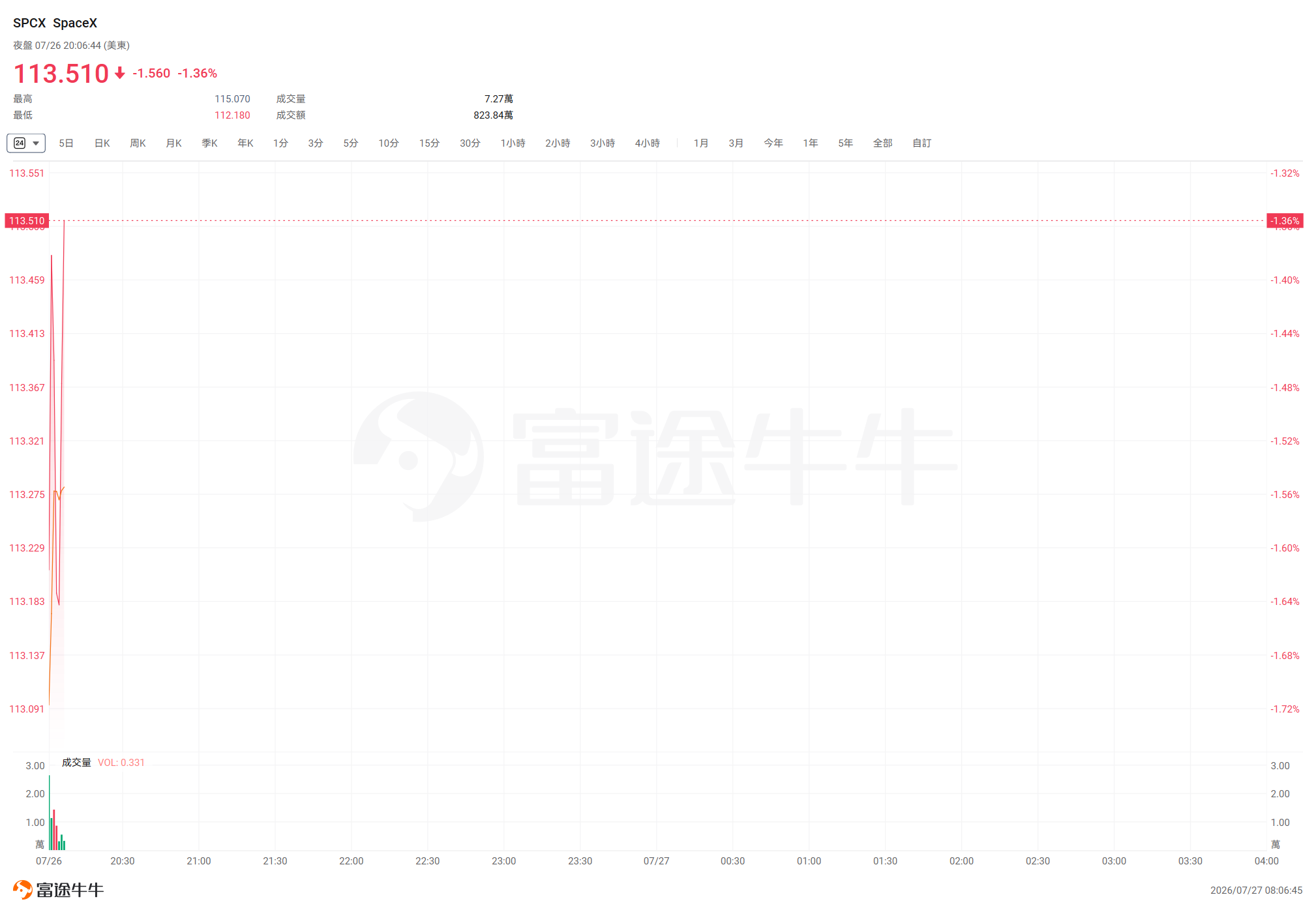
Morgan Stanley: Buy opportunity emerges in SpaceX after recent sell-off; raises target price to $300
Jonas, a Morgan Stanley analyst known for his long-standing bullish outlook on Tesla, stated that$SpaceX (SPCX.US)$SpaceX’s recent share price decline has brought it close to a level where the market appears to assign virtually no value to its artificial intelligence (AI) business, presenting an attractive entry point. Morgan Stanley maintains a $300 target price for SpaceX, with more than half of the valuation attributed to its AI operations. The firm reiterates a “Buy” rating, citing SpaceX’s unique strengths across three domains: rocket launch, satellite communications, and AI.
Analysts also noted that many investors expect SpaceX’s share price could fall further to $100 as the first batch of lock-up shares is set to expire next month, allowing some insiders to sell their holdings. If the stock does drop to that level, it would imply the market is effectively valuing SpaceX’s AI business at zero—or even negatively.
U.S. 'Starship' Completes 13th Test Flight, Splashes Down in Indian Ocean
According to CCTV, $SpaceX (SPCX.US)$The heavy-lift launch vehicle 'Starship' lifted off from its launch site in southern Texas at 24th afternoon Central Time in the United States for its 13th test flight. The rocket’s first stage, the 'Super Heavy' booster, splashed down in waters near the Gulf of Mexico, while the second stage, the 'Starship' spacecraft, completed a suborbital flight and splashed down in the Indian Ocean. The launch occurred at 5:51 p.m. Eastern Time on the 24th. Although the first-stage 'Super Heavy' booster splashed down near the Gulf of Mexico, it did so at a higher-than-expected velocity due to fewer engines restarting than anticipated.
During the flight of the second-stage 'Starship' spacecraft, six engines operated normally and deployed 20 next-generation 'Starlink' satellites. The spacecraft also briefly reignited one engine in space to validate in-orbit ignition capability required for future lunar missions. Approximately 1 hour and 5 minutes after liftoff, the spacecraft splashed down in the Indian Ocean northwest of Australia.
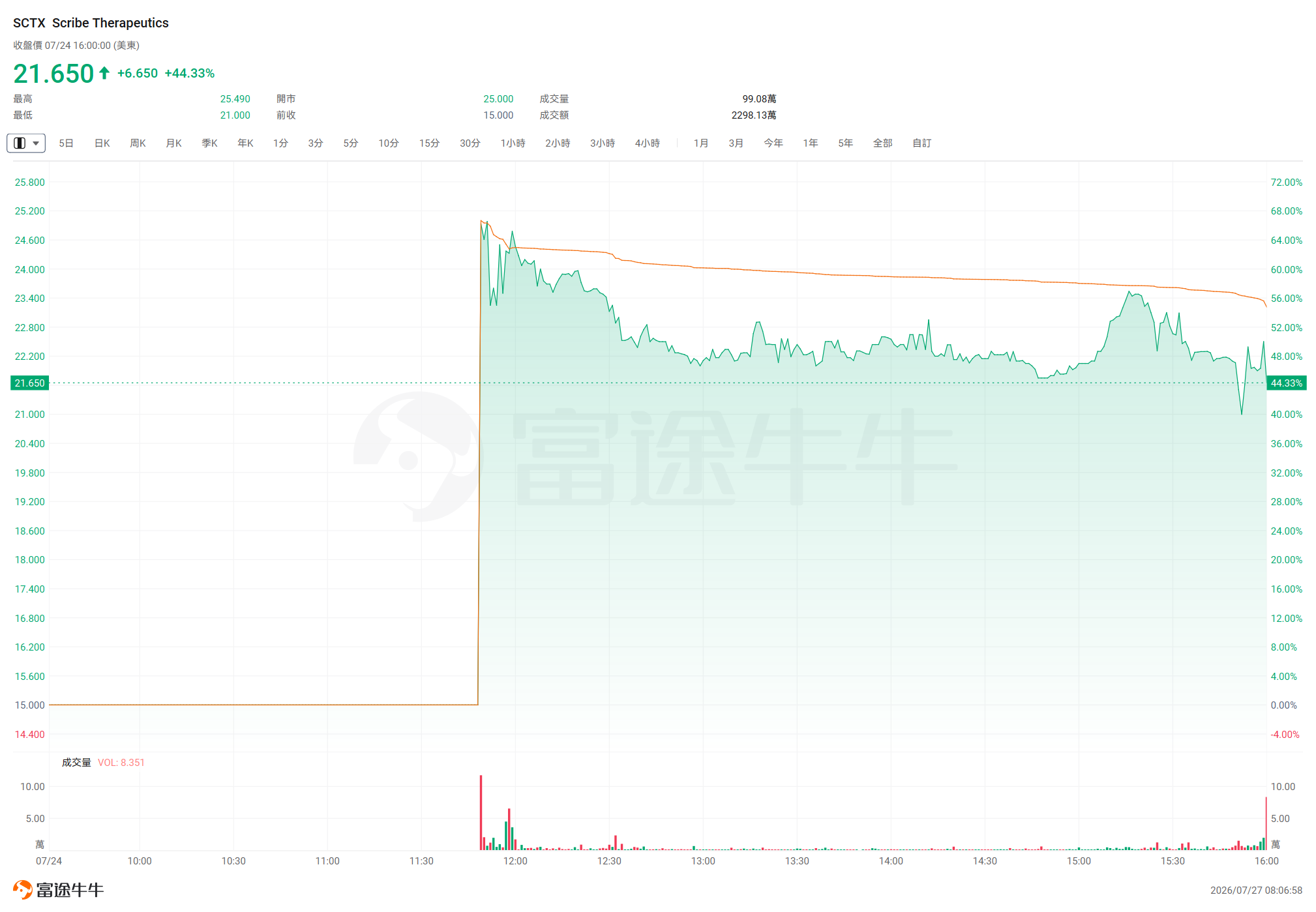
Scribe Therapeutics, backed by Eli Lilly and Co, surged over 44% on its first day of trading following its U.S. IPO.
A clinical-stage developer focused on gene therapy for heart disease$Scribe Therapeutics (SCTX.US)$After raising $128.7 million through an upsized IPO, the company’s shares surged 44.33% at Friday’s close. Filings show that an affiliate of Sanofi SA has agreed to purchase approximately $7.5 million worth of shares at the IPO price as part of a concurrent private placement. Eli Lilly and Co., one of Scribe’s existing supporters, expressed interest in acquiring additional shares in the IPO to hold up to an 11% stake in Scribe following the offering and placement.
Top 20 by Trading Volume
Hong Kong Market Outlook
Southbound capital reduced holdings of Hong Kong-listed stocks by over HK$15 billion, with Alibaba and Kingboard Laminates Holdings seeing net sales of HK$3.2 billion and HK$700 million, respectively
On Friday, July 24, southbound capital recorded net sales of HK$1.518 billion in Hong Kong-listed equities.
$Huahong Hongli (01347.HK)$、$SMIC (00981.HK)$、$Zhipu AI (02513.HK)$received net purchases of HK$379 million, HK$320 million, and HK$239 million, respectively;
$Alibaba-W (09988.HK)$、$KBTL (01888.HK)$、$Tencent (00700.HK)$suffered net sales of HK$32.08 billion, HK$6.93 billion, and HK$4.97 billion, respectively.
Hushang Auntie: Expects 36%–46% Year-on-Year Growth in Adjusted Profit for the First Half of 2026
$Hushang Ayi (02589.HK)$issued a positive profit guidance, expecting the Group to record a profit for the period in the first half of approximately RMB 304 million to RMB 325 million, representing an increase of approximately 50% to 60% compared to the profit for the same period last year of RMB 203 million. The Group also expects to report an adjusted profit for the period (non-IFRS measure) of approximately RMB 331 million to RMB 356 million, up approximately 36% to 46% from the adjusted profit for the same period last year of RMB 244 million.
Shein clears Hong Kong Exchange listing hearing: annual revenue of USD 41.8 billion and net profit of USD 2.06 billion last year
According to the Hong Kong Exchange website, Shein International Holding Limited has updated its post-hearing application documents, indicating that the company has passed the listing hearing for its IPO on the Hong Kong Exchange. Additionally, according to The Paper, data shows that Shein generated total revenue of USD 41.8 billion in 2025, with a compound annual growth rate of 14.2% from 2023 to 2025; it also reported net profit of USD 2.06 billion for the same period in 2025. As of the end of 2025, the platform served approximately 273 million active customers and operated in approximately 160 markets.
The State Administration for Market Regulation imposed a penalty totaling RMB 5.179 billion on Trip.com; Trip.com responded to the penalty: 'We sincerely accept and fully comply.'
The State Administration for Market Regulation has lawfully issued an administrative penalty against Trip.Com Group Limited for abusing its dominant market position to engage in monopolistic conduct, resulting in a combined penalty and confiscation amounting to RMB 5.179 billion. The Administration will supervise Trip.com’s comprehensive rectification, require public disclosure of corrective measures, and ensure social oversight to effectively safeguard the legitimate rights and interests of hotel operators and consumers, maintain a market order characterized by quality-based pricing and healthy competition, and promote industry innovation and sustainable development.
$Trip.com Group Limited (09961.HK)$On July 25, the company issued an announcement regarding its sincere acceptance of the administrative penalty decision by the State Administration for Market Regulation: 'Today, we received the Administrative Penalty Decision issued by the State Administration for Market Regulation. We sincerely accept and fully comply with this decision, and will strictly align with regulatory requirements to systematically implement and advance each corrective measure to ensure full and effective execution.'
New Hong Kong Exchange listing rules take effect: lower thresholds, relaxed WVR requirements, and expanded scope for confidential filings
According to 21st Century Business Herald,$Hong Kong Exchange (00388.HK)$The consultation summary on proposals to enhance the competitiveness of Hong Kong’s listing regime has been formally released, with the revised Listing Rules taking effect immediately on July 24. The market capitalization threshold for weighted voting rights (WVR) structures and secondary listing applicants has been lowered from HK$10 billion to HK$6 billion, and the shareholding requirement for WVR structures has been relaxed accordingly. Confidential filing eligibility has also been expanded from specific types of companies to all new applicants.
Hong Kong Exchange stated that the consultation received 73 responses from various market participants, all of which will be adopted, with some slightly modified. Chen Zhihua, President of the Hong Kong Securities and Futures Professionals Association, remarked that this reform is one of the most outstanding enhancements to Hong Kong’s listing regime in nearly a decade.
Today's Focus
Keywords: AstraZeneca earnings; ChangXin Memory Technologies A-share listing
On the economic data front, China’s year-over-year industrial enterprise profits for June, the U.S. durable goods orders month-over-month for June, and the Dallas Fed’s business activity index for July will be released.
09:30 China’s year-over-year industrial enterprise profits for June
20:30 U.S. durable goods orders month-over-month for June
22:30 Dallas Fed’s business activity index for July
On the earnings front, pharmaceutical giant$AstraZeneca (AZN.US)$ will release its latest results before the U.S. market opens, $Cadence Design Systems (CDNS.US)$ 、 $Celestica (CLS.US)$ 、 $Nucor Corporation (NUE.US)$ will release earnings after the U.S. stock market closes.
In terms of new listings, the leading Chinese DRAM memory chip company, which is undertaking the largest A-share IPO of the year, $Changxin Technology (688825.SH)$ will list on the STAR Market of the Shanghai Stock Exchange.
 Looking to select stocks or analyze your holdings? Want to understand the opportunities and risks in your portfolio? For any investment-related questions,just ask Futubull AI!

Editor/melody