Macro News
Trump Announces Talks with Iran on the 3rd; Israel Admits Being 'Abandoned by Allies'
On August 2 local time, U.S. President Trump stated that the United States would hold talks with Iran on the 3rd. The U.S. had dramatically reversed course again—on August 1, it claimed it would launch 'the most intense bombing ever' against Iran, only to 'agree to cancel the strike' the next day. President Trump backed down at the last minute and said Israel had also 'joined his commitment.'
However, multiple Israeli officials revealed on August 2 that Israel had been excluded from decision-making communications for several hours, and Prime Minister Netanyahu and others learned about the U.S. decision to halt the strike solely through Trump’s social media post. Analysts noted that Israel has become a bargaining chip in U.S.-Iran negotiations. Iran has found ways to directly influence U.S. strategic interests, and Israel’s influence over U.S. decision-making is being diluted.
 Trump: U.S.-Iran Talks Begin Tomorrow; Agreement Already Reached on Strait of Hormuz
U.S. President Trump said on Sunday (Eastern Time): 'The strike on Iran was canceled at the request of Saudi Arabia, the UAE, Qatar, and Iran. Had they not made this request, we would have launched a large-scale attack on Iran last night—Iran knows exactly how massive that attack would have been. I believe an agreement on the Strait of Hormuz is already in place, and a deal on denuclearization will also be reached. We are engaging with them through negotiations, which will begin tomorrow afternoon (Tuesday morning Beijing time). We are ready to act at any moment.'
Araghchi: Iran and Oman Nearing Completion of Negotiations
On August 2 local time, Iranian Foreign Minister Araghchi, speaking at a government cabinet meeting, provided an update on Iran’s latest negotiations with Oman, stating that the talks were progressing smoothly, had entered their final stage, and were nearing completion.
According to Iranian sources on July 26, Iranian Foreign Ministry Spokesperson Baghaei stated that Iran and Oman had held discussions on shared principles and operational mechanisms for managing safe navigation in the Strait of Hormuz, describing the talks as 'productive and having achieved some progress.' On July 27, Araghchi held separate phone calls with his Omani and Saudi counterparts to discuss matters related to the Strait of Hormuz. In those calls, Araghchi emphasized, according to a statement from Iran’s Foreign Ministry, 'the necessity of strengthening cooperation.'
Trump Says Yen Intervention Reflects U.S.-Japan Friendship
U.S. President Donald Trump stated that the United States participated last week in foreign exchange market intervention aimed at strengthening the yen, calling it a reflection of U.S.-Japan friendship and adding that he expects Washington to gain economic benefits from assisting its ally. Speaking aboard Air Force One on Sunday, Trump told reporters, 'They needed some help, and we’ve always supported Japan.' He referenced the 'strong relationship' between the two countries and added, 'Japan has always been very good to us—Pearl Harbor aside, of course.'
‘First and foremost, this is a symbol of friendship,’ he said. When asked what the U.S. gained from the intervention, Trump replied that it yielded 'economic benefits.' He likened the arrangement to last year’s currency swap agreement with Argentina. Although that deal drew bipartisan criticism, Argentina repaid the amount drawn under the U.S. swap facility in January, and Trump claimed the U.S. ultimately profited $25 billion from the currency swap agreement.
Bessent stated that the U.S. coordinated with Japan last Friday to intervene in the yen market.
U.S. Treasury Secretary Bessent: 'Our government stands behind America’s trusted partners. Economic security is national security, and the U.S.-Japan alliance is built upon both. Last Friday’s coordinated foreign exchange action addressed disorderly movements in the yen. The Treasury Department remains closely attentive and maintains close communication with our counterparts at Japan’s Ministry of Finance and the Bank of Japan.'
We will not hesitate to engage in further joint intervention. The FIMA Repo Facility (Foreign and International Monetary Authorities Repo Facility) serves as an important backstop. We encourage expanding its scale in the coming months. We strongly support Japan’s decisive market and monetary measures aimed at correcting the significant undervaluation of the yen.'

The probability of the Federal Reserve raising interest rates by 25 basis points in September is 73.6%.
According to CME Group's 'FedWatch Tool,' the probability that the Federal Reserve will keep rates unchanged through September is 26.4%, while the probability of a cumulative 25-basis-point rate hike is 73.6%. The probability of rates remaining unchanged through October is 19.9%, the probability of a cumulative 25-basis-point hike is 62.1%, and the probability of a cumulative 50-basis-point hike is 17.9%.
Waller considers reducing the frequency of Federal Reserve interest rate meetings, breaking a 40-year precedent
According to The New York Times, Fed Chair Waller is reportedly considering reducing the number of regularly scheduled interest rate decision meetings held by the Federal Reserve—a move that could cause significant disruption and mark the most substantial change to the Fed’s operational framework in recent years. Currently, the 12-member Federal Open Market Committee (FOMC) holds eight meetings annually to vote on whether to raise, lower, or maintain borrowing costs.
The Federal Reserve’s current system of eight annual interest rate meetings was established in 1981 under then-Chairman Volcker and has remained unchanged since. Reducing the number of meetings would not only mean fewer voting opportunities but could also narrow the window through which markets gain insight into the Fed’s interest rate outlook, further diminishing policy transparency.
OPEC+ agrees to increase its September oil production quota by 188,000 barrels per day
The statement indicates that OPEC+ has agreed to raise its September oil production quota by 188,000 barrels per day. Saudi Arabia, Russia, Iraq, Kuwait, Kazakhstan, Algeria, and Oman have agreed to adjust output and reaffirmed their commitment to maintaining market stability. The next meeting will be held on September 6.
U.S. Stock Market Update
All three major indices rose, with leading tech and semiconductor stocks showing strong performance
On Friday, the three major U.S. stock indexes staged a V-shaped recovery and closed higher. At the close, the Dow Jones Industrial Average rose 276.97 points, or 0.53%, to 52,485.03; the Nasdaq Composite gained 251.68 points, or 1.00%, to 25,373.85; and the S&P 500 increased by 52.09 points, or 0.70%, to 7,489.72.

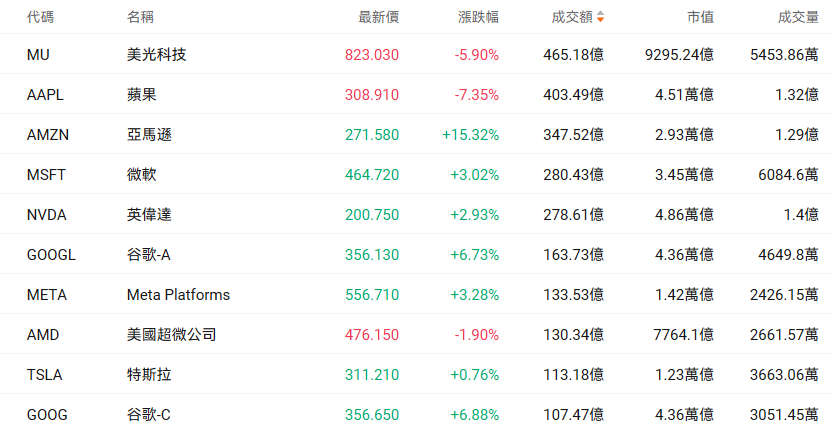
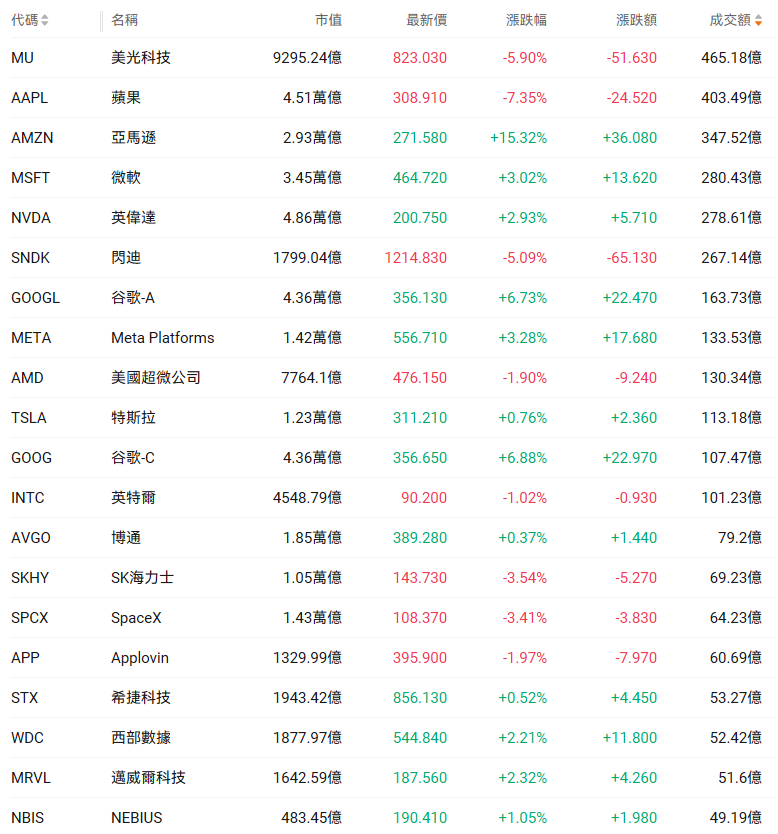
$Star Tech Stocks (LIST2518.US)$Most stocks advanced, with Amazon surging more than 15%, Google rising nearly 7%, Microsoft and Meta climbing over 3%, NVIDIA up almost 3%, Tesla gaining nearly 1%, Apple falling more than 8%, Micron Technology down nearly 6%, and AMD declining almost 2%.
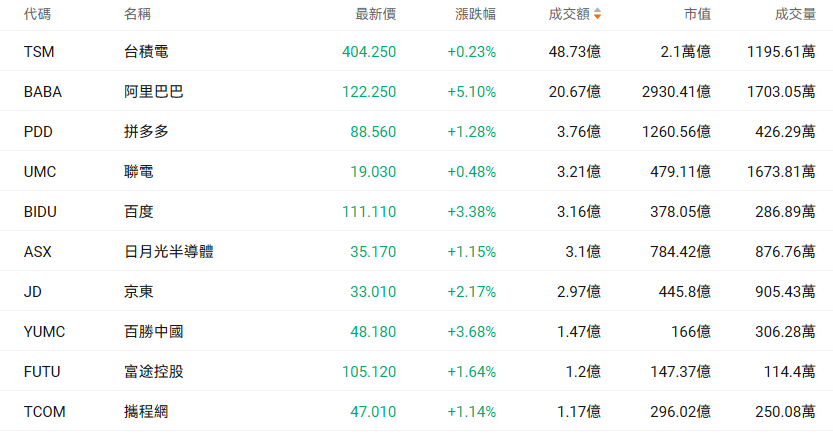
$Popular Chinese ADRs (LIST2517.US)$Most stocks declined, while the Nasdaq Golden Dragon China Index rose 1.47%. Alibaba gained over 5%, Yum China and Baidu climbed more than 3%, JD.com advanced over 2%, and PDD Holdings and Trip.com rose more than 1%.
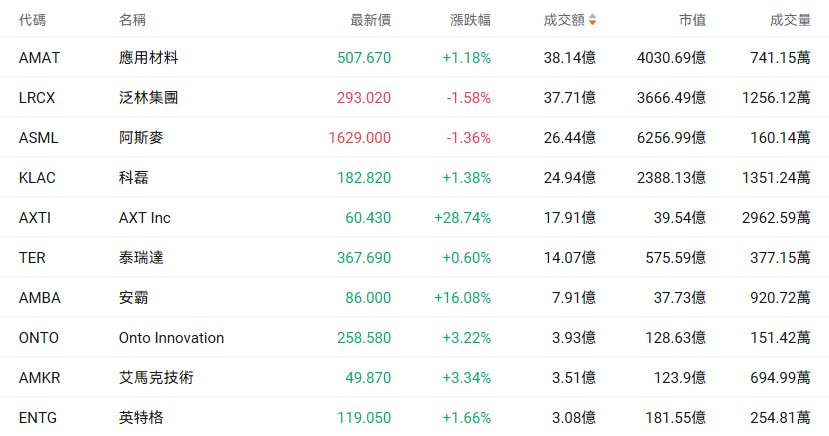
$Semiconductor Equipment and Materials (LIST2016.US)$Most stocks rose, with AXT surging nearly 29%, Amkor Technology and Onto Innovation up over 3%, and Applied Materials and KLA Corp gaining more than 1%.
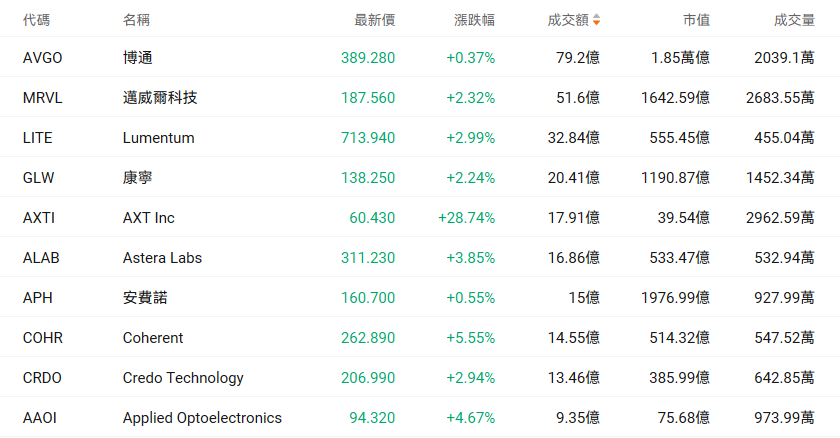
$Optical Communications (LIST23979.US)$Broad-based gains were seen across the sector, with Coherent rising over 5%, Applied Optoelectronics climbing nearly 5%, Astera Labs up over 3%, and Marvell Technology, Lumentum, Corning, and Credo all advancing more than 2%.
Stock-specific news
Morgan Stanley: South Korean equities still have 36% upside potential after a market shakeout
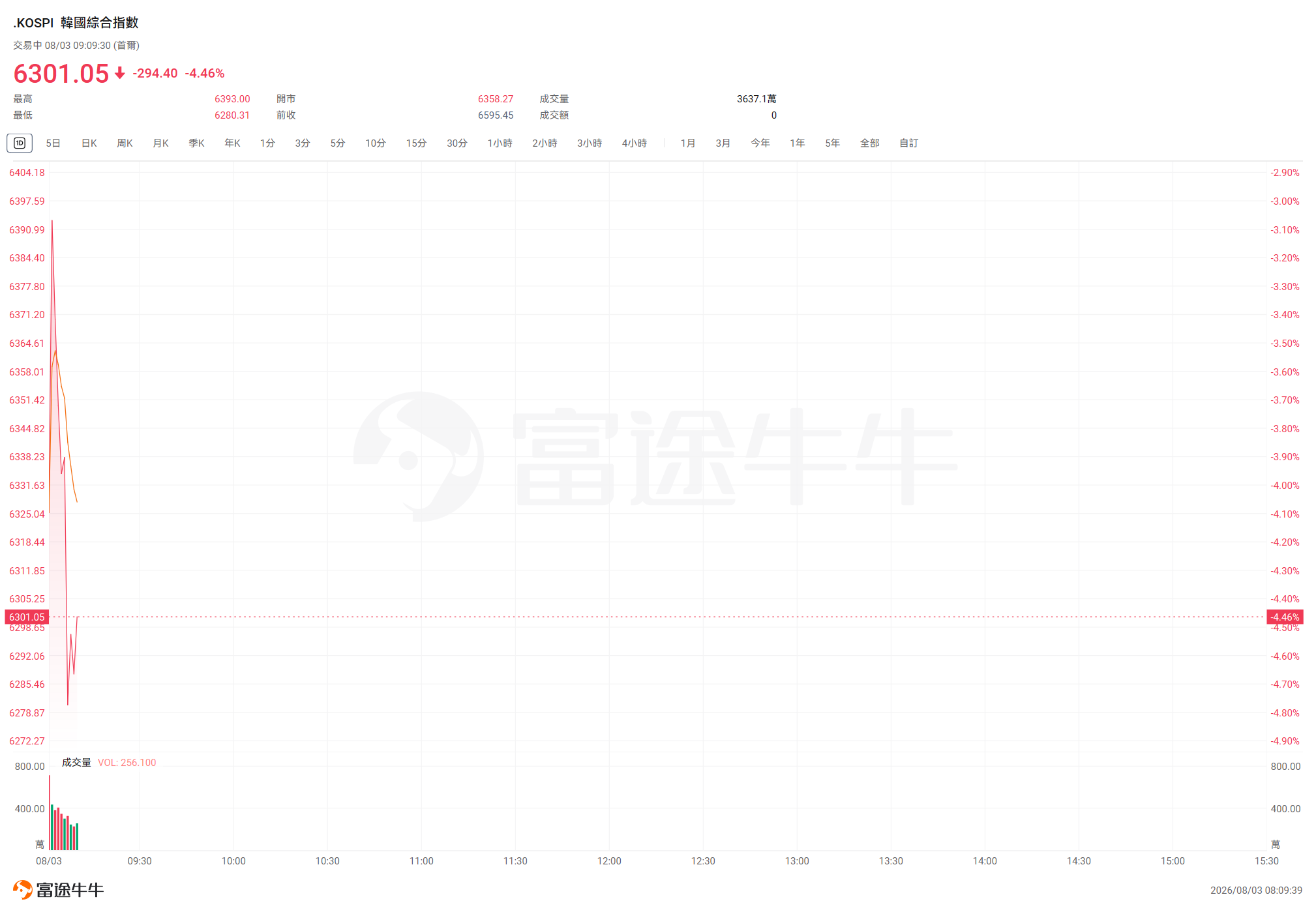
Morgan Stanley upgraded its rating on South Korean equities to overweight. The bank stated that the recent 'clearing of leveraged positions' has created a better entry point for investors to position themselves in artificial intelligence themes and the industrial supercycle. In a research report led by strategist Daniel K. Blake, the team noted that following crowded trades and significant deleveraging,$Korea Composite Index(.KOSPI.KR)$the index could potentially rise to a target of 9,000 points, representing an upside of 36%.
The brokerage previously held a neutral rating on South Korean equities. Analysts described the recent decline as primarily a 'technical correction,' noting that deleveraging from leveraged ETFs, hedge fund leverage, and retail margin financing is already more than halfway complete. The KOSPI has fallen approximately 30% from its June peak. As a former bellwether for AI demand in Asia, the market experienced a sharp sell-off amid large-scale capital outflows. Surging leveraged ETF assets and highly concentrated index weights further exacerbated the downturn.
Morgan Stanley forecasts a near-term trading range for the KOSPI between 5,500 and 10,500 points, with Samsung Electronics and SK Hynix providing valuation support. The bank also expressed optimism about potential tailwinds for individual stocks in the industrial, defense, and financial sectors.
Amazon completes full $50 billion investment in OpenAI
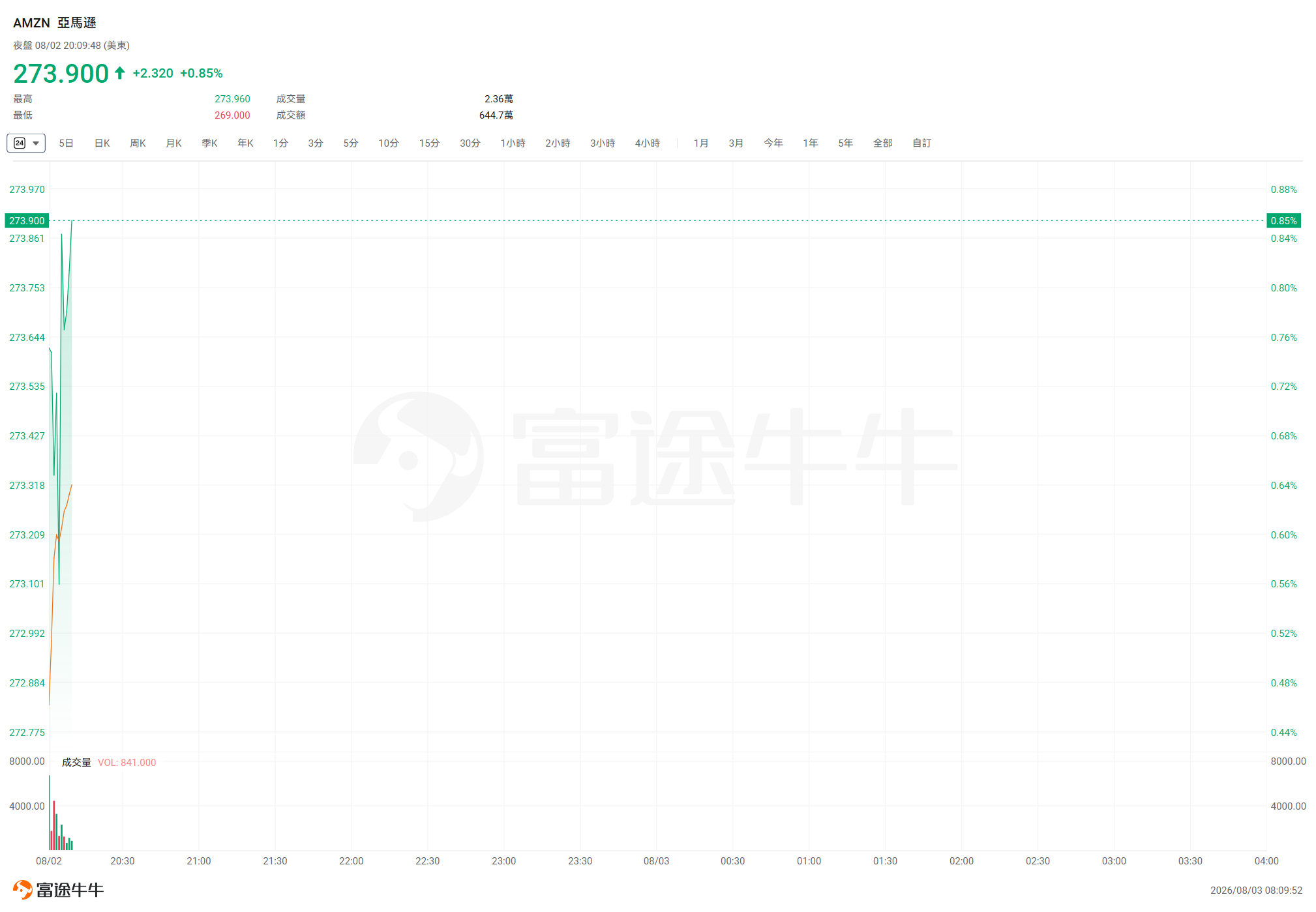
On July 31 local time, $Amazon (AMZN.US)$disclosed in its 10-Q quarterly filing that it has completed the full $50 billion investment in OpenAI. In the first quarter of this year, Amazon invested $15 billion in OpenAI’s Series C preferred shares and committed to purchasing an additional $35 billion. In the second quarter, the company deployed $13.7 billion of that commitment to acquire OpenAI Series C preferred shares. Subsequent to the reporting period, Amazon invested the remaining $21.3 billion of its commitment into OpenAI’s Series C preferred shares.
Amazon stated that if OpenAI completes an initial public offering (IPO) or another liquidity event, the issued Series C preferred shares will convert into common shares at that time. The company expects to be subject to customary lock-up restrictions following the IPO and thereafter remain bound by applicable securities laws.
IBM CEO says quantum computing is expected to contribute tangible earnings between 2028 and 2029.
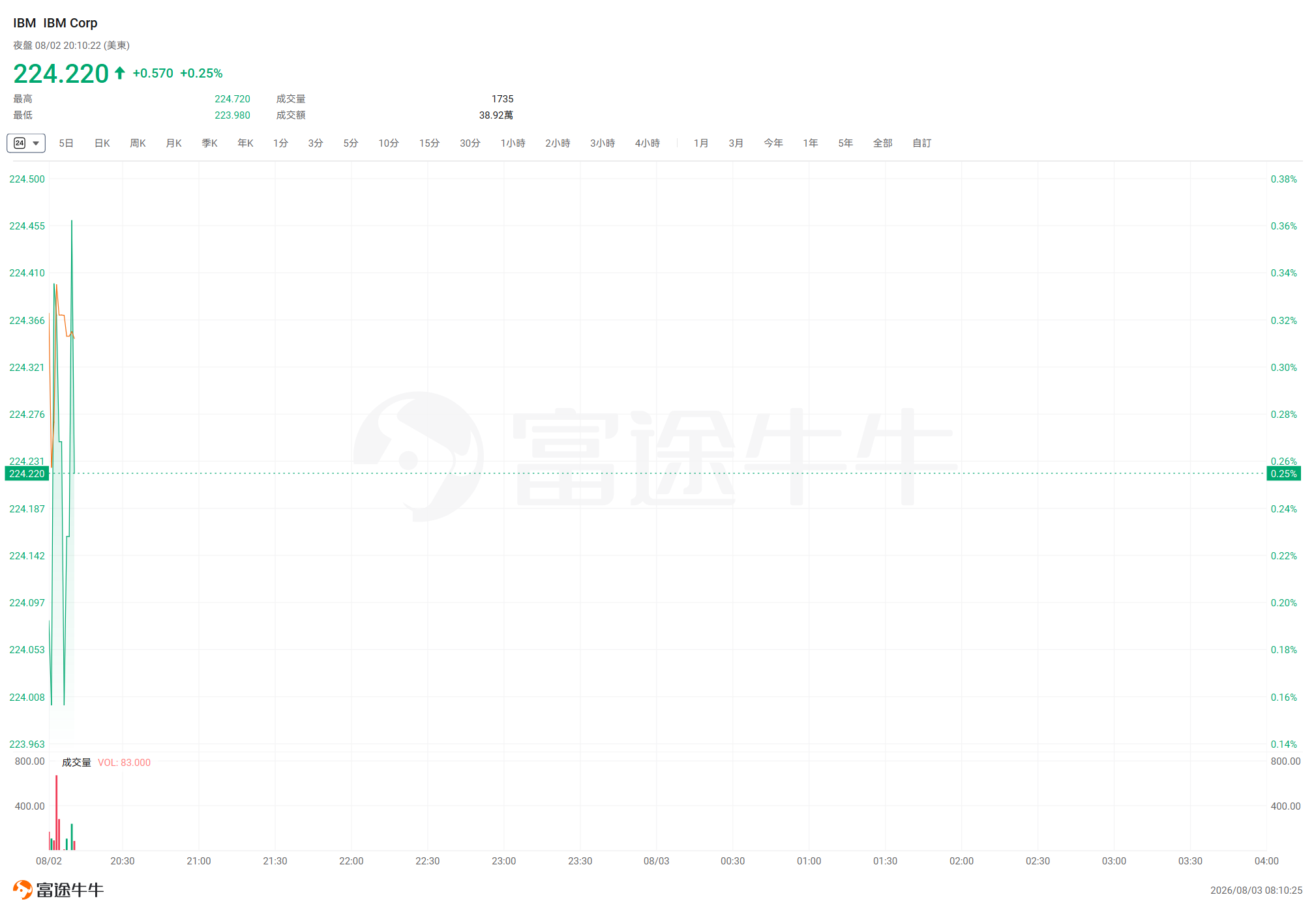
$IBM Corp (IBM.US)$CEO Arvind Krishna said on Friday that IBM’s quantum computing business is expected to begin having a “measurable impact” on the company’s earnings between 2028 and 2029. IBM is accelerating the commercialization of quantum computing and plans to invest over $10 billion in the next five years in related R&D, manufacturing expansion, ecosystem development, and acquisitions. The company previously published a roadmap targeting the launch of its first large-scale fault-tolerant quantum computer by 2029.
AstraZeneca is reportedly in talks with Bristol-Myers Squibb about a potential merger.
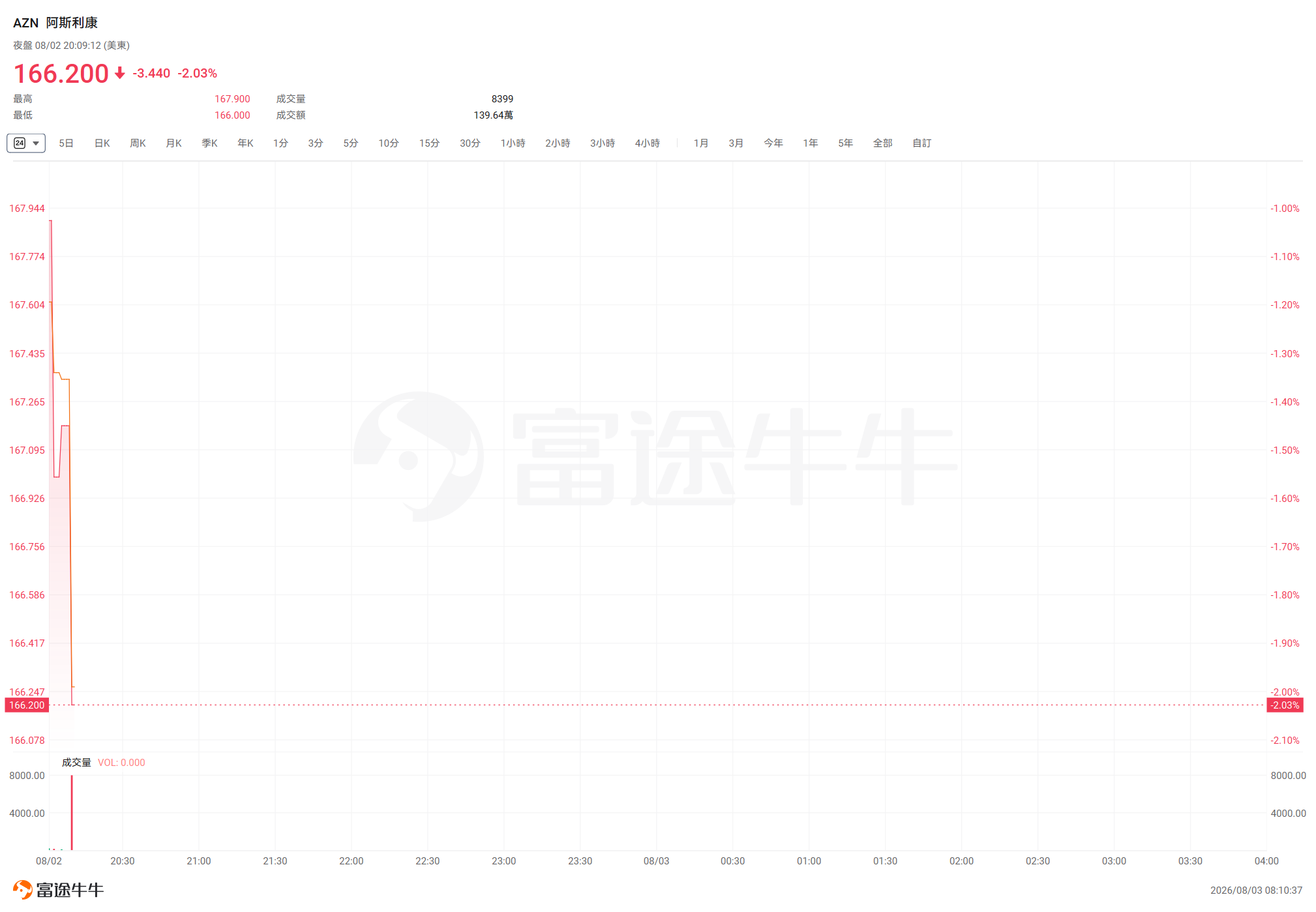
According to market sources,$AstraZeneca (AZN.US)$Already with$Bristol-Myers Squibb (BMY.US)$has been in talks regarding a potential merger. Sources familiar with the matter indicated that these discussions have taken place in recent months and could still fall through. The report did not specify the structure of any potential transaction. As of last Friday, AstraZeneca and Bristol-Myers Squibb had market capitalizations of £196 billion (approximately $264 billion) and $133 billion, respectively.
Morgan Stanley’s latest assessment: AI investment enters 'halftime pause,' with focus shifting to two new themes
Xing Ziqiang, Chief China Economist at Morgan Stanley, recently shared his latest views during a media briefing. Xing noted that recent volatility in the AI sector does not reflect deteriorating fundamentals but rather stems from overcrowded trades, capital outflows due to large tech firms’ fundraising activities, and heightened rate-hike expectations driven by rising oil prices. He believes AI investment has entered a 'halftime pause,' with the investment thesis shifting from chasing upstream compute-chip plays toward two new themes: AI applications (cost reduction and revenue realization) and HALO-enabling resources (energy, energy storage, and raw materials).
Sources: OpenAI may delay IPO until next year
Sources revealed that OpenAI may delay its IPO until next year. The company had originally aimed to complete its IPO ahead of Anthropic. One week after Anthropic filed its IPO application, OpenAI also submitted its listing documents but did not finalize a timeline, stating that 'it is still early' for an IPO, as 'many strategic objectives can be more conveniently pursued while remaining a private company.'
Moreover, multiple sources indicated that in recent months, several of OpenAI’s major investors have privately expressed concerns that the startup is burning cash too quickly, with revenue growth failing to keep pace. Other investors have opted to diversify their risk by also investing in Anthropic.
Top 20 by Trading Volume
Hong Kong Market Outlook
Southbound capital recorded net purchases of Xiaomi Group exceeding HK$1.7 billion and added positions in Alibaba with net buys of over HK$1.2 billion, while net selling Meituan by more than HK$600 million.
On Friday, July 31, southbound capital recorded net sales of HK$480 million in Hong Kong-listed stocks.
$Xiaomi Group-W (01810.HK)$、$Alibaba-W (09988.HK)$、$Tencent (00700.HK)$with net purchases of HK$1.716 billion, HK$1.234 billion, and HK$795 million, respectively;
$Meituan-W(03690.HK)$、$Yangtze Optical Fibre and Cable Joint Stock Limited Company (06869.HK)$、$SMIC (00981.HK)$with net sales of HK$636 million, HK$216 million, and HK$148 million, respectively.
China Singyes New Energy: Signed power purchase agreements with Tesla for a total capacity of approximately 469 megawatts.
$China Singyes New Energy (0182.HK)$The Company announced in its Hong Kong filing that its wholly-owned U.S. subsidiary has entered into three long-term power purchase agreements (PPAs) with Tesla for solar projects located in the United States. These PPAs cover three solar projects with a combined capacity of approximately 469 megawatts (AC side). Under these agreements, once all three projects reach full commercial operation, the Company will supply Tesla with approximately 1,200 gigawatt-hours of electricity annually in the U.S. The first project is expected to begin delivering power in the first half of 2027.
Hang Seng Indexes Company: GD32 Innovation and Montage Technology added to the CSI Hang Seng Shanghai-Hong Kong Stock Connect AH Smart Index
China Securities Index Co., Ltd. and Hang Seng Indexes Company Limited today announced the results of the semi-annual review of the CSI-Hang Seng Shanghai-Hong Kong Stock Connect AH Smart Index as of June 30, 2026. The following changes will be made to the constituent companies of the CSI-Hang Seng Shanghai-Hong Kong Stock Connect AH Smart Index, with the number of constituents remaining at 50. Additions:$GigaDevice (03986.HK)$、$Montage Technology (06809.HK)$, excluding$China Southern Airlines Co., Ltd. (01055.HK)$、$China Railway Construction Corporation (01186.HK)$。
Xiaomi smartphones have increased in price by RMB 300 to 500.
$Xiaomi Group-W (01810.HK)$Smartphone prices across the board have increased. On August 2, Xiaomi Mall updated its pricing, with several flagship models seeing price hikes ranging from RMB 300 to RMB 500. Specifically, the Redmi Turbo 5 rose from RMB 2,299 to RMB 2,599; the Xiaomi 17 Pro increased from RMB 4,999 to RMB 5,399; and the Xiaomi 17 Pro Max saw the largest increase, jumping from RMB 5,999 to RMB 6,499—a RMB 500 rise.
BYD: New energy vehicle production exceeded 420,000 units in July 2026
$BYD (01211.HK)$The announcement stated that in July 2026, exports of new energy vehicles totaled 180,538 units. Production of new energy vehicles that month reached 420,249 units, compared to 317,892 units in the same period last year. Year-to-date production stood at 2,234,379 units, down 8.98% from the 2,454,925 units produced during the same period last year. Sales in July amounted to 419,211 units, up from 344,296 units in the same month last year. Year-to-date sales reached 2,227,722 units, representing a 10.54% decline compared to the 2,490,250 units sold during the same period last year.
Today's Focus
Keywords: U.S. July ISM Manufacturing PMI; earnings reports from Palantir, ON Semiconductor, and Wuxi Apptec
On the economic data front, China’s July RatingDog Manufacturing PMI and the U.S. July ISM Manufacturing PMI will be released.
09:45 China July RatingDog Manufacturing PMI
16:00 Eurozone July Manufacturing PMI Final
22:00 U.S. July ISM Manufacturing PMI; U.S. June Construction Spending MoM
On the earnings front, Hong Kong-listed stocks $Wuxi Apptec(02359.HK)$Release latest earnings results.
U.S. stocks EchoStar Corporation (ECHO.US) 、 Luckin Coffee (LKNCY.US) will release their latest earnings before the market opens, $Palantir (PLTR.US)$、 $ON Semiconductor (ON.US)$、 $Snap Inc (SNAP.US)$ and report earnings after the market close.
 Looking to select stocks or analyze your holdings? Want to understand the opportunities and risks in your portfolio? For any investment-related questions,just ask Futubull AI!

Editor/melody