Macro News Highlights
U.S. and Russian officials discuss the post-war return of U.S. companies to Russia's energy market.
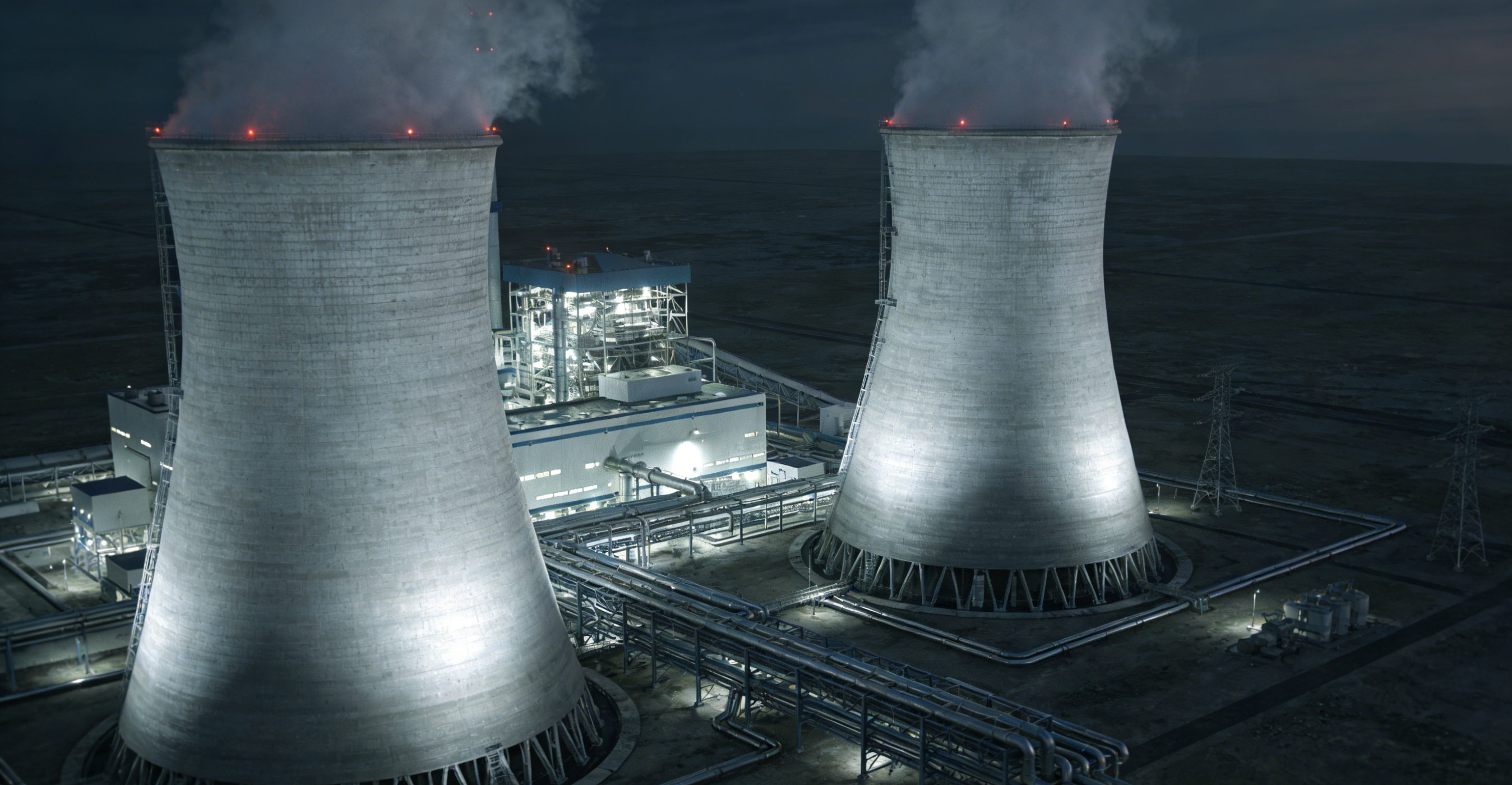
According to the Financial Times, citing sources familiar with the matter, the United States and Russia are discussing offering economic incentives—such as allowing U.S. companies to re-enter Russia's energy market and resuming the Sakhalin oil-and-gas joint venture, as well as restoring Russian oil exports to Europe via the Druzhba pipeline—to help advance peace negotiations between Russia and Ukraine.
Other proposed measures include selling Lukoil's overseas assets to investors with close ties to the White House, involving Russia's Novatek in an Alaska-based LNG project, resuming gas supplies to Europe via the partially intact Nord Stream pipeline, and easing sanctions on Russian potash fertilizers while transferring management of the Russian‑controlled Zaporizhzhia Nuclear Power Plant to U.S. entities.
 U.S. officials stated that any related economic cooperation must be integrated into a comprehensive peace framework, and no agreement has yet been finalized. The report noted that Europe opposes easing sanctions on Russia before the war ends, while U.S. companies remain cautious about reentering the Russian market, leaving significant uncertainty as to whether such plans can actually be implemented.
Trump: The United States will receive the first batch of 1 million barrels of Venezuelan crude oil, with subsequent supplies expected to reach several billion barrels.
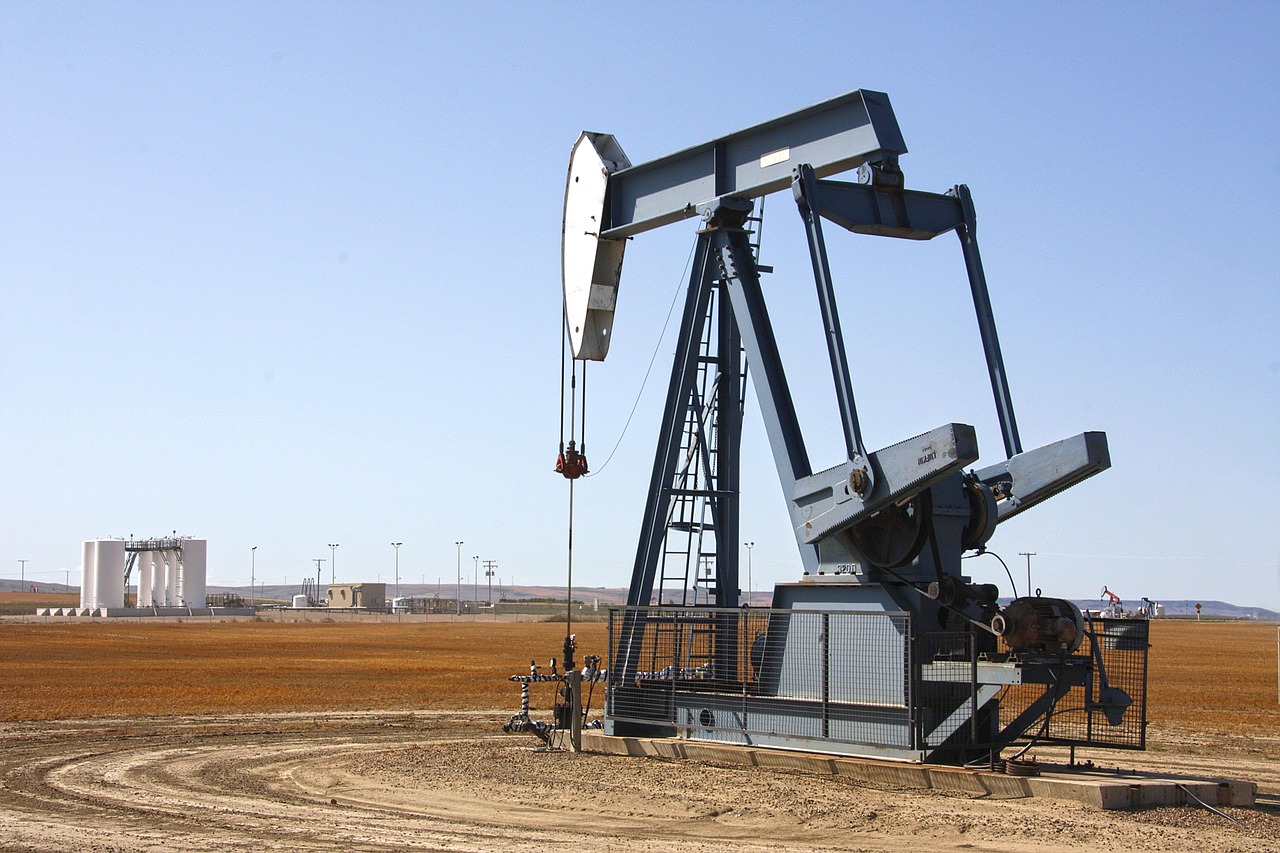
U.S. President Trump: I am on my way to Corpus Christi, Texas, to attend an unprecedented rally. Thanks to our highly successful military operations, the United States will secure one million barrels of Venezuelan oil; subsequently, we will also conclude the largest oil deal in world history. Thanks to our restored relations with Venezuela—and these relations are developing exceptionally well—the United States can obtain this oil without any cost to American taxpayers.
This is just the first batch of what could be billions of barrels of oil in the years to come. By leveraging our energy‑dominant position stretching from Alaska all the way to Venezuela, I have turned the Western Hemisphere into the world's "energy capital." Gasoline and diesel prices will soon plunge—just you wait!
Iran's Supreme Leader stressed the implementation of Tehran's conditions to bring the war to a close.
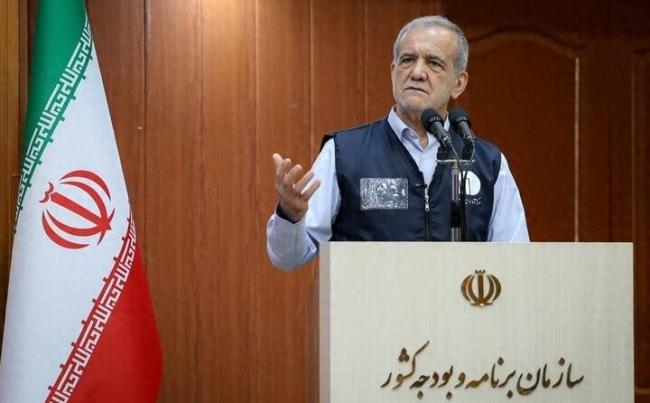
The Iranian Revolutionary Guard stated that Major General Rezaei, Secretary of Iran's Supreme National Security Council, met with Iran's Supreme Leader, Ayatollah Mojtaba Khamenei. During the talks, they discussed safeguarding national and regional security through the management of the Strait of Hormuz, as well as strengthening bilateral relations with neighboring countries on the basis of lasting mutual benefit. Khamenei emphasized that the adversaries' predicament is a result of Iran's steadfast commitment to national resistance.
He emphasized that information should be disseminated proactively and promptly to sustain the public's ongoing participation in efforts to safeguard the nation and its system. At the same time, by implementing the relevant conditions put forward by Iranian officials, it is essential to protect the rights and interests of the Iranian people and the Resistance Front, with a view to bringing an end to the war and the "neither war nor peace" situation. Rezaei stated that the Secretariat of the Supreme National Security Council is advancing Iran's strategic policies, which include "establishing regional arrangements and order led by the region itself."
AI financing anxiety may be nearing its peak, with billionaire Novogratz predicting that credit markets will stabilize.
Michael Novogratz, the billionaire founder and CEO of Galaxy Digital Inc., a provider of crypto‑finance services and an operator of artificial‑intelligence data centers, said that anxiety in global credit markets over AI‑related spending may be nearing a turning point. Following the company's third‑quarter results, Novogratz stated on Tuesday's earnings call, "The credit markets are currently experiencing some 'indigestion.' Market tensions may be close to peaking. There's no easy path out of this situation, but I believe time will gradually bring things back into balance."
Novogratz believes that Meta Platforms' equity financing and Anthropic PBC's planned initial public offering are both signs that pressure may be easing. Novogratz stated, "You can think of it this way: more equity financing, less debt financing. In a sense, the past week has been good for the credit markets, because we've seen such large-scale equity financing."
The probability that the Federal Reserve will hold interest rates steady this week stands at 92.8%.
According to CME's "FedWatch" tool, the probability that the Federal Reserve will hold rates steady this week stands at 92.8%, while the likelihood of a cumulative 25-basis-point hike is 7.2%. By December, the odds of unchanged rates are 16.4%, with a 77.7% chance of a cumulative 25-basis-point increase and a 5.9% chance of a cumulative 50-basis-point rise.
Deutsche Bank: U.S. stocks may be at the bottom of their final decline for the year, and a year-end rally could soon begin.
Jim Reid, head of global macro research at Deutsche Bank, said on October 27 that, based on the historical seasonal patterns of the S&P 500 since 1928, U.S. stocks may be at the bottom of their final decline for the year and could then see a year-end rally.
Historical data show that in typical years, U.S. stocks tend to peak in early September, bottom out and rebound by late September, then retreat again in late October before gradually climbing through year-end. The pattern is even more pronounced in midterm election years: the S&P 500 typically declines about 4% to 5% from its late-April peak, hitting a low in early October; over the past 23 midterm election cycles, the index has risen in the three months following early October on 21 occasions.
Reid noted that since the S&P 500 hit a record high on May 29 this year, its cumulative gain over the past five months has been less than 1%, with the overall trend closely mirroring historical patterns in midterm election years. As the November 3 midterm elections draw near, the electoral cycle could coincide with year-end seasonal rally factors; however, developments in Iran, advances in AI, and political risks in France may still unsettle markets, and historical trends do not guarantee a sustained stock market rally.
U.S. stock market行情
All three major indices rose, and SpaceX's stock rallied after its earnings report.
On Tuesday, the three major U.S. stock indexes all rose. At the close, the Dow Jones Industrial Average edged up 0.03% to 52,377.57 points; the Nasdaq Composite gained 1.18% to 26,477.81 points; and the S&P 500 climbed 0.60% to 7,722.60 points.

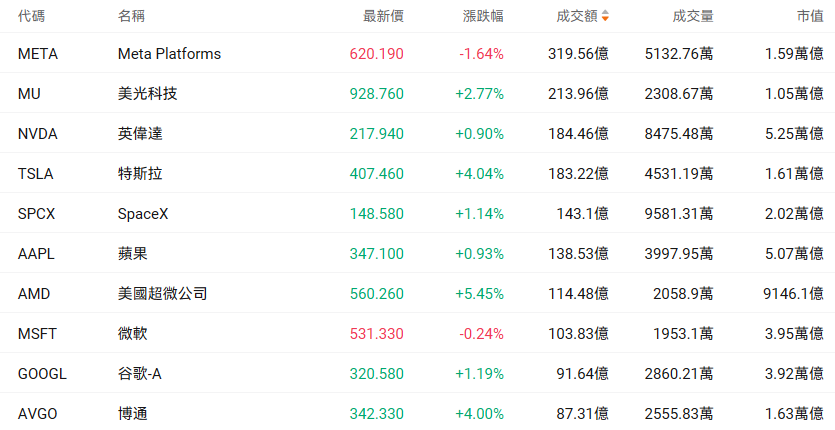
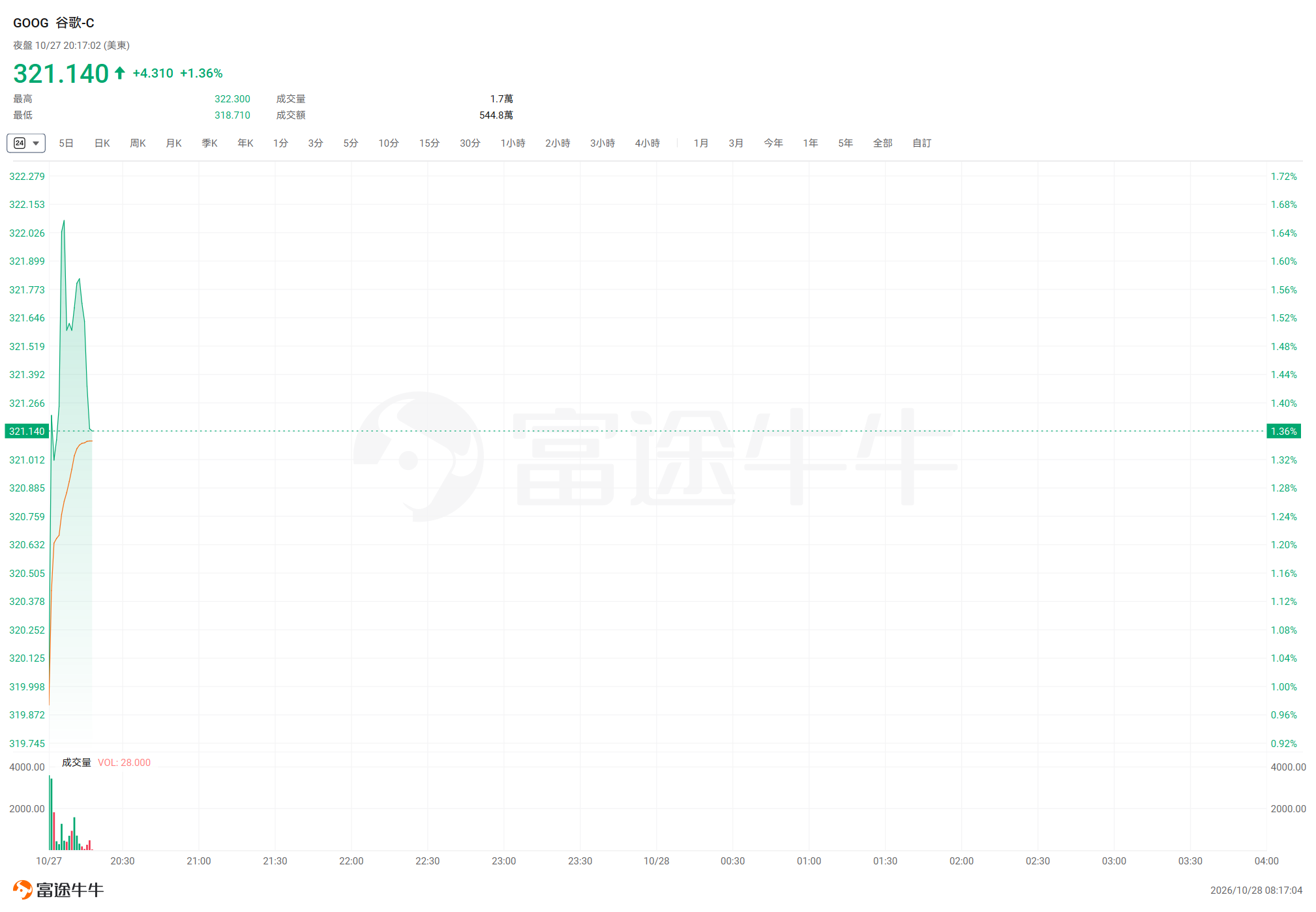
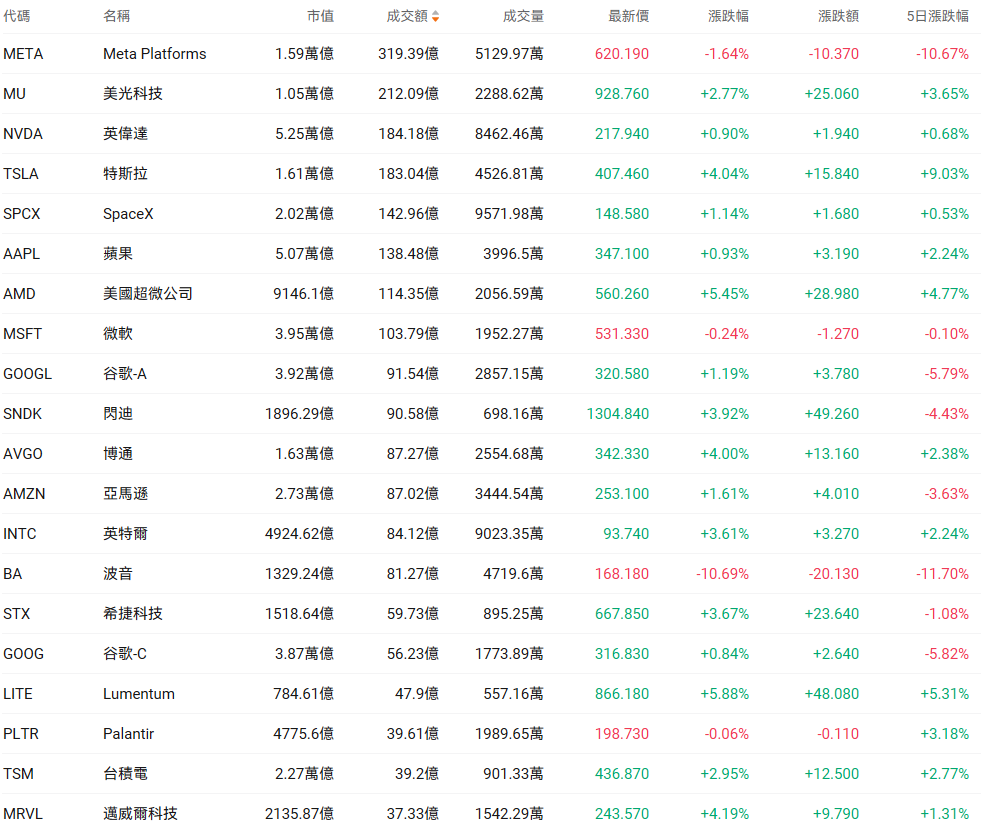
$Star Technology Stocks (LIST2518.US)$Most stocks rose, with AMD up over 5%, Tesla up over 4%, Broadcom up 4%, Micron Technology up nearly 3%, Google A and SpaceX up over 1%, NVIDIA and Apple up nearly 1%, Meta down nearly 2%, and Microsoft slightly lower.
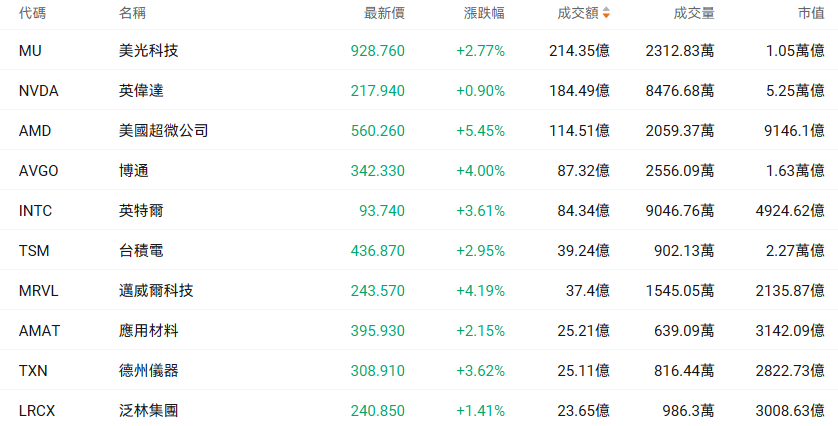
$Philadelphia Semiconductor Index (.SOX.US)$Up 3.60%, with all 30 constituent stocks advancing; Marvell Technology rose more than 4%, Intel and Texas Instruments gained nearly 4%, Taiwan Semiconductor climbed nearly 3%, and Lam Research increased by over 1%.
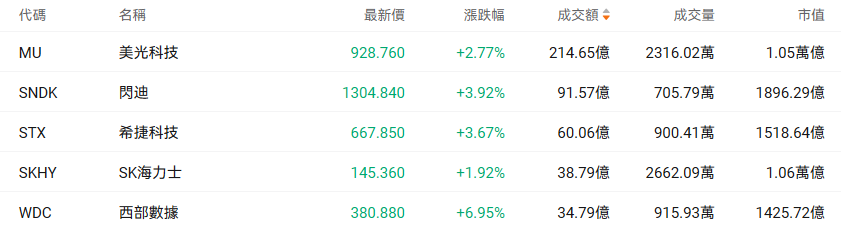
$Storage Concept (LIST23925.US)$Most stocks rose,$Roundhill Memory ETF(DRAM.US)$Up 4.53%, Western Digital rose nearly 7%, Seagate Technology and SanDisk gained nearly 4%, Micron Technology climbed nearly 3%, and SK Hynix advanced nearly 2%.
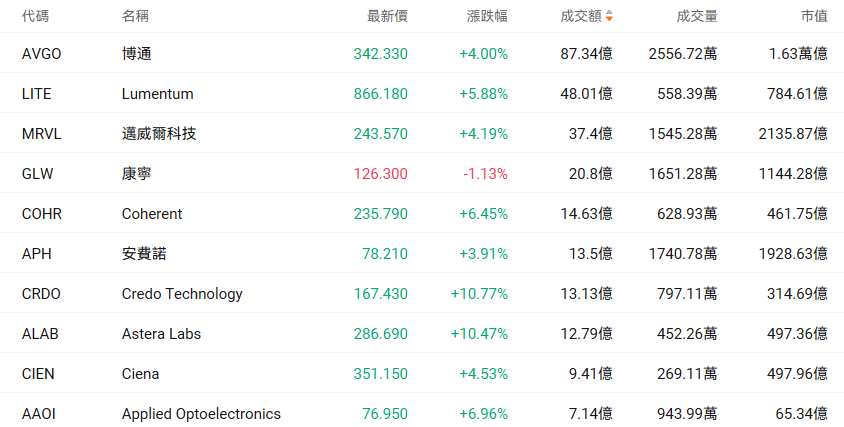
$Optical Communications (LIST23979.US)$Stocks broadly advanced, with Astera Labs and Credo Technology rising more than 10%, Corning up over 6%, Lumentum gaining nearly 6%, Marvell Technology surging more than 4%, Broadcom climbing 4%, and Corning falling more than 1%.
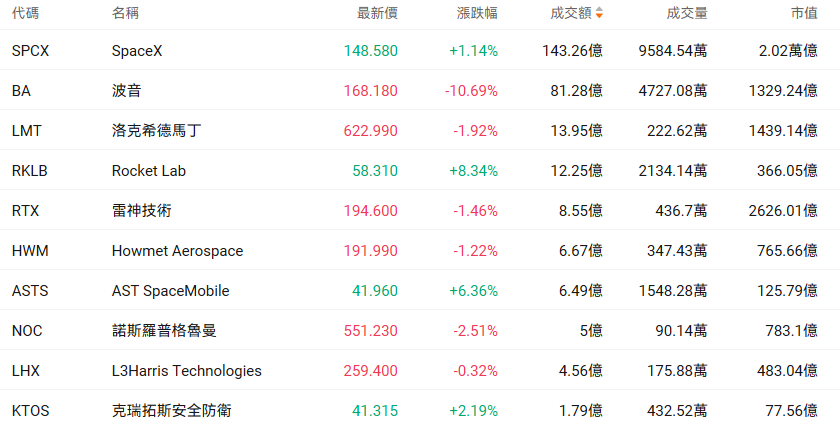
$Space Concept (LIST2556.US)$Most stocks rose, with Rocket Lab up over 8%, AST SpaceMobile up over 6%, Kratos Security & Defense up over 2%, and SpaceX up over 1%. Boeing fell nearly 11%, Lockheed Martin fell nearly 2%, and Raytheon Technologies fell over 1%.
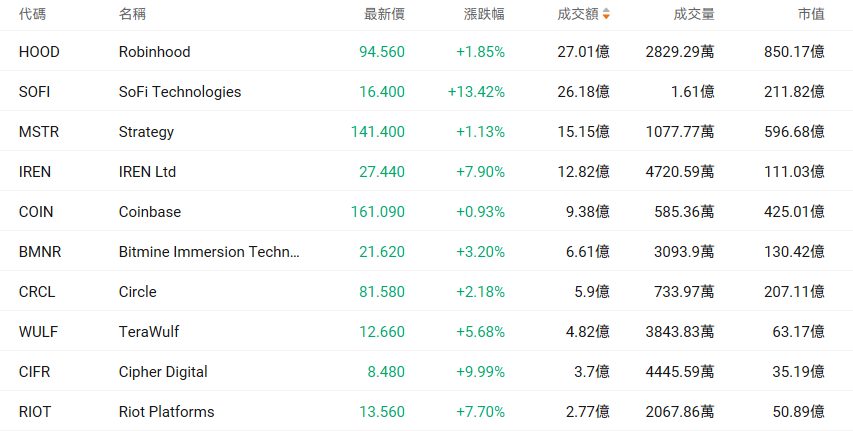
$Cryptocurrency Concept Stocks (LIST20010.US)$Most stocks rose, with SoFi Technologies up over 13%, IREN Ltd up nearly 8%, Bitmine Immersion Technologies up over 3%, Circle up over 2%, and Strategy up over 1%.
Individual Stock Information
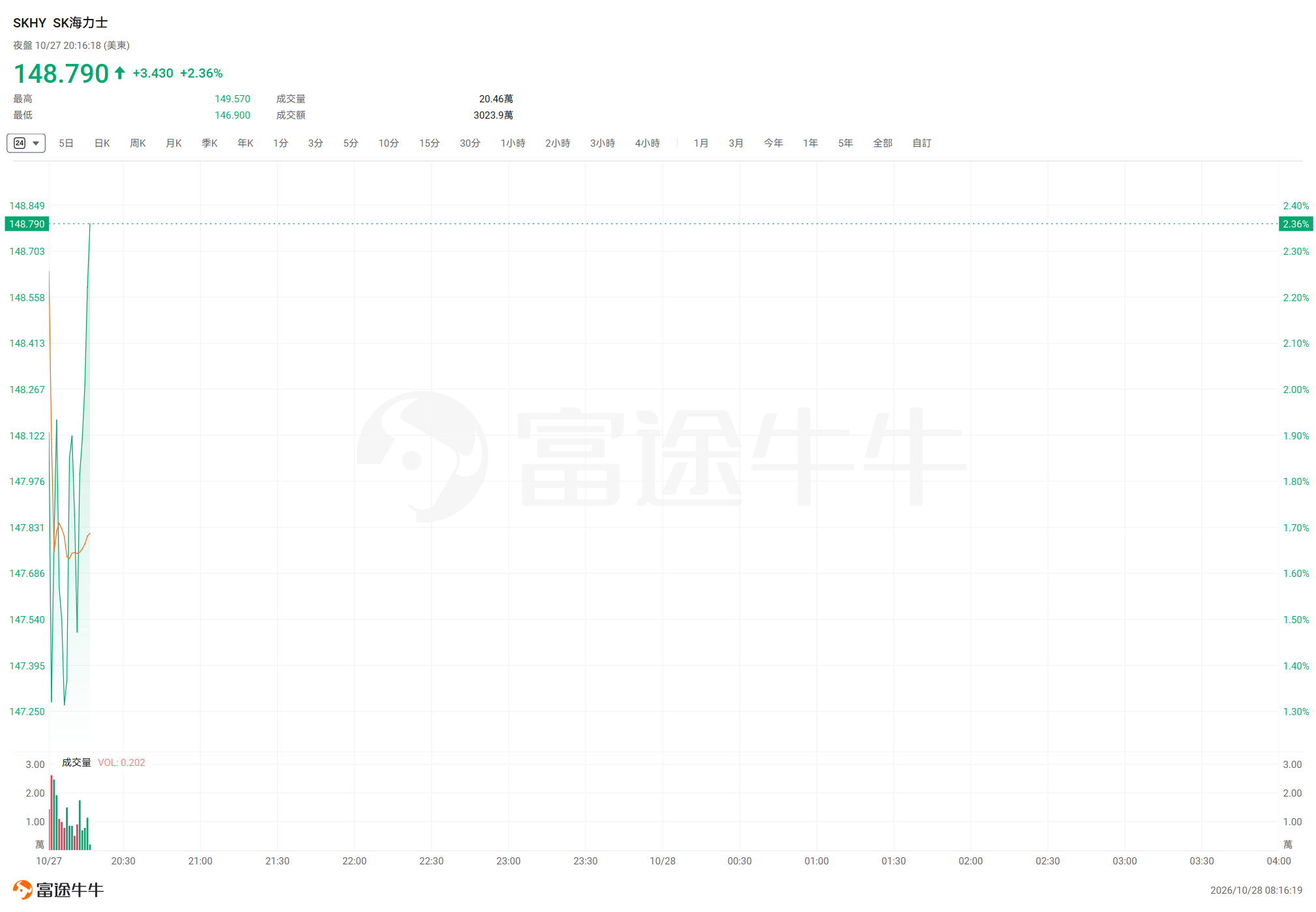
SK Hynix reported third-quarter revenue of KRW 104.62 trillion and operating profit of KRW 83.33 trillion.
$SK Hynix (SKHY.US)$In the third quarter, revenue reached KRW 104.62 trillion, operating profit stood at KRW 83.33 trillion, and net profit was KRW 39.8 trillion. The company plans to return approximately KRW 100 trillion to shareholders by 2026, with proposed cash dividends exceeding KRW 30 trillion. SK Hynix expects the shortage of memory chips to persist through 2030 and has already signed long-term contracts with 14 major customers.
SK Hynix forecasts that DRAM market demand will grow by more than 20% year over year in 2027, while NAND market demand is expected to expand at a high single-digit percentage rate. In the fourth quarter, DRAM shipments are projected to increase at a mid‑range pace within the 20% range compared with the third quarter, and NAND shipments are anticipated to rise by a low‑to‑mid single-digit percentage from the third quarter.
The new Apple iMac boasts a fivefold increase in AI performance, with a starting price of 12,499 yuan.
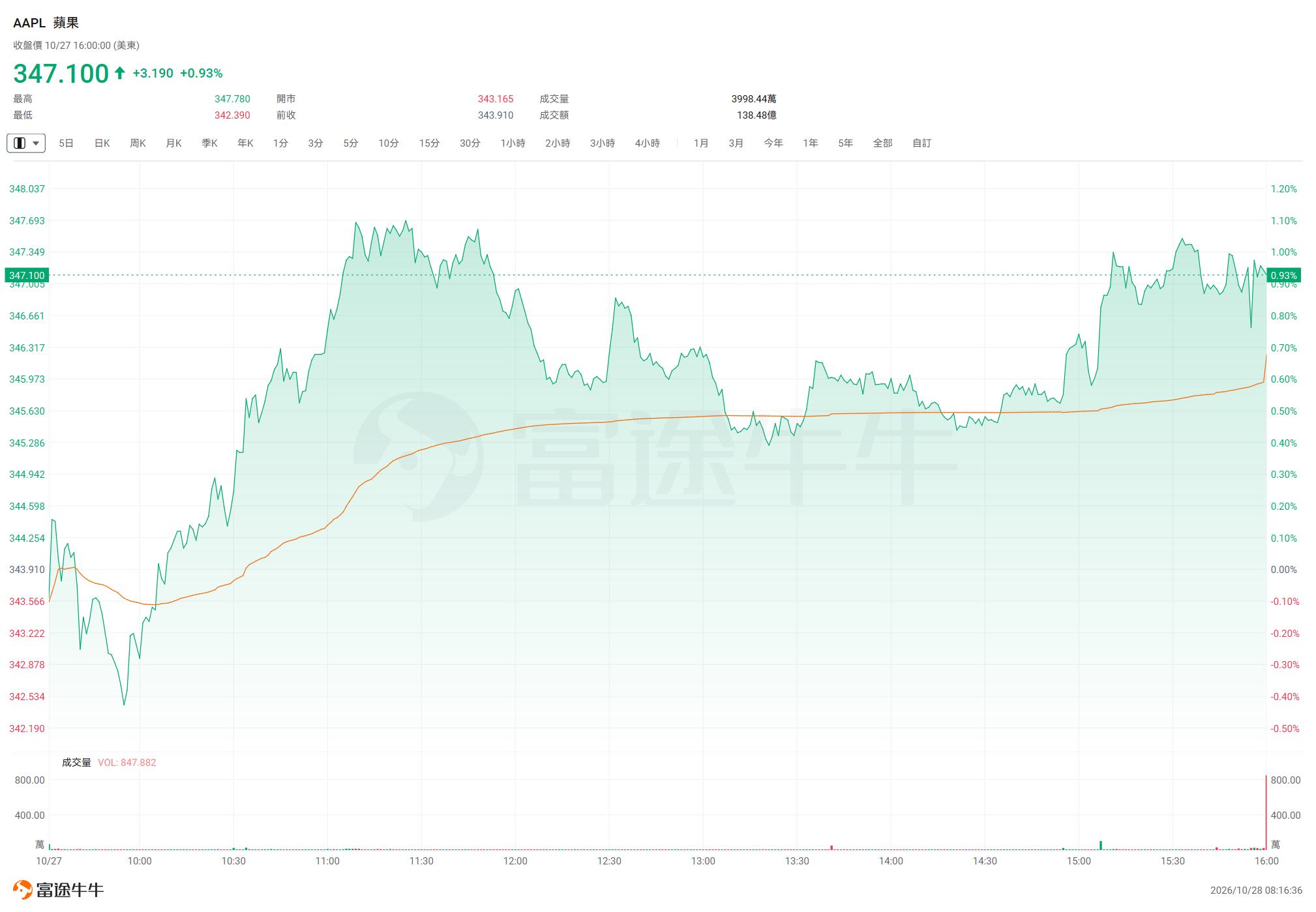
$Apple(AAPL.US)$This week, Apple unveiled a flurry of new products: just ahead of the debut of the Touch Bar–equipped MacBook Pro, it launched the 24-inch iMac with the M1 chip and the 14-inch entry-level MacBook Pro. Both models will go on pre‑order at 1:10 a.m. Beijing time on October 29, with official shipping beginning on November 6. The new iMac starts at RMB 12,499, while the MacBook Pro starts at RMB 15,999.
Google has unveiled the latest version of its AI world model, Genie 4.
$Google-A (GOOGL.US)$On Tuesday, DeepMind unveiled Genie 4 on its official website, enabling users to create explorable virtual worlds via text prompts and navigate them using a keyboard. Users can also input commands as the scene unfolds, dynamically altering the weather or adding characters in real time. Google stated that the simulated environment can run for up to two minutes—roughly twice as long as the previous-generation Genie 3.
OpenAI, which has long been purchasing NVIDIA chips, plans to procure Google AI chips.
According to The Information, OpenAI plans to procure$Google-A (GOOGL.US)$AI chips are good news for Google, NVIDIA's new rival in the investment space. At present, the financial terms and other details of this purchase remain unclear. If the TPU (Tensor Processing Unit) procurement agreement is finalized, it will mark a major breakthrough for Google's chip business. Currently, the AI computing market is dominated by NVIDIA GPUs, but Google's chip division is steadily mounting a challenge to NVIDIA. OpenAI has long been one of NVIDIA's most important customers, and NVIDIA has already invested tens of billions of dollars in this startup.
Broadcom has arranged for financial partners to purchase AI racks based on custom AI accelerators.
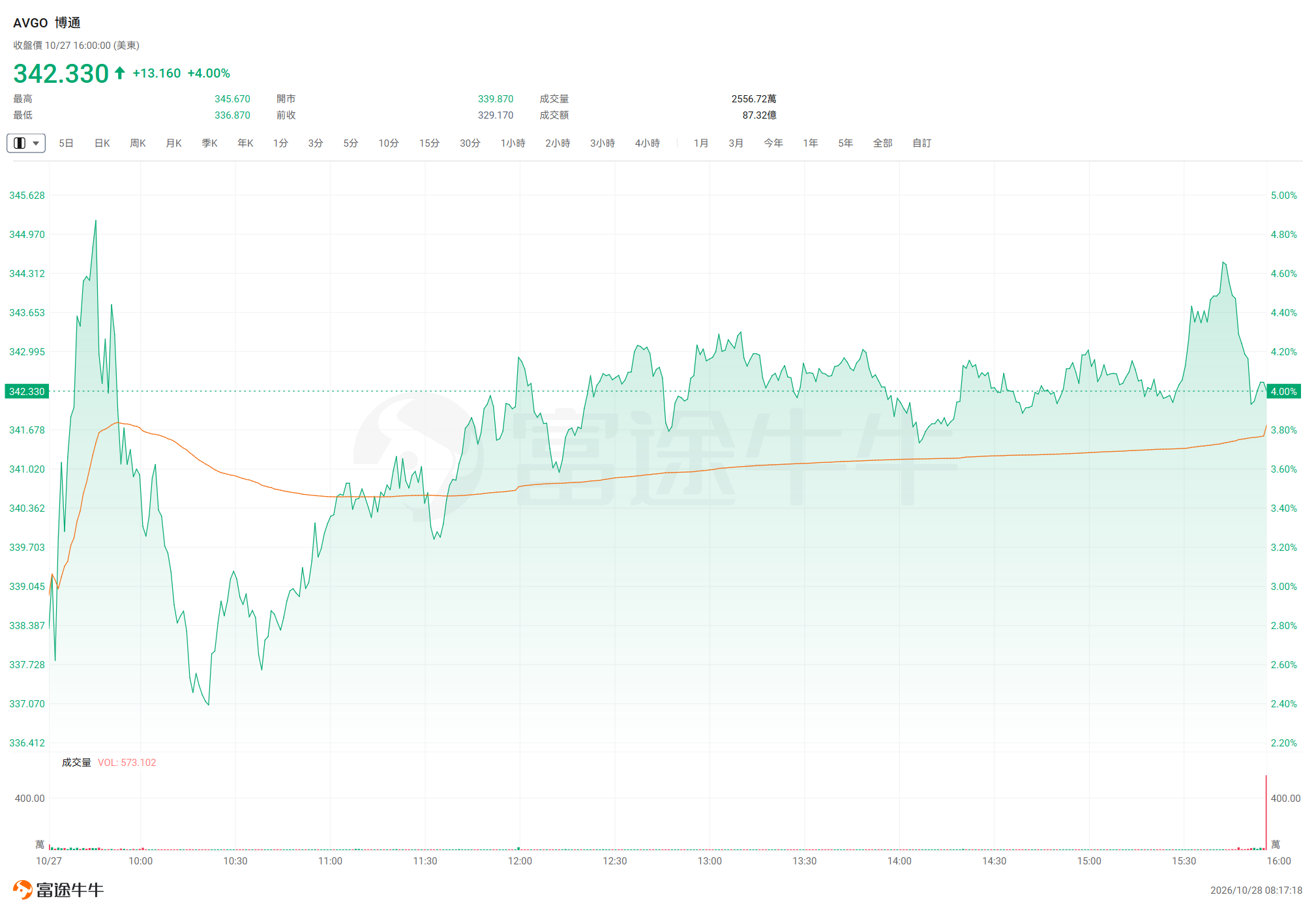
$Broadcom (AVGO.US)$Arrange for financial partners to purchase AI racks powered by custom AI accelerators. Provide residual value support to a special-purpose vehicle (SPV), with the maximum potential liability under the guarantee arrangement capped at approximately USD 43 billion. The company assumes a maximum indemnity liability of USD 43 billion for AI rack losses, covering 72.5% of the customers' lease obligations.
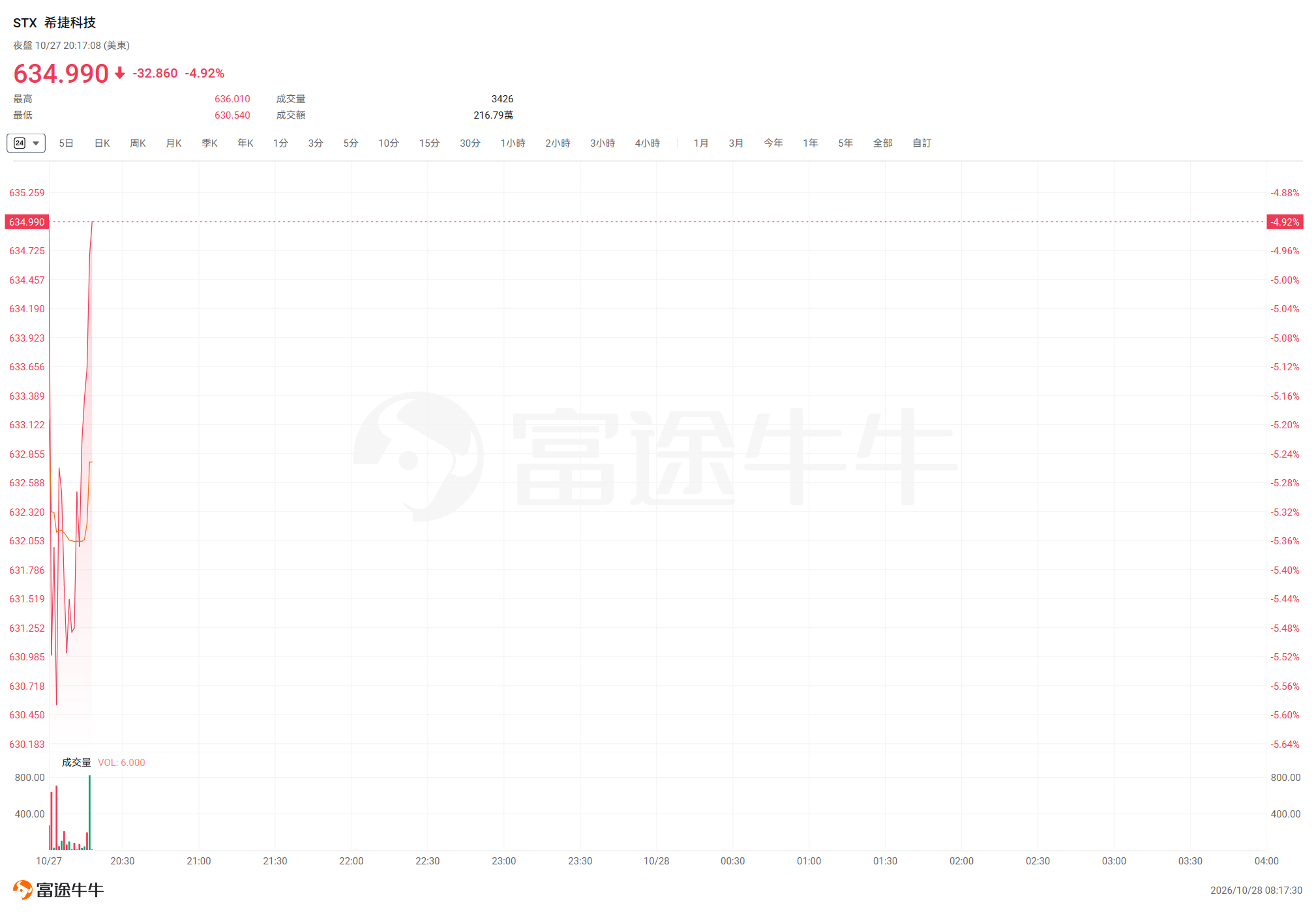
Seagate Technology fell nearly 5% in after-hours trading, despite a 61% increase in quarterly revenue; the strong earnings report failed to boost the stock price.
Data storage device manufacturer$Seagate Technology (STX.US)$The company reported first-quarter fiscal 2027 revenue that exceeded market expectations, rising 61% year over year to $4.23 billion. Its guidance for next quarter's revenue is $4.8 billion, 6.7% above the consensus estimate. Seagate has posted revenue growth for ten consecutive quarters, underscoring the persistence of the current upcycle. Historically, such industry upcycles typically last eight to ten quarters.
Adjusted earnings per share were $7.68, compared with $2.61 in the same period last year and $7.39 expected. Adjusted operating margin was 50.7%, versus 29% a year ago and 49.8% expected; adjusted gross margin was 57.8%, up from 40.1% a year ago and above the 57.4% forecast. Operating cash flow totaled $1.7 billion, compared with $532 million in the prior-year period and $1.71 billion expected.
Management currently expects next quarter's revenue to grow 69.9% year over year. This quarter, Seagate's inventory turnover days stood at 86, five days above the five-year average, indicating that the company's inventory levels have risen to historically elevated levels. Inventory turnover days (DIO) is a key metric for chipmakers, reflecting both the capital intensity of the business and the cyclical nature of semiconductor supply and demand.
Related Reading:Seagate Technology's Q1 revenue grew 61% year over year, with both free cash flow and gross margin hitting record highs.
Oracle expands its NVIDIA chip partnership, bringing in suppliers such as Google and Cerebras.
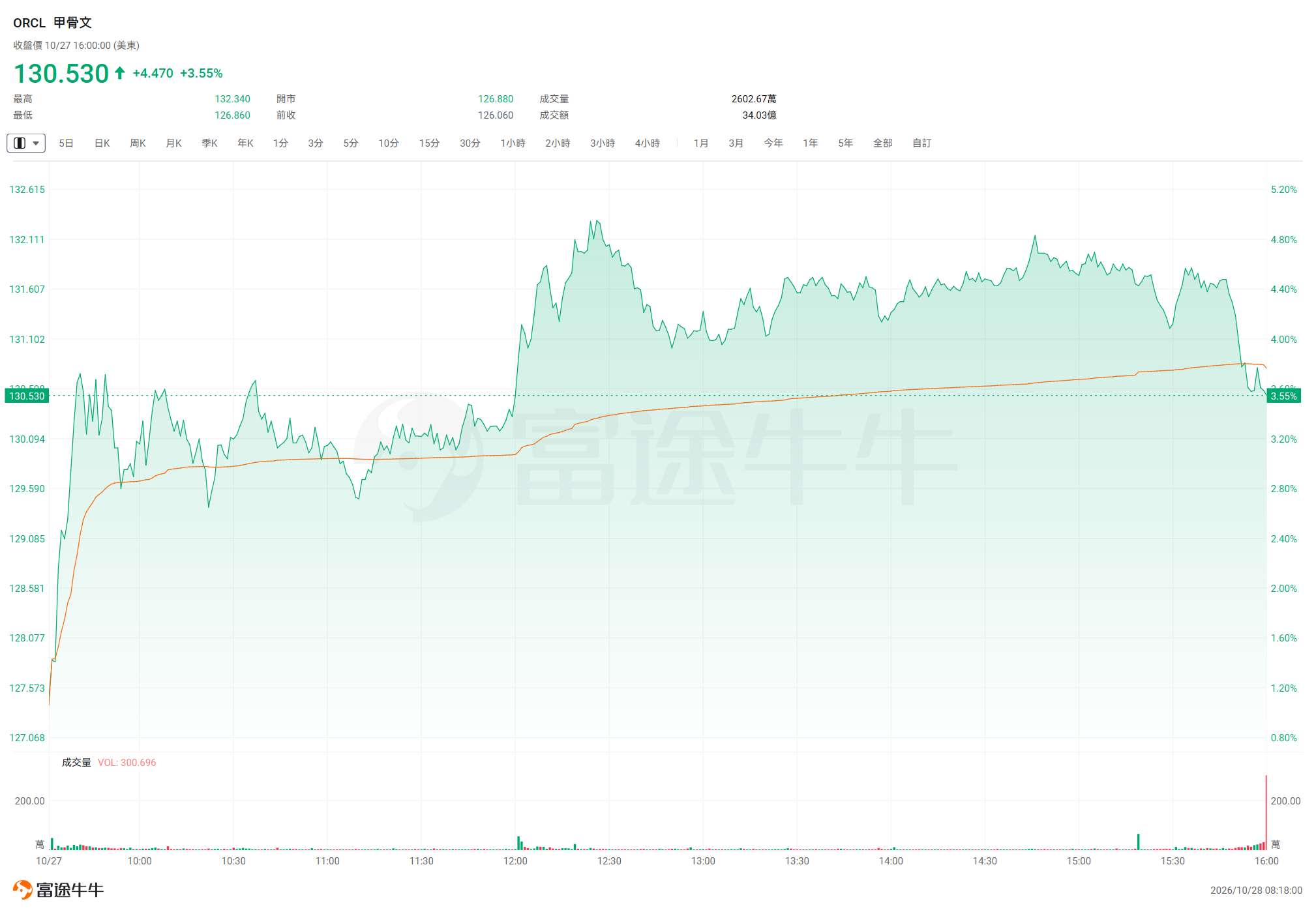
$Oracle (ORCL.US)$Announced the expansion of cooperation with$NVIDIA (NVDA.US)$In its cloud-based AI chip collaboration, the company plans to scale up the deployment of AI servers equipped with NVIDIA's next-generation Vera Rubin chips to several gigawatts, while also integrating Google's TPU chips and AI inference chips from SambaNova Systems and Cerebras Systems to diversify its computing power offerings.
Oracle also plans to deploy its self-developed Acceleron network chip in select NVIDIA servers, replacing some of NVIDIA's networking products. The company stated that different AI workloads have varying demands for computing power, and a diversified chip supply enables customers to choose the right infrastructure based on performance, throughput, and cost. Oracle has not yet disclosed the financing arrangements for this chip procurement. Last month, the company noted that customers are increasingly bearing the costs of chip purchases and maintained its fiscal 2027 capital expenditure target of approximately $90 billion to $95 billion.
According to reports, Meta's $25 billion stock offering was oversubscribed by approximately five times.
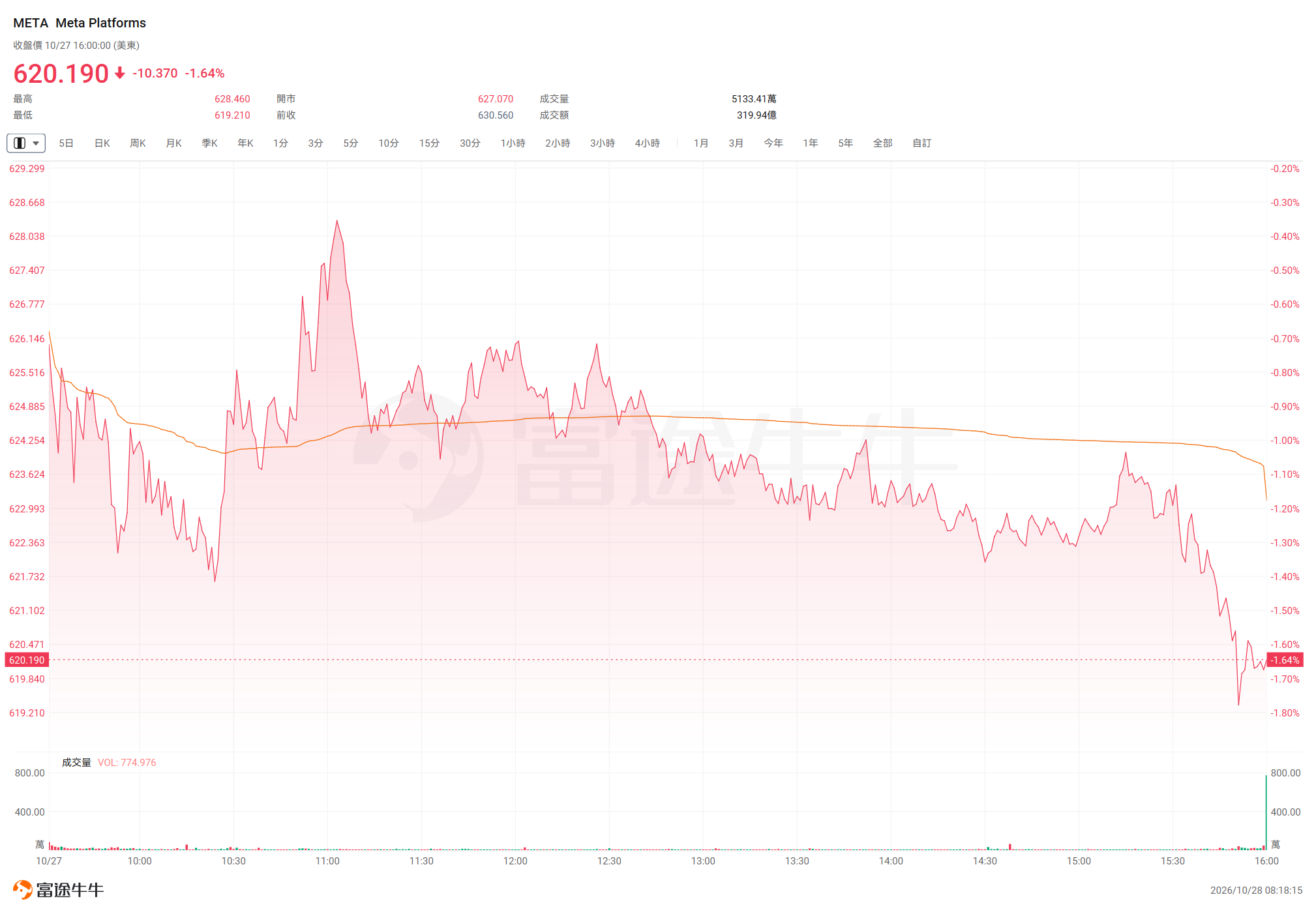
Sources familiar with the matter revealed that,$Meta Platforms(META.US)$The expanded $25 billion stock offering attracted subscription demand roughly five times the number of shares available. The company plans to raise $98 billion to fund its artificial intelligence initiatives. According to insiders, more than half of the common shares in this offering were allocated to long-term investors and existing shareholders. Notably, the top 15 largest subscribers collectively received approximately 70% of the shares issued.
The offering is priced at $625 per share, representing a 2.7% discount to the closing price on the Friday before the announcement. This stock offering is just one component of Meta's broader financing plan, which also includes the issuance of $12.5 billion in mandatory convertible preferred shares and a planned secondary offering of shares at market prices. If the final fundraising reaches $98 billion, it would become one of the largest equity‑financing transactions in history.
The cloud sector faced a sell-off, while Crusoe's CEO staunchly defended rival CoreWeave, noting that its situation is quite favorable.
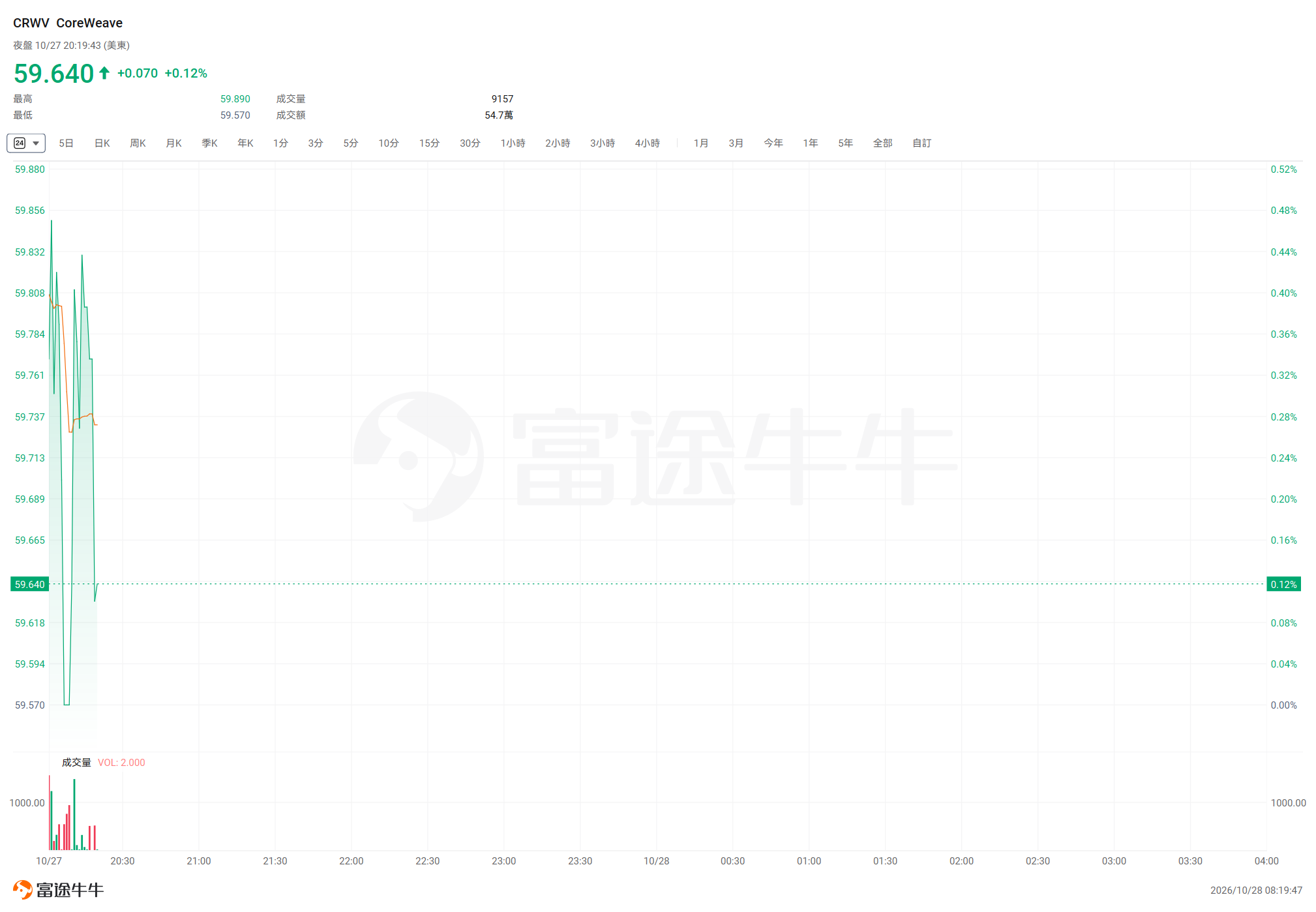
Chase Lochmiller, CEO of Crusoe, a U.S.-based AI data center developer, stated at an investment conference in Dallas that the recent market sell-off of "neocloud" companies was an overreaction. He specifically cited competitors.$CoreWeave(CRWV.US)$"As far as I know, CoreWeave has struck some very good deals, and they're in a pretty strong position right now."
This statement comes as CoreWeave finds itself in the eye of a market storm. Market concerns are mounting over whether the AI infrastructure boom can endure and whether the hundreds of billions of dollars in debt incurred to fuel it can be smoothly repaid—CoreWeave has become the focal point of this controversy. While defending his peers, Crusoe himself is also facing scrutiny from outside observers, with some tech companies questioning his ability to build and sustain large-scale data centers.
Tesla rose more than 4% in the previous trading session, hitting a over-three-month high, and was targeted by Barclays with a price target of $450.
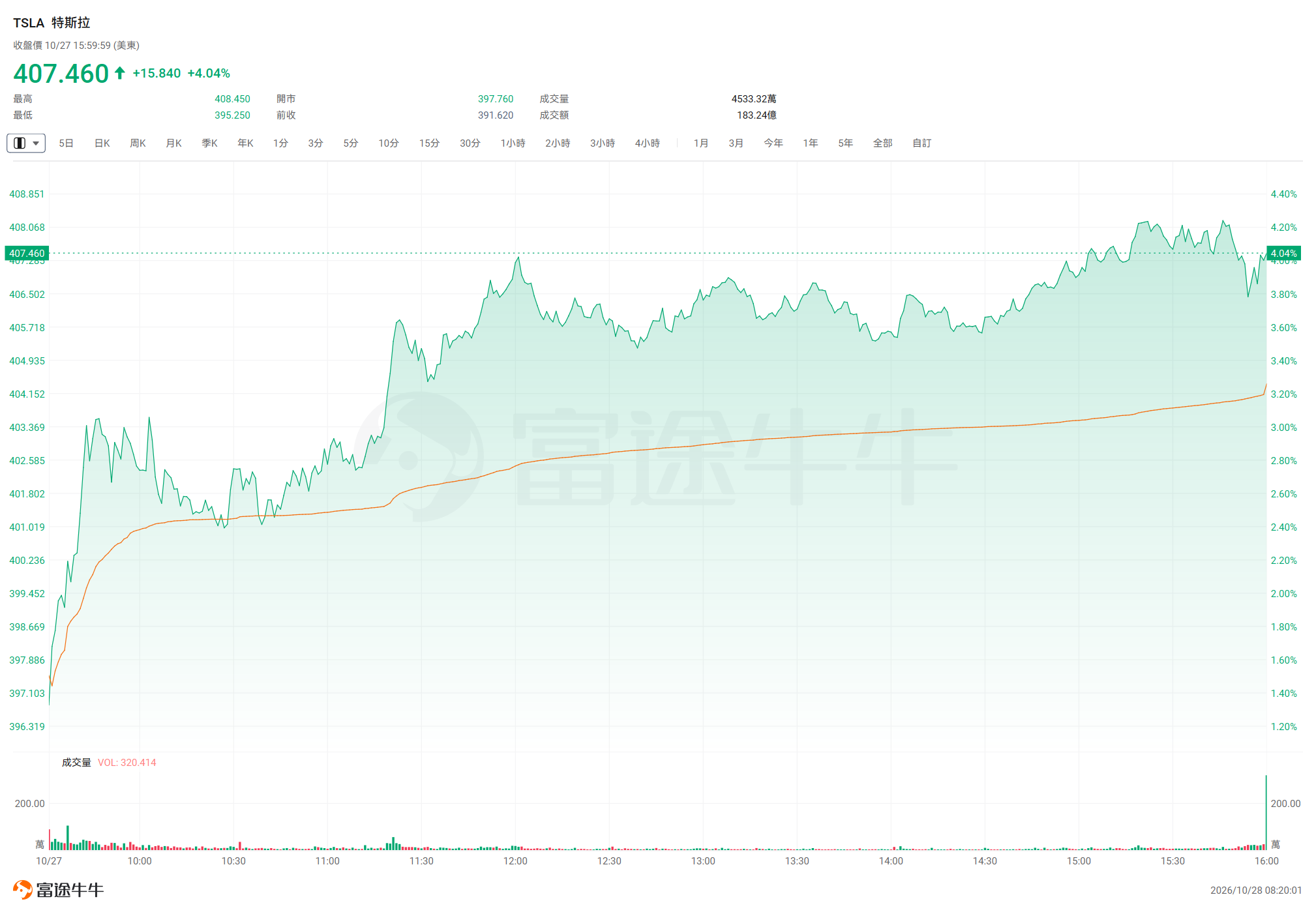
$Tesla (TSLA.US)$On the previous trading day, it rose more than 4%, hitting a new high since July 15, with its total market capitalization approaching $1.6 trillion. Barclays upgraded Tesla's rating to "Overweight" and raised its price target from $370 to $450, citing the strategic premium that could be unlocked by a potential merger between Tesla and SpaceX. On October 20, during SpaceX's earnings call, Musk confirmed that the two companies have established a dedicated committee to explore a merger, though no specific deal structure has been finalized yet.
Corning's Q3 core sales rose 19% year over year to $5.08 billion, beating expectations.
$Corning(GLW.US)$In the third quarter, core sales totaled $5.08 billion, up 19% year over year, beating the market estimate of $5.02 billion; optical communications sales rose 44% year over year to $2.38 billion; and core earnings per share came in at 91 cents, surpassing the market estimate of 89 cents. Corning forecasts fourth-quarter core earnings per share of 96 cents to $1.00, compared with the market estimate of 93 cents, and core sales of $5.2 billion to $5.3 billion, versus the market estimate of $5.2 billion.
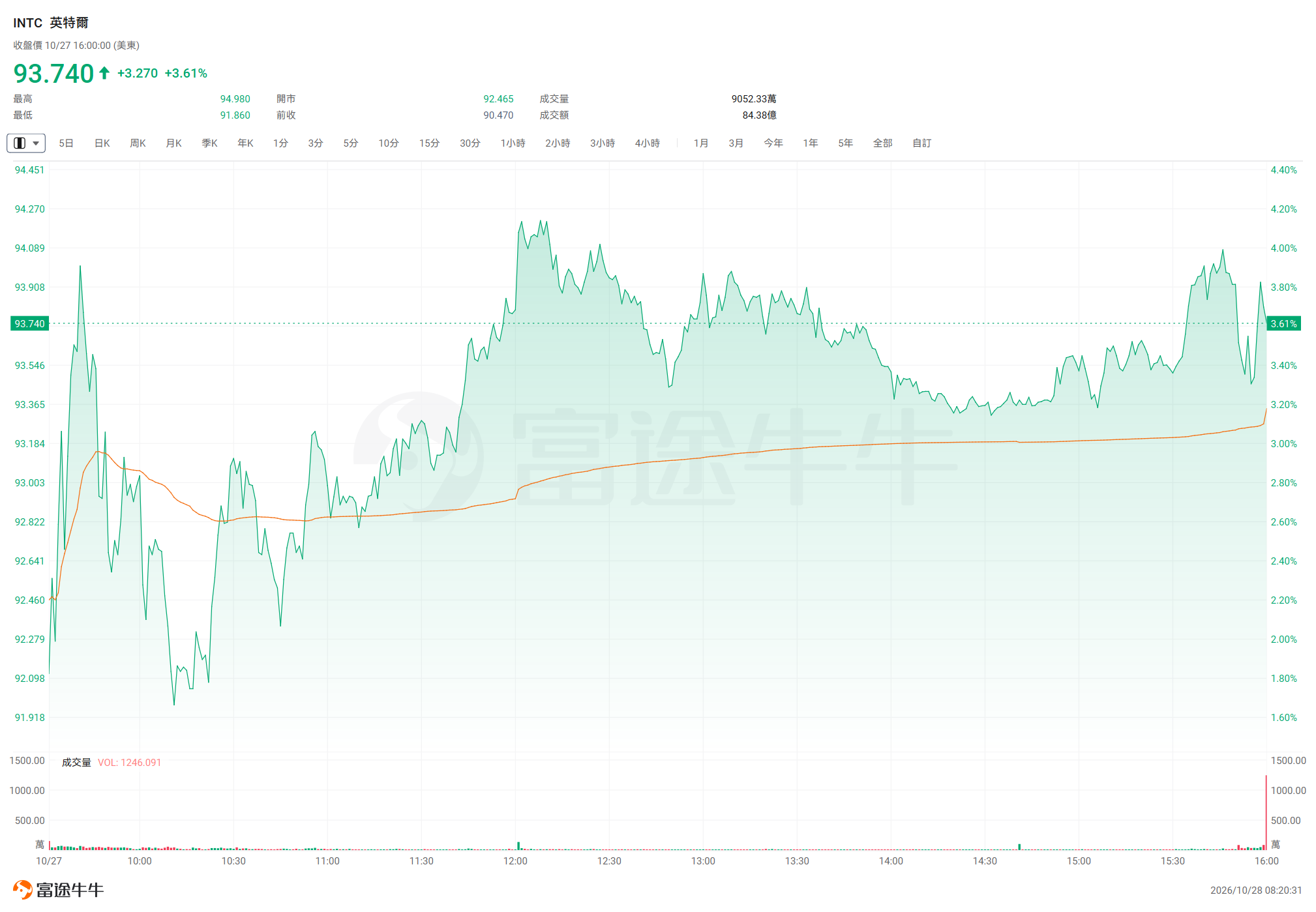
Intel rose nearly 4% in the previous trading session, acquiring Classiq to build a full-stack quantum computing business.
$Intel (INTC.US)$An agreement has been reached to acquire the Israeli startup Classiq, with the transaction expected to close in the first half of 2027, subject to regulatory approval. This acquisition will integrate Classiq's quantum algorithm software platform with Intel's silicon-based qubit hardware capabilities, creating a full-stack quantum computing business that spans both hardware and software, thereby addressing Intel's shortcomings in the quantum software domain.
Coca-Cola raised its earnings guidance for the second time this year.
Thanks to strong overseas demand for soft drinks,$Coca-Cola (KO.US)$It has raised its full-year 2026 earnings outlook, but sales in its North American market fell short of expectations. Coca-Cola now expects organic sales to grow by at least 5% this year, up from its previous forecast of around 5%. The company had already revised its guidance upward in July; this latest upgrade underscores its growing confidence in its full-year performance.
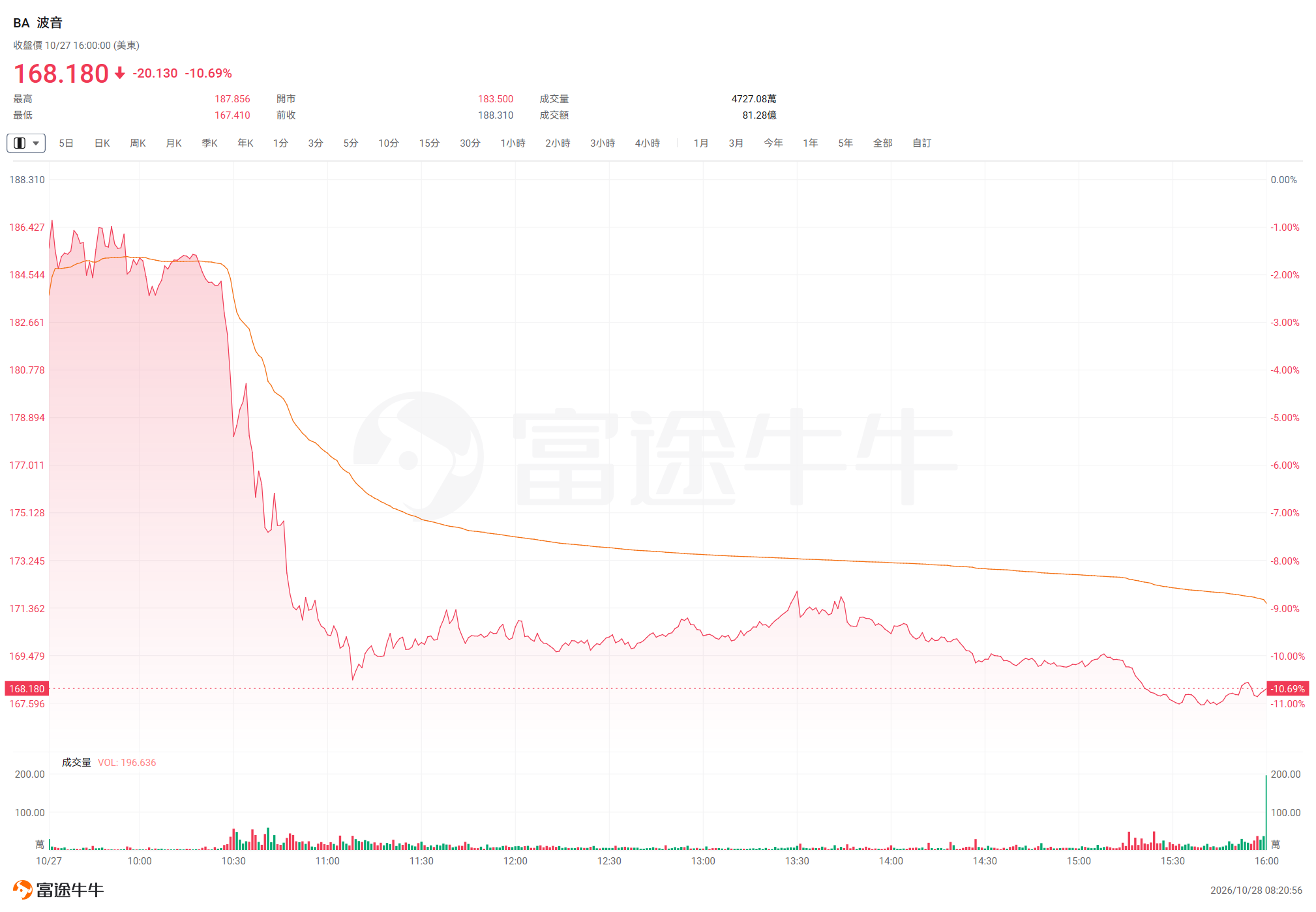
Boeing fell nearly 11% in the previous trading session, hitting a more than one-and-a-half-year low, as the CFO warned that the company might fail to meet its full-year delivery target.
$Boeing (BA.US)$Third-quarter revenue totaled $24.19 billion, up 4% year over year; core loss per share was $0.34, a significant narrowing from the $7.47 loss in the same period last year, though still below analysts' expectations of a $0.25 loss per share. Commercial Airplanes segment revenue edged down to $10.7 billion, with an operating loss of $697 million. Boeing's chief financial officer stated that delays in ramping up the 737's monthly production rate to a steady 47 aircraft are expected to reduce deliveries, making it unlikely to meet the 2026 target of 500 deliveries.
Visa's fourth-quarter net revenue was $12.14 billion, up 13% year over year.
$Visa(V.US)$Fourth-quarter net revenue totaled $12.14 billion, up 13% year over year, versus an estimate of $12.09 billion; service revenue reached $5.26 billion, up 14% year over year, compared with an estimate of $5.2 billion; adjusted earnings per share were $3.48, up from $2.98 in the same period last year, ahead of the $3.44 consensus estimate; payment transaction volume amounted to $4.08 trillion, up 9.3% year over year, in line with the $4.08 trillion forecast; and adjusted net profit stood at $6.55 billion, up 13% year over year, surpassing the $6.47 billion estimate.
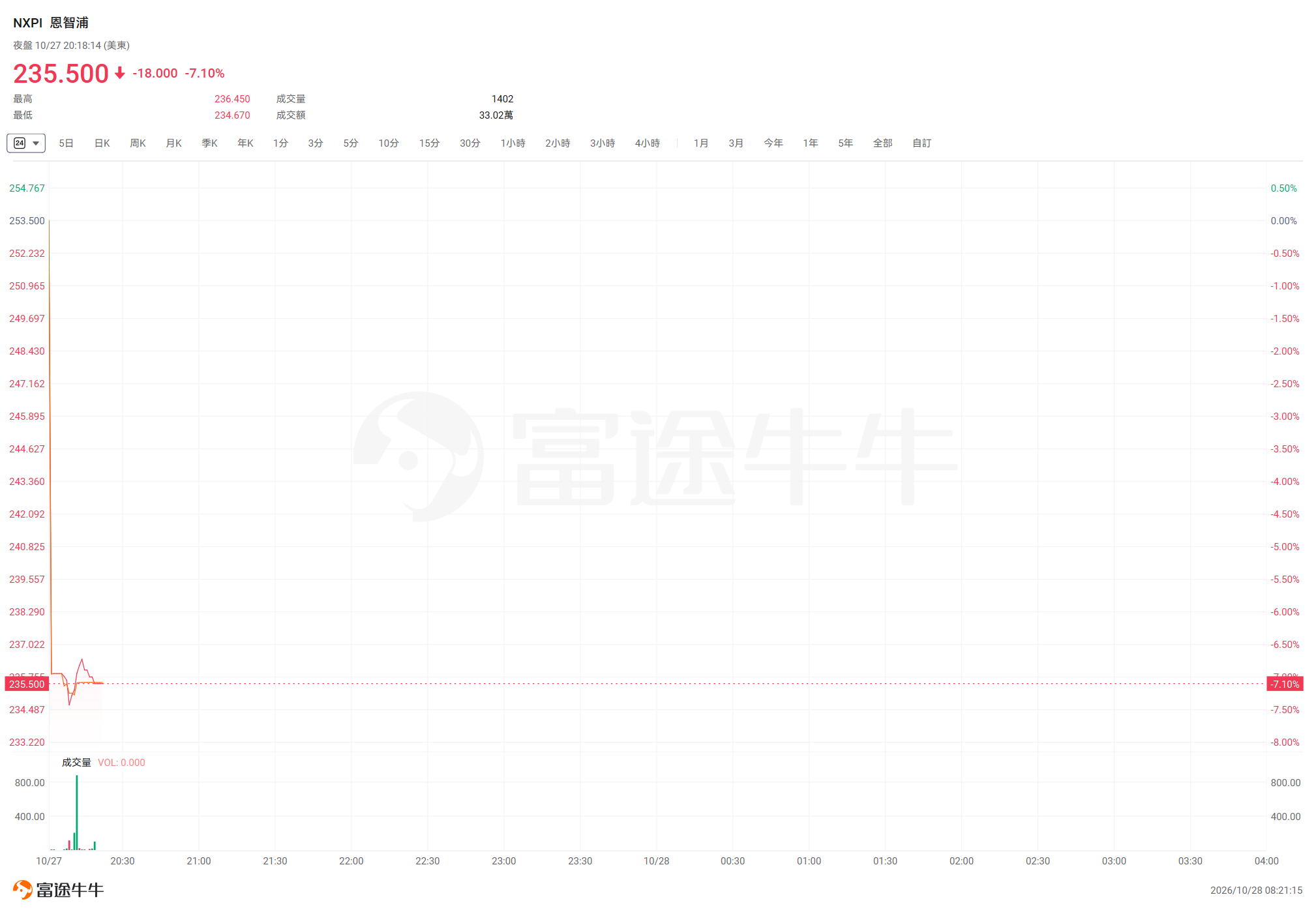
NXP Semiconductors fell more than 7% in after-hours trading, with Q3 revenue up 19%, beating expectations, but its Q4 guidance fell short of forecasts.
$NXP Semiconductors (NXPI.US)$In the third quarter, adjusted earnings per share were $4.20, compared with $3.11 in the same period last year and $4.12 expected; third-quarter revenue reached $3.79 billion, up 19% year over year, versus an expectation of $3.75 billion. NXP Semiconductors forecasts adjusted earnings per share of $4.14 to $4.58 for the fourth quarter, above the market's $4.36 estimate; it expects fourth-quarter revenue of $3.75 billion to $3.95 billion, compared with the market's $3.87 billion forecast; and anticipates a fourth-quarter adjusted gross margin of 58.5% to 59.5%, higher than the market's 59% expectation.
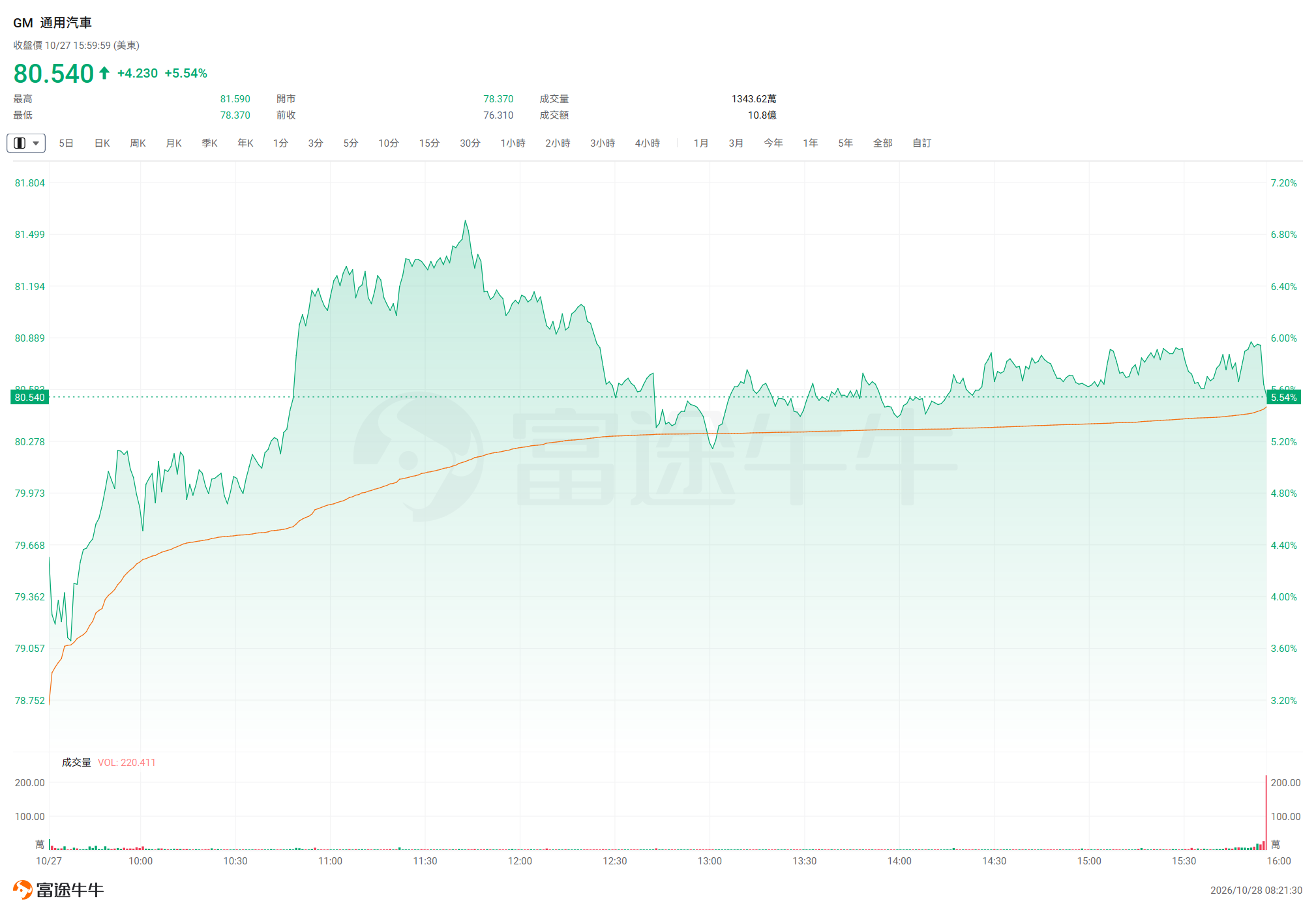
General Motors rose more than 5% in the previous trading session and will transfer its listing from the NYSE to the Nasdaq.
$General Motors (GM.US)$It plans to transfer its common stock from the New York Stock Exchange to the Nasdaq, seeking to further shape a corporate image centered on technology. General Motors expects to begin trading as a Nasdaq-listed company on November 17, with the ticker symbol expected to remain "GM." General Motors noted that after moving to the Nasdaq, the company will become eligible for future inclusion in the Nasdaq-100 Index.
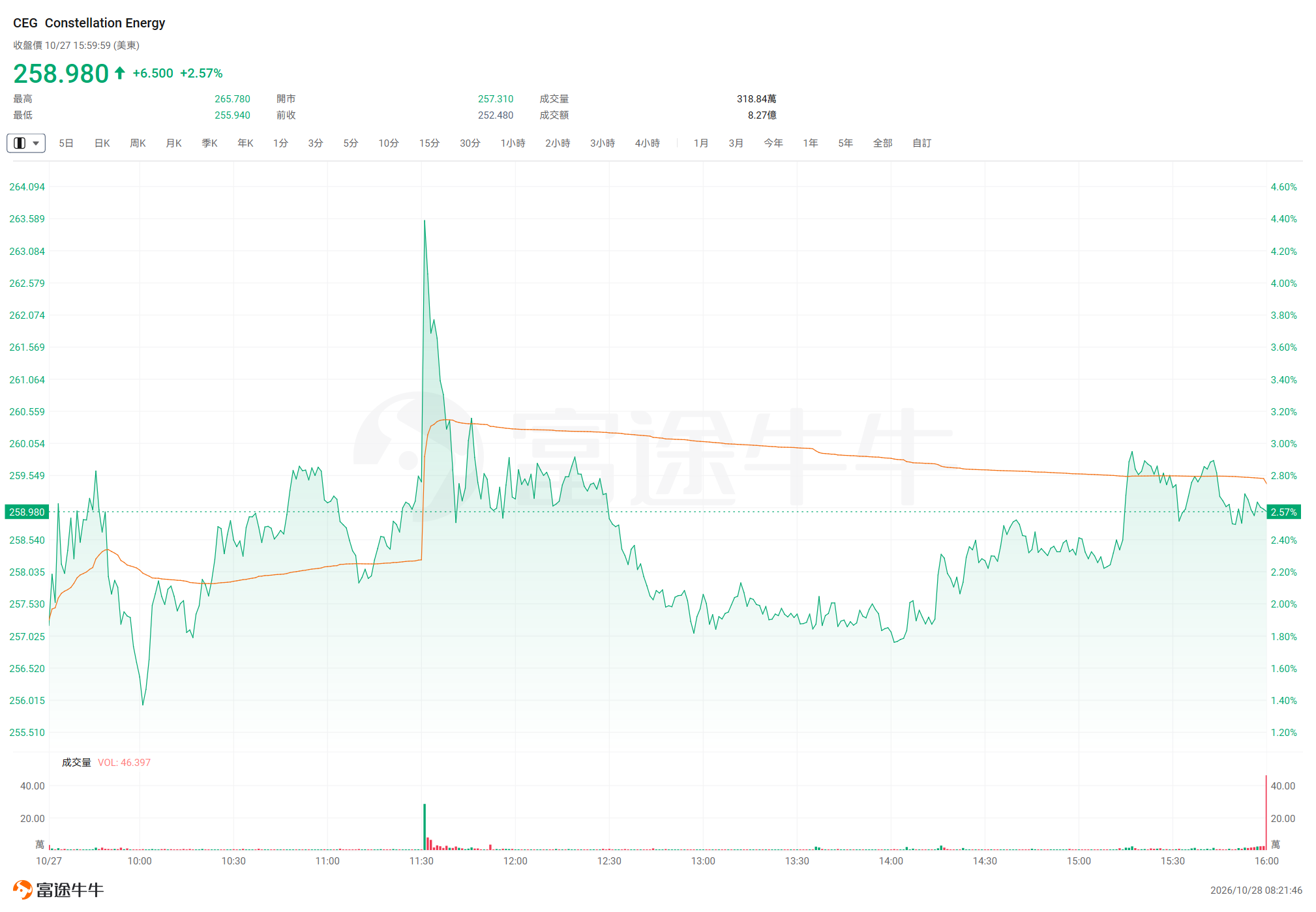
The United States has provided $5 billion in financing to Constellation to boost nuclear power generation.
The Trump administration is considering to$Constellation Energy(CEG.US)$The energy company is offering up to $5 billion in financing to upgrade and modernize its nuclear reactor facilities in Illinois, Maryland, and Pennsylvania. According to the U.S. Department of Energy, with the support of this conditional loan commitment, the projects are expected to add nearly 1.1 gigawatts (GW) of generating capacity, helping to strengthen the grid and reduce costs.
Top 20 in Trading Volume
Hong Kong Stock Market Outlook
Southbound capital reduced its holdings in Hong Kong stocks by over HK$1.2 billion, with net purchases of Xiaomi Group exceeding HK$500 million and increased positions in Zhipu worth over HK$400 million; meanwhile, it net sold Changfei Fiber Optic Cable for more than HK$500 million.
On Tuesday, October 27, southbound capital net sold HK$1.238 billion worth of Hong Kong stocks.
$Xiaomi Group-W(01810.HK)$、$Zhipu (02513.HK)$、$China Mobile (00941.HK)$They recorded net purchases of HK$546 million, HK$426 million, and HK$415 million, respectively.
$YOFC Fiber Optic Cable (06869.HK)$、$JianTao Laminate Board (01888.HK)$、$SMIC (00981.HK)$They were net sold off by HK$519 million, HK$305 million, and HK$193 million, respectively.
Pop Mart: The gross margin for the second half of the year is expected to decline compared with the first half.
In$Pop Mart (09992.HK)$During the third-quarter earnings call, the company's management stated that the group's gross margin for the second half of the year is expected to decline compared with the first half, by no more than two percentage points. The decline in gross margin is primarily attributable to two factors: first, the share of overseas revenue is projected to decrease relative to the first half; and second, in order to enhance competitiveness in overseas markets, the company has proactively adjusted pricing for certain products in select international markets.
On the cost side, in the second half of the year, the Group will open a significant number of additional stores in its core overseas markets, leading to a corresponding increase in fixed expenses such as labor, rent, property management fees, and amortization of store renovations. As a result, the overall cost ratio is expected to exceed that of the first half.
Related Reading:Third-quarter revenue nearly halved, as Pop Mart pins its growth outlook on repeat customers.
Hengrui Pharma: Q3 net profit of RMB 2.458 billion, up 88.92% year-on-year and 12% quarter-on-quarter.
$Hengrui Pharma (01276.HK)$In the third quarter, operating revenue totaled RMB 8.953 billion, up 20.55% year over year; net profit attributable to shareholders of the listed company reached RMB 2.458 billion, an increase of 88.92% year over year. For the first three quarters, operating revenue amounted to RMB 24.409 billion, up 5.26% year over year; net profit attributable to shareholders of the listed company stood at RMB 6.923 billion, up 20.38% year over year.
The change in performance was primarily driven by an increase in external licensing revenue during the reporting period. The company's Q3 net profit stood at RMB 2.458 billion, compared with RMB 2.183 billion in Q2; based on these figures, Q3 net profit grew 12% quarter over quarter.
CATL: All-solid-state batteries are expected to achieve small-scale production by 2027.
$CATL (03750.HK)$On October 27, the company stated on its investor‑relations platform that it remains firmly committed to investing in all‑solid‑state batteries, with technology that is among the industry's most advanced, and expects to achieve small‑batch production by 2027. In addition, in recent years the company has accelerated capacity expansion in response to market demand; with new capacity coming online throughout this year, supply constraints have eased somewhat. However, market demand continues to grow, and overall, capacity utilization is expected to remain at a high level, maintaining a healthy operating environment.
HSBC Holdings' Q3 pre-tax profit rose 32% year-on-year, and it plans to repurchase up to US$1 billion worth of shares.
$HSBC Holdings (00005.HK)$The company announced its third-quarter 2026 results, reporting pre-tax profit of $9.6 billion, up $2.3 billion from the third quarter of 2025—a 32% increase—while market expectations had been $9.7 billion. Revenue rose by $800 million to $18.6 billion compared with the third quarter of 2025, versus a market estimate of $18.93 billion.
Net interest income totaled $9.3 billion, up $500 million, or 6%, from the third quarter of 2025. The Director has approved the payment of a third dividend of $0.10 per share. As of September 28, 2026, HSBC has completed the $1 billion share buyback announced when it released its interim results; it also plans to initiate a further share buyback of up to $1 billion, which is expected to be completed before the release of its full-year results for 2026.
Today's Focus
Key topics: U.S. EIA crude oil inventories for the week ending October 23; Google and Microsoft earnings; Dongshan Precision's Hong Kong stock market listing.
On the economic data front, at 04:30, the U.S. API crude oil inventories for the week ending October 23 (in thousands of barrels) will be released; at 22:30, the U.S. EIA crude oil inventories and the U.S. EIA Strategic Petroleum Reserve inventories for the same week will be published.
On the economic and financial front, SK Hynix will hold its third-quarter earnings call at 8:00 a.m.; British Chancellor of the Exchequer John Healey is scheduled to present his first annual budget since taking office in Parliament at 8:30 p.m.; at 9:45 p.m., the Bank of Canada will release its interest-rate decision and monetary-policy report, followed by a press conference at 10:30 p.m.
In terms of performance,$Jiangxi Copper Company Limited (00358.HK)$、$PetroChina (00857.HK)$、$Ping An (02318.HK)$and$Sanhuan Group (06951.HK)$Release financial results;$GE Vernova(GEV.US)$、$GlaxoSmithKline (GSK.US)$、$Vertiv Holdings(VRT.US)$It will release its earnings before the U.S. stock market opens;$Google-A (GOOGL.US)$、$Microsoft (MSFT.US)$、$ServiceNow(NOW.US)$、$KLA Corp (KLAC.US)$、$Ford Motor (F.US)$U.S. stocks reported earnings after the market closed.
Regarding new shares,$Dongshan Precision (02384.HK)$Listed on the Hong Kong stock exchange.
 Want to pick stocks or analyze them? Curious about your portfolio's opportunities and risks? For all your investment questions,Just ask Futubull AI!

Edited by melody